












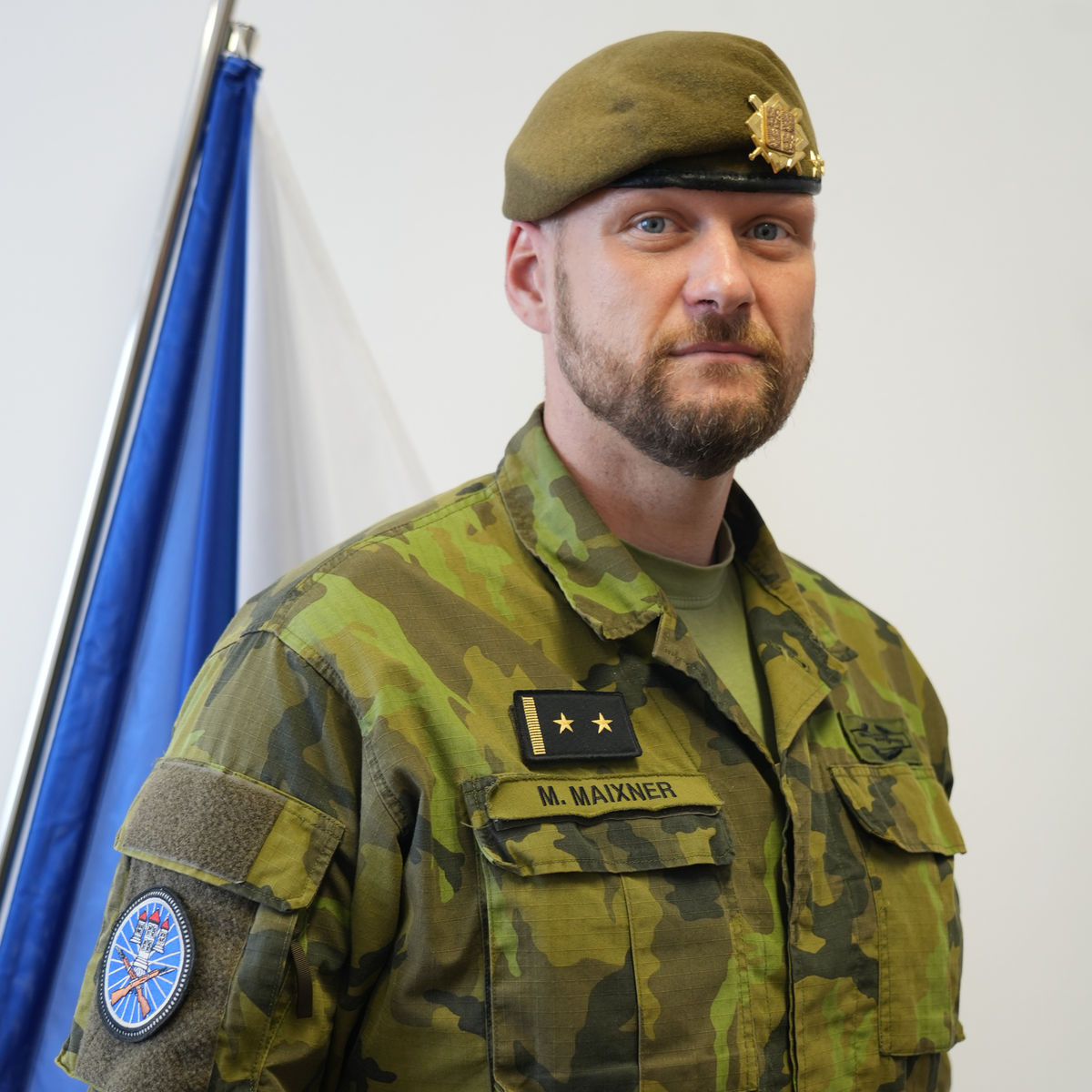
Lt. Col. Miroslav Maixner: Experimentation, criticism, stepping outside our comfort zone, and continuous development are our most effective weapons
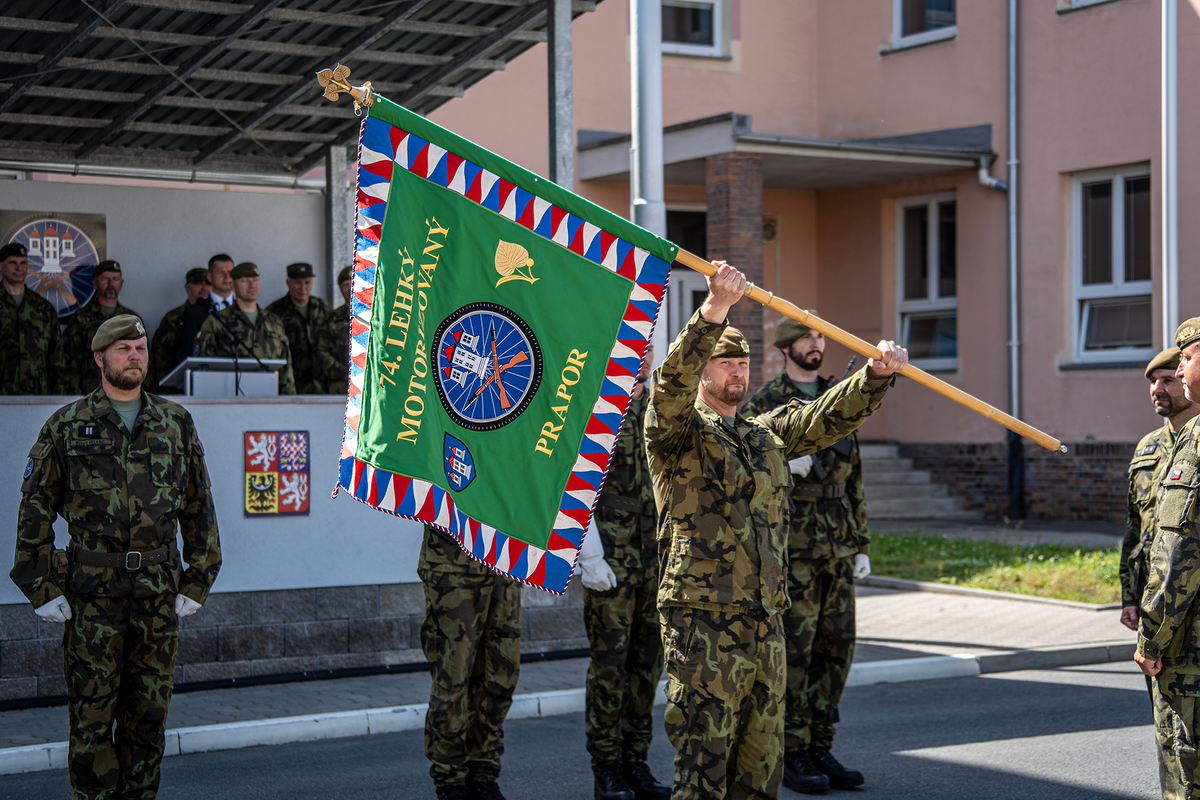
The youngest battalion of our 7th Mechanized Brigade – the 74th Mechanized Battalion “Colonel Bohuslav Maleček” in Bučovice – is preparing for a major rearmament as well as a staffing increase. In this context, we requested an interview with the battalion commander, Lieutenant Colonel Miroslav Maixner.
Lieutenant Colonel, you are currently in command of the 74th Mechanized Battalion, but let’s go back to the very beginning of your military career. What had the greatest influence on your decision to become a career soldier?
I come from a military family, which of course had a major influence on my choice of career. My grandfather was the biggest influence on my career. He himself was greatly influenced by his uncle, a legionnaire. It was my grandfather who really enjoyed his time “in the army” and later in the gendarmerie during the First Republic – it gave him a sense of purpose. He instilled in me the idea that becoming a soldier might bea the right path for me.
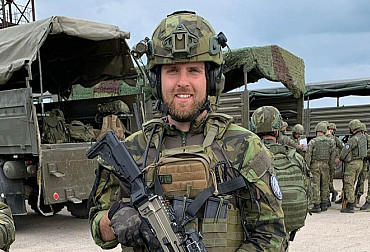
Your father was once the commander of the training company at the Military Police Vocational School in Moravská Třebová. Did you ever discuss your military careers together?
Yes, we discussed not only my studies but also my early experiences and insights from my command positions. However, my father, in particular, wasn’t exactly in favor of me joining the military. He always told me to make my own decision, saying that this career has many benefits but can also take a lot away from my life – especially when it comes to family.
Today you’re a battalion commander; there’s not only a generational gap between you and your father, but also a difference in leadership and management styles. Do you discuss these changes with your father as well?
Yes, among other things, we also discuss current trends in the military in comparison with past ones. Since we’re both rational thinkers and like facts, our opinions don’t differ all that much. It’s always been, is, and will be about what works and what doesn’t.
Your undergraduate studies at the University of Defense focused on mechanized infantry and all-arms command. Was this a field of study that proved useful at a time when our military was primarily engaged in overseas operations in the Balkans and Afghanistan?
He certainly did. The contingents were made up almost entirely of mechanized units. By joining a mechanized unit, it was automatically assumed that I would be deployed abroad. And tactics? The basic principles are the same or similar. By that I mean the principles for commanders’ decision-making, working with subordinates, or the fundamentals that every soldier must know. What differed were the specific situations and how to handle them, depending on the particular mission.
It is often said that, during periods of overseas operations, our military has strayed from its primary mission, which is to defend our own territory. Do you agree with that?
Yes, in a way it did shift in the form of the so-called “Afghanization” of the army – that is, by adapting the training of units, their deployment, and the acquisition of military equipment, gear, and weapons. However, as I’ve already said, the main principles remain the same. Even in Afghanistan, it was necessary to approach things this way: “I am the commander of a mechanized unit, and I need to complete the mission.” What could have been detrimental to the army was the fact that some soldiers viewed the experiences and procedures from Afghanistan as some kind of established and immutable truths. And that made training more difficult for us, because some individuals came to believe that whatever they hadn’t used in Afghanistan was obsolete and therefore no longer needed to be mastered. However, even individual conventional wars naturally differ from one another, so this line of thinking is deeply flawed.
You have completed a total of three missions in Afghanistan. What did you gain from these overseas operations? Did you gain new insights or experiences that can be applied today to the training and leadership of the battalion?
First and foremost, Afghanistan provided me with tremendous personal experience as a commander. It also gave me personal insight into how people act under pressure and how one makes decisions when bearing real responsibility for the lives of one’s soldiers – because in training, it’s always just a simulation. The missions also enriched me in terms of problem-solving, planning, and cooperation with allies. Even today, in my command duties, I continue to apply a great deal of what I learned from overseas operations. In addition, I draw on the invaluable experience I gained from two command courses (a two-month company-level course and a three-month battalion-level course) in Israel.
How challenging were those overseas missions for you?
Each one was challenging in its own way. The first one, the 5th PRT in Logar, was challenging because it was the first. Everything was new – the coalition environment, the local culture, and my first command responsibility in an operation. The tasks we carried out were very varied – ranging from escorting civilian project experts to deployment at COP Kherwar, where the main focus was on maintaining order in a troubled district. The second mission, the 4th OMLT Wardak, was challenging because the level of danger and unpredictability I had to assess was high. And the standard of care for the soldiers and hygiene there was by far the worst of all three missions. We lived with Afghan soldiers at their checkpoint and carried out tasks with them in our assigned area of responsibility. Encounters with the enemy were very frequent. And that third mission, the 11th SR BAF Parwan, was the most difficult for me from a commander’s perspective, because I had command responsibility for 172 people – that is, the entire contingent. And I had to act accordingly in my dealings with our allies as well. In all of these missions, however, I had a team of wonderful people with me – people I could rely on, who were willing to go to great lengths for their comrades-in-arms.
In 2025, you became commander of the 74th Mechanized Battalion. If we look at the organizational structure of mechanized battalions during the era of the combined-arms brigade, an anti-tank company was an integral part of them. Should it still have a place in the battalion’s structure today?
Certainly, anti-tank weapons have their place in a battalion. It’s best to have a multi-layered response to every threat on the battlefield. And overall, when it comes to combined-arms brigades, I believe they definitely have a place on the battlefield, because victory can only be achieved through cooperation among the various branches. And they can only achieve that if they know each other and train together – which is best accomplished when they’re in the same brigade.
The current war in Ukraine highlights the importance of unmanned aerial vehicles. Should the Czech Mechanized Battalion also include a drone unit in its ranks to counter the enemy’s mechanized equipment, or perhaps a unit dedicated to countering enemy drones?
Absolutely. I believe it is essential for a battalion to have its own UAS/UGV company, and for each company to have its own UAS squad, tailored to its specific mission. For mechanized units to succeed on the battlefield, they absolutely need the support of these assets. And, of course, these units would need to have large stocks of UAS/UGVs available to replace war losses. Unmanned systems will therefore certainly be indispensable for performing the most dangerous tasks and are capable of delivering “a lot of bang for the buck.” Their reaction speed when operating with pre-programmed behavior is also impressive.
When discussing a unit designed to counter drones, air defense must not only be multi-layered but must also have multiple responses to each threat. Therefore, it would be best if each unit were equipped with specific anti-drone systems tailored to its needs and importance. Within the air defense system, each threat should then be intercepted by the appropriate layer, ideally using multiple systems within each layer. We cannot rely on a single system that could be jammed or otherwise rendered inoperable.
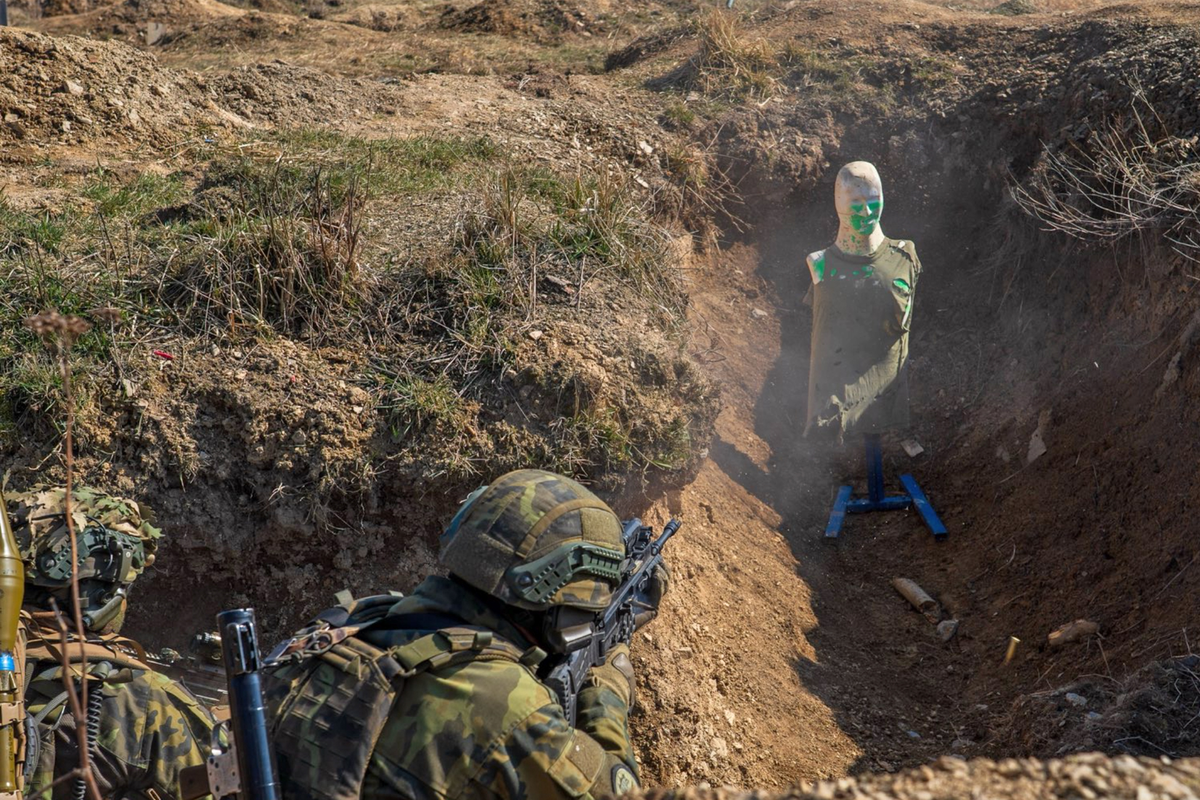
On the Ukrainian battlefield in particular, we see that conventional infantry is very often under pressure from small drones capable of penetrating an open vehicle through its hatch or into a building. Do you incorporate these findings into your infantry training?
We work and test. We take advantage of every possible opportunity for collaboration with the University of Defense and other entities so that we can train not only with UAS but also with other modern technological advancements. The goal is to expose soldiers to what they might use on the battlefield or encounter on the enemy’s side. Through these exercises, we develop entirely new procedures and ways of thinking – both among commanders and the soldiers themselves. Instructors at the courses in Israel liked to quote two pieces of wisdom: “The primary task of commanders is to lead by example in stepping outside their comfort zones,” and “I care about my comrades-in-arms, which is why they deserve the most scathing yet constructive criticism from me – so they can improve in time, because on the battlefield, it will already be too late.” It is therefore clear that if we want to succeed on the modern battlefield, there is no other option but to continuously experiment, evolve, and critically evaluate our procedures and equipment. We learn before it’s too late. Experimentation, criticism, setting an example, stepping outside our comfort zone, and constant development are our most effective weapons. My team at the 74th Mechanized Battalion plays a crucial role in this through its initiative, dedication, and hard work every day.
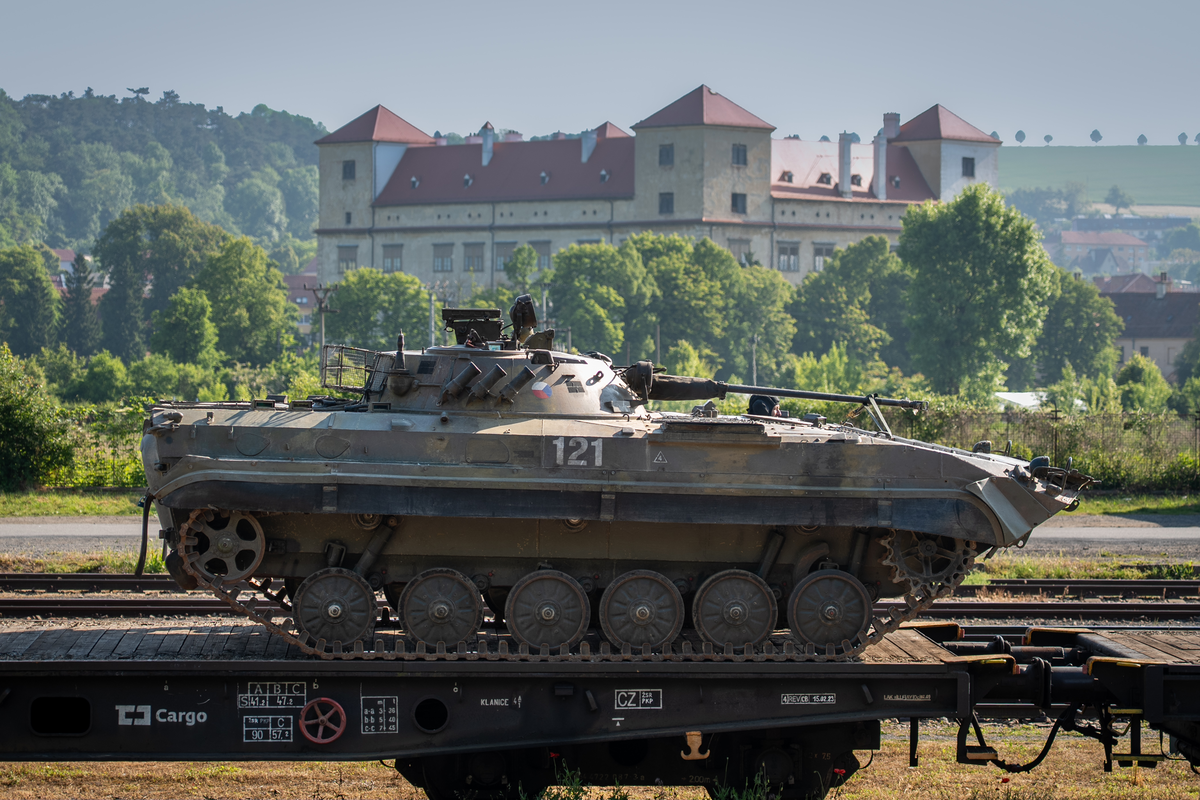
The 7th Mechanized Brigade, to which your battalion belongs, is set to be re-equipped with the new CV90 tracked IFVs. In your opinion, how significantly will the tactics for deploying a mechanized battalion change once these vehicles are added to your arsenal?
Thanks to its BMS (Battlefield Management System), a much higher level of protection, and a significantly more advanced fire control system with far greater capabilities and range, the CV90 provides us with an excellent tool for engaging the enemy. However, what will actually change tactics the most in the future will be the presence of UAV/UGV units within the battalion structure and the use of AI for planning and analyzing battlefield data. It will also depend on the quality and multi-layered nature of air defense and the ability to withstand electronic warfare (EW).
Even a state-of-the-art mechanized battalion cannot achieve the required combat effectiveness without an adequate level of personnel readiness and training. How is the 74th Mechanized Battalion faring in terms of personnel? Are there any specific areas of expertise you are currently lacking?
I see a significant need among KIS specialists, CV90 vehicle crews, and maintenance specialists. With the arrival of new technology, we will need to increase the number of CIS specialists and adjust their benefits and career paths so that they are motivated to remain with the mechanized battalion for a longer period of time. Due to rapid developments in this field, soldiers with this expertise have no shortage of offers from other branches of the military and the civilian sector, so we naturally need to retain them.
It will also be advisable for combat vehicle drivers, gunners/operators, and maintenance specialists to remain in their positions longer or to focus more on the same area of expertise across multiple consecutive posts, ideally with rising ranks. The increasing sophistication of the new system is illustrated, for example, by the length of the SO BVP 2 course, which now lasts 3 weeks. For the CV90, based on the experience of armies where these vehicles are already in service, this training takes approximately 3 months. For the CV90, it would therefore be beneficial for a soldier to, for example, start as a rank-and-file SO at the rank of corporal, then progress through the roles of platoon/company commander SO as a sergeant and staff sergeant, and subsequently become a company/battalion master gunner as a first sergeant and master sergeant. Subsequently, they could become instructors for SO courses in Vyškov, ensuring that the most talented individuals retain their expertise. This vehicle is already highly sophisticated, and we cannot afford to lose trained personnel simply because they leave the CV90 program in pursuit of career advancement.
In your opinion, how are we doing as a society? Are we willing to fight for this country?
I think that as a society – and often this is just posturing – when we hear in the media that someone isn’t willing to do something, it often stems from the idea of defending some foreign entity that Czech citizens are supposed to fight for. But my country is my homeland, my region, my city, my family, my friends, and also my freedom. I think almost everyone is willing to fight for these things.
In your opinion, is being a soldier a matter of honor, pride, or simply having a job?
I think it’s a matter of pride to serve my country. And I believe that’s true for a large number of my subordinates as well. Many of them are motivated by being part of a good team or by the opportunity to work with high-quality, modern equipment. I also think that some of them are proud of how far they’ve come. The military is a great place to learn and provides plenty of opportunities for personal growth. As a result, we often have well-educated and capable people in our ranks who earn a decent salary and can therefore take good care of their families.