














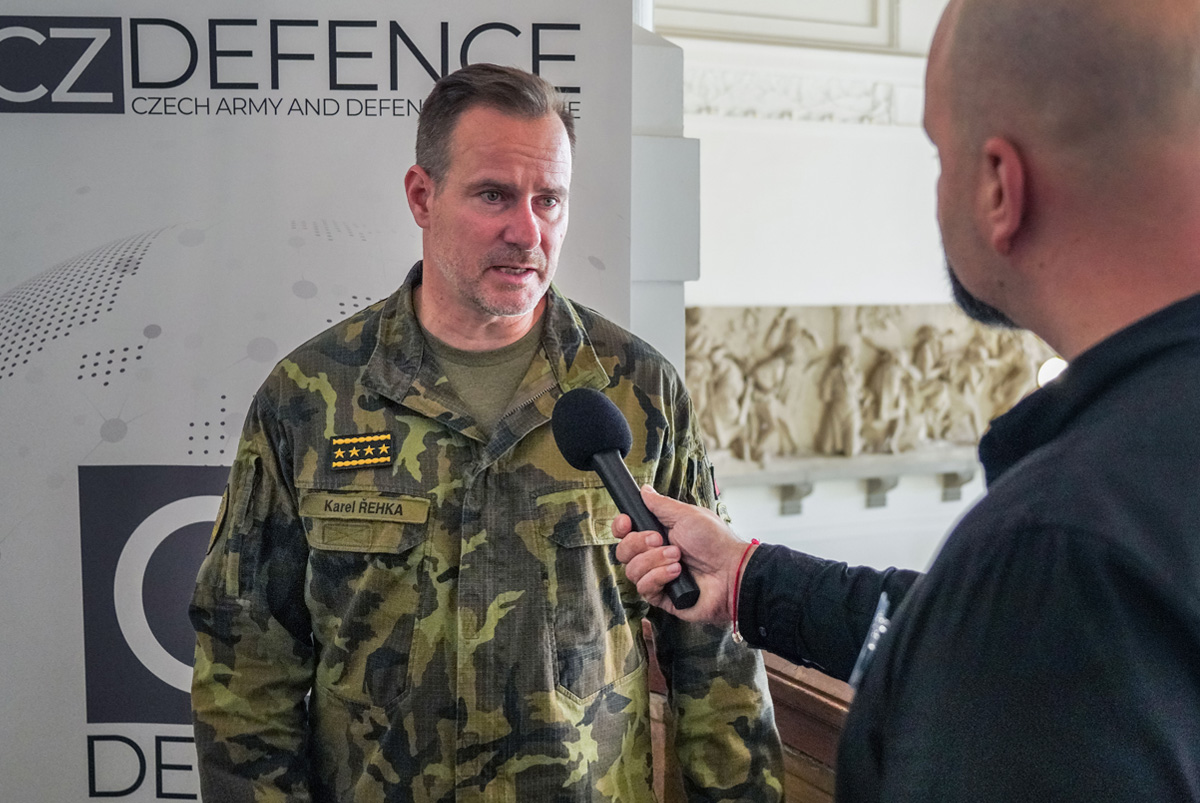
Gen. Karel Řehka: Defense Begins with a Shared Understanding of What We Hold Dear
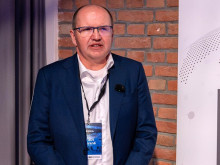
The Chief of the General Staff of the Czech Armed Forces, Lt. Gen. Karel Řehka, emphasized in an interview during the recent Security Conference in Pilsen that citizens are an integral part of national defense and that the country’s defense capabilities cannot be complete without their involvement. However, according to him, the problem is not that people are uninterested in security issues. On the contrary, based on public discussions, Řehka believes that citizens are ready for serious discussion and are asking about essential matters. However, he believes there is a lack of stronger social and political prioritization of this issue and, above all, a sense of urgency.
Video: Gen. Karel Řehka: Defense begins with a consensus on what we hold dear / CZ DEFENCE
“I don’t really think our people aren’t ready for this discussion, or that they aren’t interested in these issues, but there’s a lack of a sense of urgency. I think people aren’t being told how serious the situation is and how little time we have to do something about it,” said General Řehka in an interview, in which he also highlighted the problem of societal polarization. According to him, the basic outlines of foreign, security, and defense policy should take precedence over partisan rivalry. National defense cannot be planned solely in four-year election cycles, as it requires long-term continuity, social consensus, and the ability to compromise.
General Řehka also noted that Czech society is capable of pulling together in times of crisis, as was evident, for example, following the start of the Russian invasion of Ukraine. At the same time, however, he warned that it would be a mistake to rely on society’s mobilization only when the situation becomes dire. Discussions about national defense must take place in a timely and open manner.
The Chief of the General Staff also considers it important to revisit what the concept of 'homeland' actually means. According to Řehka, it is not an abstract phrase, but a concrete environment in which a person lives—family, loved ones, community, way of life, and values that one does not want to lose. It is precisely on this consensus, he says, that true defense capability begins. “It’s my surroundings, my community, my family, my loved ones, my friends. It’s a way of life that I love, that I would never want to trade, and that I will always defend,” said the Chief of the General Staff.
According to him, the military’s communication with the public also plays a significant role in this area. According to Řehka, the military has made visible progress in recent years and is increasingly aware that the information environment is part of the operational environment. It is therefore not just about communication during foreign operations, but also about its activities in peacetime. Public support, he says, is crucial for the military because without it, no activity of the armed forces has any real meaning. The military must therefore communicate with the public openly, fairly, and objectively.
In the next part of the interview, General Řehka also addressed the priorities for modernizing the Czech Armed Forces. He emphasized that it is not a matter of selecting just one isolated capability on which the military should focus. The main task is to complete the capability-building goals that constitute the Czech Republic’s contribution to NATO’s collective defense and deterrence. If collective deterrence were to cease functioning or if the Czech Republic were not a reliable ally, he believes this would pose a fundamental security problem.
Among national capabilities, Řehka highlighted air defense, counter-drone capabilities, and ballistic missile defense as being of paramount importance. However, he also placed special emphasis on digital command-and-control systems, a unified situational picture, and the ability to quickly process large amounts of data.
“Without communication, there is no command, and without command, the army does not function. It is critically important to get the right information to the right place, in the right form, and at the right time,” Řehka summarized. According to him, this is precisely where digitization, command and control systems, and new support technologies—including artificial intelligence—play a crucial role.
At the end of the interview, the Chief of the General Staff of the Czech Armed Forces also addressed the question of whether traditional military equipment and capabilities—such as tanks, artillery, and maneuver warfare—still hold significance on the modern battlefield. In this context, Řehka cautioned against drawing hasty conclusions based solely on a single phase of a single conflict. According to him, the war in Ukraine provides crucial insights, but one cannot mechanically conclude from it that all future wars will look the same. Artillery, according to Řehka, remains critically important in Ukraine, and tanks still have their place, as experience from the Middle East also shows. The battlefield is changing, becoming more transparent, with faster decision-making cycles and an increasing number of sensors, unmanned systems, and new technologies. However, this does not mean that traditional branches of the military can simply be written off.
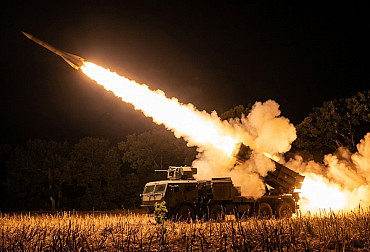
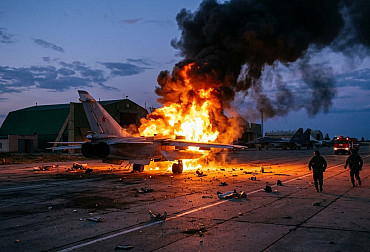
“These capabilities are incredibly easy to dismantle but incredibly difficult to rebuild. It’s not just about buying a tank. It’s about doctrine, trained personnel, and know-how,” General Řehka pointed out, adding that it is therefore necessary to monitor new trends while maintaining strategic caution and avoiding hasty conclusions.