








Future Forces 2026: World Premieres, New Weapon Systems, and Technologies Transforming the Modern Battlefield
The Future Forces 2026 international trade fair, which took place from October 21 to 23 in Letňany, Prague, showcased the latest technologies and trends in the field of defense and security. The 16th edition of this major international event brought together representatives from the armed and security forces, government institutions, the defense industry, research, and academia. This year’s program focused primarily on the modernization of ground and air forces, unmanned and autonomous systems, robotics, air defense, electronic warfare, cybersecurity, and military logistics. Experiences from the war in Ukraine also played a significant role, as they are fundamentally influencing the development of new technologies and the requirements of armed forces. During the trade show, the CZ DEFENCE editorial team filmed a series of interviews with representatives of Czech and foreign companies, who, standing right next to the exhibits, gave us an inside look not only at world premieres but also at other interesting systems designed for the modern battlefield.
Video: Future Forces 2026 – World Premieres and the Most Interesting Defense Technologies / CZ DEFENCE
From the Meander Amphibious Vehicle to Decoys for Radar
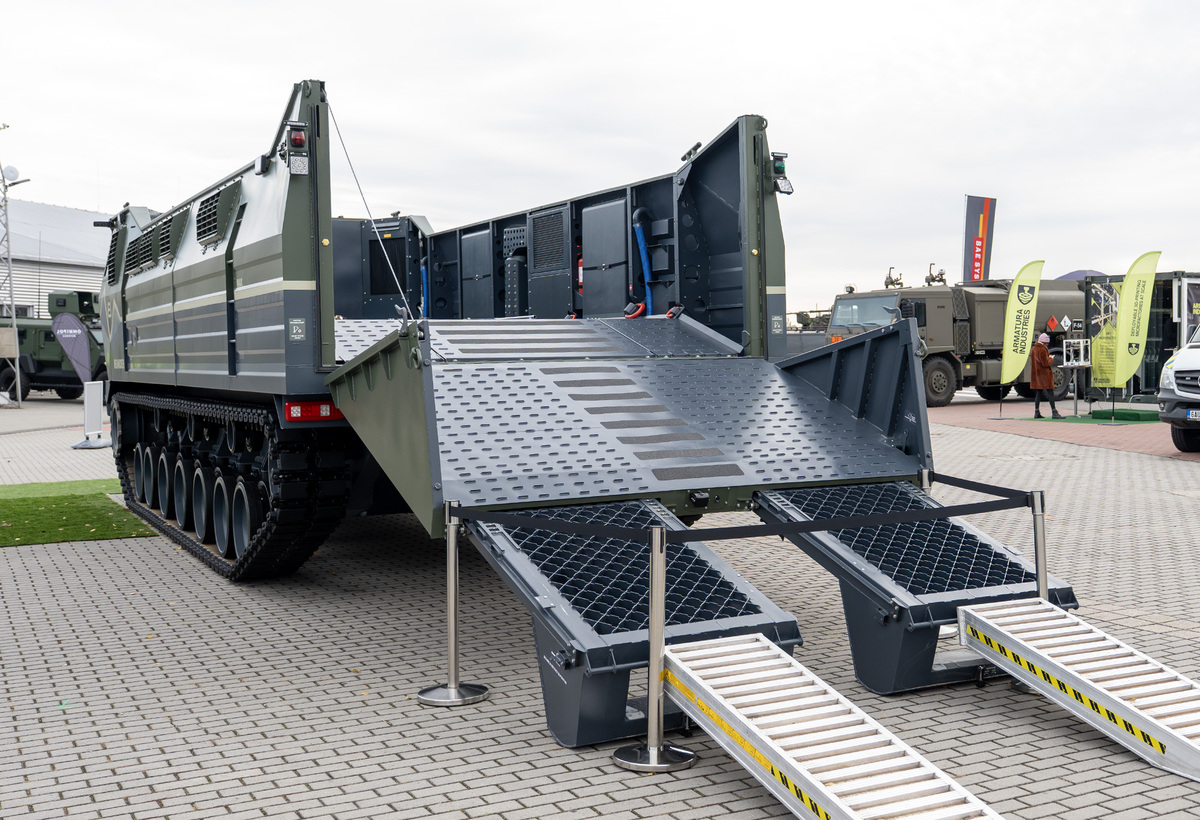
One of the most notable world premieres was the Meander tracked amphibious vehicle, developed in collaboration between Excalibur Army and New Space Technologies. The new platform can carry up to 13 metric tons of cargo, including light military equipment, or up to 70 standing soldiers. It is designed to cross water obstacles, operate in difficult terrain, and transport troops between islands.

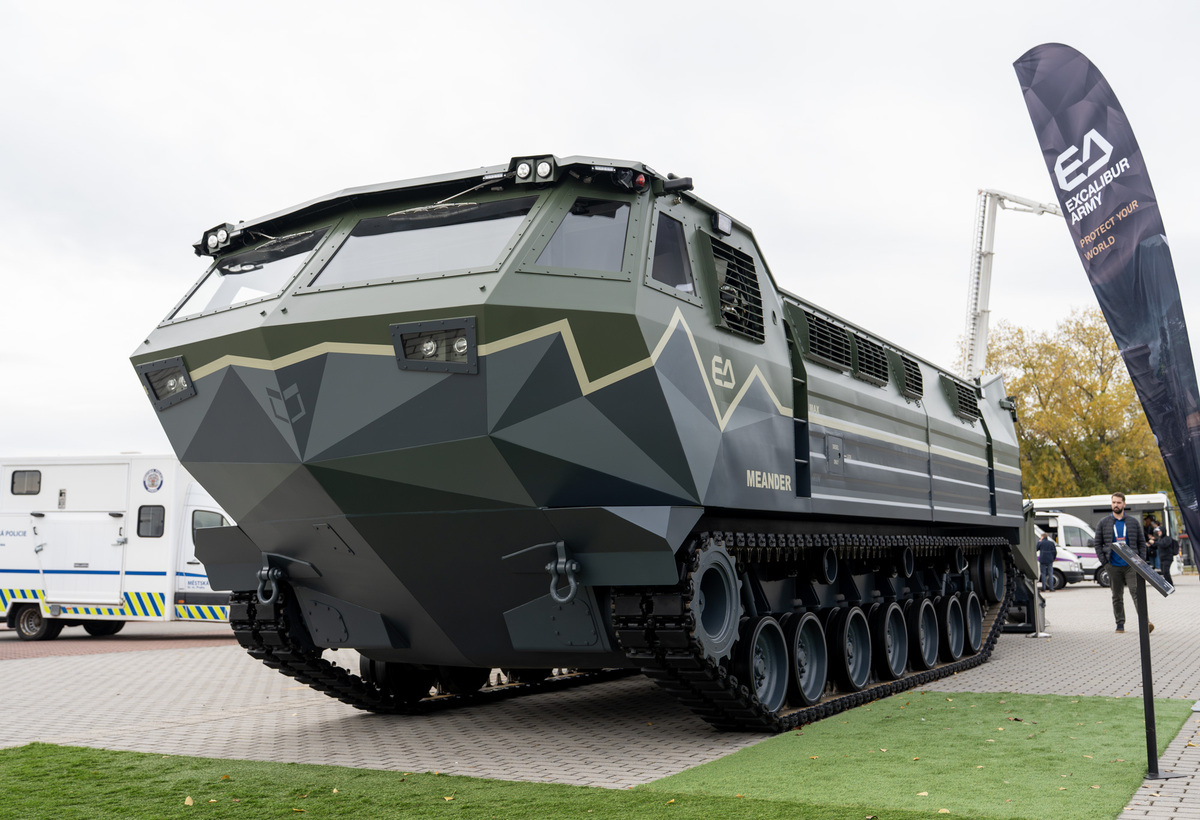
Its technical advantages include the ability to adjust track tension directly from the cab and to transition seamlessly between land and water travel. The vehicle can also be equipped with weapon or anti-drone systems according to customer requirements. Excalibur Army is primarily involved in the project through defining military requirements, militarizing the platform, and preparing for its mass production.
ERA also attracted attention by unveiling the EW-DEC system – an active false radar target – for the first time in the Czech Republic. The device mimics the electromagnetic emissions of a real radar, thereby tricking the enemy into attacking the decoy instead of a valuable air defense asset. The compact system, weighing approximately 25 kilograms, can operate on battery power and without an operator. A key advantage is its relatively low cost, which makes it acceptable to lose the device in combat. For ERA, a company long associated primarily with passive surveillance systems, the EW-DEC represents a significant step into the field of active electronic warfare systems.
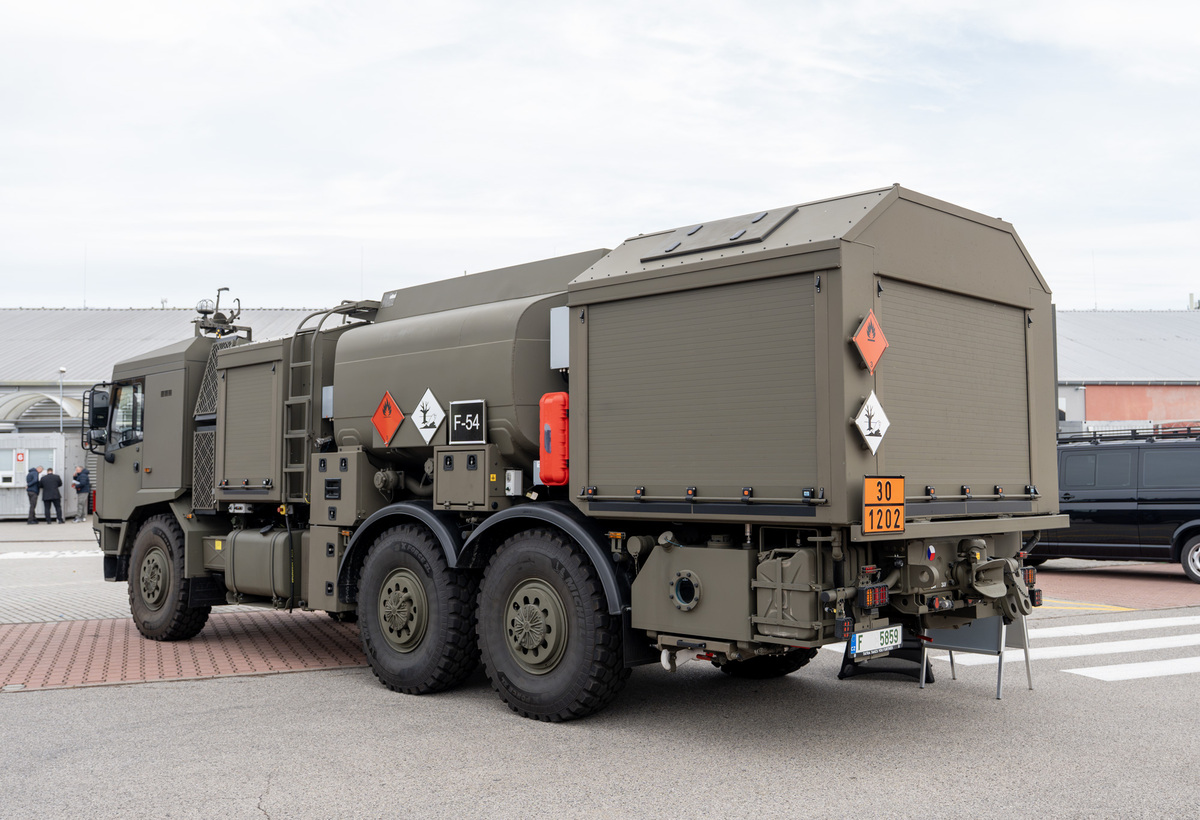
Another world premiere was presented by the state-owned enterprise VOP CZ, which unveiled the CAP SHADOW Tanker, a multifunctional tanker built on a Tatra Force 6×6 chassis. The vehicle, equipped with a dual-chamber tank, is designed to supply ground vehicles with fuel; when fitted with the appropriate equipment, it can also service aircraft.
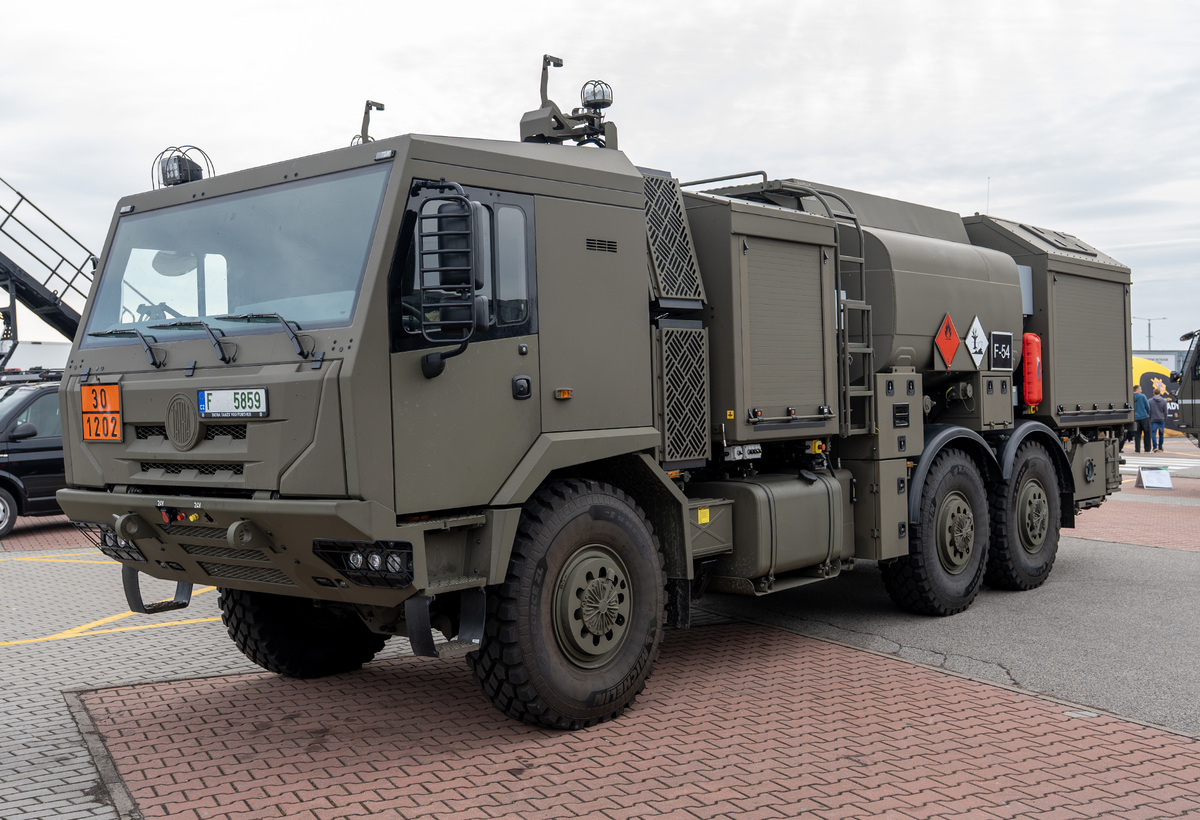
The project is being developed in collaboration with domestic suppliers, with VOP CZ responsible for the design and integration of individual components. The prototype presented is undergoing testing prior to its introduction into the Czech Army, and the framework agreement provides for additional deliveries.
Anti-drone defense, new drones, and modernized ammunition
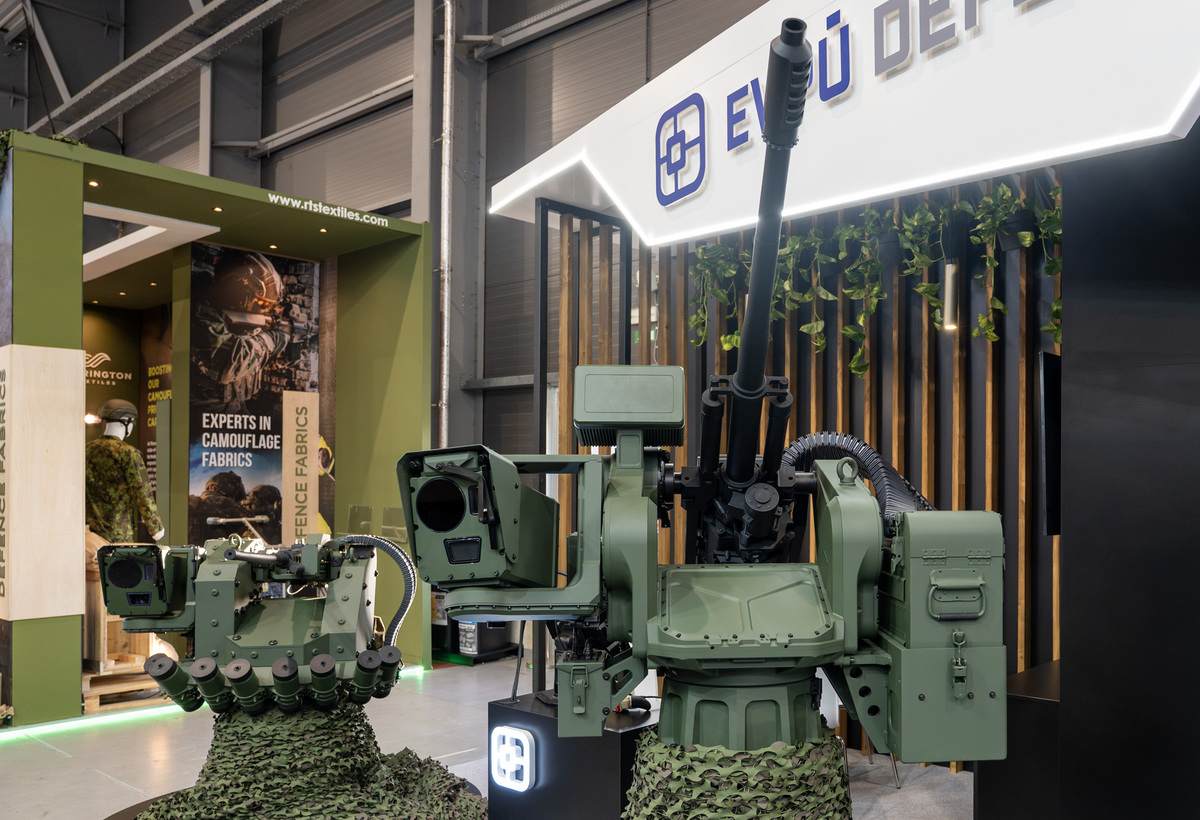
EVPÚ Defence also brought a significant innovation, introducing the GLADIUS MAX modular remote-controlled weapon station, designed, among other things, to combat unmanned aerial vehicles. The configuration on display was equipped with a 30-mm automatic cannon, but the design also allows for the installation of a pair of 7.62-mm machine guns or a single 12.7-mm machine gun. The station combines a radar with an electro-optical sight that includes a cooled thermal imaging camera, a daytime camera, and a laser rangefinder. It is designed for both wheeled and tracked platforms and is operated by a single operator from inside the vehicle. The manufacturer emphasizes, above all, the system’s modularity and the ability to tailor it to specific customer requirements.
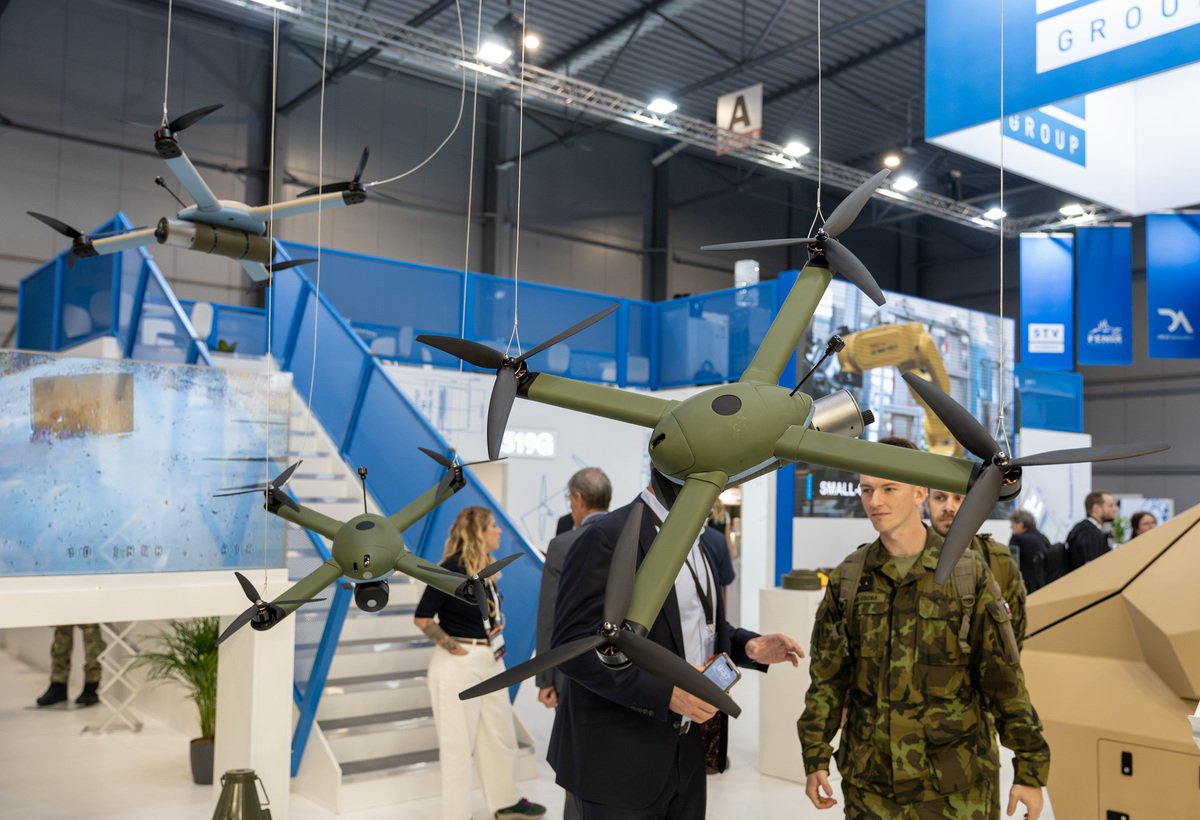
STV GROUP also responded to the rapidly growing threat posed by unmanned aerial vehicles by unveiling a new generation of modular drones of its own design. Their main advantage is the ability to swap out individual components depending on the nature of the mission, including optical and thermal imaging sensors, communication modules, and mounted weaponry. The platform can utilize both radio control and fiber-optic communication and features autonomous navigation and artificial intelligence capabilities.
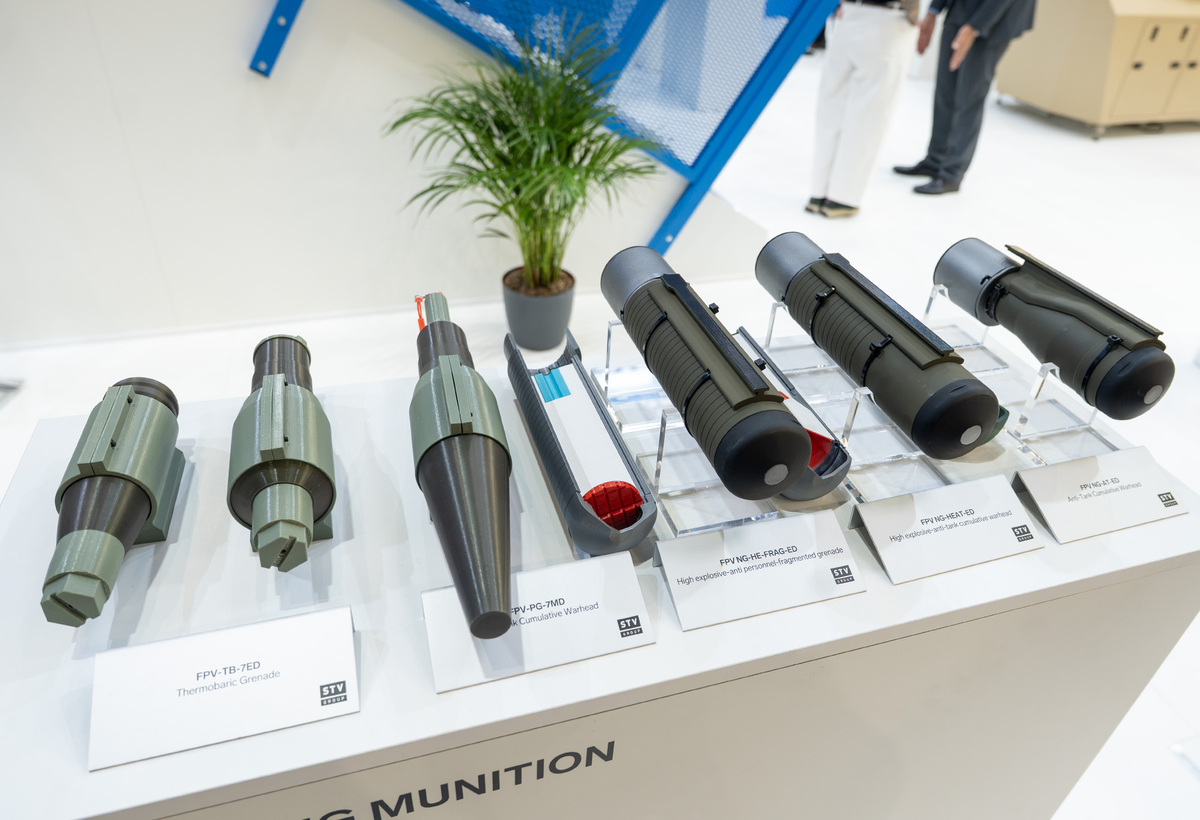
The company also unveiled modular ammunition for unmanned systems, including cumulative, fragmentation, and combined variants. In addition to drone technologies, STV GROUP also presented a modernized anti-tank mine, which builds on an older Czechoslovak design and incorporates new technical features that meet the current requirements of the armed forces.
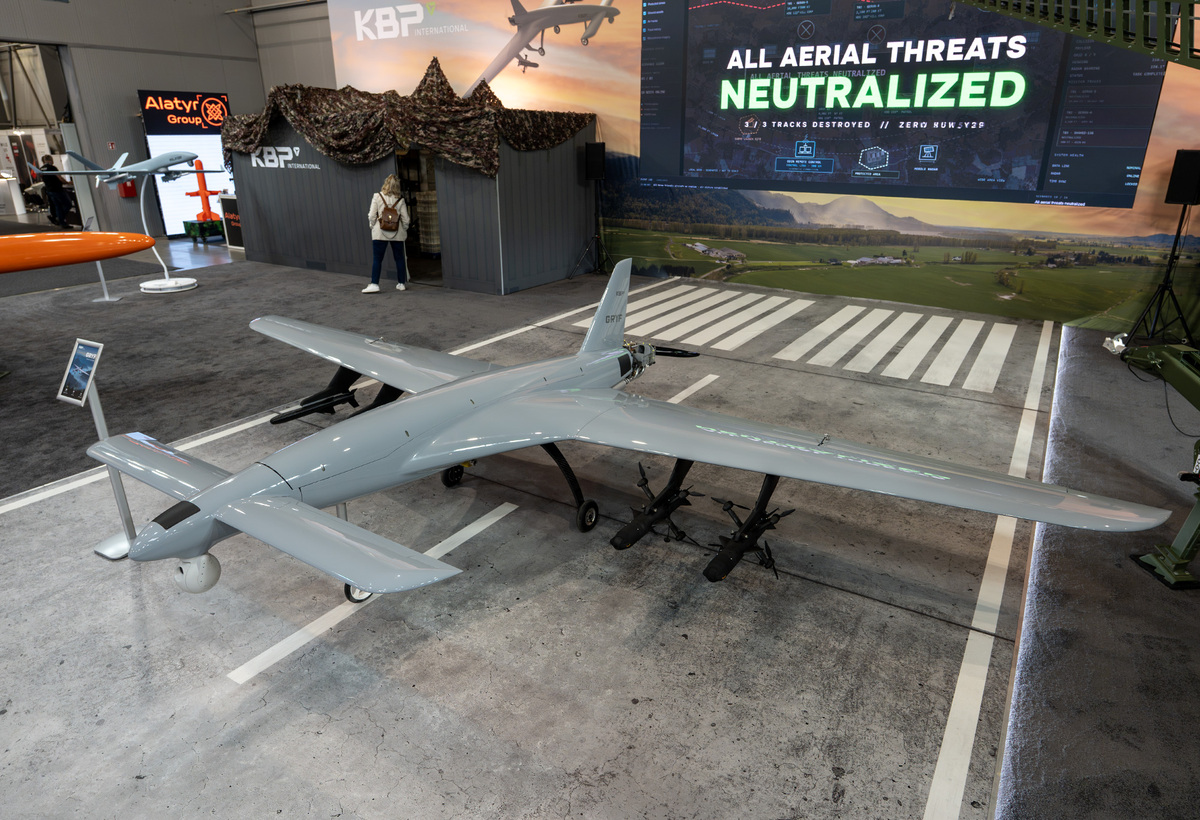
KBP International, a company operating within a Czech holding group with a long tradition of developing unmanned aerial vehicles, presented an interesting solution for multi-layered air defense. Its new fixed-wing unmanned aerial vehicle, the GRYF, is designed as part of a defense system against enemy drones. It can cooperate with ground-based radars and integrate various assets designed to eliminate aerial threats, ranging from more affordable interceptor drones to more sophisticated guided munitions. Emphasis is placed not only on technical capabilities but also on affordability and the potential for large-scale production.
Visitors’ attention was also drawn to the fifth generation of the DroneBuster (DB5) handheld anti-drone weapon, which was presented by a manufacturer’s representative at the Interlink CS booth. The device allows users to electronically interfere with enemy drones and, depending on the specific situation, disrupt their operations, force them to land, or change their flight path. The manufacturer states that the range is approximately five to seven kilometers, and even greater under favorable conditions.
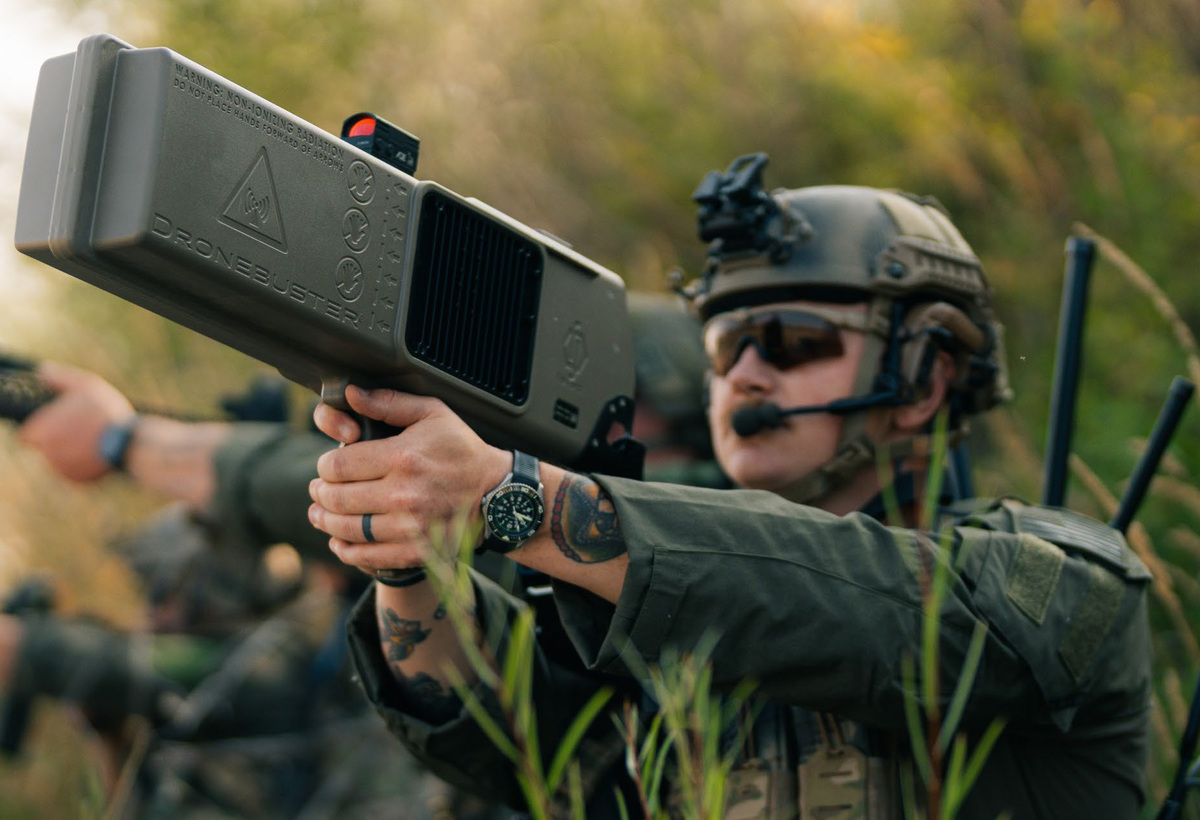
The latest generation was also developed based on experience from the Ukrainian battlefield and offers expanded capabilities for working with radio frequencies as well as simpler operation. In addition to military applications, this technology is used to protect airports, critical infrastructure, and other sensitive facilities.
Technologies That Respond to Battlefield Experience
This year’s Future Forces demonstrated that current developments in defense technology are increasingly focused on the ability to respond quickly to new threats, enhance the resilience of military units, and simultaneously reduce the costs of their operation and combat deployment.
In addition to new weapon systems, electronic deception measures, multi-layered anti-drone defense, autonomous platforms, and flexible logistics solutions are gaining in importance. The Czech defense industry also plays a significant role in this regard, as it is capable of offering both in-house development and the integration of complex technological systems.
We now present the individual premieres and the most interesting systems on display in our video report, in which representatives from the individual manufacturers directly showcase their capabilities, technical solutions, and potential future applications.