
















Jaromír Zůna: The Nation’s Security System Cannot Function Without an Informed Public
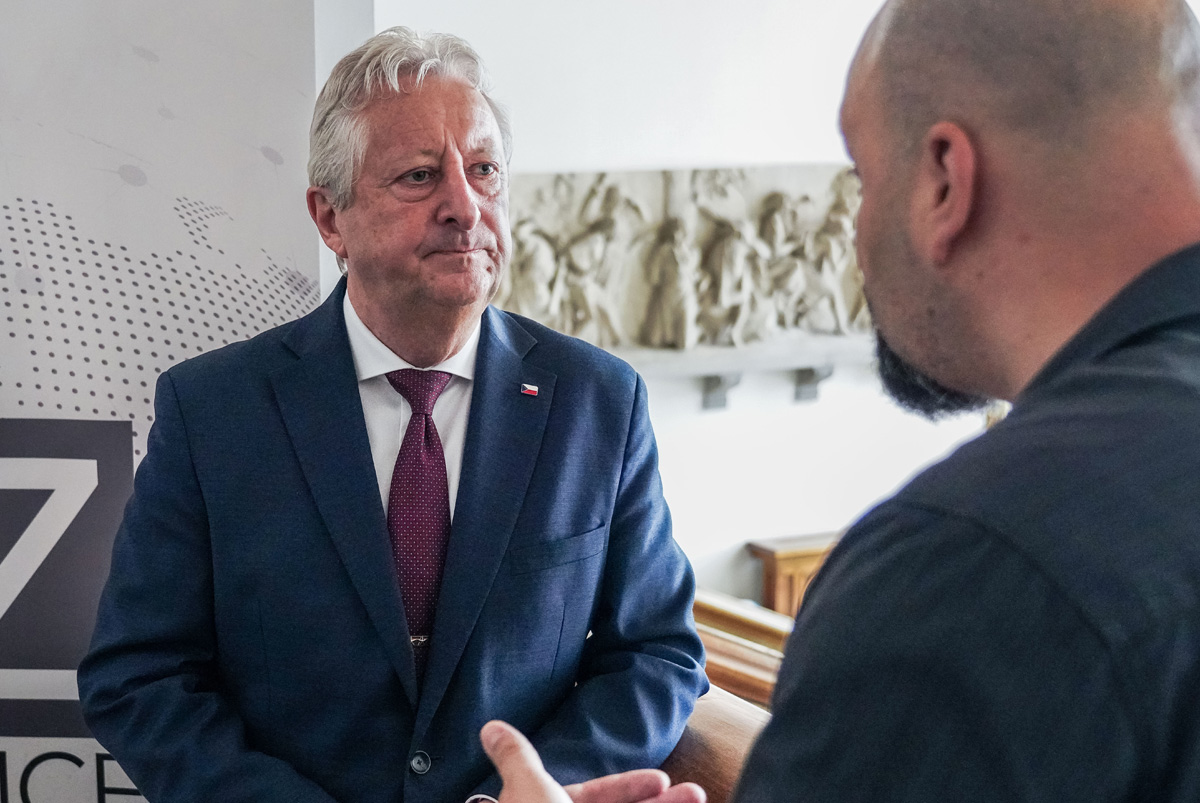
The security of the Czech Republic has long since ceased to be solely a matter for the military, the police, or other specialized state agencies. The current security environment shows that the resilience of society and the preparedness of citizens themselves also play a key role. This was precisely the topic discussed by Defense Minister Jaromír Zůna in an interview with CZ DEFENCE during the Security Conference in Pilsen, which bore the subtitle “The Citizen – the Foundation of National Security.”
Video: Jaromír Zůna: The Nation’s Security System Cannot Function Without an Informed Public / CZ DEFENCE
According to the Minister of Defense, it is essential that the Czech Republic view security not merely as a collection of separate institutions, but as a single, interconnected whole. In this context, he referred to the government’s statement, which calls for the development of a comprehensive national security system and a holistic approach to defense. This cannot be achieved without the active involvement of citizens, as the public is one of the fundamental pillars of national resilience.
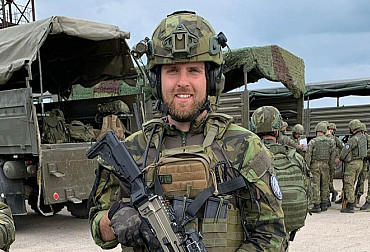
The minister also noted that Czech society’s attitude toward defense and security issues has been gradually improving in recent years. According to him, it is no longer just about defense against external military aggression, but also about internal security, crisis preparedness, societal resilience, and the state’s ability to function even under conditions of serious threats. According to Zůna, this shift is linked, among other things, to developments within NATO following the 2016 Warsaw Summit, when – after years of expeditionary operations – the themes of territory, mobility, resilience, and the defense of one’s own territory began to be emphasized once again.
A significant practical step is the establishment of the Territorial Forces Command, which was created on January 1 of this year. According to the minister, the Ministry of Defense aims to establish a territorial forces battalion in every region. These battalions are to have a smaller professional core, to which active reserves and other mobilization-registered forces will be attached. The goal is to strengthen the state’s ability to respond in the regions and to create a broader base of people who will be ready to help ensure the defense and security of the Czech Republic if necessary.
In this context, Zůna also mentioned the system of voluntary military exercises. Participants in these exercises take a military oath, thereby becoming full-fledged members of the reserve. The minister recalled his recent visit to Vyškov, where members of the active reserve took the oath alongside professional soldiers. He specifically identified the active reserve as an exceptionally important component of the entire system.
According to the Minister of Defense, it is necessary to realistically acknowledge that, given its size and population, the Czech Republic will never base its defense on mass numbers. This makes modern technology, well-trained forces, and a broad volunteer reserve of people in society all the more important. In the event of a need, this reserve can support the state’s efforts in defending the country, managing crises, and strengthening overall security.
According to Zůna, the Ministry of Defense therefore also supports projects related to civic education, safety, sports, and practical skills. He believes these activities help young people and the general public develop physical fitness, discipline, the ability to navigate the terrain, basic first aid, and other skills that were not previously viewed as particularly important in society. Today, however, it is becoming clear that precisely such knowledge can be extremely valuable in crisis situations.
The interview with Defense Minister Jaromír Zůna thus confirmed the main theme of the Pilsen conference: national security does not begin with the military, but with prepared, informed, and responsible citizens. Without them, it is impossible to build a truly resilient security system capable of responding to current and future threats.
Related