













The War in Ukraine: There Has Been No Turning Point, but Russia Is Not Winning
Russia’s invasion of Ukraine in February 2022 was a watershed moment for Europe. Even after four years of Russia’s brutal invasion, Ukraine continues to successfully resist the Russian aggressor. Today we know what we did not know for certain at the start of the war. Russia is capable of waging a long, brutal, and costly war. But it is not capable of achieving its original objectives quickly and decisively. It has not broken Ukraine. Kyiv has not fallen. The Ukrainian state has not collapsed.
This does not mean that the situation is developing favorably on its own or that there is cause for optimism. There isn’t. Russia still holds a significant portion of Ukrainian territory, continues to apply pressure on the front lines, and keeps attacking civilian infrastructure and cities. At the same time, however, it is not the case that Russia has a decisive advantage that would guarantee its victory. The war has turned into a protracted, attritional conflict in which industrial capacity, technology, logistics, and resolve are the determining factors. And in precisely such a conflict, it is no longer grand declarations that decide the outcome, but the ability to endure longer, produce more, and organize one’s own resources more effectively.
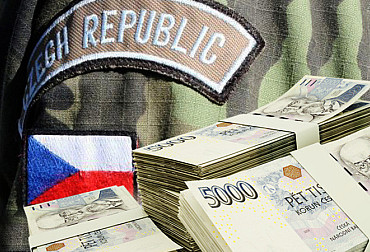
Every Czech koruna we donate to help Ukraine will come back to us in the future
That is also why it makes no sense to talk about this war as if it concerned only Ukraine. It does not. It concerns the entire European security architecture. It concerns whether the principle that borders are not changed by force will hold in Eastern Europe, or whether we will return to a world where aggression is rewarded and weakness is punished. It therefore concerns the Czech Republic as well. If the West did not support Ukraine, Russia would be closer to our borders, the security situation in Central Europe would be dramatically worse, and the cost of our own defense would be many times higher. Aid to Ukraine is therefore not an act of charity. It is an investment in our own security. And we need to say this plainly at home as well. Every koruna that helps Ukraine defend itself against Russian aggression is a koruna we won’t have to spend one day in a much worse situation to defend ourselves. This isn’t moralizing; it’s a realistic calculation. And in the Czech case, this also holds true economically, because part of the aid flows through our defense industry, strengthening its capabilities, production, and technological development. Security and the economy are not at odds here. On the contrary, they are closely intertwined.
Two Illusions That Don't Hold True
Likewise, we must reject two illusions that keep cropping up in the debate. The first illusion is that there is some quick, simple, and just solution. There isn’t. This war will eventually end through negotiations – there’s no doubt about that. But negotiations won’t happen simply because we want them to. They will take place only when Russia calculates that continuing the war is less advantageous for it than reaching an agreement. And that will not happen on its own. It will happen only if Ukraine remains militarily capable, economically functional, and politically supported by the West.
The second illusion is the belief in a single miracle solution that will decide the war. At one point it was supposed to be tanks, then long-range missiles, and then aircraft. None of these is sufficient on its own. In modern warfare, a single weapon does not decide the outcome. It is the totality of factors that matters: sufficient ammunition, air defense, the ability to disrupt the enemy’s logistics and rear areas, industrial production, technological adaptation, and political will. Anyone waiting for a single decisive moment has failed to understand the nature of this war.
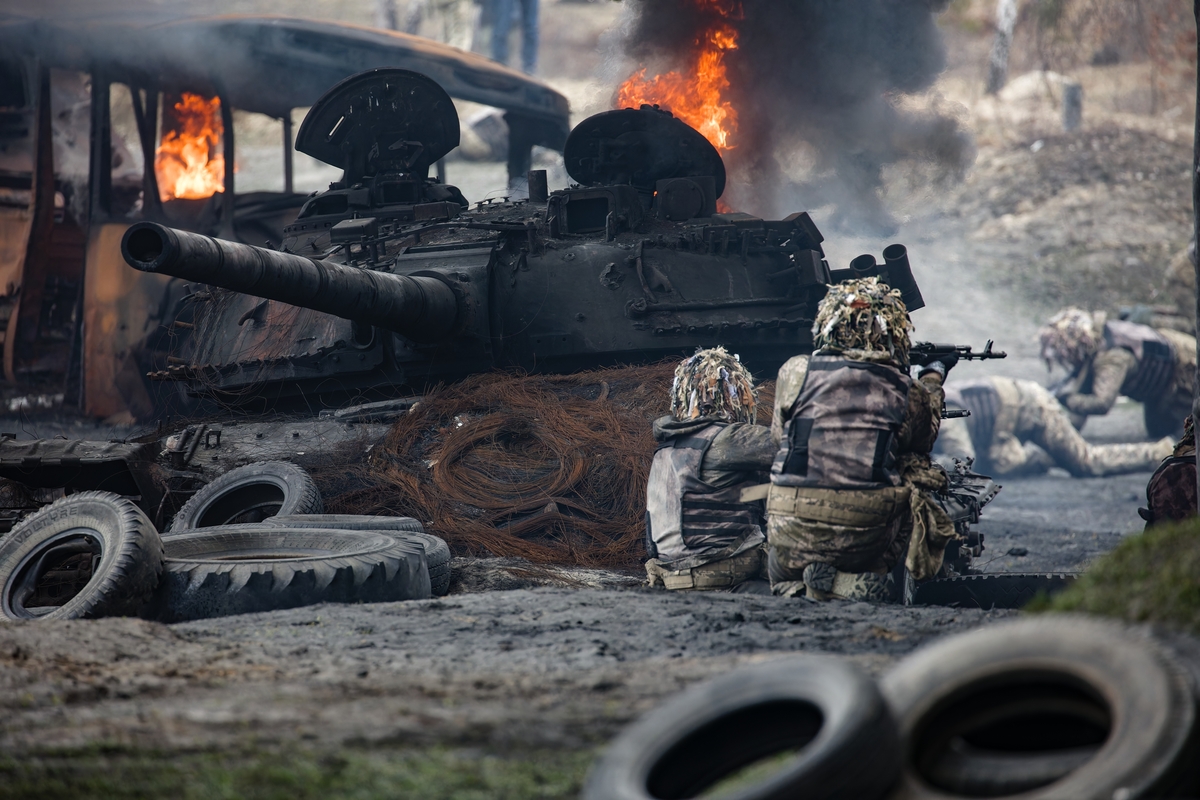
Meanwhile, Ukraine is demonstrating its ability to adapt. It can quickly adopt new technologies, change its tactics, and make the most of what it has at its disposal. Russia, on the other hand, is showing that it does not care about human casualties or the devastation of its own resources, as long as it can maintain the pressure. That is precisely why it is so important for the West not to succumb to fatigue. Fatigue is humanly understandable, but strategically worthless. If we were to scale back our aid, we would not hasten peace. We would only improve the Kremlin’s negotiating position.
Lessons for Europe and the Czech Republic
Europe must also learn another lesson from this war. Security does not come for free, and it cannot be outsourced solely to the United States in the long term. The American presence and American strength remain crucial to European security, and it is still impossible to do without the United States today. But that does not mean Europe can continue to pretend that defense concerns it only marginally. It must produce more, invest more, procure more quickly, and better integrate the government, the military, industry, and research. Those who want security must be willing to pay for it. Those who want to live in a safe and prosperous region cannot simultaneously and systematically underestimate the importance of defense.
For us, the main lesson of the war should be to definitively dispel any illusions about Russia and the notion that peace in Europe is a given. And thanks to Ukraine, we see that Russia can be stopped if there is sufficient will, capability, and resources to stand up to it – but only through strength, deterrence, and long-term perseverance.
That is the main lesson for us today as well. Ukraine is fighting first and foremost for itself, but the outcome of this war will have a direct impact on our future as well. The sooner Europe stops romanticizing the situation and begins to act accordingly, the better.