















The Russian Threat, NATO, and Czech Defense: Era of Delays Is Over
Prime Minister Andrej Babiš’s statement that the Czech Republic will likely fail to meet its 2 percent NATO defense spending commitment this year has sparked a debate that goes far beyond the dispute over budget methodology. At a time of ongoing Russian aggression against Ukraine, growing pressure from the United States on its European allies, and a new Alliance commitment aimed at significantly higher defense spending, the issue of defense has become a test of the Czech Republic’s credibility. It is not just about a percentage of GDP. It is about the state’s ability to hold its own in a security environment that has fundamentally changed over the past few years.
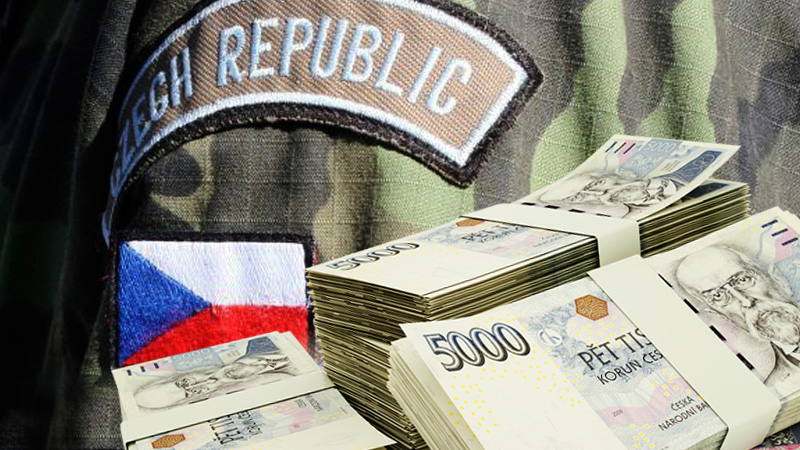
In an interview with the Financial Times, Prime Minister Andrej Babiš stated that the Czech Republic will likely fail to meet its long-term NATO commitment to spend 2 percent of GDP on defense this year. At the same time, he declared his support for NATO’s new target, which calls for spending 3.5% of GDP on defense and an additional 1.5% of GDP on security-related investments by 2035.
According to information published by the Czech media, the government reports defense spending exceeding two percent of GDP, while preliminary Alliance assessments suggest that approximately 1.78% of GDP could be recognized. The dispute, therefore, is not over the spending itself, but over its recognition according to Alliance methodology.
This debate comes at a time when NATO is undergoing one of its greatest transformations since the end of the Cold War. Following the 2025 summit in The Hague, the allies committed to gradually moving toward total spending of five percent of GDP, with 3.5% allocated to direct defense spending and 1.5% to investments in infrastructure, resilience, cybersecurity, and other areas related to national security.
At the same time, the war in Ukraine continues, and the Alliance continues to identify Russia as the most significant and direct threat to the security of the Euro-Atlantic area. The Czech Republic’s 2023 Defense Strategy also identifies Russia as the most serious security threat to the Czech Republic.
The debate over defense spending is often reduced to the question of whether the state has met or failed to meet a certain percentage of GDP. In reality, however, NATO is placing increasing emphasis on specific military capabilities. The budget amount alone does not indicate whether a country has sufficient ammunition, logistical capabilities, air defense, ready reserves, or the ability to conduct military operations over the long term.
In this regard, Prime Minister Babiš is right when he points out that percentages alone do not automatically increase defense capabilities. At the same time, however, it is true that the necessary capabilities cannot be built without long-term investment. Defense is an area where the consequences of political decisions become apparent only after several years. Cutting investment today could mean a shortage of capabilities in five or ten years.
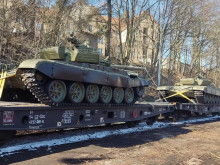
This fact is particularly important for the Czech Republic. The Czech Armed Forces are undergoing extensive modernization, including the acquisition of F-35 aircraft, CV90 infantry fighting vehicles, Leopard tanks, new air defense systems, and other technologies. Alongside these acquisitions, however, there are less visible but equally important areas: ammunition stocks, logistics, maintenance capabilities, cybersecurity, military healthcare, and the protection of critical infrastructure.
The war in Ukraine has shown that modern conflict is not merely a clash of armies, but also a clash of logistical and industrial capabilities. Countries that are unable to produce ammunition, repair equipment, and replace losses over the long term gradually lose their ability to conduct combat operations, regardless of their initial level of armaments.
In a potential conflict with Russia, the Czech Republic would likely not be the main theater of operations. However, its role would be exceptionally important. Czech territory represents a key logistical hub between Western Europe and NATO’s eastern flank. It is precisely the ability to receive, deploy, and support allied forces that could become one of the decisive factors in the Alliance’s defense.
Failure to meet defense commitments is therefore not merely a reputational issue. It also has concrete strategic consequences. A country that consistently fails to meet agreed-upon targets has less political clout in negotiations within the Alliance. At the same time, it may face greater pressure from the United States, which is increasingly openly demanding that European countries assume a greater share of responsibility for their own defense.
The greatest risk of the current debate is that it will be reduced to a political dispute. The security of the Czech Republic is not a matter for a single government or a single term in office. It is the result of long-term investments that extend beyond the horizon of ordinary politics.
The Russian invasion of Ukraine has definitively put an end to the notion that large-scale conventional war in Europe is a thing of the past. It has also shown that deterrence depends not only on the number of soldiers or tanks, but also on the credibility of political commitments.
Three basic scenarios can be expected in the coming years. The first is a gradual increase in defense spending and the development of capabilities commensurate with the Alliance’s new objectives. The second is a situation in which political declarations outpace the actual development of capabilities. The third, least favorable scenario envisions a security crisis on NATO’s eastern flank before Europe addresses its long-standing defense shortcomings.
It is precisely this last scenario that shows why the debate on defense spending is important. It is not about accounting. It is about the ability to respond to a security crisis at a time when there will be no room for delay.
The Czech Republic today is not facing the question of whether it can afford to invest more in defense. The more important question is whether it can afford to invest slowly.
The current government has a legitimate right to demand the effective use of public funds and to highlight the gap between spending and actual capabilities. At the same time, however, it bears the responsibility for ensuring that budgetary arguments do not overshadow strategic reality.
Since its inception, the Alliance has been founded on the principle of collective defense and trust among allies. However, trust does not arise from political statements. It arises from long-term predictability, the fulfillment of commitments, and the ability to shoulder one’s share of responsibility.
In the event of a future security crisis, the deciding factor will not be whether the Czech Republic allocated 1.78 or 2.06 percent of its GDP. What will matter is whether it possesses the capabilities to protect its own territory, support its allies, and contribute to the Alliance’s defense. It is precisely in this regard that NATO’s defense commitments represent much more than a budgetary indicator. They are a measure of a nation’s readiness for a world that is becoming increasingly unpredictable.