















Skyfox as a Drone Hunter
The current conflicts in Ukraine and the Middle East have led to the widespread use of unmanned aerial vehicles in attacks on critical infrastructure as well as densely populated urban areas. Air forces are seeking to counter this trend not only by changing the tactics for deploying their conventional aircraft but also by adjusting the composition of their armaments to ensure the effective fulfillment of their assigned missions.
Inexpensive, single-use unmanned aerial vehicles capable of long-range strikes – commonly referred to as OWA (One-Way Attack) – are characterized by a small radar cross-section, speeds often of only around 180 km/h, and flight at relatively low altitudes above the ground. Deploying them in large numbers overwhelms air defense systems and significantly reduces the likelihood of their complete detection and elimination. At the same time, for economic reasons, no country is able to cover its entire territory with ground-based air defense across all layers. Solutions are therefore being sought that will enable a flexible response to the current situation. One such solution is to equip standard aircraft – which can be rapidly redeployed over a vast area – with cost-effective systems and armaments.
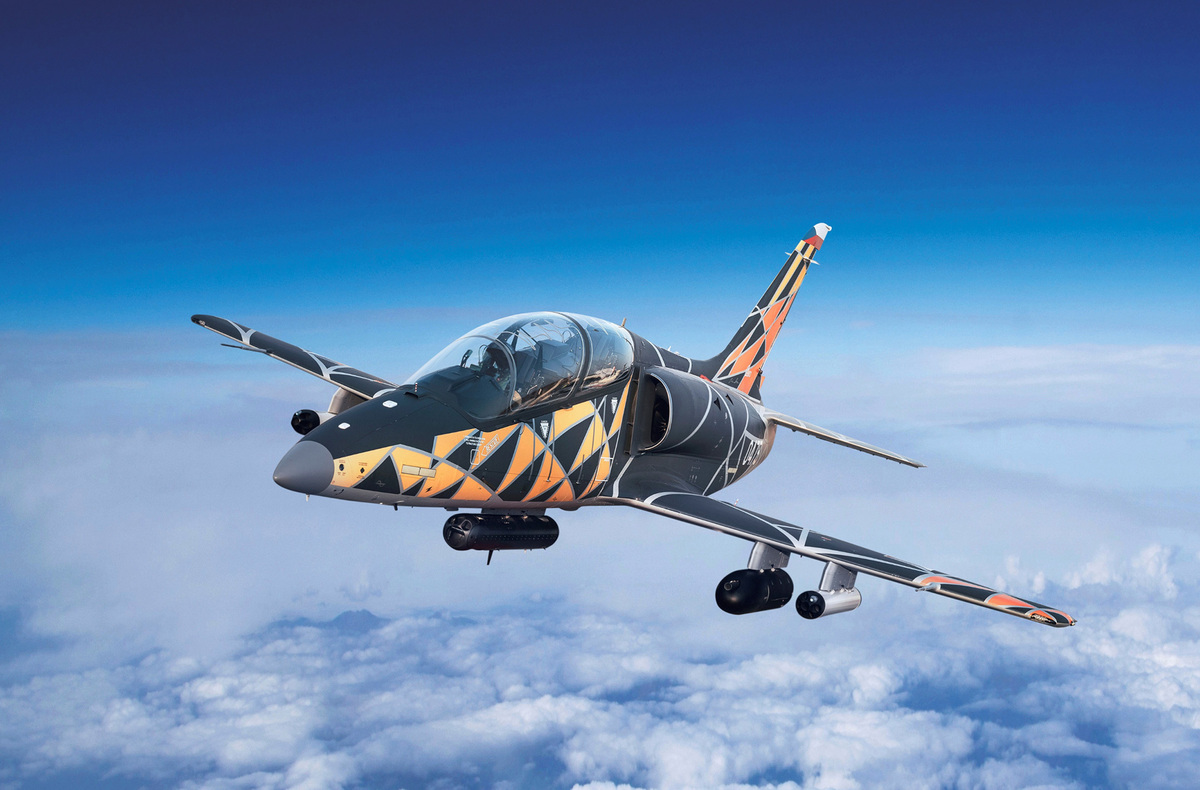
Many air forces and leading aircraft manufacturers are well aware that the long-term deployment of supersonic combat aircraft would significantly drain their capacity to perform other missions in which they play an irreplaceable role. The solution, therefore, is to develop a multi-tiered system in which, in addition to ground-based systems and combat aircraft, appropriately modified aircraft from other categories would also have a place. One such category consists of trainer and light combat aircraft, which are suitable for operations over their own or allied territory, where they can intercept enemy drones that penetrate the main line of defense. The structural robustness, high operational readiness, and maneuverability of Aero Vodochody Aerospace’s latest product, the L-39 Skyfox, also make it ideally suited for this purpose.
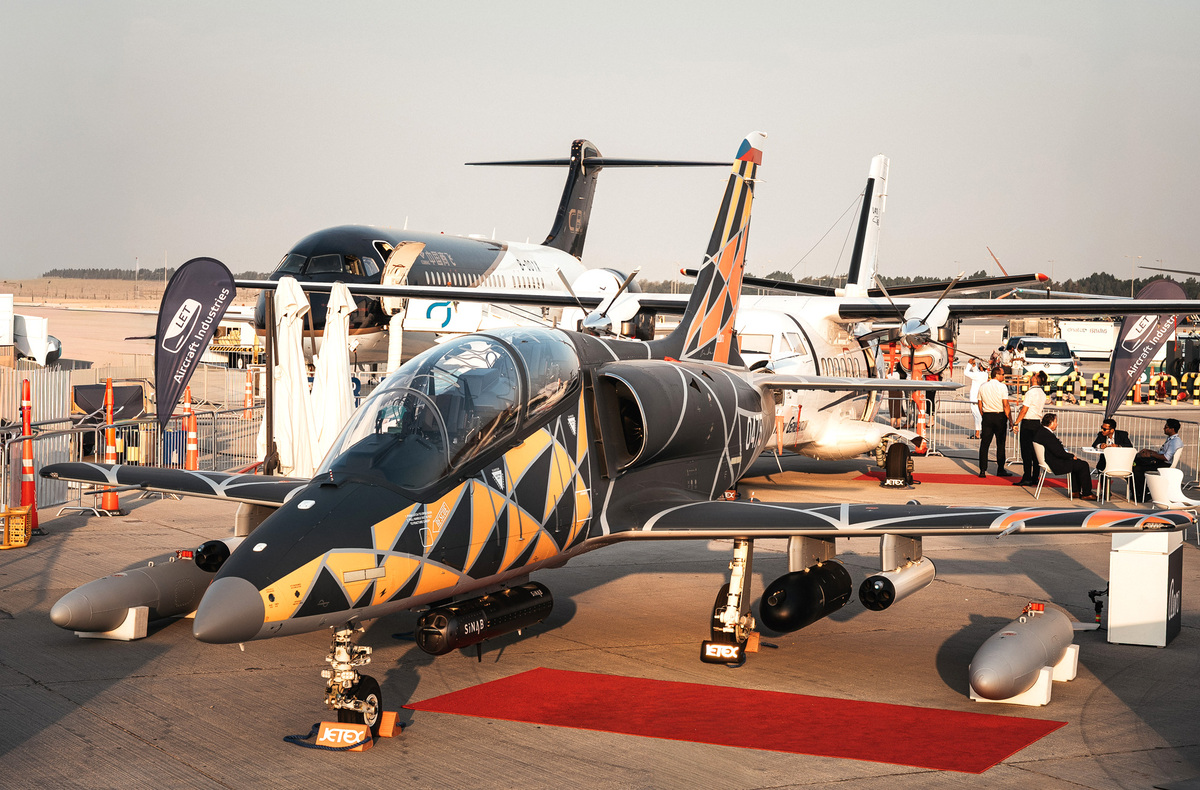
“Based on information and discussions with military experts, we began piecing together a picture of the possible tactics for deploying the Skyfox and considering which elements are important for it to become an effective tool for destroying drones. In other words, the aim is to make use of its existing strengths, including long endurance thanks to the integral fuel tank in the wing and the efficiency of the Williams FJ44-4M jet engine, operating costs comparable to those of turboprop aircraft – around 2,000 euros per flight hour, compared to approximately 20,000 euros for F-16-class aircraft – and open-architecture avionics that allow for the relatively simple implementation of new functions and systems,” explains Petr Jinda, Executive Vice President and Chief Technical Officer of Aero Vodochody Aerospace. He adds: “Another important benefit is the L-39’s ability to operate from unpaved surfaces, such as grass airfields at flying clubs, which means operations can be dispersed to cover the widest possible area while simultaneously reducing the risk of them being taken out by a single enemy strike. We have therefore developed a conversion kit whose core components are an electro-optical pod and relatively inexpensive laser-guided missiles.” By way of comparison: their unit price is in the tens of thousands of euros, whereas conventional short-range anti-aircraft guided missiles cost hundreds of thousands of euros.
However, for the existing Skyfox to operate in live combat, it must be equipped with an advanced IFF system and a high-capacity data link – whether it is a data link operating in one of the standard Alliance formats, commercial Starlink, or other encrypted communication systems suitable for exchanging data between the aircraft and other airborne or ground-based platforms, such as command and control centers.
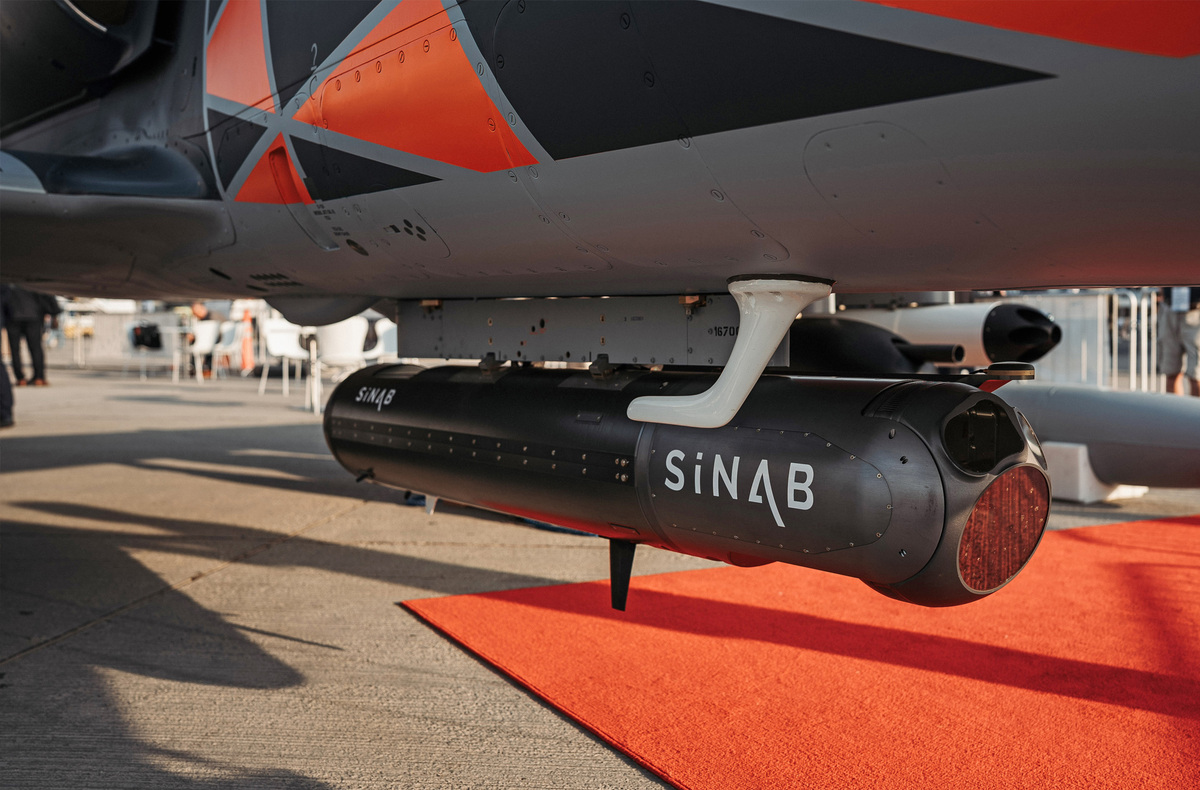
The primary sensor for detecting, identifying, tracking, and guiding the aircraft’s weapons to a target is the compact Phoenix electro-optical pod from the Australian company SiNAB, which can be mounted on any of the five hardpoints under the Skyfox’s wings and fuselage. It is a state-of-the-art system controlled by the pilot via an intuitive 8-inch touchscreen tablet. In the future, however, other solutions may also be utilized; for example, the upcoming reconnaissance version of the L-39 will be equipped with a more powerful sensor head. The capabilities of electro-optical systems have advanced significantly in recent years, particularly in the area of software, where machine image processing with advanced search algorithms based on artificial intelligence is becoming standard.
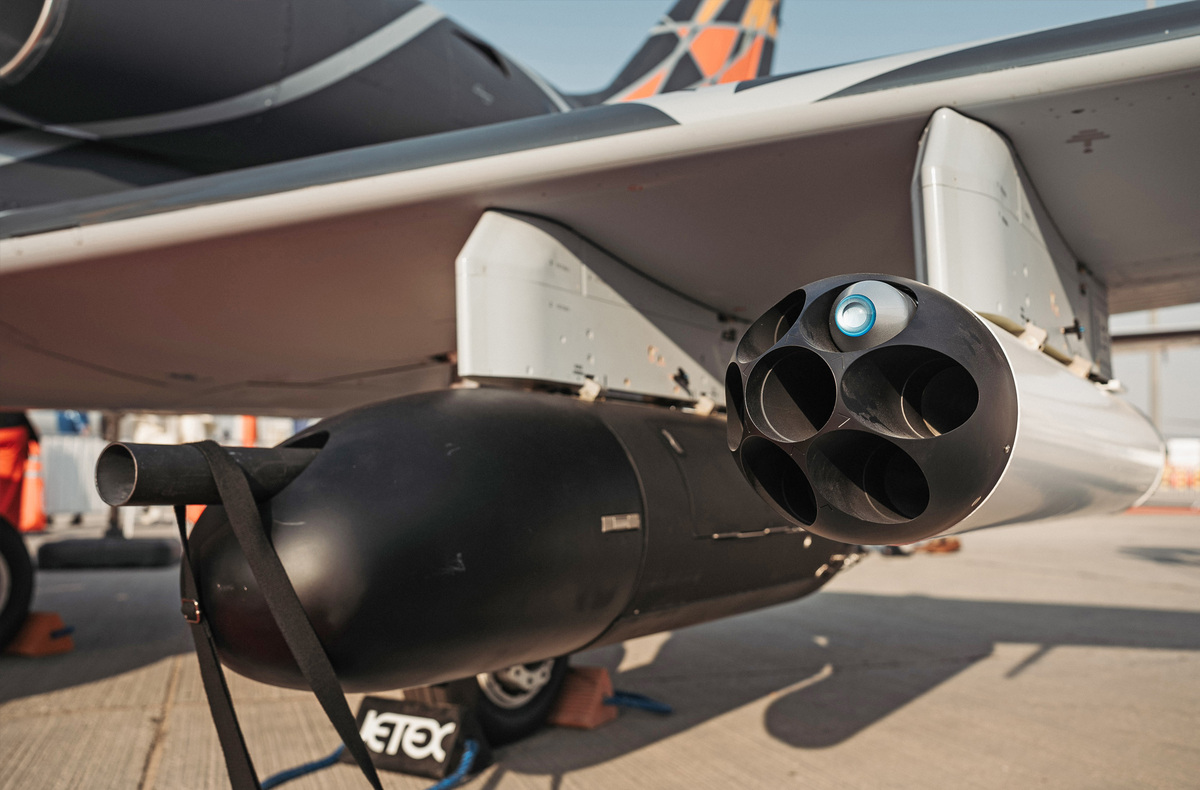
The aircraft’s primary armament for counter-drone missions will consist of 70 mm FZ275 LGR laser-guided rockets. These are manufactured by the Belgian subsidiary of Thales and have a range of more than 8 km. If the customer so desires, a conversion kit being developed by Aerem allows for the selection of similar Hydra 70 rockets equipped with the APKWS II laser guidance section from BAE Systems, which are also found, among other places, in the armament of the Czech Air Force’s H-1 helicopters.
In its basic configuration, the aircraft is expected to be armed with 14 rockets, with the potential to carry up to 28 rockets in the future. According to analyses, this appears to be a sufficient number, given that it will be used to destroy unmanned aerial vehicles that evade the main air defense lines. The L-39 Skyfox should be effective against targets moving at speeds ranging from approximately 150 to 600 km/h and at altitudes of up to 8,000 m. These could include drones of various classes, as well as certain types of cruise missiles.
An unquestionable advantage is that the kit is designed to be easily installed on any Skyfox in a training configuration with two pylons. Since the aircraft is structurally designed from the outset to carry five pylons, the modification is minimally invasive, interfering with its systems only to the extent absolutely necessary. The aircraft thus retains its full training capabilities; if necessary, the appropriate equipment can be quickly mounted, and once the mission is complete, it can be easily removed, returning the aircraft to its original training role.
“The conversion kit will be ready for operational use as early as the end of this year. The development risk is low in this case, since it consists of components that have already been introduced into mass production,” notes Petr Jinda. The kit can, of course, be expanded in the future as needed; examples include a pod with a 12.7 mm machine gun, a decoy launcher, an AESA radar pod, or electronic warfare equipment. Thanks to its design, the suite can also be integrated onto L-159 aircraft. This synergy could therefore be of interest to the Czech Republic, which operates both Skyfox and Alka aircraft; in the event of a crisis, the country could thereby strengthen its defenses against attacks by unmanned aerial vehicles.