















Training Isn't Enough. Austria Brings Back Mandatory Reserve Exercises
Mandatory military service is often viewed not only as a means of increasing the current number of soldiers, but also as a way to create a broad base of reservists whom the state can call up in the event of a military conflict. Compared to people who have never served in the military, they should be significantly better prepared—they have completed basic training and, as a rule, have also acquired a certain specialization during their service. Upon returning to civilian life, however, their military readiness gradually declines. They lose the skills they have acquired as well as their physical fitness, and at the same time, they fall behind technological developments and new procedures that the military has implemented in the meantime.
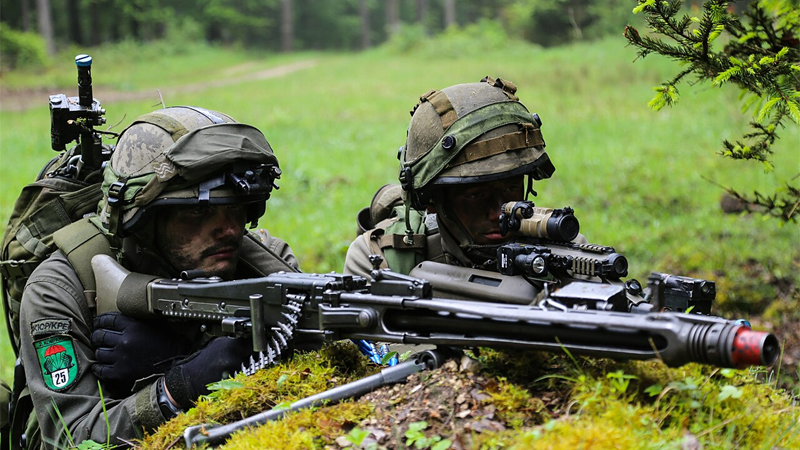
This process can be reversed—or at least slowed down—through regular training exercises that former soldiers undergo after completing their basic service. As part of a broader reform of mandatory military service, neighboring Austria has also decided to reintroduce these exercises. Military service there has always been relatively short compared to that in the former Czechoslovakia. Even in its longest form, following its introduction in 1955, it lasted only nine months. In the 1970s, it was shortened to six months, supplemented by an additional 60 days of military training. It was precisely these mandatory follow-up training sessions that were abolished in 2006. Former soldiers could then voluntarily join the militia, which is conceptually similar to the Czech active reserve and includes regular military exercises. However, if they were not interested in the militia, their connection with the army ended.
Neutrality, Demographics, and a Shortage of Reservists
At present, however, this system—designed for a less turbulent era—is no longer sufficient. Austria is a militarily neutral country and has never become a member of the North Atlantic Treaty Organization. It is therefore not bound by the alliance’s defense spending requirements; at the same time, however, it cannot rely on NATO’s collective defense system to defend its own territory. The need to ensure sufficient domestic defense capabilities therefore resonates strongly in the country—and without an adequate number of soldiers, this is not possible.
The military states that it would need nearly 3,500 new militia members annually, but it has only been able to meet approximately 60 to 70 percent of this need. The situation is even worse for non-commissioned officers in the militia, where only about 35% of the required number is recruited each year, while their average age continues to rise. Demographic trends also do not favor the military. The number of young citizens subject to conscription is declining, and no significant turnaround is expected in the foreseeable future. Consequently, pressure is mounting for the military to make better use of personnel who have already been trained and to maintain their skills even after they return to civilian life.
Six Months of Service, Three Months of Training
The broad center-right coalition currently governing Austria aims to push through the reform so that it can take effect on January 1, 2027. If the bill passes parliament, mandatory military service will operate under the 6 + 3 model. Soldiers will continue to complete the standard six months of basic service, but this will be supplemented by an additional three months of mandatory training. Part of this will consist of so-called “Truppenübungen”—unit exercises immediately following basic military service—and part will consist of so-called “Milizübungen,” which reservists will complete over the course of the following ten years. The dates of these exercises should be known up to four years in advance so that soldiers can better coordinate them with their work and family lives.
The government is thus trying to accommodate young people, only a minority of whom (36 percent) support the changes and who point out the complications that military exercises can cause in their daily lives. At the same time, it is responding to employers’ concerns about repeated absences by employees, particularly those who are difficult to replace. The aim is to limit the practical impacts of the reform and prevent significant public resistance, which could complicate its implementation.