
















Meeting of the Century: Aero Ab-11 and L-39 Skyfox at Kbely
Exactly one hundred years after the legendary Aero Ab-11 returned from its promotional flight, the Kbely Aviation Museum hosted a remarkable gathering of two aircraft separated by an entire century of technological development but united by the same mission – to represent Czech aviation around the world. Next to the carefully restored historic biplane stood the modern L-39 Skyfox jet trainer, which – just a few days ago, much like its predecessor years ago – returned from an extensive promotional tour.
On July 23, 1926, the Aero Ab-11 returned to Kbely Airport after an extraordinary promotional flight covering more than 15,000 kilometers. During nearly ninety-two hours in the air, the crew – consisting of pilot Vilém Stanovský and mechanic František Šimek – visited three continents and twenty-three countries. The goal was not only to cover the distance but, above all, to introduce the then-young Czechoslovak aviation industry to foreign partners and to demonstrate that the newly established republic was capable of developing and manufacturing cutting-edge aviation technology. One hundred years later, this same story was commemorated by a symbolic meeting between the historic aircraft and its modern successor – the L-39 Skyfox.
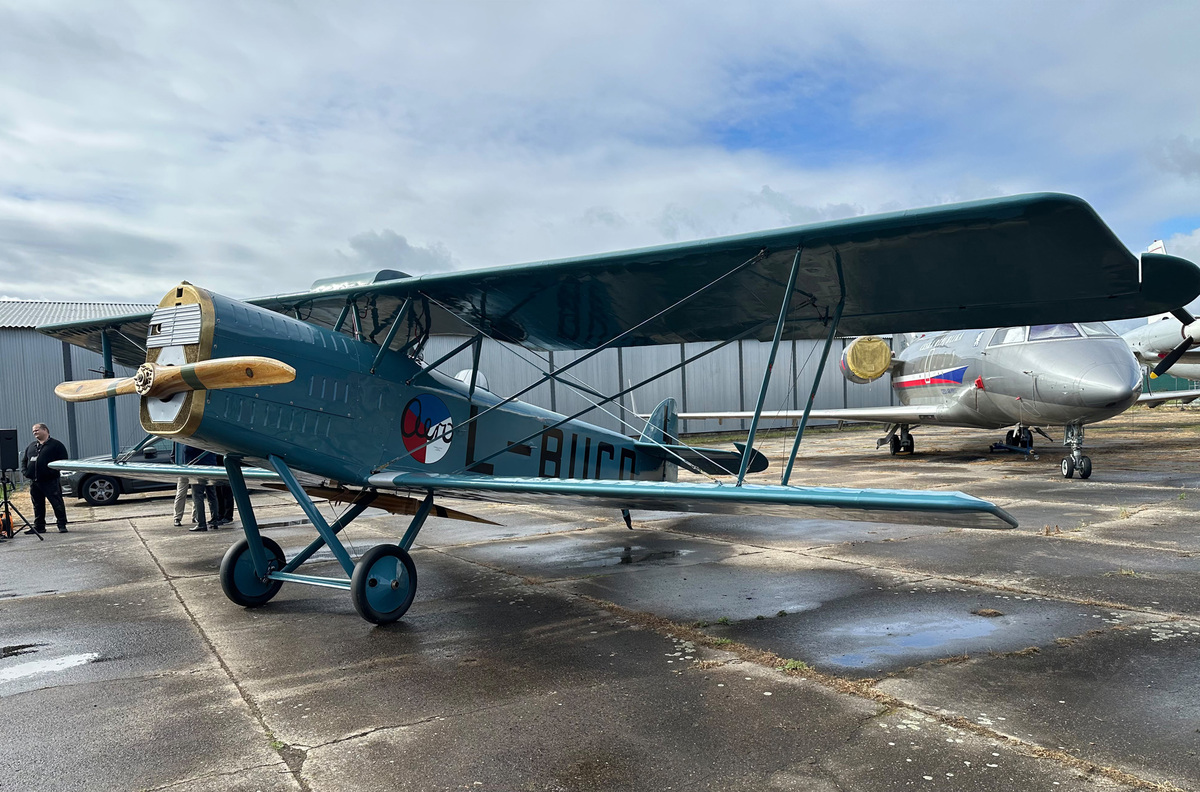
Brigadier General Aleš Knížek, director of the Military History Institute in Prague, noted that the promotional flight at that time represented an extraordinary feat not only in terms of piloting but also in terms of organization. Czechoslovak diplomatic missions along the entire route were prepared to assist the crew with logistics, refueling, and technical support. “Our Aero Ab-11 aircraft undertook a promotional flight that was unprecedented at the time. It was such an exceptional event that even the staff at Czechoslovak diplomatic missions abroad were on standby. Commercial and military attachés contacted their counterparts in each country, and Vilém Stanovský demonstrated the aircraft to them so they could see what the Czechoslovak school of aircraft design was capable of,” said Brigadier General Aleš Knížek. Restorers at the Military History Institute have devoted the last two years of intensive work to this historic Aero Ab-11 aircraft. This was not merely a matter of cosmetic repairs. The goal was to restore the aircraft to the condition in which it took off on its famous journey in May 1926.
According to General Knížek, the original restoration from the 1980s laid a solid foundation, but the current restoration work went much further. “What was done in the last century was an incredibly good foundation. But now the aircraft has been disassembled again, prepared, fitted with a new radiator, new engine parts, a new coat of paint, and the fuselage structure has been reinforced. It’s magnificent; it’s a joy to look at,” he told CZ DEFENCE. At the same time, however, he recalled the courage of the original crew. “The courage to get in there and fly around the world back then – that’s really something,” added Knížek. The historic flight took place at a time when neither satellite navigation nor radio communication as we know it today existed. The crew had to rely on maps, a compass, and navigating by the landscape. “Today we’re used to GPS or cell phones. Back then, there were only maps and landmarks. In Europe, radio beacons helped, but in Africa it was a completely different story. They relied on a compass, and wherever our diplomatic missions were located, they were tasked with providing the crew with maximum support. For the rest of the route, everything was up to Captain Stanovský and mechanic Šimek,” explained Aleš Knížek.

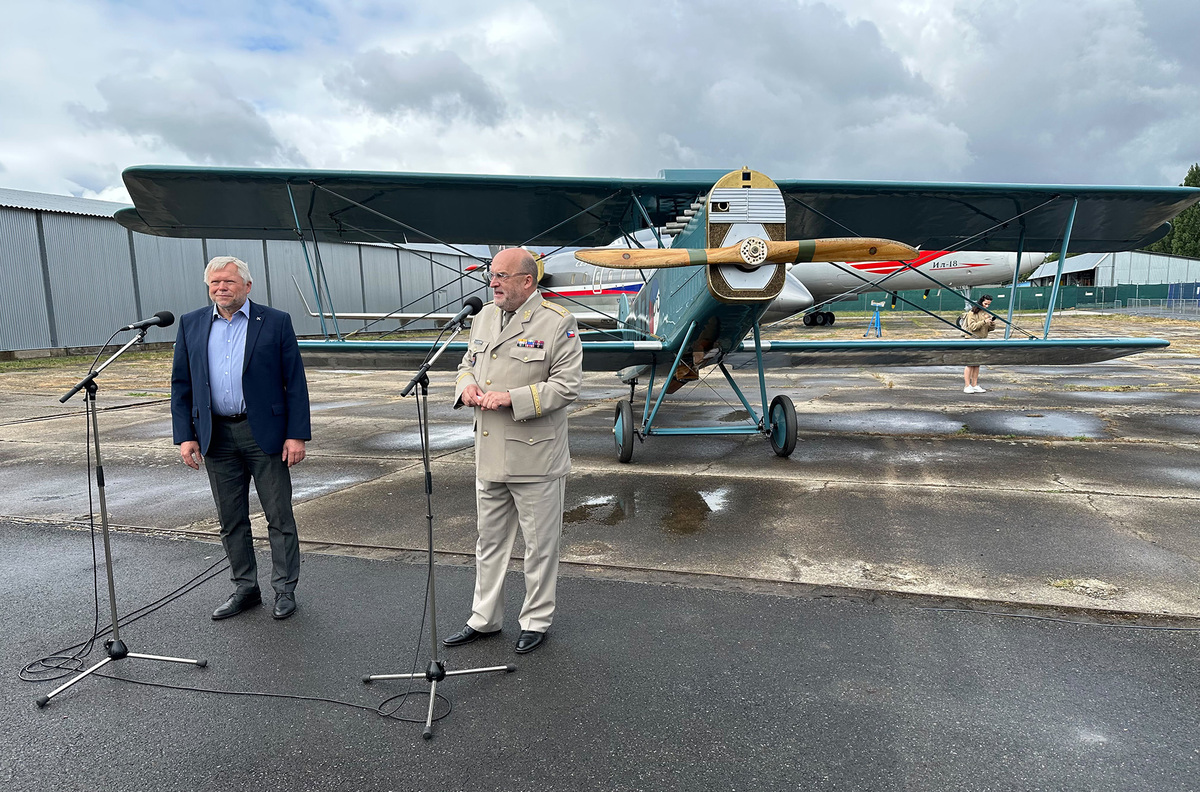
One of the interesting features of the aircraft on display is the spare propeller suspended beneath the fuselage. Yet it was more than just an interesting detail. “Wooden propellers had a limited lifespan. You could refuel or add oil, and you could repair the engine, but no one could fix a warped propeller while in flight. That’s why a spare propeller was part of the aircraft’s equipment,” explained Knížek. Although the historic aircraft is technically operational today following an engine test, it will never take to the skies again. “It’s the only surviving example in the world. If you have just one such unique artifact, you don’t let it take to the skies. It’s too valuable,” emphasized the director of the Military History Institute during a press conference.
Next to the restored biplane landed a modern L-39 Skyfox jet aircraft, which had recently returned from a promotional tour lasting several months and covering more than 23,000 kilometers. Just like its predecessor a century ago, it showcased Czech aviation to foreign partners and potential customers. Jan Chvojka, marketing director at Aero, noted that the two aircraft share more than just a manufacturer’s brand. “A hundred years of technological development separate the Ab-11 and the Skyfox, but the essence of a good aircraft remains the same – it must be safe, reliable, and capable of fulfilling its mission even under demanding conditions. Both aircraft are proof that Czech aviation know-how has a rich history and a strong future,” said Jan Chvojka. Jaromír Lang, chief designer of the L-39NG at Aero Vodochody, expanded on this idea, emphasizing the importance of maintaining domestic aircraft production. “The fact that the Czech Republic has an aircraft manufacturing industry is extremely important. We have a global reputation as an industrially advanced country with excellent engineering and aviation manufacturing. The Aero name is known around the world, and it really warms the heart when you meet pilots – say, in America – and they tell you they flew the L-39. That aircraft spreads Aero’s good name across the globe,” said Lang.
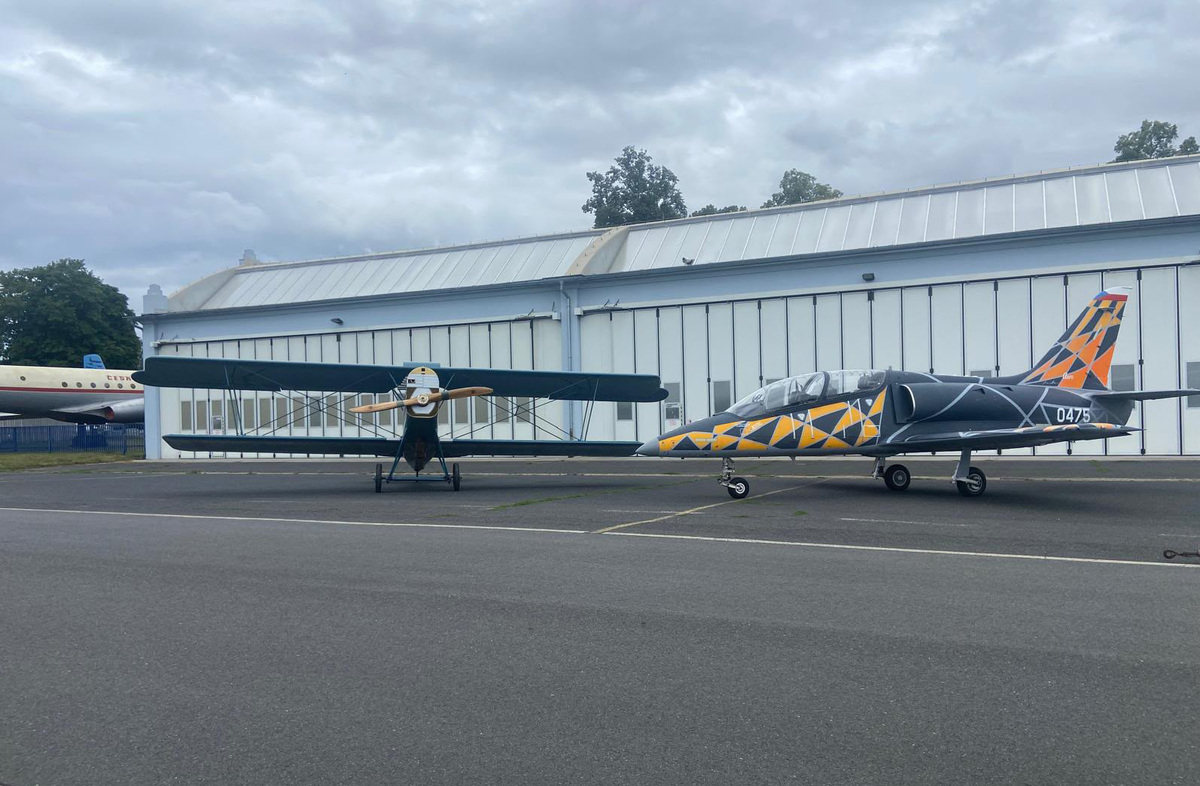
The event followed on from the recently concluded Farnborough International Airshow. According to Jaromír Lang, the event is not just about showcasing products but is, above all, a place where long-term partnerships are forged. “Twelve years ago in Farnborough, we officially announced the launch of the L-39NG project. Today, the aircraft is being manufactured, sold, and flown. We use the airshow mainly for meetings with partners and suppliers, but of course we also keep an eye on new technologies and developments among our competitors,” said Lang.
Aero is currently devoting significant attention to future requirements for training fifth-generation pilots. The Czech Republic is preparing to introduce F-35 aircraft, and the Skyfox is expected to play a significant role in training their pilots. “The Skyfox was originally designed primarily for training F-16 pilots. We have gradually adapted it for the Gripen as well, and of course we are aware of the arrival of the F-35. That is why we are preparing further modernization projects that will bring the aircraft in line with the specific training requirements for F-35 pilots,” said Chief Designer Lang. According to him, the changes will primarily concern the avionics. “Today, the aircraft has two multifunction displays, which was a modern solution at the time of its development. However, new fighter jets use large-screen displays and helmet-mounted display systems. That is precisely the path we are now exploring. If it proves to be technically feasible, we will definitely pursue it.” Lang also confirmed that Lockheed Martin considers the Skyfox a suitable platform for training future pilots. “Such discussions have taken place. Lockheed Martin, of course, hasn’t made any official statements to that effect, but they have confirmed that the L-39 is a good platform on which to conduct this training,” he said.
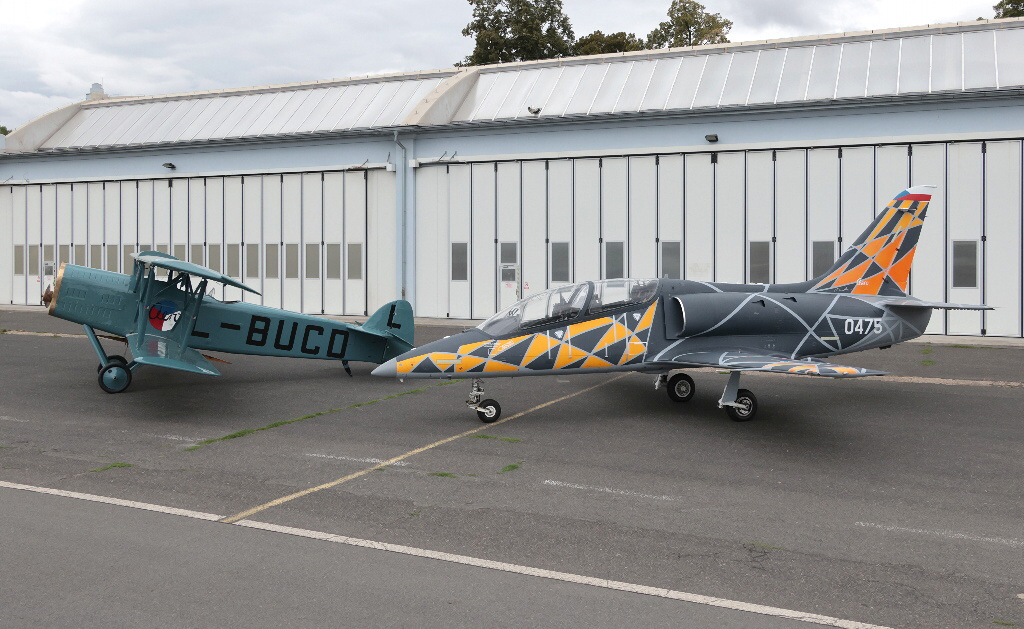
The symbolic connection between the two aircraft confirms that, just as the AERO Ab-11 did a century ago, today’s Skyfox represents a continuation of the Czech aviation tradition. It was precisely this continuity that was the main message of the entire “Meeting of the Century.” In one place, two aircraft – created in different historical eras but sharing the same mission – met symbolically: to showcase to the world the capabilities of Czech designers, manufacturers, and pilots. A century ago, the Aero Ab-11 opened the doors to the world for Czechoslovak aviation. Today, the L-39 Skyfox carries on this tradition and confirms that the Czech aviation industry remains a respected part of global aviation even in the 21st century.