











Lt. Col. Tomáš Suchý: The Leopard 2A4 Bridges the Gap Between the T-72 and the Leopard 2A8
The 73rd Tank Battalion is undergoing the most significant transformation in its modern history. The re-equipment with Leopard 2A4 tanks and the prospect of future Leopard 2A8 tanks signify not only a change in equipment, but also a shift in mindset, tactics, logistics, and crew training. Lieutenant Colonel Tomáš Suchý, commander of the 73rd Tank Battalion, discusses the role tank units will play on the modern battlefield, which is shaped by drones, electronic warfare, and digital command systems.
Video: Lt. Col. Tomáš Suchý: The Leopard 2A4 Bridges the Gap Between the T-72 and the Leopard 2A8 / CZ DEFENCE
To start off, I’ll ask a very simple question, since we’ve been discussing this quite often on our show lately. How would you define the role of a tank battalion on the modern battlefield, particularly in light of drones, various sensors, and other factors?
You already mentioned this in your question. It’s discussed quite often, and the war in Ukraine, in particular, shows us that drones play a crucial role on the battlefield. The role of a tank battalion or tank force on the battlefield has not fundamentally changed. It remains one of the key players capable of breaking through enemy defenses, and that is precisely what it is used for. However, a tank battalion as such will never operate alone on the battlefield. We still have key players such as mechanized infantry, air defense, artillery, and logistics. The tank battalion is one component of these forces and units that play a vital role on the modern battlefield.
Are the tactics changing in any way?
Tactics are certainly changing, and as new elements – which were not previously present on the battlefield – are introduced, they must change fundamentally. Whether in response to drones, electronic warfare, or intelligence coming in from the battlefield. Tactics are changing most fundamentally in response to drones.
Speaking specifically about drones, tell me how tank protection has changed, for example. When I saw Israeli tanks in Israel with anti-drone grilles on top, for instance, that probably isn’t the intended way to protect tanks.
If you look, for example, at the Russia–Ukraine war, in the early stages of protecting tanks against drones, improvised devices were naturally used – such as the cages you mentioned and all the other things that, in military terms, were attached to the tanks. In any case, protection against drones is a crucial issue today, because heavy armored vehicles are large, visible, and the crew inside is vulnerable to drones. However, a fundamental requirement for defending tanks against drones is a change in how those tanks are moved and used. If you look back at the start of the Russia-Ukraine war, the Russian army deployed heavy mechanized and tank units in large numbers and essentially relied on outdated tactics. I would focus more on the tactics of the Ukrainian army, which today uses tank and mechanized units as a sort of firefighting force. They keep them out of the operational range of drones, and only when a section of the front line is truly “on fire” do they deploy heavy mechanized and tank units to put out that fire. But the role of tank units remains unchanged. They are still the firepower we need to either break through the enemy’s defenses or put out any fire that breaks out on the front line.
Would you say you're learning from the situation in Ukraine?
We are learning, and it would be a mistake not to learn. Because whether we like it or not, once the Russia-Ukraine conflict ends, the Ukrainian army will have the most extensive expertise in the conduct of military operations in the world today. So if we didn’t learn, we’d be making a big mistake.
Are there any protective measures or camouflage techniques to reduce the heat signature, protect electronic communications, and so on?
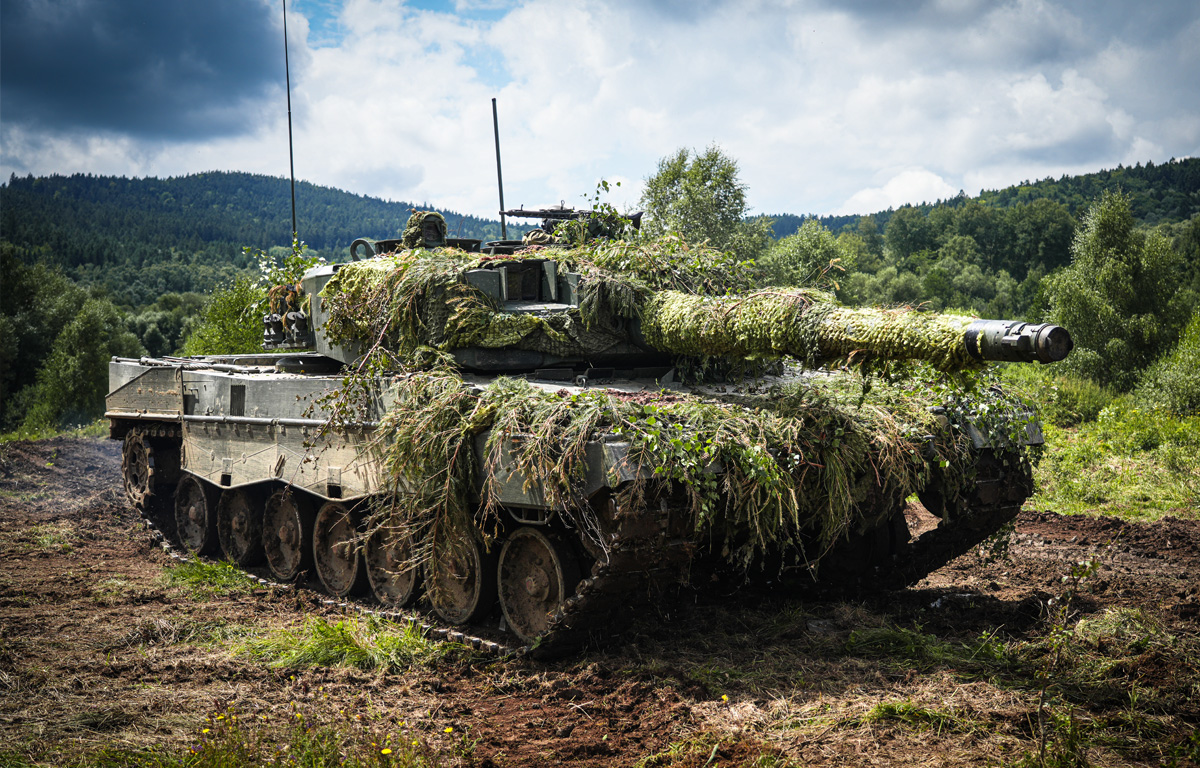
Definitely. As I mentioned, the first step is for crews to understand how to use Western-made tanks – in our case, the Leopard 2A4, and in the future, the Leopard 2A8 – on the battlefield. We’re no longer seeing massive tank unit assaults or head-to-head tank battles. That approach simply won’t work today. Another aspect, of course, is movement across the battlefield. We can also use smart camouflage nets, thermal blankets, or protection against electronic warfare. So we definitely need to incorporate these elements in the future as well.
Does all of this affect crew training? How have high-intensity conflicts changed their training?
As far as crew training is concerned, in my view, the tank battalion has been undergoing a historic transformation and re-equipment with Western-style equipment since December 2022. We are transitioning from the Eastern school of tank warfare to the modern Western school. And crew training has had to adapt accordingly. Above all, the crews must change their mindset. I’ve already spoken about this – it’s not about the massive deployment of tanks, but about the method and understanding of how to use a tank on the battlefield and how to leverage its strengths, whether that be mobility, firepower, or the ability to “put out a fire” on the front lines. So we are definitely changing crew training as well.
From the crews’ perspective, this actually meant a change in communication, because the number of crew members went from three to four. And now you’re operating according to the standards the military requires. However, what’s better for you as a commander? Training a completely new soldier on new technology, or explaining to the “veterans” how things will work differently?
I’d like to address this question on two levels. I’ll start with the second part. Of course, today, if a young corporal – a tank driver or gunner – comes to you wanting to be part of a tank crew, it’s obviously easier to train him on a Western tank without any prior experience with the T-72. However, in the early stages of the tank battalion’s rearmament, which we began in 2022 and 2023, respectively, we first had to help the veteran T-72 crews understand what a modern Western tank offers and how to make the most of its potential. It is sometimes difficult to retrain crews who were accustomed to the “if force doesn’t work, more force will” approach to operate a Western tank. Now that we’ve reached 2026, we’ve already trained those veteran crews and are recruiting new recruits. The training system is now set up so that the new generation receives all the information they need about the tank.
Do you work with the manuals you received along with the tanks, or have you established your own system for the Czech Army? I’m asking this to see if there is such a thing as a “Czech way.”
I think I know where you’re going with this. Personally, I don’t like the “Czech way.” By switching to Leopard tanks – whether the Leopard 2A4 today or the Leopard 2A8 in the future – I don’t think we can afford to blaze our own Czech trail. Leopard tanks are widely used by most NATO armies. And we’d be incredibly stubborn, in a way, if we tried to go our own way. So today, as part of our training system, we’re adopting the German Bundeswehr’s system. We’re also cooperating with the Austrian Bundesheer and trying to apply these methods to the training of the Czech tank battalion.
On today's battlefield, is it even possible for a tank battalion to operate independently? Or is it the synergy between other systems – such as air defense and the like – that is important?
On today's battlefield, tank units, mechanized units, artillery, logistics, engineers, and air defense remain key players. It would be misleading and incorrect to deploy a tank battalion on its own, as it requires support from infantry, logistics, and engineers. Without this support, you would actually weaken its effectiveness.
Let's talk about the crews. Are you having success recruiting new tank drivers and gunners for your battalion?
Since we began transitioning to Western-style tanks, we also had to adapt our organizational structure. In terms of reorganization, our tank battalion is divided into three phases. The first phase involved adjusting the structure of the tank units and companies. We increased the number of tanks from ten to fourteen – that is, three platoons of four tanks each, plus two command tanks. The number of crew members increased from three to four. We are now completing the second phase and will begin implementing it on October 1 of this year. This involves the logistics units, because since we increased the number of tanks from 30 to 42, we also have to adjust our logistics to ensure they can supply 42 combat tanks. Thanks to our transition to Western equipment and the prospect of acquiring Leopard 2A8 tanks, I must say that recruitment for the tank battalion is going very well. We’ve taken many steps to reach out to technical and engineering schools. We’re collaborating with five or six high schools in the region, where we promote the tank battalion, the 7th Brigade, and the Czech Army. And we’re starting to see results. The tank battalion’s staffing level is currently around 85%, which is a good number.
If we were to describe the type of new soldier joining a Leopard tank crew, who would that be? Is it someone interested in technology, or a soldier with a specific education or set of skills?
In 95% of cases, these are enthusiasts who want to serve on tanks. And I greatly appreciate that, because they realize what serving on a tank entails. It’s not just about firing a 120mm cannon – it makes a huge bang and sends up a plume of smoke. It’s about the day-to-day work around the tank – maintenance, training, and preparing to operate and use it. So today, the people who join the tank units are true enthusiasts. And thanks to how we promote the tank battalion, thank God, we’re succeeding.
You brought up an important topic – logistics. How have the new tanks changed the logistics system, refueling, or ammunition resupply? Is this a major change compared to older technologies?
We’re still in the process. We can’t say that the change in logistics – or even the overall thinking about what the Leopard 2A4 tanks need – is complete. Not at all. As I said, we started in December 2022, when the first Leopard 2A4 arrived in Přáslavice. We all remember it; it was a huge event. That marked the beginning of a change that, in my opinion, will last until the end of this decade. When you’re changing combat units, their mission profiles, organization, and mindset, logistics must go hand in hand with those changes. In the second phase of the reorganization, we’re changing the structure of the logistics company and establishing a new unit: the repair company. The technical complexity and maintenance requirements of Western equipment are completely different from those of Soviet or Eastern-style equipment.
Do you work in this field and have experience with the Bundeswehr? Do you have their manuals available?
We have to. As I said, we have to take over the entire system. I like to say: let’s not reinvent the wheel when it was invented long ago. They’ve been using tanks for over 25 years and have perfected their system for maintenance, deployment, and everything else a tank needs. So 99% of the time, we’re adopting the German Bundeswehr’s system. And from my perspective, that’s the right thing to do.
The transition from Leopard 2A4s to Leopard 2A8s – will it be a big leap? How are the crews preparing for it?
When I took over as commander of the tank battalion, a lot of people asked me: You used to have the T-72M4 CZ, now you have the Leopard 2A4, and in 2028–2029 you’ll be getting the Leopard 2A8. I always say that the Leopard 2A4 bridges the gap between the T-72 and the Leopard 2A8. The key difference will be that the Leopard 2A8 has many systems that the Leopard 2A4 doesn’t have. In terms of basic operation, control, and handling the main gun, we have a huge head start. But we’ll have to learn how to use the systems that the Leopard 2A4 doesn’t have yet.
It's not just about introducing new technology and armored vehicles, but also about changing the way we command, manage, and communicate. How much will this transition and these new digital systems change the way things work?
Let me take a broader view. If you look at the current equipment of the 7th Mechanized Brigade – which is designated as a heavy brigade – the mechanized battalions are currently operating BVP-2s and are very much looking forward to the arrival of the CV90. If you look at the Leopard 2A4 tanks – and by extension, the T-72s – which were equipped with combat information systems, and then move on to the Leopard 2A8, the amount of information you’ll receive in real time will be enormous. Whether it’s the CV90 or the Leopard 2A8, real-time information will play a key role. Our crews will have to learn to process this information in real time. Today, we’re training Leopard 2A4 crews to command and control based on the information they receive via radios. And from my perspective, that’s a good thing. It’s always better to learn by moving from a worse scenario to a better one. Once you have the Leopard 2A8 and receive a massive amount of real-time information, it will be a huge boon to command and control. But if that information goes down for some reason, our crews will still be able to command and control even using only radios.
However, is the emphasis on basic technologies still a part of the training?
They have to stay. You can’t just dismiss the basic skills of every tank crew member. You just have to teach them how to use technologies that weren’t available to them before. It’s easier with new crew members; young people between the ages of twenty and twenty-five are used to working with information, data, and technology these days. It’s more difficult with older crews. But even they have to learn it. They have to learn to make decisions in real time based on the information they receive from the tank’s systems.
We’ve been talking here about the differences in the capabilities of the new tanks. However, what’s rarely mentioned when they’re being procured are the additional costs: maintenance, infrastructure, and so on. How big of a challenge is this for your battalion?
Huge. Because it’s not just about the hardware. Let me offer a comparison – you might not even want to use it. If you have monkeys, you also need to have bananas for them to eat. And that, though very unmilitary, perfectly captures the essence of the issue. We have to ensure the entire life cycle of the equipment. After all, we’re not buying Leopard 2A4s or 2A8s with the intention of decommissioning them after five years. We’re buying a system that’s supposed to serve us for decades. And we have to adapt our maintenance, spare parts supply, and overall operational support to that. Yes, it involves significant costs. I’m well aware that a tank battalion is expensive, but if we want to have it as part of the army’s structure, we have to provide it with the resources it needs.
How would you define the role of a mechanized company within a tank battalion?
A tank battalion never operates alone. Let me turn that question around – what would a mechanized company be today without the firepower support of a tank battalion? And that probably answers the question. Mechanized infantry plays a key role within a tank battalion. Since the 7th Brigade includes a tank battalion in its structure and forms a brigade task force, the tank battalion will never be alone on the battlefield. Mechanized battalions will have the firepower support of the tank battalion. It is, therefore, a key component.
Let's turn to commanders at the lower levels. How do you prepare them to handle the overload of electronic information? We're talking, for example, about tank commanders.
Today, as I mentioned in the previous question, ninety percent of decision-making processes take place over the radio. We’re no longer using the RF-13 or RF-1325. The Leopard 2A4 uses the Harris system, and it will also be used on the Leopard 2A8 in the future. By training crews to command via radios and gradually providing them with more of the information they need to make decisions, we’re steadily increasing the volume of information. Mentally, this prepares them for the fact that in the future they will have sensors and real-time information. It’s actually also about interconnectivity with NATO units, so that the crew is able to communicate not only with their own command but also with the command of other components of the formation. As I mentioned, we’re cooperating with the German Bundeswehr, with the Austrian training battalion, which uses Leopard 2A4 tanks, and we’re working with Polish tank units as well as the Slovak Army, which is also equipped with Leopard 2A4 tanks. And it’s precisely from the German Bundeswehr that we’re adopting tank operational procedures and know-how. And that’s the right approach.
How is recruitment going at the 73rd Tank Battalion?
It’s working, and very well. The Leopard 2A4s – and, in the future, the Leopard 2A8s – are a huge draw. And even though the Leopard 2A4, which was manufactured sometime in the 1980s, isn’t the most modern tank on the battlefield today, it’s the right intermediate step between the T-72 and the Leopard 2A8. It’s the ideal platform for crews to change their mindset and learn to use the tank differently. So yes, things are going well, and I’m glad about that.
We often address these issues in the Air Force, but I think the same topic is important for ground forces as well. How do you train crews to cope with mental strain, stress, and information overload during a mission?
At the moment, we have no other choice. Deploying and training a tank battalion is a truly daunting task today. Since we had to change our mindset and switch to a different platform, we’re now focusing mainly on training the basic crews and recruiting personnel for the three tank companies. And as I said, recruitment is going well. Now we have to learn how to further develop that personnel and equip them with all the capabilities the tank has to offer.
It’s certainly not a specialty for every soldier. Imagine a small space, a four-person crew, the stress of possibly being discovered or hit – all while you have to complete your mission. Do you work with the soldiers on their mental well-being in any way?
The fundamental principle we apply is that teamwork among the four-member tank crew must be absolutely crucial. Those guys have to trust each other. That’s the key message I’d like to convey here. We don’t mix crews. If a crew is assigned a specific tank, the same people stay in it. In my opinion, this is essential so they can get used to each other, know what to expect from one another, and be able to rely on each other. As for recruitment and how we get people into tank crews in general, we’ve devised a system that some people don’t like, but we use it. Before we definitively offer someone a position, we invite them to the unit, show them the workplace and the colleagues who will make up their crew, and lock them inside a tank. We’re testing to see if they can handle being in that confined space. And you wouldn’t believe how many people start knocking on the hatch after five, ten, or fifteen minutes, saying they won’t serve in a tank. In such cases, we obviously don’t assign them to a crew and recommend they join another army unit.
How long does the crew stay together? Is it a relationship that lasts for the entire tour of duty, similar to other military specialties, with connections extending into their personal lives and so on?
I wish it were always like that. If you look at tank drivers or gunners, they’re mostly soldiers with the rank of corporal these days. These positions are what we call rotational. I’d like a corporal who’s a tank gunner to serve as a gunner for eight to ten years, and the same goes for a tank driver. But because these are rotational positions, the crews change over the years. We select tank loaders from among the best corporals, and tank commanders from among the best loaders. So the best guys who start out as corporals today could become excellent tank commanders, platoon deputy commanders, or even tank company commanders after finishing college. So yes, I’d like the crews to stay together for a long time, but that’s not always the case. In life and so on?
Is it possible to say how much the crew changes during a shift?
Take a tank driver, for example. If he’s good after two or three years, he’s promoted to the rank of sergeant. The same goes for a tank gunner. We have to maintain the career progression. We have a limited number of entry-level positions where we can hire someone directly from the recruitment system. Today, for example, we can’t hire someone with the rank of sergeant directly into the position of tank loader, because that person already serves as the tank commander’s deputy. We need them to have experience with tanks, know how to operate one, understand what to expect from it, and be able to assist the commander in decision-making.
The active reserves are an important part of the Czech Army. What is the situation like in a tank battalion? Most reservists have been trained on older tank models. Has anyone been trained on the Leopard yet?
You’ve hit the nail on the head. The 73rd Tank Battalion includes an active reserve company. For now, that company is officially equipped with T-72M4 CZ tanks, but of course, the plan for the future is for it to also have Leopard 2A4s. It’s a logical process. Today, we already have the first sixteen members of the active reserve force roughly two-thirds of the way through their basic Leopard 2A4 operator training. So we’re already laying the groundwork for the future, and by the end of this year, we should have the first four complete crews trained.
Does that mean they'll be interchangeable, too?
The ability to operate a tank is a basic skill for a soldier. However, deployability is a matter of further training. So no, I wouldn't say that active reserve soldiers will be immediately deployable after completing the course. They will need additional training.
The 73rd Tank Battalion is the only one of its kind in the Czech Army. Do you feel that you are in a special position within the army?
Absolutely. It’s the only – and therefore the best – tank battalion in this army. I began my career in 2004 as a mechanized platoon commander and served in the mechanized forces until 2023. In 2023, I became the commander of a tank battalion, and I had enormous respect for the role because I hadn’t worked directly with tanks for twenty years. But there is something truly exceptional about it. The internal harmony of a tank battalion, its structure, and the way it operates in general are different from those of mechanized battalions. And I’m glad that’s the case. It’s not for nothing that they say tanks are the kings of the battlefield. And who wouldn’t want to be the king of kings?
I see. Do you think there is room for a second tank battalion in the Czech Army in the future?
I probably won’t reveal anything that isn’t public yet. But when you consider that we’re currently transitioning from T-72s to 42 and 44 Leopard 2A4 tanks, respectively, and that in the future the battalion will have 44 Leopard 2A8s, the sheer strength of a single battalion with 88 main battle tanks is significant. When you compare that to the original structure of 30 T-72M4 CZ tanks, it’s a huge difference. However, I don’t think there are plans to establish another tank unit besides the 73rd Tank Battalion in the future.
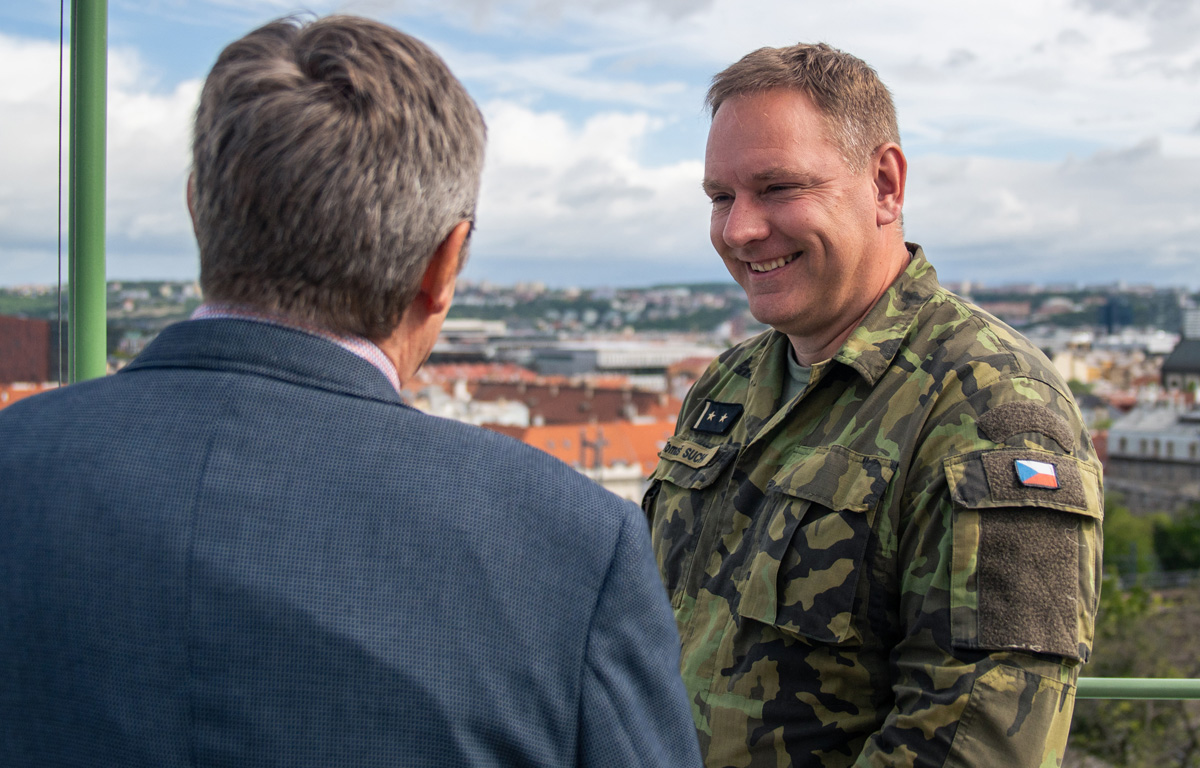
As commander of the 73rd Tank Battalion, you naturally carry out the missions of the Czech Army. But what goals have you set for yourself personally?
Completing the reorganization of the tank battalion’s organizational structure. That is the main and most crucial task. As I mentioned, we are now completing the second phase – the logistics portion. We still have a third phase ahead of us, because, as we’ve mentioned, the tank battalion also includes a mechanized company, which is also looking forward to receiving CV90 vehicles, although logically, its turn will come later as part of the entire 7th Brigade. The first task is to complete the restructuring and the overall shift in mindset, transitioning to Western equipment and phasing out the use of the BVP-2 and T-72. The second task, which is personally on my mind, is to keep the 73rd Tank Battalion in the best possible condition for my successor. Every commander has a certain “tenure” with the battalion. I’m very happy serving with the tank battalion and would like to stay here as long as possible. But of course, my military career is determined by my superiors. And the third task – which is perhaps a bit unusual – is to preserve the image of the tank battalion as a unique unit, not only within the Czech Republic but also among NATO countries. Because our guys are truly exceptional and incredibly skilled tank crews.
You mentioned your plans. Are there one or two capabilities of the tank battalion that will still be important ten years from now and that you, as commander, would like to continue developing?
I’d have to stay with the tank battalion for at least another ten years for that. In any case, I’ll mention one absolutely essential and crucial capability and refer to the current Russia–Ukraine conflict. By rearming with Leopard 2A4s and not yet having adopted a specific system, we’ve lost our ability to breach barricades. And that is a capability that will have to be restored in the future. We all remember the mine-clearing devices used on the T-72. The Leopard does not yet have this system, and I believe that the ability to breach barriers will have to be restored to the tank battalion. If you look at the early stages of the war in Ukraine, massive tank and mechanized attacks largely ended up in minefields. And it is precisely this capability that the tank battalion lacks today.