















Leopards on the Highway for the First Time
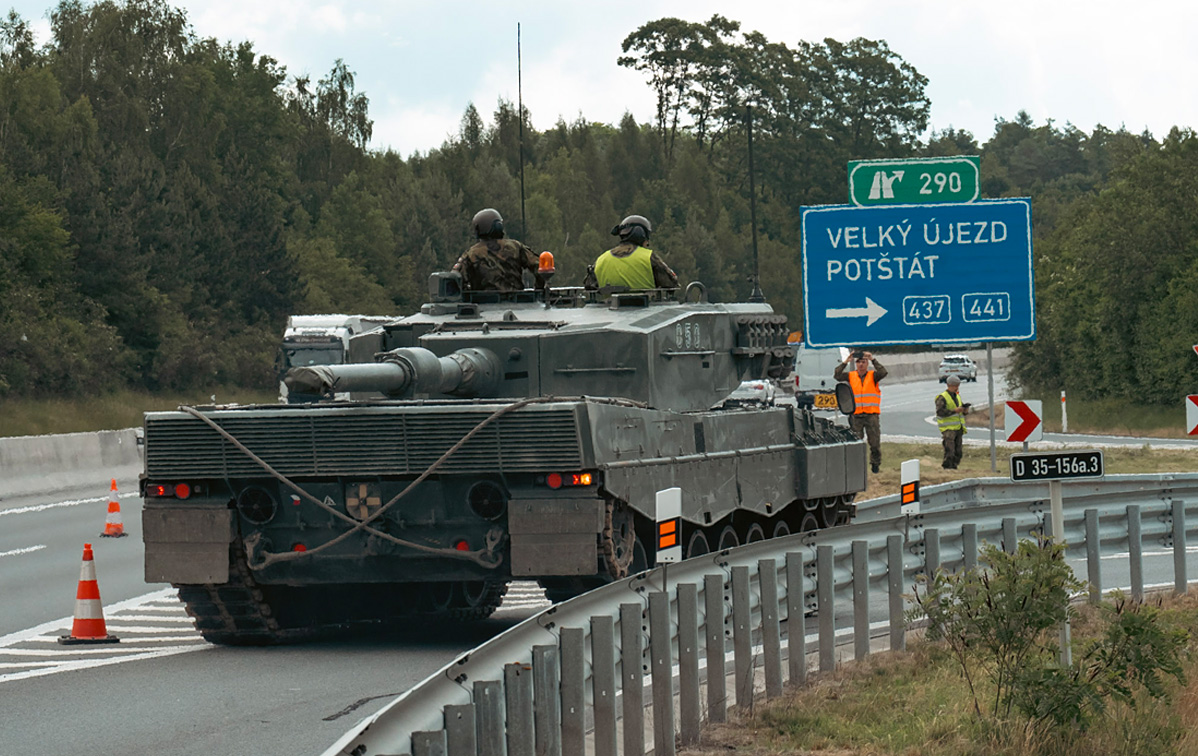
Six Leopard 2A4 tanks and one Büffel recovery vehicle on the D35 highway. Just a few years ago, in the Czech context, this would have sounded more like media hyperbole than a routine training exercise. But that is exactly what happened on June 16, 2026. The 73rd “Hanácký” Tank Battalion conducted its first practical test of moving Leopard 2A4 tanks along a highway. And this was no minor event. In fact, it was a crucial test of a capability without which a modern heavy brigade cannot realistically function.
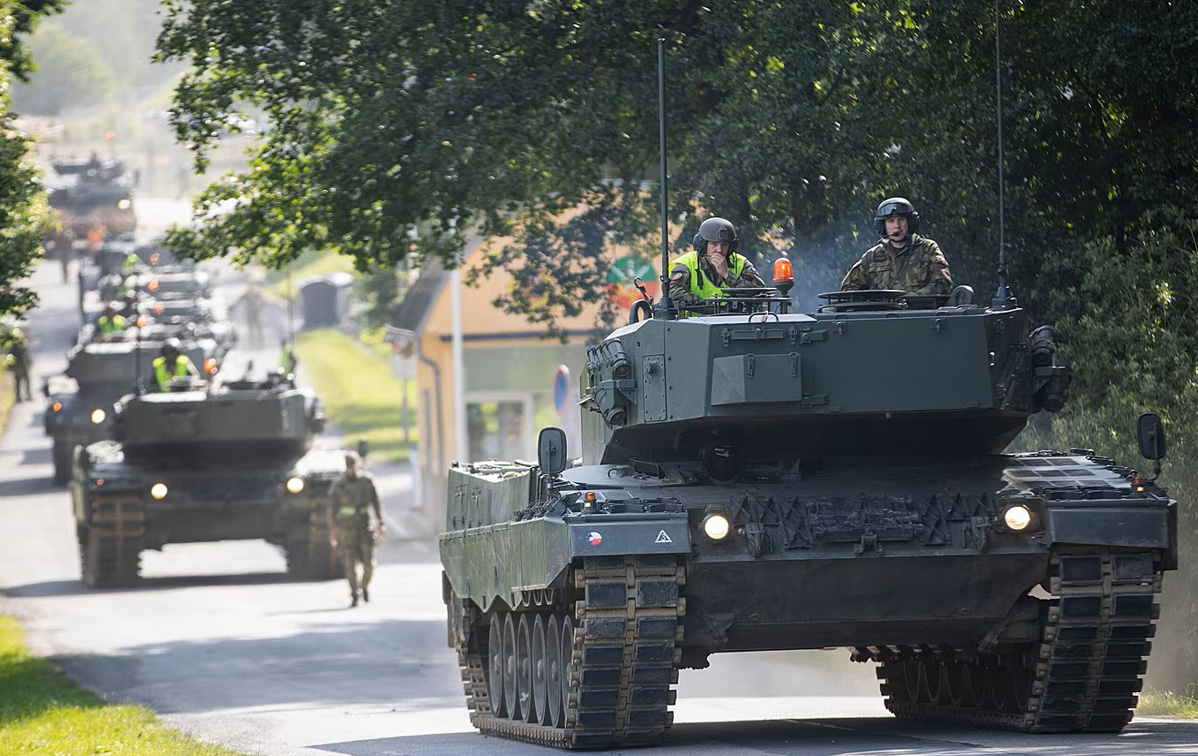
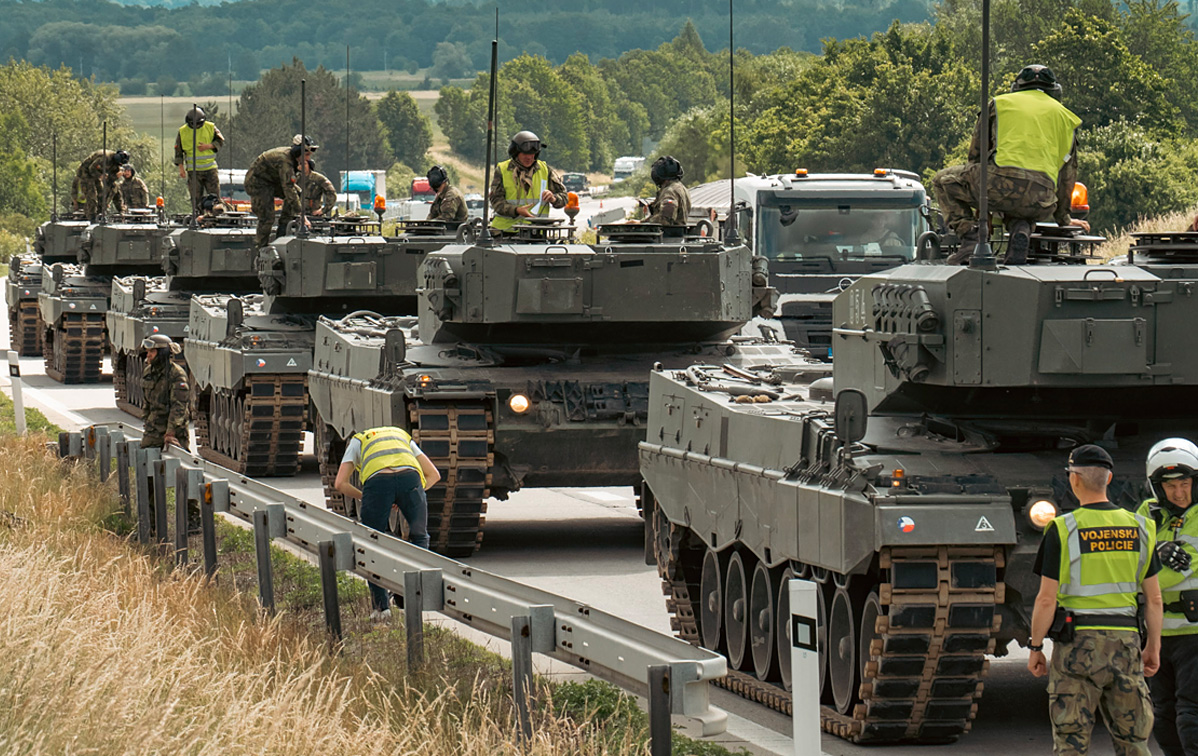
The training documents show that this was a carefully structured training program. The topic “Driving in Traffic” focused on three areas: improving drivers’ skills in driving in traffic, improving commanders’ skills in organizing movement along roads, and practicing the operation of tracked vehicles accompanied by military police on roads and highways. The route followed the D35 highway and included designated areas for crew rotations, traffic control at bridges and intersections, medical and rescue support, and a precise schedule from morning preparations through to the return to the garrison.
“To the public, this may seem like an unusual sight, but for us, it is a very specific training exercise. A modern tank battalion must not only be able to fight but also to move in a timely, safe, and organized manner to wherever it is needed. And that is exactly what we were testing in practice today,” says Lieutenant Colonel Tomáš Suchý, commander of the 73rd Tank Battalion.

| Czech Army
This is an important point. The Leopards are often discussed primarily as symbols of modernization. What is less often emphasized is that the introduction of a Western tank also places entirely new demands on troop movements, logistics, security, and training. A tank battalion isn’t modern the moment it takes delivery of new vehicles. It’s only modern when it’s capable of moving, deploying, and maintaining them safely, quickly, and effectively. And the highway transport along the D35 is a prime example of how this abstract concept plays out in practice.
Even more important is the tactical dimension. A modern heavy brigade is defined not only by what it can do on the battlefield, but also by how quickly and in an organized manner it can get there. Movement along roads – and especially along main routes – is one of the key prerequisites for maneuvering, providing timely reinforcements to a threatened sector, or moving into the area of operations. Those who cannot move effectively cannot, in reality, fight at an operational pace either.
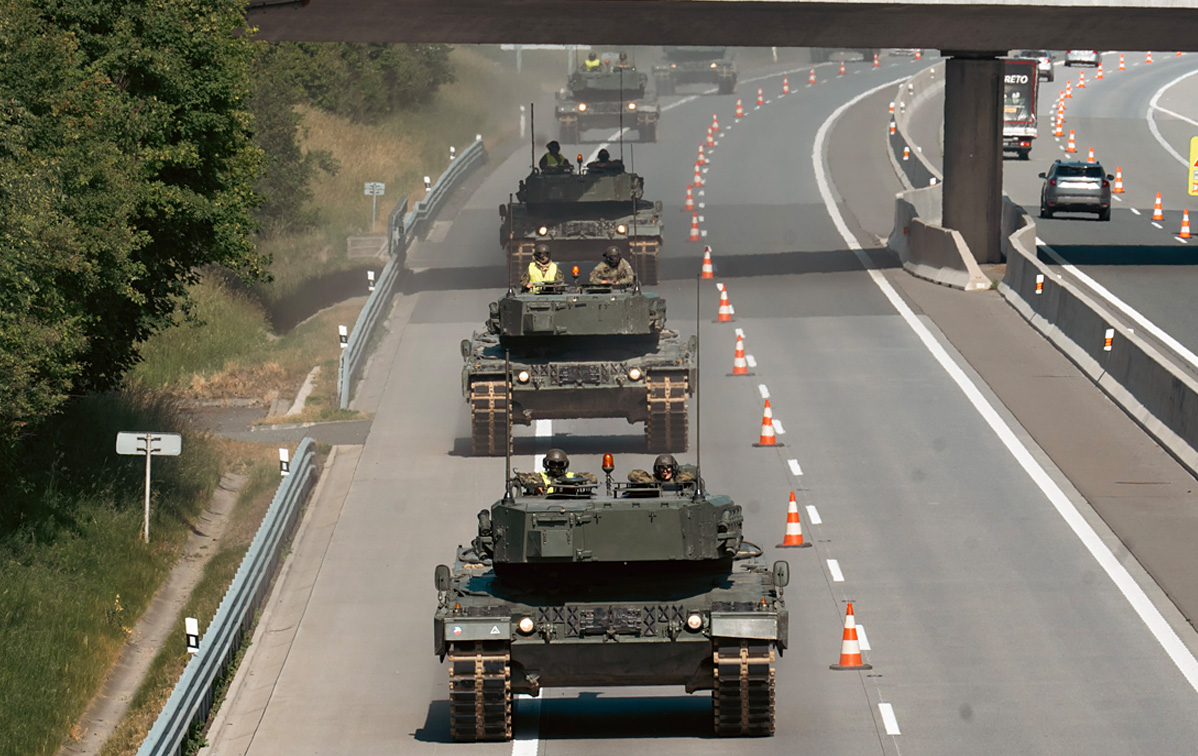
Major Marek Váňa, the training commander, adds: “This wasn’t just about moving equipment along the highway. The training focused on the entire process of driving in traffic – from preparing the vehicles and crews, through the actual movement with traffic control, to evaluating the exercise. We wanted not only for drivers and commanders to verify in practice that tanks can be moved in traffic even outside military areas with partial traffic restrictions, but above all to prepare the general public for the possibility of encountering independently moving tracked vehicles on the road.”
The training on the D35 thus had greater significance than its seemingly simple content might suggest. Drivers practiced pulling away in traffic, maintaining distances, navigating narrow sections and bridges, stopping, and getting the convoy moving again. Each vehicle was accompanied by a driver-instructor and a tank commander, who continuously evaluated their performance. In other words, this was not just a drive down the highway, but a standardized training exercise designed to turn new technology into a real capability.
“Driving a Leopard on the highway was a powerful experience for me, but also a great responsibility. It wasn’t just about the drive itself, but about maintaining the pace, keeping proper distances, and responding precisely to commands so that the entire convoy could operate safely and smoothly,” described one of the Leopard 2A4 tank drivers.
It is telling that this type of training is taking place within a unit that currently bears the brunt of the Czech Army’s tank modernization effort. The 73rd Tank Battalion is no longer merely a recipient of Leopard 2A4 tanks. It is becoming a unit that, step by step, is mastering the full range of new capabilities associated with Western tank technology. And the drive along the D35 was one of those steps that may not be as photogenic as live-fire exercises or dynamic demonstrations, but are of extraordinary value in terms of actual combat readiness.
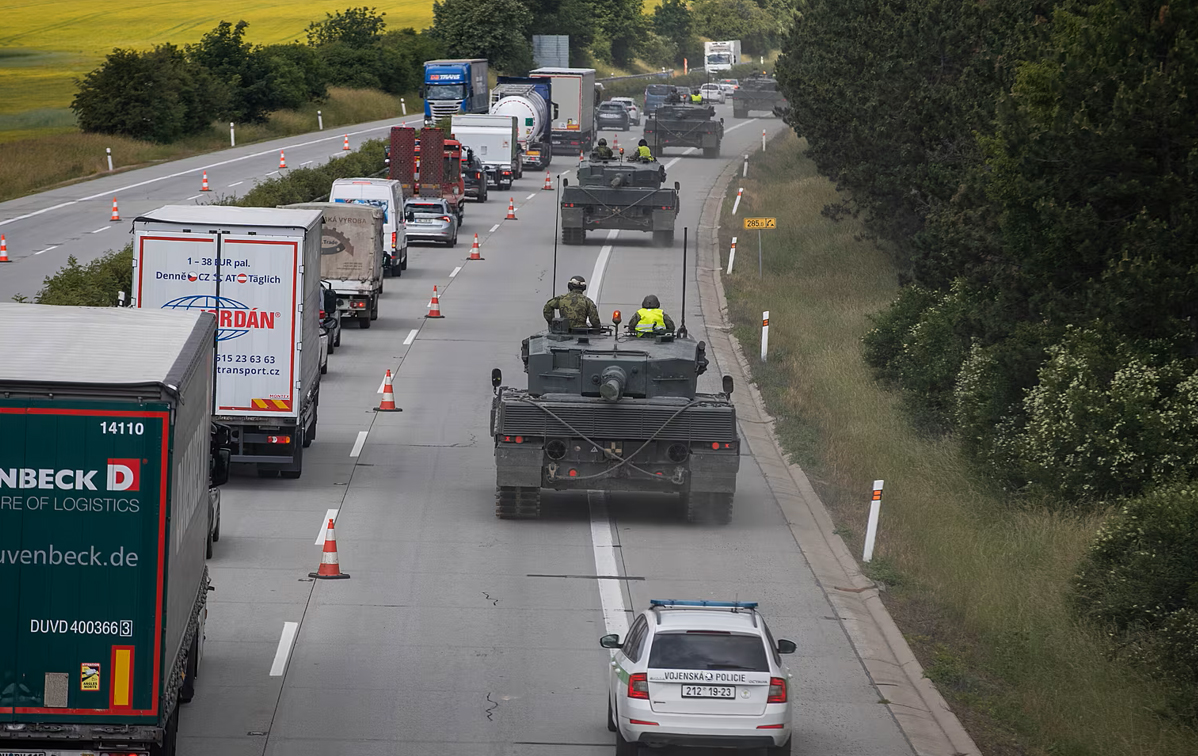
So if anyone is looking for an answer to the question of what true modernization of the tank forces looks like, they won’t find it just at a parade or in a catalog of technical specifications. They’ll find it on days like these, when a new platform is put to the test in practical tasks that make it a usable tool for a heavy brigade. And the highway transport of the Leopard 2A4 tanks was exactly such a day.