















Information Disruptions as a Security Threat
An infodemic is a rapidly spreading flow of information of varying reliability that makes it difficult to discern the actual facts and disrupts decision-making by both individuals and groups. In the context of the armed forces, it can very easily lead to a weakening of soldiers’ physical and mental resilience, a reduction in their ability to adhere to protective and preventive measures, and a subsequent decline in the operational readiness of units. Defense against an infodemic requires unified command, rapid decision-making, and consistent strategic communication that supports discipline, adherence to protective measures, and the continuity of the ability to carry out missions. Information resilience is therefore a key element of force protection, national security, and hybrid defense, and must be firmly integrated into crisis and defense planning.
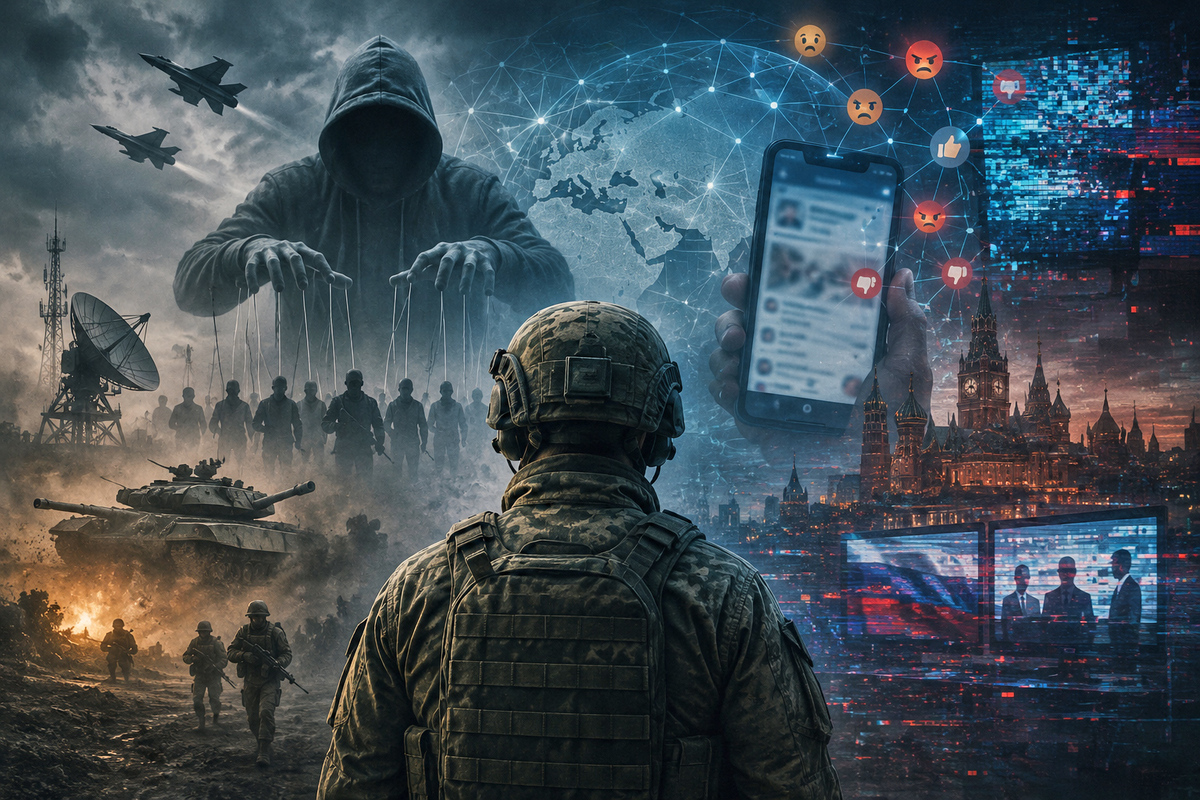
Information operations as a tool for weakening the enemy are not a phenomenon exclusive to the 21st century. Even in ancient times, misleading messages were part of military strategies. Classical works on military theory openly employed the principle of deception as a legitimate tool of warfare. In modern times, disinformation was systematically used during both world wars, both through propaganda and through controlled operations aimed at the morale of the civilian population and soldiers. The Cold War brought about the institutionalization of disinformation campaigns, which were planned and directed by state structures with the long-term strategic goal of weakening the adversary without direct military confrontation.
The Historical Roots of Information Warfare
The Soviet Union played a significant role in the development of systematic disinformation operations. Its intelligence services, particularly the KGB, developed “active measures” that included spreading false reports and forged documents, promoting conspiracy theories, and deliberately influencing foreign media and political movements. The goal was to sow distrust in “Western” institutions, divide alliance partners, and undermine the legitimacy of democratic governments. A well-known example was Operation Denver from the 1980s, which spread claims that the HIV virus had been artificially created in U.S. military laboratories as part of a secret U.S. biological weapons program. What was crucial was not only the falsity of the claim itself, but above all the sophisticated manner in which it was disseminated. The disinformation was first published in regional and non-American media, particularly in countries of the Global South, from where it subsequently “re-entered” the Western information space with references to supposedly independent sources. This created the illusion of international consensus and objectivity. Furthermore, the narrative about “the American origin of HIV” was flexibly adapted to the local context – in some regions, it emphasized the racial dimension and the virus’s alleged ethnic targeting; in others, it appealed to anti-American sentiment or distrust of expert and government authorities. This example illustrates how targeted disinformation can undermine trust in the exact sciences and healthcare institutions, and erode confidence in state institutions and authorities. In its consequences, it constitutes a key mechanism for weakening a nation’s defenses without the use of military force.
The Vietnam War demonstrated how disinformation can influence not only the situation directly on the battlefield but, above all, political stability and, on a massive scale, public opinion. The information war was waged by both sides. North Vietnamese forces and the Viet Cong used disinformation to undermine the morale of American soldiers. Examples included operations aimed at spreading reports of alleged mass desertions, the failures of the American economy, or the extramarital affairs of soldiers’ wives back home. These narratives were disseminated via radio broadcasts. At the same time, the North Vietnamese side systematically exaggerated its successes and downplayed its own losses to create an image of indomitable resilience. On the other hand, the U.S. carried out Operation Wandering Soul, aimed at instilling fear of the “wandering souls” of unburied soldiers. Recordings of voices simulating the ghosts of fallen Viet Cong fighters were broadcast. This exploitation of local cultural traditions and superstitions led to significant psychological destabilization of the enemy.
The Digital Battlefield: From Troll Farms to Artificial Intelligence
Analyses by NATO and EU security institutions have repeatedly identified the Russian Federation as an actor that systematically employs the aforementioned tactics in today’s digital environment. While during the Cold War, disinformation operations required a large-scale apparatus and the physical distribution of content, today’s digital environment allows them to be carried out through online platforms, anonymous accounts, and troll farms. Organized groups of individuals systematically create and disseminate manipulative content on social media. They use fake identities, coordinate comments, artificially inflate the popularity of posts, and amplify selected narratives using specific algorithms. The goal is not merely to convince the majority, but to polarize the discussion, flood the information space, and cast doubt on the very possibility of objective truth. This erodes trust in institutions and weakens social cohesion, which has direct security implications.
The information environment has become a full-fledged operational domain. The goal is not the immediate destruction of the adversary, but the gradual weakening of its cohesion, as well as its ability to make rational decisions. Information disruptions – hat is, misinformation, disinformation, and malinformation – are tools that can fundamentally affect a state’s stability and the effectiveness of its armed forces.
From a security perspective, organized disinformation campaigns pose the greatest risk. They are often part of broader hybrid operations. Misinformation consists of inaccurate or misleading information disseminated without the intent to deceive, often as a result of misunderstanding or misinterpretation. Disinformation, on the other hand, consists of intentionally false or manipulated information aimed at harming, influencing, or destabilizing a specific group or institution and gaining a strategic advantage. Malinformation is based on true data that is, however, taken out of context or published with the intent to cause harm, such as through the leak of sensitive data.
The dynamics of information dissemination have fundamentally changed with the advent of social media and digital communication platforms. These tools enable the instant sharing of content with a potential reach of millions, while the platforms’ algorithms often prioritize posts that evoke strong emotions, such as fear, anger, or outrage. As a result, emotionally charged content gains greater visibility than factual and expertly crafted messages. This creates an environment that is exceptionally conducive to the spread of simplified, black-and-white, and manipulative narratives.
The Information Pandemic and Cognitive Immunity
In academic literature today, the spread of disinformation on social media is increasingly being compared to the pandemic-like spread of viral infections. This concept is based on “infodemiology,” which studies the dynamics of information spread in much the same way that epidemiology studies the spread of biological pathogens. Just as a virus needs a host and a route of transmission, disinformation needs carriers – users who share it – and an environment in which it can spread exponentially. Social media acts as an accelerator of the spread: algorithms that prioritize emotionally charged content increase the “reproduction number” of information – that is, the number of other people who pick it up and spread it further.
In this context, we can speak of an information pandemic. A single highly emotional, oversimplified, or shocking message can reach thousands to millions of users within a few hours. If it is not corrected in a timely and credible manner, it can become part of the collective belief of a particular group of people. Just as with biological infections, immunity plays a role here – in this case, media literacy and the capacity for critical thinking on the part of both individuals and institutions. As a hierarchically structured organization with a high degree of responsibility for national security, the military must be able to recognize when it is facing an isolated “information incident” and when it is dealing with a coordinated “information epidemic” that has the potential to disrupt its operations.
Health-related disinformation in recent years provides a prime example of these mechanisms. In connection with the H5N1 avian influenza outbreak in 2024, claims appeared on social media that the virus was transmitted through pasteurized milk, even though pasteurization reliably destroys pathogens. A real-world event was exploited to create a distorted narrative that undermined trust in official recommendations and encouraged risky alternative behaviors. Another of many examples is the long-standing spread of myths about “miraculous” alternative treatments that promise simple solutions to complex diseases while simultaneously casting doubt on expert authority. Similarly, during the COVID-19 vaccination campaign, narratives emerged about so-called “turbo cancers,” which were not supported by scientific data but managed to provoke a strong emotional reaction and distrust of healthcare institutions.
These mechanisms are fully transferable to the military environment. By analogy, claims can be spread about the allegedly concealed health effects of military equipment on soldiers, about hidden casualties during operations, about “classified incidents,” or about the alleged dangers of mandatory health measures (e.g., vaccinations) prior to deployment. Emotionally powerful individual stories can be generalized to suggest alleged systemic failures of the military as a whole. The goal of such efforts is to undermine trust, create internal tension, and weaken the legitimacy of the armed forces in the eyes of both the public and their own personnel. Disinformation campaigns are often targeted, linguistically localized, and tailored to the specific cultural and political conditions of a given country. Their goal is to sow discord among soldiers and political leadership, between commanders and subordinates, and also between the military and the public.
Within the NATO environment, campaigns have repeatedly been observed that spread false information about alleged crimes committed by Alliance soldiers in the Baltic states, fabricated incidents involving the civilian population, or fictitious epidemics introduced by foreign units. These narratives were often supported by a network of fake social media accounts, automated bots (i.e., software designed to respond to inputs and perform predefined tasks, often running continuously on a large scale), and purpose-built news websites. The goal was not to convince everyone, but to sow doubt and stir up controversy that would weaken support for allied forces.
In the United States and in some European countries, campaigns targeting military personnel directly were observed, spreading conspiracy theories about “elite betrayal,” allegedly illegitimate orders, or plans to misuse the military against its own citizens. These narratives were disseminated through closed online groups, discussion forums, and alternative media platforms. In some cases, members of the armed forces became active disseminators of this content, which posed not only a reputational problem but also a security risk.
Campaigns targeting foreign missions constitute a specific category. During operations in Afghanistan and Mali, false reports emerged about massive casualties, allegedly classified incidents, or deliberate attacks on civilians. This information was often disseminated during troop rotations or at sensitive political moments, such as before parliamentary debates on extending a mission’s mandate. The goal was to influence domestic public opinion and political decisions.
The ongoing conflict in Ukraine represents the most intense example to date of the use of information disruption in modern warfare. From the very beginning of the invasion, the physical front was accompanied by massive operations in cyberspace and the cognitive domain. One of the most striking examples was disinformation regarding biological laboratories. A recurring narrative was the claim that secret U.S. laboratories existed in Ukraine, allegedly developing ethnically targeted biological weapons. This campaign was directly linked to Russian “active measures” and aimed to legitimize the invasion in the eyes of both domestic and foreign “audiences” as a preemptive strike.
Another significant threat was the use of deepfakes of political and military leaders. For example, a doctored video surfaced in which the Ukrainian president called on his soldiers to lay down their arms and surrender. Although the video’s quality was relatively poor and the attempt was quickly exposed, it clearly demonstrated the potential of these technologies to instantly sow chaos and undermine morale at critical moments. At the same time, disinformation campaigns about “Nazification” were underway. Among other things, staged footage of alleged Ukrainian attacks on civilian targets in the Donbas was circulated. This misinformation and disinformation were intended to create the appearance of genocide and justify military intervention in accordance with Russian doctrine.
Current systematic campaigns target residents of Western countries with narratives about arms shipments to Ukraine ending up on the black market, the embezzlement of financial aid, and the consequences of supporting Ukraine – which will lead to the irreversible collapse of the European Union’s economies in the near future. The goal is to weaken the political will of democratic states to continue their support. A particularly brutal form of this is psychological pressure on prisoners of war and their families. The use of videos featuring prisoners of war who are coerced into reciting prepared narratives is a form of disinformation that abuses human rights to exert psychological pressure on soldiers’ families and the general public.
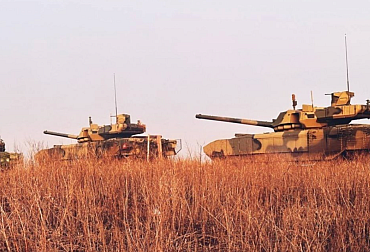
Operational security also poses a major security challenge. Malinformation – that is, the disclosure of true but sensitive data – can jeopardize troop movements, logistics routes, the identities of personnel, or vulnerabilities in infrastructure. Open sources, social media, and geolocation tools enable adversaries to combine fragments of information into an operationally exploitable picture. The unintentional sharing of photos from training exercises, details of weaponry, or information about troop movements can have direct tactical consequences. The impacts of information disruptions on security and defense capabilities are therefore multifaceted. A key issue is the erosion of trust, which is a fundamental pillar of the armed forces’ operations. Trust in the chain of command, in the soundness of superiors’ decisions, and in the legitimacy of leadership is essential for the effective fulfillment of missions. If this trust is systematically undermined, it can lead to a decline in morale, an increase in suspicion, and skepticism toward official information. In extreme cases, the cohesion of units and their operational capability may be jeopardized.
Repeated exposure to alarming and manipulative messages can also have psychological effects. It can lead to anxiety, feelings of helplessness, resignation, or a loss of motivation. In crisis situations, where psychological resilience is crucial, information pressure can significantly weaken not only members of the armed forces but also their families. Furthermore, disinformation can influence the broader social climate, reduce support for defense budgets, complicate recruitment and mobilization, and weaken the will to fulfill alliance commitments. Information disruptions are often not random occurrences but part of coordinated hybrid operations. These operations combine true information, half-truths, and outright lies with the aim of polarizing society, undermining trust in democratic institutions, disrupting the unity of allies, and creating informational chaos. In such an environment, it is difficult to distinguish facts from manipulation, which in itself represents a strategic advantage for the adversary.
Defense Strategies: Prebunking and Transparency
Given the seriousness of the threats that information disruptions pose to national security and the cohesion of the Alliance, a number of specialized institutions have been established in recent years to address this issue both academically and operationally. The United States plays a leading role in this regard, as it has an extensive network of academic and government institutions. One of the most important organizations is the Global Engagement Center, which operates under the Department of State and is tasked with monitoring and countering foreign propaganda and disinformation directed against U.S. interests and allies. In the academic sphere, there is the Stanford Internet Observatory, which conducts in-depth analyses of the misuse of digital technologies to influence public opinion, and the Atlantic Council’s Digital Forensic Research Lab, which specializes in detecting disinformation networks in real time.
Specifically within the NATO framework, the issue of information warfare has become a priority, leading to the establishment of specialized centers. The Strategic Communications Center of Excellence, based in Riga, Latvia, plays a key role in these efforts. This institution conducts extensive scientific research focused on the manipulation of social media, the psychology of digital influence, and the Alliance’s strategic communications. It works closely with the armed forces of member states to build their resilience and ability to identify hybrid threats. Another important entity is the European Centre of Excellence for Countering Hybrid Threats in Helsinki. This center focuses on researching the methods by which both state and non-state actors combine disinformation with other tools of hybrid warfare to weaken democratic societies.
Combating information disruptions within the armed forces requires a comprehensive strategy that combines technical solutions, institutional changes, and individual training for every soldier. A key pillar must be the integration of information security into the standard training cycle. This means that soldiers should undergo regular simulations of information attacks. Through these exercises, they should learn how to recognize manipulation techniques.
An essential step is the creation of a robust internal communication system capable of refuting, in real time, disinformation targeting military personnel and their families. The military must be the first and fastest in the information domain – if an information vacuum arises, the enemy will immediately fill it with its own propaganda. Transparency and building a high level of trust between commanders and subordinates play a crucial role here. A soldier who has access to reliable channels for verifying information is far less likely to succumb to anonymous narratives on social media.
Emphasis must also be placed on so-called “prebunking.” This method involves familiarizing soldiers in advance with the typical narratives that an adversary is likely to use against them. If a soldier knows that the enemy will spread reports about the alleged ineffectiveness of his equipment or about fictitious losses in a neighboring unit even before this happens, he will build a cognitive barrier that dramatically reduces the effectiveness of the disinformation. Part of this process also involves providing psychological support to family members, who are often the weakest link in a soldier’s information security, as disinformation reaches them through civilian, less-protected channels.
Last but not least, it is essential to invest in advanced technologies for detecting and analyzing the information landscape. A modern military needs specialized teams to monitor social media and digital platforms, which, using artificial intelligence, can identify coordinated inauthentic behavior at its earliest stages. These teams are not intended for censorship, but to provide early warning to commanders about ongoing disinformation campaigns that could jeopardize morale or the security of an operation. Only through a combination of technological sophistication and high cognitive literacy among individuals can we ensure that the armed forces remain operational even in an environment of constant information pressure.
Information disruptions, therefore, cannot be underestimated as a marginal phenomenon of the digital space. They represent a real security threat that can systematically weaken a state’s defense capabilities, undermine the cohesion of the armed forces, and influence strategic decisions. In the era of hybrid conflicts, defense takes place not only at a state’s borders, but also in the information space and in the minds of its citizens and soldiers. Maintaining information superiority, strengthening trust, and building the resilience of both society and the military are thus among the strategic priorities of modern security policy.