













Further Optimization of the Czech Republic's Security Framework: A Management Model or a Career Model?
The Czech Republic is in the midst of the most significant transformation of its security system since joining NATO. Defense spending is rising to levels that were unimaginable just a few years ago. The Czech Armed Forces are implementing the largest modernization program in their history. They are acquiring fifth-generation aircraft, tracked infantry fighting vehicles, air defense systems, new electronic warfare capabilities, and technologies based on artificial intelligence. At the same time, new strategic documents are being drafted to define the Czech Republic’s defense posture through 2040. Yet it seems that one fundamental question remains on the sidelines of both public and expert debate.
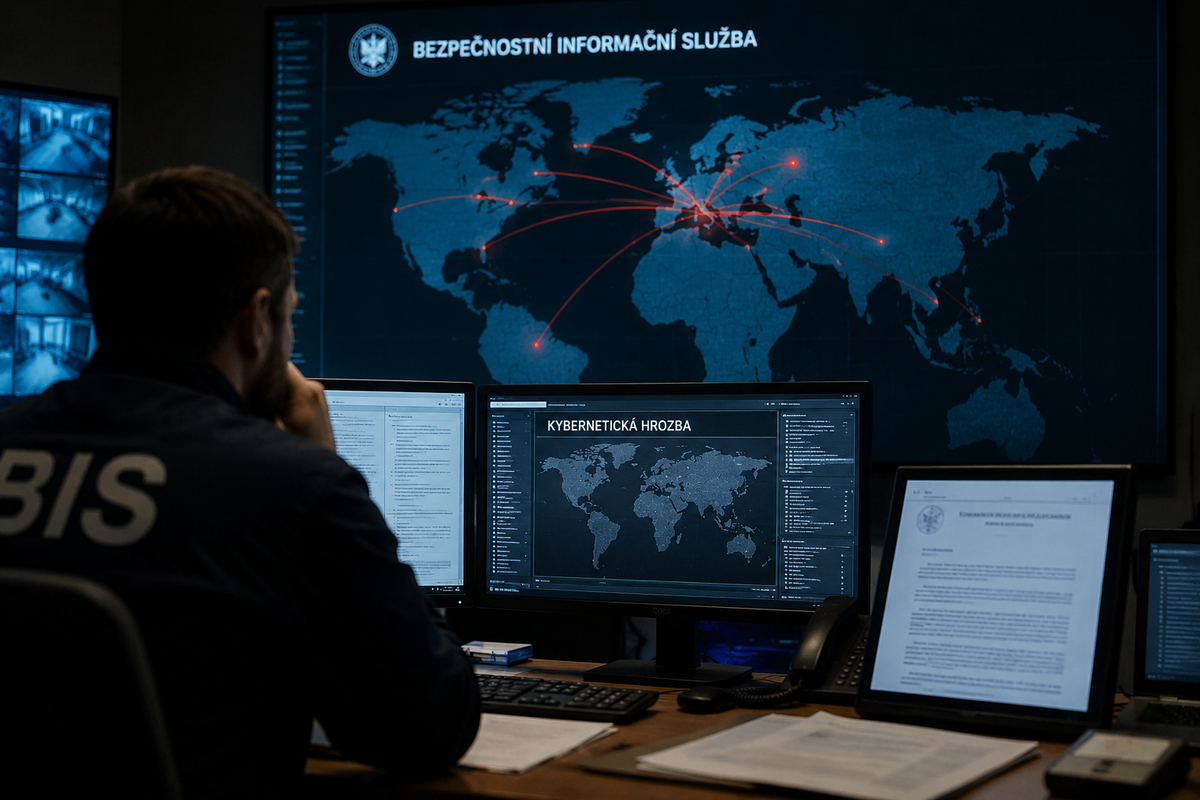
Who will manage this entire system?
We are building the army of the future, but we are still managing it according to personnel principles designed for the security environment of the 1990s. We discuss troop numbers, budget levels, or the specifications of new equipment, but we hardly ever talk about the institutional architecture of the security system’s management. Yet this is precisely where the greatest strategic risk may arise.
History has repeatedly shown that states do not usually lose because they have fewer tanks or aircraft. They fail when their institutions are unable to properly evaluate information, coordinate individual security agencies, and make consistent long-term decisions. Modern conflicts are increasingly less likely to be decided solely on the battlefield. They are decided by the quality of a nation’s governance. That is precisely why it is time to open a discussion that has remained virtually taboo until now. Should the Czech security system be governed primarily by a managerial model or a career-based model?
A poorly phrased question leads to poor answers
In public administration today, two seemingly incompatible approaches often stand in opposition to one another. The first is the managerial model. It is based on flexibility, accountability for results, and the ability to make rapid personnel changes. A manager derives his or her legitimacy primarily from the ability to meet established goals. If results are not achieved, the manager may be replaced by someone else.
The second approach is the career model. This is based on the assumption that top positions should be filled by people who have gradually gained experience, professional authority, and trust within the organization. Their legitimacy does not rest on political support, but on professional competence.
At first glance, this appears to be a logical conflict. In reality, however, it presents a false dilemma. Neither of these models, when used in isolation, is capable of ensuring the long-term effectiveness of the security system. The managerial model promotes adaptability but weakens institutional continuity. The career model safeguards expertise and experience, but it can lead to insularity, departmental corporatism, and resistance to innovation.
Therefore, we should ask ourselves a different question: not which model is better, but which parts of the security system require managerial oversight and which must remain professional in the long term. It is precisely this shift in perspective that marks the true beginning of institutional reform.
Security is not a business entity
Proponents of the managerial model often cite experiences from the private sector. Modern organizations must be flexible, respond quickly to changes, and regularly rotate leadership. This approach undoubtedly works in many areas of the economy.
However, the security sector is different. A brigade commander, an experienced intelligence analyst, or a strategic planning specialist cannot be trained in a matter of months. Their professional value is built up over many years through a combination of education, international experience, operational practice, and work with classified information. It takes just as long to build the trust of allies, personal authority, and the ability to make decisions in crisis situations.
This is precisely why institutional memory represents one of the most valuable strategic capabilities of the security system. Any significant personnel change means much more than a mere replacement of a senior official. Along with that person go experience, contacts, knowledge of the environment, historical continuity, and the ability to anticipate the consequences of decisions. These losses cannot be replaced by any recruitment process. However, the opposite risk is just as dangerous.
A closed career system gradually creates its own power structures, reproduces the same ways of thinking, and finds it increasingly difficult to adopt new technologies or new security concepts. The organization becomes stable but ceases to be adaptable. In the age of artificial intelligence, multi-domain operations, and hybrid warfare, such inertia poses just as serious a risk as overly frequent personnel changes.
A real weakness in the Czech security system
The biggest problem with the Czech security system lies neither at the political level nor among career professionals. It lies between them. Today, it is precisely the middle executive tier that represents the weakest link in the state’s institutional architecture. Section directors, heads of strategic units, and top management of security institutions operate at the intersection of politics and professional management. They prepare strategic decisions, coordinate long-term projects, and are responsible for their implementation. Yet their position is often neither sufficiently stable nor clearly defined.
This creates a paradox. Strategic documents are prepared for a period of ten to twenty years. The modernization of the military takes place over a similar timeframe. Building trust among allies is a matter of decades. Management structures, however, often think in terms of a single electoral term. Such a system cannot function optimally in the long term.
The Czech Republic needs a third way
The most significant contribution of the FATI analysis is not its critique of the current state of affairs. Its greatest value lies in the solutions it offers. Instead of choosing between two extremes, it proposes the creation of a differentiated, three-tiered model for managing the security system. The first tier remains unambiguously political. The government and ministers bear democratic responsibility for national security. The third tier consists of the professional core – soldiers, analysts, specialists, and experts – whose careers must be protected from political interference in the long term.
The key innovation, however, is the second tier – executive-professional management. This group should be selected based on professional criteria, appointed for a fixed term, and removable only for reasons defined by law. Such a model links political accountability with institutional continuity while simultaneously limiting the risk of personnel instability.
Conclusion: A reform that will determine the quality of Czech security
Today, the Czech Republic is investing hundreds of billions of crowns in the modernization of its defense capabilities. These investments are both wise and necessary. However, we should not forget that technology alone does not guarantee security. Security is created by people.
And people can only be successful if they work in institutions that foster professionalism, continuity, and the capacity for innovation. The future of the Czech security system will therefore not depend solely on how much modern technology we acquire. It will depend above all on whether we can create an institutional architecture suited to the security environment of the 21st century.
The discussion about the management and career model is therefore not an academic debate about personnel policy. It is a debate about whether the Czech Republic will be able to manage its own security in the long term as a modern democratic state.
The greatest security reform of the coming years may not take place at airports, in barracks, or in arms factories. It will lie in how we select, train, and manage the people who will bear responsibility for the security of the Czech Republic in the coming decades. And it is precisely in this area that we should not seek to favor either the managerial or the career model, but rather to create a system that combines the best of both worlds.