















Five percent of GDP for defence: a reality check, not an accounting exercise
The debate on increasing NATO countries' defence spending to five percent of GDP is not a technocratic budget discussion, but a litmus test of political courage and strategic maturity. For the Czech Republic, this debate is particularly uncomfortable because it exposes the long-standing contradiction between security rhetoric and the state's actual readiness to bear the costs of defence in conditions of high-intensity warfare. Five percent of GDP does not mean "more money for the army," but a fundamental redefinition of what the state considers its primary responsibility: whether it understands defence as a marginal public policy or as an existential function.
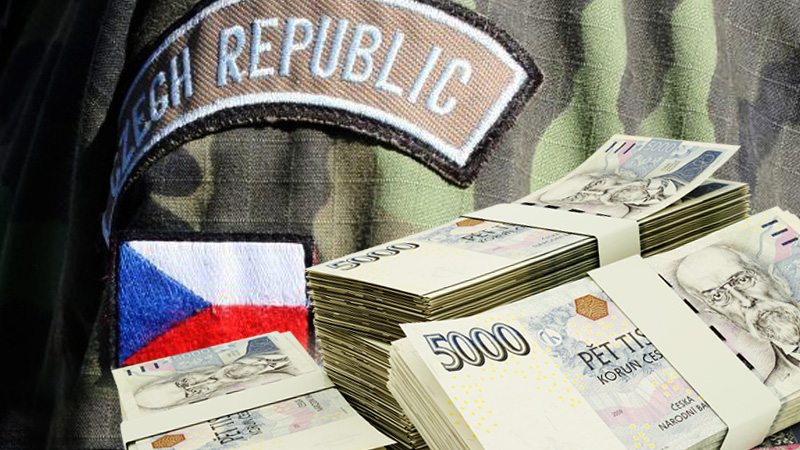
It is necessary to state an uncomfortable truth right at the outset. If the Czech Republic were to achieve five percent of GDP for defence by simply rearranging existing expenditures, creatively counting civilian items, or expanding the definition of security to the point where it encompasses almost everything, then such a move would be neither credible to the alliance nor strategically meaningful. NATO is not an accounting association but a military alliance, and its defence spending methodology has one fundamental goal: to determine whether a member state is capable of making a real contribution to deterrence and defence. Five percent of GDP should therefore not be seen as a political gesture but as a test of whether a state is prepared to build an army for real conflict, not for crisis management in peacetime.
From this perspective, it is crucial to distinguish between expenditures that are unquestionably recognizable as defence expenditures and those that are merely disguised as defence expenditures. The hard core of defence spending consists of armed forces personnel, their training, operations, armament, logistics, supplies, and the ability to conduct combat over time. This is where the Czech Republic has long been failing. The Czech Republic's army is selectively modernized in terms of technology, understaffed, and logistically set up for short-term operations rather than long-term high-intensity conflict. In this sense, any debate about five percent of GDP is meaningless unless it begins with the question of how much of these funds will actually end up in the defence ministry's budget and be used to build real combat capabilities.
The optimal and alliance-justifiable model for the Czech Republic assumes that at least three and a half percent of GDP will be allocated directly to the Ministry of Defence. This amount is not arbitrary, but is based on elementary reality: without a massive increase in personnel, reserves, supplies, and heavy capabilities, it is impossible to talk about an army that would be capable of fulfilling its tasks within the framework of collective defence. The Czech Republic has long been under the dangerous illusion that technological quality can replace quantity and that alliance solidarity automatically compensates for its own weakness.
However, the Ukrainian experience shows the opposite to be true. Without people, without ammunition, without repair capabilities, and without the ability to sustain combat operations for months rather than days, even a technologically advanced army quickly becomes strategically irrelevant.
Increasing the personnel component of the Czech Armed Forces is therefore not a question of social policy, but a question of survival. An army of 30,000 professionals, supplemented by symbolic active reserves, is not capable of fulfilling the tasks that arise from NATO membership. If the Czech Republic is serious about spending five percent of its GDP on defence, it must openly state that its goal is to have an army of at least 35,000 to 40,000 professional soldiers and tens of thousands of properly trained and equipped reservists. This is not militarism, but a return to the basic concept of national defence.
The issue of supplies and logistics is equally crucial. There is almost complete silence on this topic in the Czech debate, even though it is precisely here that the army's ability to survive the first phase of a conflict is decided. Ammunition, fuel, spare parts, and service capacities are not attractive to the media, but without them, modern technology is nothing more than a static exhibit. Five percent of GDP only makes sense if it allows for the build-up of supplies for dozens of days of intense combat and a logistical infrastructure that is not dependent on immediate assistance from allies.
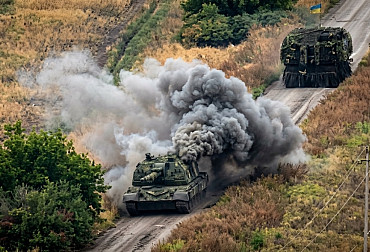
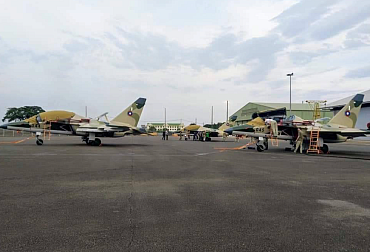
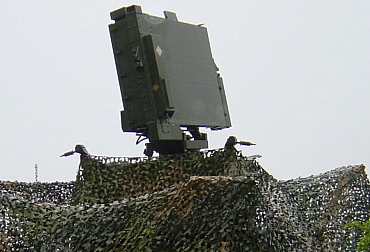
The modernization component of spending must then be understood not as a political showcase, but as a tool for filling real capability gaps. A heavy ground brigade, multi-layered air defence, long-range artillery, unmanned systems, and electronic warfare are not "optional projects" but fundamental elements of Alliance defence in Central Europe.
If the Czech Republic does not build these capabilities systematically and to their full extent, it will become a security consumer within NATO, not a security provider.
The remaining five percent of GDP can and should be devoted to broader defence capabilities, particularly military infrastructure, cyber defence, and host-nation support. However, maximum discipline is required here. Any dissipation of defence spending into general "societal resilience" without a clear link to military use will lead to methodological disputes and a loss of credibility. Infrastructure is only acceptable if it is designed for the movement of troops and equipment, cyber defence only if it is part of military structures, and education only if it serves to train commanders and staff, not general security awareness.
Politically, five percent of GDP for defence is an extremely uncomfortable topic because it requires openly stating that defence is not free and that, in the context of a deteriorating security environment, it will be necessary to reevaluate the state's priorities.
However, the alternative is much worse. Either the Czech Republic accepts five percent of GDP as a strategic turning point and begins to build an army capable of surviving in the reality of the 21st century, or it will stick to symbolic gestures that will not deter any adversary and will not ensure any real security.
Five percent of GDP is not a goal in itself. It is a threshold beyond which the illusion that security can be outsourced ends and responsibility begins. If we are not willing to actually cross this threshold, there is no point in talking about it at all.