













CV90 for the Czech Army: Modern Combat Vehicle Brings New Capabilities, Digitalization, and Protection Against Drones
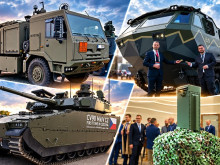
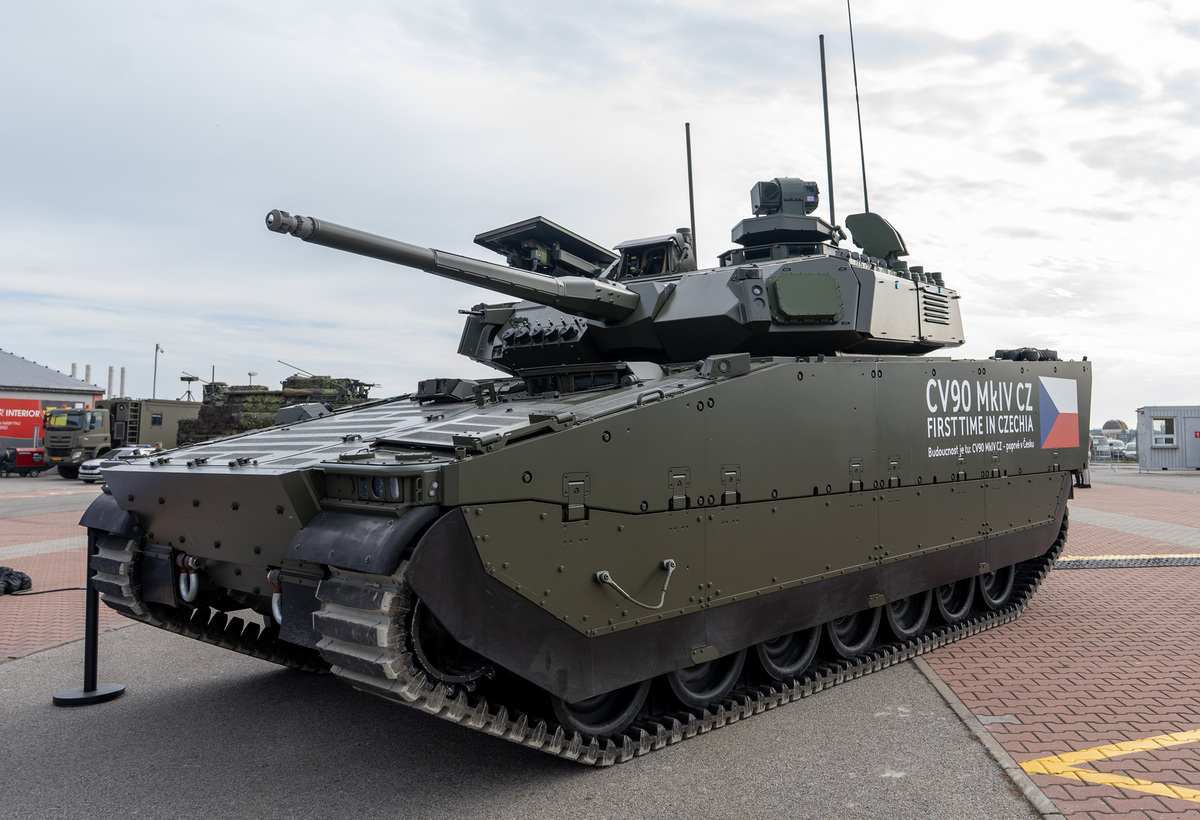
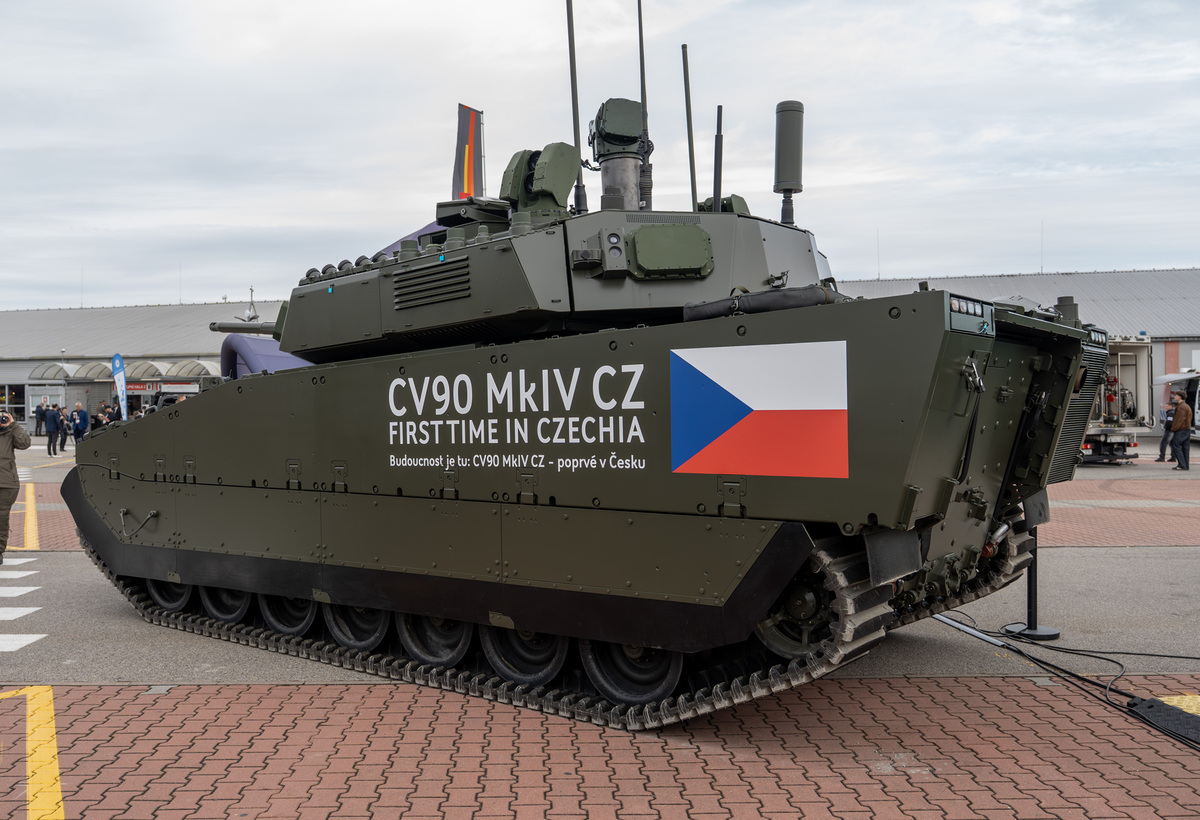
The CV90 tracked infantry fighting vehicle, in a configuration designed for the Czech Army, was unveiled for the first time at the Future Forces 2026 international trade fair in Prague. This modern platform from the Swedish company BAE Systems Hägglunds represents a significant technological leap forward compared to the BVP-2 vehicles currently in use. It offers high mobility, firepower, advanced protection, digital connectivity, and capabilities to defend against unmanned aerial vehicles. In an interview with CZ DEFENCE, Tarkan Turkcan, CV90 Program Director at BAE Systems Hägglunds, discussed the technical specifications, the training of Czech soldiers, the involvement of domestic industry, and the platform’s further development.
Video: CV90 for the Czech Army: Modern Combat Vehicle Brings New Capabilities, Digitalization, and Protection Against Drones / CZ DEFENCE
According to Turkcan, the Czech configuration of the CV90 Mk IV represents the most advanced version of this platform currently offered by the manufacturer. “What you see here is the latest and best we produce today,” Turkcan said during the vehicle’s presentation. Weighing approximately 38 metric tons, the vehicle reaches speeds of around 70 km/h and uses composite tracks that reduce noise, vibration, and overall weight. The weight savings also allow for the integration of additional equipment without significantly increasing the vehicle’s total weight.
A key component of the Czech program is the involvement of the domestic defense industry. Vehicle assembly is handled by the state-owned enterprise VOP CZ; Excalibur Army is involved in the production of turrets; and EVPÚ Defence also supplies optoelectronic systems. “A large part of the work takes place directly in the Czech Republic, for the Czech Army. And that is very important,” Turkcan emphasized.
The vehicle’s primary armament consists of a 30-mm Bushmaster automatic cannon, supplemented by a coaxial machine gun and a pair of Spike LR2 anti-tank guided missiles. These enable the vehicle to engage targets even beyond the crew’s line of sight, thereby significantly expanding its combat capabilities.
Drone Defense and the Digital Battlefield
One of the main topics of the interview was defense against unmanned aerial vehicles, whose importance on the modern battlefield continues to grow. According to Turkcan, the CV90 offers several layers of defense. The first is the cannon itself, equipped with a fire-control mode for air targets. The targeting systems feature automatic target detection and tracking, which reduces the crew’s workload and shortens their reaction time. “You don’t have to constantly search for targets yourself. If the system detects one, it automatically alerts you and allows you to aim the weapon at it,” explained the CV90 program director.
Another layer of protection is provided by electronic countermeasures, which can counter radio-controlled drones and delayed-action munitions. The CV90 tracked vehicle intended for our army will also be equipped with the Iron Fist Active Protection System (APS), which can physically destroy incoming unmanned aerial vehicles.
The key difference between the older CV90 Mk III generation and the current Mk IV lies primarily in digitization. The manufacturer has completely redesigned the vehicle’s digital architecture to meet current technological requirements. “Technology has advanced tremendously since the Mk III version was introduced in 2008. We therefore had to completely redesign the vehicle’s digital architecture,” Turkcan noted.
The CV90 is thus no longer just a standalone combat vehicle, but also a networked node on the digital battlefield capable of sharing target information with other vehicles. “From a single CV90, I can transmit target information to any other connected vehicle, and I can receive it as well. It’s no longer just a combat vehicle, but also a sensor for others,” Turkcan explained.
Situational awareness on the part of both the crew and the troops being transported plays a significant role. The vehicle is equipped with sixteen cameras that provide a continuous 360-degree view of the surroundings. This view can be displayed not only at the driver’s, gunner’s, and commander’s stations, but also in the troop compartment. The troops being transported can thus continuously monitor the situation in their immediate surroundings, assess potential threats, and prepare to disembark. Even before disembarking, the troop commander can assign tasks and directions of movement to individual soldiers based on the real-time view of the surrounding terrain.
Training, Maintenance, and Collaboration with Users
According to Turkcan, the transition from the current BVP-2 to the modern CV90 will represent a significant change for Czech soldiers, not only from a technological standpoint but also from a tactical one. The manufacturer has already conducted a three-day introductory training session in Olomouc, attended by drivers, gunners, vehicle commanders, and unit commanders.
To illustrate the intensity of the training, Tarkan Turkcan cited the experience of the Dutch Army, where technical training for gunners lasts nine weeks, followed by another two weeks of field training, including live-fire exercises. Training for a vehicle commander takes approximately twelve weeks, followed by tactical training. Full mastery of combat operations at the unit level therefore requires several more months. “The transition from the BVP to the CV90 Mk IV is a huge leap. It’s not just about the vehicle itself, but about the entirely new capabilities it brings,” Turkcan pointed out.
At the same time, modern digital systems significantly simplify maintenance. Computer diagnostics are increasingly being used in place of traditional mechanical troubleshooting. “It’s no longer just about a hammer, a screwdriver, dirty hands, and oil. Today, you connect a laptop to the vehicle and find out where the problem is,” explained Turkcan. In addition, the vehicle’s information system contains approximately 2,000 pages of technical documentation with procedures for operation, maintenance, and repairs. This allows the crew to perform a range of service tasks independently, depending on their authorization levels.
From a production standpoint, Turkcan explained that the rollout of the new platform is proceeding at a slower pace initially. This approach allows Czech industrial partners to master production and integration procedures, eliminate any shortcomings, and stabilize the production process even before transitioning to a higher production rate.
Another important advantage of the Czech program is its integration into the international community of CV90 users, which, according to Turkcan, includes ten countries. The so-called CV90 User Club facilitates the exchange of experiences regarding training, deployment, maintenance, and logistical support. The Czech Army is already cooperating in this area with, for example, the Dutch Armed Forces, which in the past underwent a similarly challenging transition from older armored vehicles to the modern CV90. “There’s no point in reinventing the wheel. Learn from your allies. That’s exactly what the user club is for,” emphasized the CV90 program director, who also chairs the System Development Board, within which individual user nations formulate requirements for further modernization. Currently, technologies for protection against drones are the primary focus among these requirements. A coordinated approach allows for the sharing of experiences, the harmonization of requirements, and the more effective development of the entire platform’s capabilities.
According to Turkcan, however, the CV90’s primary mission remains to safely transport mechanized infantry to the combat zone, provide them with the necessary fire support, and ensure their protection. The combination of mobility, armament, armor protection, and digital connectivity enables effective coordination with other assets of the heavy mechanized brigade, including Leopard tanks. “You need high mobility, a high level of protection, and significant firepower. Ultimately, though, you still have to get the soldiers to the mission site, enable them to complete their mission, and bring them home safely,” Turkcan concluded.
You can watch the full video interview with Tarkan Turkcan, CV90 Program Director at BAE Systems Hägglunds, at the beginning of the article.