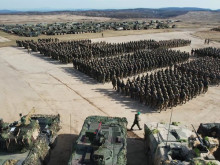

















A Coalition of the Willing: A Coalition of Interests, a Coalition of Capabilities, or a New Model for European Security?
In public discourse, the question is increasingly being raised as to whether the so-called Coalition of the Willing is primarily a coalition of interests or a coalition of capabilities. At first glance, this seems like a logical debate. Upon closer analysis, however, it becomes clear that the question itself is poorly framed. The current Coalition of the Willing transcends traditional security categories and represents a phenomenon that cannot be satisfactorily described using classical concepts of international relations.
The history of security policy includes a number of ad hoc coalitions formed outside formal alliance structures. The U.S.-led coalition during the 2003 operation in Iraq was a typical example of a politically motivated grouping whose goal was to establish international legitimacy for a military operation. The current Coalition of the Willing, however, which was formed in 2025 in response to the need to establish long-term security guarantees for Ukraine, is emerging in a completely different strategic environment. This is not merely a matter of supporting a single country or a one-time military operation. A structure is gradually taking shape that could fundamentally influence the nature of European security in the coming decades.
That is precisely why it is more appropriate to ask a different question. Does the Coalition of the Willing mark the beginning of a new security architecture for Europe? Are we witnessing the emergence of a system in which, alongside traditional international organizations, flexible, ad-hoc coalitions are beginning to assert themselves – coalitions that will be able to respond more quickly than traditional institutions? If this is indeed the case, then this is not merely another political initiative related to the war in Ukraine, but a significant milestone in the evolution of the European security landscape.
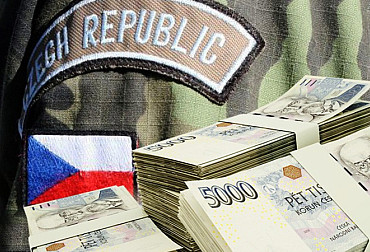
Coalitions of Interests and Coalitions of Capabilities: Two Classic Models That Are No Longer Enough
Security studies traditionally distinguish between two basic types of multilateral security groupings. The first are coalitions of interest. These arise when a group of states shares the same political or strategic goal, without it being necessary for all of them to possess the same capabilities to achieve it. The main outcome of such a coalition is not military strength, but political unity. Its significance lies primarily in demonstrating a common will, sending diplomatic signals, and establishing international legitimacy.
The advantage of this model is its openness. A large number of states can join the coalition regardless of their military capabilities. The broader the circle of participants, the stronger the political signal sent to both the adversary and one’s own allies. At the same time, however, a fundamental weakness arises. Expanding the membership base generally leads to a dilution of the specificity of commitments. The result is often compromise declarations that express a common political stance but only loosely define the specific responsibilities of individual members.
The second traditional model consists of capability-based coalitions. These are built on an entirely different logic. It is not about the number of member states or the strength of political statements, but about the ability to actually carry out a specific task. Membership is therefore contingent on the availability of military units, logistical capabilities, industrial capacity, intelligence capabilities, or technological know-how. Such coalitions tend to be significantly smaller but, at the same time, much more effective operationally.
However, even this model is not without its problems. Heavy reliance on a few key states creates significant vulnerability. The withdrawal of a single major contributor can disrupt the entire operation. Capability-based coalitions are therefore stable only if there is long-term agreement not only on objectives but also on the willingness to bear a significant share of the costs and risks.
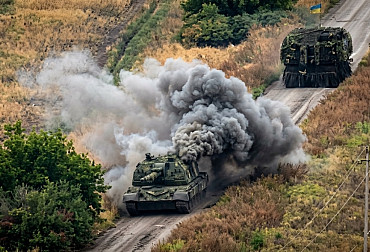


This is precisely where we encounter a fundamental problem. The “Coalition of the Willing” exhibits characteristics of both of these models simultaneously, without being clearly classifiable as either one. This suggests that we are witnessing the emergence of a new type of security grouping whose logic transcends the traditional division between political and military coalitions.
The Coalition of the Willing as a Testing Ground for a New European Security Architecture
The evolution of the Coalition of the Willing during 2025 and 2026 shows that it is not a static organization, but an exceptionally dynamic structure that continuously adapts to changing security needs. The very manner of its formation suggests that Europe is beginning to seek new mechanisms for security cooperation that are not constrained by the procedural rules of either NATO or the European Union. The London summit in March 2025 launched a process that, within a few months, led to the establishment of regular summits, meetings of chiefs of staff, ministerial meetings, and joint planning structures. It was not merely a series of political declarations, but rather the gradual institutionalization of a new form of security cooperation.
A pivotal moment came with the Paris Declaration of January 2026, which for the first time outlined a comprehensive architecture of security guarantees for Ukraine. Its significance, however, extends beyond the Ukrainian conflict itself. The declaration establishes a model in which military, political, economic, logistical, and intelligence tools are integrated into a single functional system. Security is no longer understood merely as the deployment of military units, but as a coordinated set of capabilities that can be activated as needed by various groups of states. This approach strongly resembles a networked architecture, which is gradually replacing traditional hierarchical models of governance.
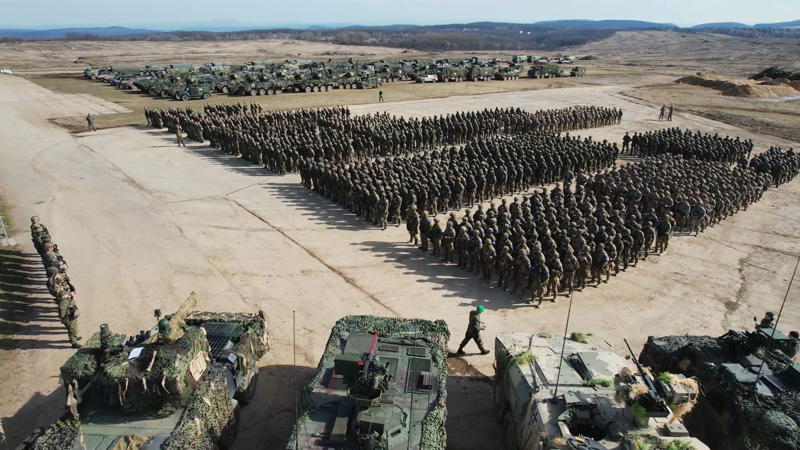
Even more interesting, however, is the internal structure of the coalition as a whole. At first glance, it appears to be a unified group of approximately thirty-seven countries. Upon closer analysis, however, it becomes clear that there are several levels of engagement within this political platform. Some countries have declared their readiness to assume direct military risk and are considering deploying forces on Ukrainian territory. Others provide logistical, training, or intelligence support. Still others focus on financial aid, reconstruction, or sanctions policy. The Czech Republic, for example, has unequivocally declared its political support for the coalition, but at the same time has refused to send its own combat units to Ukrainian territory.
It is precisely this differentiation that represents the most significant feature of the entire Coalition of the Willing. It is neither a weakness nor evidence of disunity, as is sometimes interpreted. On the contrary, it is a deliberately constructed system that allows individual states to participate according to their political will, military capabilities, economic capacities, and domestic constitutional constraints. While traditional alliance structures generally strive for maximum uniformity of commitments, the Coalition of the Willing bases its effectiveness on the controlled diversity of individual contributions.
This principle was fully demonstrated by the formation of the Missile Defense Coalition announced at the July 2026 summit. Only ten states possessed the necessary industrial, technological, and military capabilities to address the specific challenge of European missile defense. Rather than seeking consensus among all members, a specialized group focused on a single operational task was formed within the broader Coalition of the Willing. This development shows that a broad political platform functions as a space within which smaller, highly specialized coalitions of capabilities are formed according to current needs.
This is precisely where a new security model is emerging. It is no longer a single organization performing all functions simultaneously. A multi-layered architecture is emerging, in which individual layers fulfill different tasks. The political layer provides legitimacy and strategic unity. The operational layer ensures military capabilities. The technological layer links the defense industry, research, and innovation. The institutional layer creates new mechanisms for command, coordination, and planning. These layers complement one another without necessarily having identical membership or the same level of commitment.
The Coalition of the Willing cannot be regarded as either a classic coalition of interests or a classic coalition of capabilities. It is more accurate to view it as an institutional platform that enables the simultaneous existence of both of these models and creates the conditions for the emergence of additional specialized security structures in accordance with current strategic needs. In other words, the greatest value of the Coalition of the Willing lies not in its current form, but in its ability to continually generate new forms of security cooperation.
Is NATO on the Verge of Its Greatest Transformation Since the End of the Cold War?
If the Coalition of the Willing truly represents a new model for European security cooperation, then another question inevitably arises: What role will NATO play in this system? Two opposing views are frequently expressed in public debate.
According to the first view, the Coalition of the Willing weakens the Alliance because it creates parallel security structures outside its formal framework. The second view, on the other hand, argues that it is merely a temporary mechanism that will cease to exist once the war in Ukraine ends. However, neither of these interpretations is likely to accurately reflect the actual developments.
Experience to date shows that NATO retains its irreplaceable role in collective defense based on Article 5 of the Washington Treaty. No ad hoc coalition can replace the Alliance’s institutional strength, its integrated military command, or its long-established system of defense planning. At the same time, however, it is becoming increasingly clear that the current security environment requires a much higher degree of flexibility than organizations based on the consensus of all member states can offer.
This is precisely where the Coalition of the Willing fills a gap that has not yet been institutionally addressed. It enables a group of states to act more quickly, experiment with new forms of cooperation, and develop operational solutions without the need to achieve unanimous consent from the entire Alliance. This does not mean circumventing NATO, but rather supplementing its capabilities with a mechanism capable of responding to situations where the speed of decision-making is just as important as military capabilities themselves.
From this perspective, NATO’s very role may change. The Alliance need not be the sole organizer of all security initiatives in the future. It may increasingly act as a guarantor of standards for interoperability, joint planning, training, force certification, and strategic deterrence, while specific operational initiatives will emerge through flexible coalitions of capabilities. NATO will thus not be replaced, but will serve as the foundational infrastructure upon which new coalition formats will be built.
This development is not entirely new in the history of the Alliance. Various framework initiatives, multinational forces, or specialized groups of nations focused on specific capabilities have been established in the past. What is new, however, is their scope and institutional sophistication. The Coalition of the Willing does not serve merely to address a single military operation. It is gradually establishing its own coordination structures, planning mechanisms, and working groups that may persist even after the current conflict ends. In this way, it resembles a long-term institutional platform rather than a classic ad hoc coalition.
We can therefore formulate a bold but analytically grounded hypothesis. European security may be entering a period in which modular security groupings will play an increasingly significant role alongside established institutions. They will not be created to replace NATO, but to address tasks that are too specific, too urgent, or too politically sensitive to be handled through standard alliance procedures. If this trend is confirmed, the future of European defense will be characterized not by a single organization, but by a network of interconnected security structures.
The Czech Republic Faces a Strategic Choice
For the Czech Republic, the Coalition of the Willing is not merely a foreign policy initiative in support of Ukraine. Above all, it raises the question of whether the Czech security and defense system is prepared to operate in an environment where, alongside traditional alliance commitments, new capability coalitions with varying degrees of political and military commitment will increasingly emerge.
The Czech Republic’s defense planning to date has logically been oriented toward the NATO Defense Planning Process and the fulfillment of the Alliance’s Capability Targets. However, this system assumes a relatively stable institutional environment. The Coalition of the Willing demonstrates that future security challenges may require the creation of new coalition structures within a matter of months. The state will therefore not only decide which capabilities to build in the long term, but also how quickly it can make them available to a specific coalition and under what political, legal, and budgetary conditions.
This means that the very philosophy of defense planning will also have to change. In addition to traditional military capability-building, it will be essential to develop the capacity for rapid strategic decision-making. Every newly formed coalition will require answers to several fundamental questions. What type of commitment is expected from the Czech Republic? Does the Czech Republic possess capabilities that are truly beneficial to the initiative in question? Will the new commitment jeopardize the fulfillment of existing alliance tasks? And finally – does the level of risk assumed align with the Czech Republic’s long-term security interests? The ability to systematically answer these questions may prove just as important in the future as the size of the defense budget itself.
Equally significant is the constitutional dimension of the entire issue. If new capability coalitions with varying levels of commitment continue to emerge, it will be necessary to create a decision-making mechanism regarding the Czech Republic’s participation that is sufficiently flexible yet constitutionally compliant. Democratic legitimacy must not be sacrificed for the sake of speed in decision-making; at the same time, however, situations must not arise in which protracted procedures prevent timely participation in initiatives that may be of fundamental importance to the security of both Europe and the Czech Republic.
We Are Not Witnessing a Coalition, but a Shift in the Security Paradigm
Any significant change in the international security system tends to be interpreted initially through the lens of the past. We try to fit new phenomena into existing categories because they give us a sense of analytical certainty. That is exactly what is happening today with the Coalition of the Willing. We are seeking an answer to the question of whether this is a coalition of interests or a coalition of capabilities, since these are the terms we have been accustomed to using for decades to describe international security cooperation. The actual development, however, is considerably more complex.
Analysis shows that the Coalition of the Willing is neither of these models. At the same time, however, it is not simply a combination of the two. It represents a multilayered security architecture in which a broad political platform creates legitimacy, credibility, and strategic cohesion, while within this platform, specialized coalitions of capabilities focused on specific operational tasks are formed. In addition, coordination mechanisms, command structures, interoperability standards, and industrial ties are being built simultaneously – ones that may endure long after the current war ends. In other words, the greatest outcome of the Coalition of the Willing may not be the security guarantees for Ukraine themselves, but rather the emergence of a new institutional model for European security cooperation.
It is precisely this development that may represent the greatest strategic shift in European security since the end of the Cold War. For more than seventy years, European security has been built primarily through established international institutions. These remain irreplaceable for collective defense, strategic deterrence, and long-term defense planning. At the same time, however, it is becoming clear that the current security environment requires organizational flexibility that traditional institutions – given their size and decision-making procedures – cannot always provide. The Coalition of the Willing therefore does not represent an alternative to NATO or the European Union. It represents a new mechanism that makes it possible to combine political legitimacy with operational speed and technological specialization.
It is likely that similar models will emerge with increasing frequency. They may focus on air and missile defense, critical infrastructure protection, space capabilities, military mobility, the defense industry, artificial intelligence, autonomous systems, or cybersecurity. They will not always have the same members or the same mission. They will be formed in response to specific security challenges and based on the capabilities of the states willing to shoulder their share of the responsibility. It is precisely this modularity and adaptability that may become their greatest advantage.
At the same time, this means that the position of medium-sized states will also change. The Czech Republic will no longer be judged solely by the level of its defense spending or by its fulfillment of alliance targets. The ability to offer unique technological, industrial, logistical, or intelligence capabilities – where these are truly decisive for a specific coalition – will become increasingly important. Future influence will not be derived solely from the size of a country’s military, but from its ability to become an indispensable partner in certain segments of the security ecosystem. It is precisely here that an opportunity opens up for the Czech Republic, which can compensate for its limited resources with a high degree of specialization, technological advancement, and the ability to rapidly integrate into multinational projects.
This, of course, requires a shift in strategic thinking. Czech security policy will have to abandon the notion that defense planning can be prepared once every few years and then simply updated. A dynamic security environment will require ongoing assessment of emerging coalitions, their objectives, benefits, and risks. Building institutional adaptability will become just as important a capability as building military units. A state that is unable to quickly identify opportunities to join new capability coalitions may gradually lose not only political influence but also access to technologies, industrial projects, and decision-making processes.
The ultimate question, therefore, is not whether the Coalition of the Willing is a coalition of interests or a coalition of capabilities. The real question is this: Is this very model becoming the blueprint for European security in the third decade of the 21st century? If so, then the Coalition of the Willing’s greatest legacy will not be its role in supporting Ukraine. Its true legacy will be the transformation of the way European states organize their security, share responsibility, and build capabilities for future conflicts. And it is precisely this change that may, in the long run, be more significant than the war itself that gave rise to this coalition.