





HAMMAR: A Key Player in Modern Logistics
Today, modern military operations are based not only on the strength of equipment, but above all on the ability to respond rapidly, operate independently of supporting infrastructure, and maintain equipment readiness directly in the field. In this context, logistics assets are no longer merely a supporting element but have become one of the key factors in operational success.
HAMMAR sideloaders are precisely such a solution. What originally began as a tool for civilian logistics has evolved into a versatile military system that combines the functions of a container handling unit, a transport asset, a mobile crane and, increasingly, a field maintenance and recovery platform.
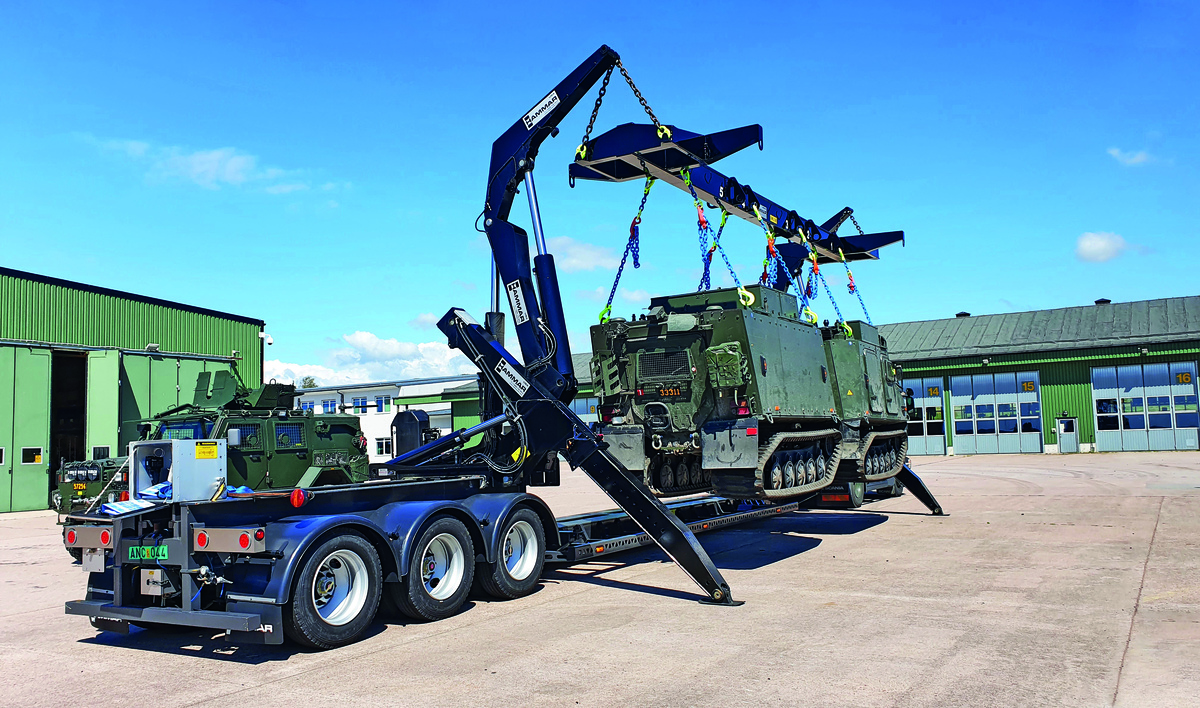
From Container Handling to Field Repair: The Evolving Role of Logistics Technology
While the ability to handle containers, equipment and specialized cargo remains the core function of HAMMAR systems, their true value becomes evident when intervention is required directly at the point of operation.

Equipped with hydraulic cranes and offering a payload capacity of up to 45 tonnes, HAMMAR sideloaders can handle not only containers but also vehicles and heavy equipment. This makes them an ideal platform for mobile service, maintenance and field repair operations.
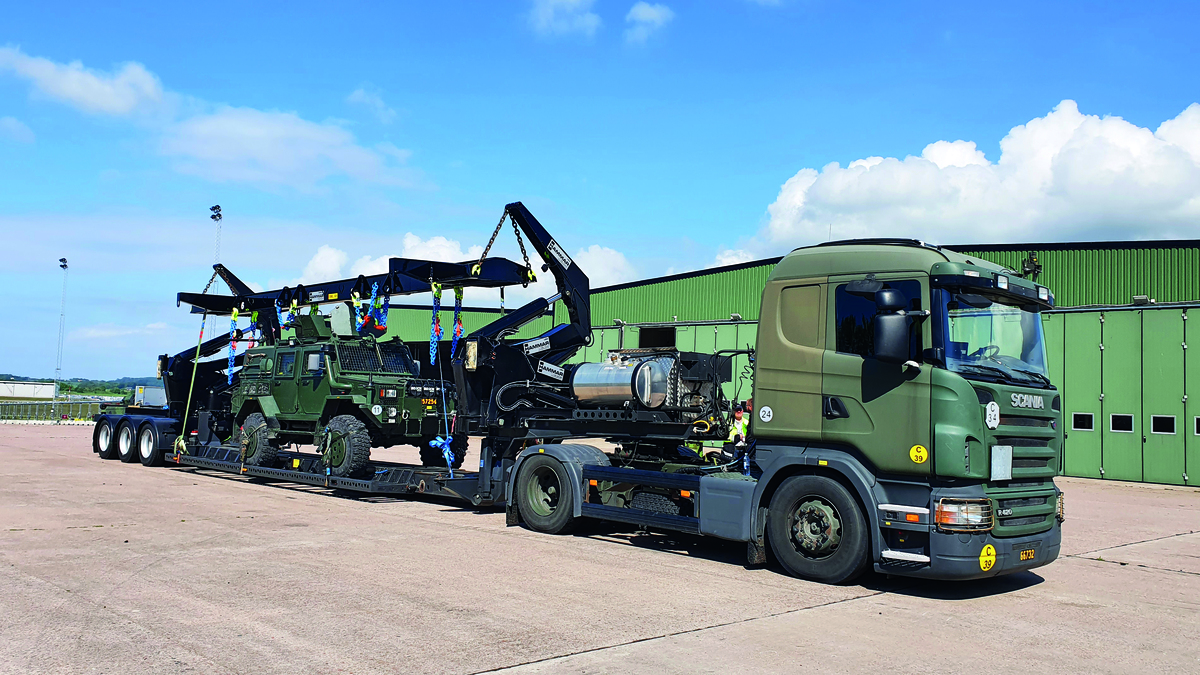
HAMMAR as a Mobile Repair Unit
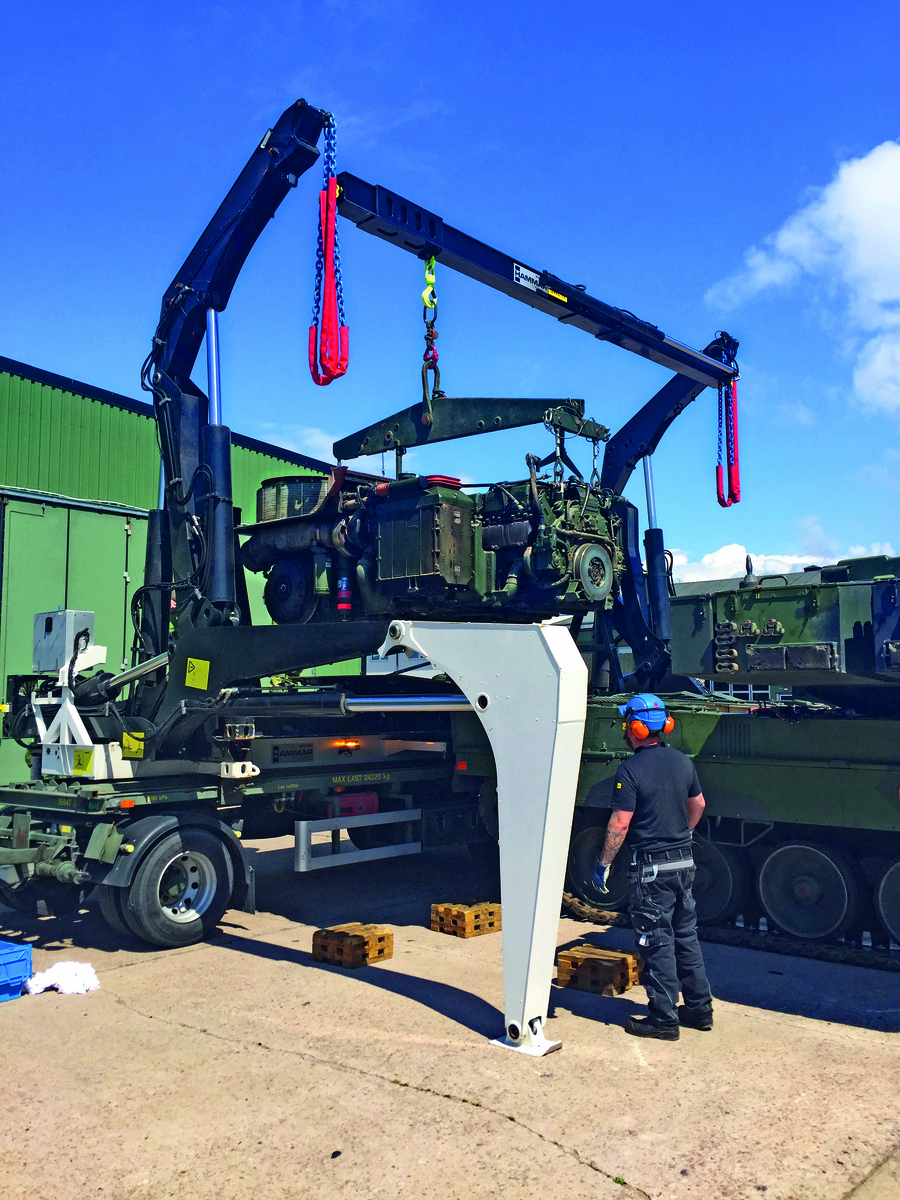
Equipped with a service beam and winch, a HAMMAR sideloader can be transformed into a fully capable repair crane, enabling maintenance and recovery operations directly in the field. The ability to carry out repairs on-site is one of the key factors in maintaining the operational readiness of modern armed forces. Any prolonged downtime resulting from the need to transport equipment to specialized maintenance facilities reduces the effectiveness and deployment capability of military units.
This is why armed forces are increasingly relying on mobile maintenance and repair capabilities that enable faults to be diagnosed and repaired directly at the point of deployment, eliminating the need for time-consuming and logistically complex transportation of equipment to specialized maintenance facilities. The result is a faster return of assets to service, a reduced logistical burden and improved operational readiness of military units.
In this role, HAMMAR sideloaders offer a wide range of applications. They can be used for:
- handling heavy components of military vehicles and equipment, including complete powerpacks and chassis components,
- repairing damaged vehicles directly in the field, eliminating the need for transport to specialized maintenance facilities,
- supporting recovery operations and the replacement of damaged equipment in emergency situations.
The winch can move both horizontally and vertically along the service beam and is capable to handle loads of up to 10 tonnes, providing lifting capabilities comparable to those of a conventional crane in field conditions. Mobility is one of its key advantages. Once repairs have been completed, the unit can immediately return to its mission or redeploy to the next support location.
Minimising Logistics Requirements, Maximising Operational Effectiveness
In modern military operations, the ability to operate independently of supporting infrastructure can be critical to mission success. HAMMAR sideloaders fully meet this requirement by functioning autonomously, without the need for external lifting equipment or additional support assets, while being operated by a single person.
This approach provides substantial operational benefits, including reduced personnel requirements, accelerated maintenance and recovery operations in the field, lower equipment downtime, and the ability to operate effectively in remote, undeveloped or difficult-to-access environments.
Repairs Without Delay: The Key to Operational Readiness
One of the most significant advantages of the HAMMAR mobile repair unit is its ability to support field maintenance and repair operations, which are critical to maintaining the operational readiness of modern armed forces. By eliminating the need to transport damaged equipment to remote service centers, downtime can be significantly reduced and equipment returned to service much faster. If a vehicle can be repaired on-site, the intervention can be carried out immediately. If not, the system enables the vehicle to be recovered, loaded and transported to another location without the need for additional specialized equipment. This flexibility enhances equipment availability, reduces logistical demands and increases the overall operational readiness of units in the field.
Alliance Compatibility
The HAMMAR sideloader is fully compatible with ISO containers and NATO STANAG standards, ensuring seamless interoperability across allied forces during international operations, exercises and deployments. Supported by HAMMAR's global network and worldwide service infrastructure, operators benefit from prompt technical support and rapid spare parts availability, helping to maximize operational readiness and reduce the risk of mission-critical equipment downtime.
Proven in Armed Forces Around the World
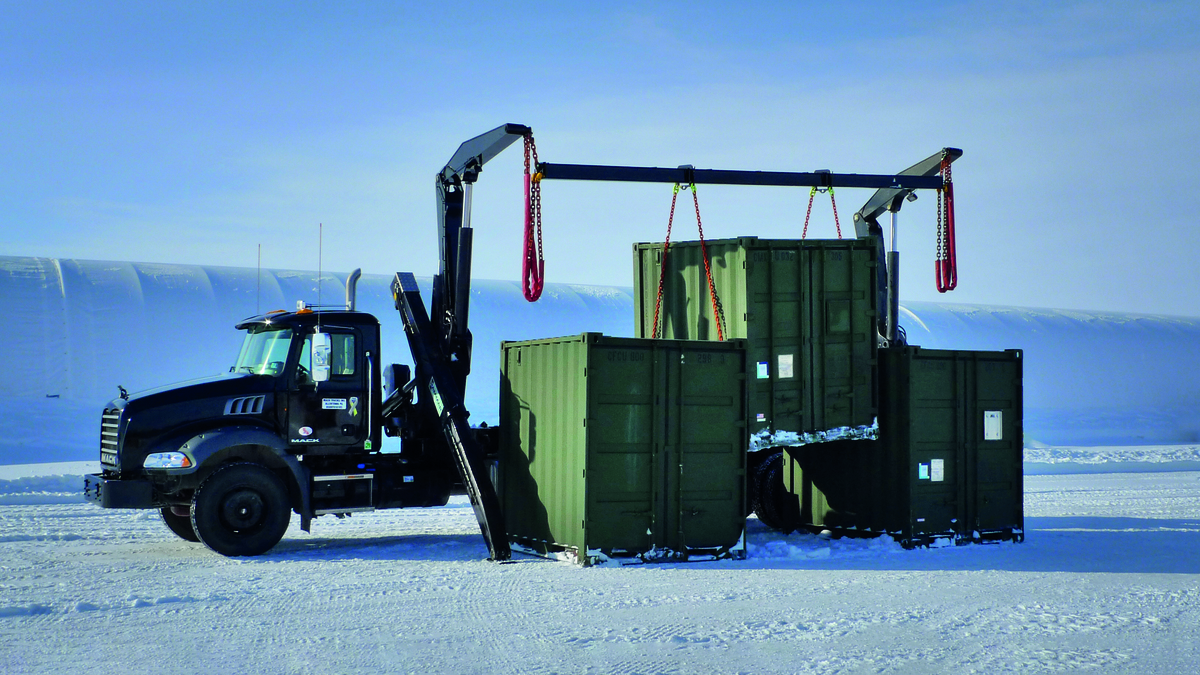
HAMMAR sideloaders are currently in service with dozens of armed forces around the world. In addition to their logistical role in transporting containers, fuel tanks and mobile field hospitals, they are increasingly being used as mobile lifting and maintenance platforms for military equipment in the field.
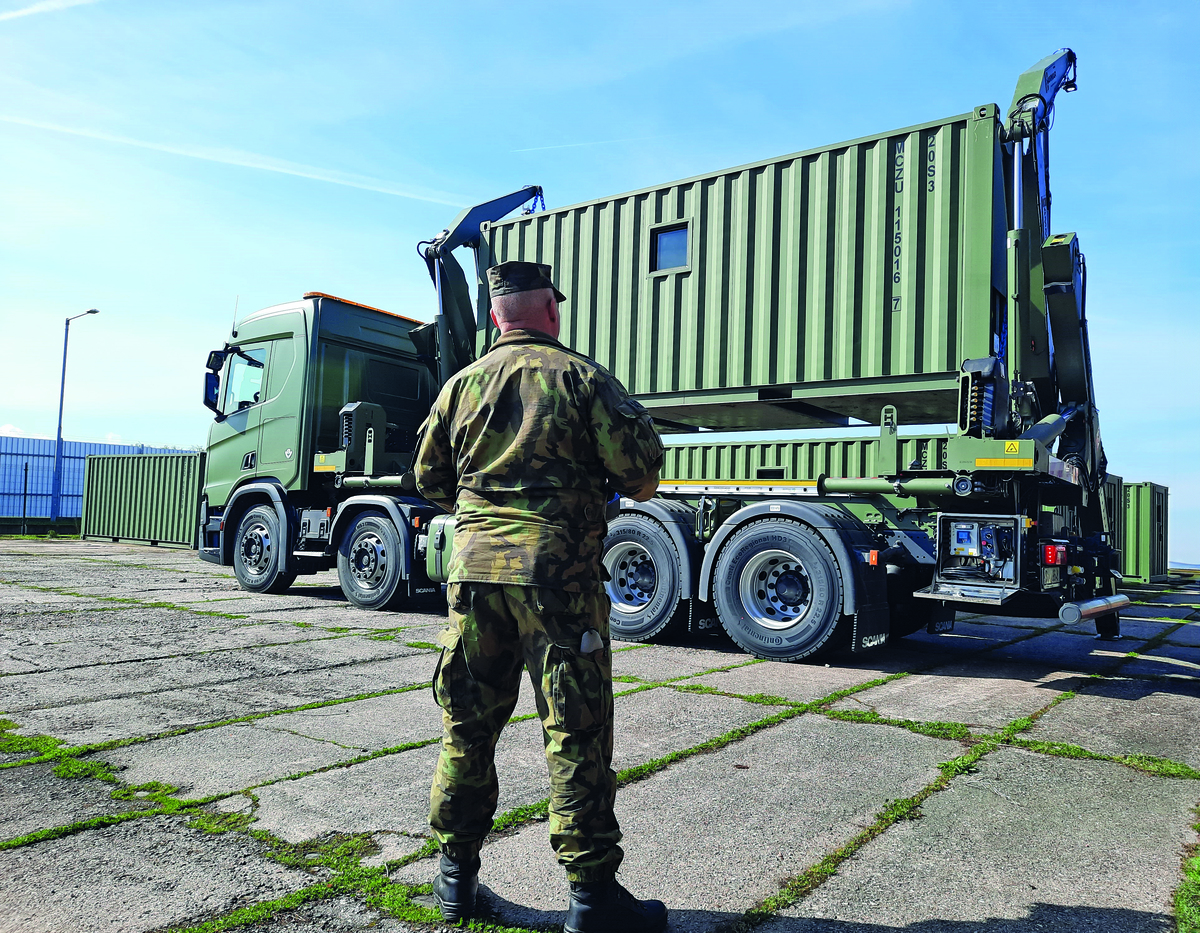
The Czech Armed Forces have also invested in this technology, recently introducing 20 new HAMMAR units into service. These systems significantly enhance the military's ability to conduct fast, flexible and self-sufficient logistics operations.
The Future of Military Logistics: Mobility, Flexibility and Self-Sufficiency
Modern military operations demonstrate that success depends not only on advanced technology, but also on its availability at the right place and at the right time. HAMMAR meets these challenges by bringing together handling, transport, recovery and repair capabilities in a single platform.
As a result, HAMMAR has become an essential asset for modern tactical and logistical support, enabling armed forces to operate more efficiently, respond more rapidly and maintain a high level of operational readiness in any environment.