









General Šnajdárek Steps Down as Head of the Signal Corps After Four Years, Will Now Focus on Developing the Czech Armed Forces’ Capabilities
After more than four years, Brigadier General Petr Šnajdárek is preparing to step down from his position as director of the Communications and Information Systems Section at the Ministry of Defense. In connection with his upcoming promotion to the rank of major general, he is set to transfer to the Ministry of Defense’s Force Development Section. His work to date has focused on the digitization of the armed forces, the modernization of communications and information systems, NATO interoperability, and the development of new technologies. In addition to specific projects – including the National Test Range for Autonomous Ground Systems – he has also focused on personnel development within the Signal Corps and on cooperation with industry, research institutions, and other government agencies. Here is a profile of the general, whose professional experience can now be applied to the broader development of the capabilities of the Czech Army.
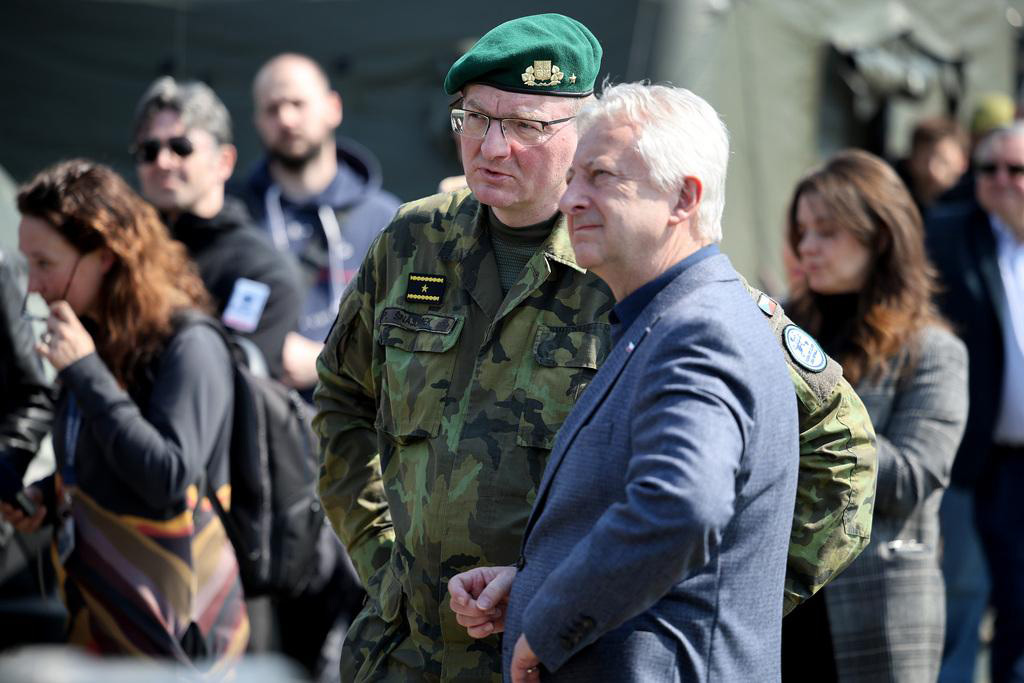
Brigadier General Petr Šnajdárek has headed the Communications and Information Systems Section of the Ministry of Defense since 2022. His military career has focused primarily on electronic warfare, reconnaissance, intelligence, and the development of command and control systems. It is precisely this combination of expertise that is reflected in his approach to modernizing the military, in which, in addition to developing communications infrastructure, he emphasizes the integration of new technologies, information sharing, and their practical application in military operations.

General Šnajdárek studied electrical engineering at the Military Academy in Brno, specializing in advanced radar technology. He began his military career in 2003 with the 111th Electronic Warfare Battalion and subsequently served in various technical and command positions with the 53rd Brigade, later the Reconnaissance and Electronic Warfare Regiment. He participated twice in the ISAF mission in Afghanistan, and in 2015 he was tasked with establishing the Czech Army’s first unmanned systems unit as part of Operation Resolute Support. It was precisely the experience with unmanned systems gained during these overseas deployments that later fueled his interest in autonomous systems and their use in the armed forces. In the following years, he focused on developing intelligence, surveillance, and reconnaissance (ISR) capabilities and worked in the field of command and control systems. From 2020 to 2021, as a member of the Central Management Team and the Government Council for Health Risks, he also contributed to the response to the COVID-19 pandemic. Before taking the helm of the Communications and Information Systems Section, he served as deputy commander of the 53rd Reconnaissance and Electronic Warfare Regiment. He was promoted to the rank of brigadier general on May 8, 2022.
He took over leadership of the Communications and Information Systems Section at a time when the requirements for the operation of military communications networks, data processing, and command security were undergoing significant changes. The ongoing modernization of the army and lessons learned from the war in Ukraine have shown that the effectiveness of modern weapon systems increasingly depends on the ability to acquire, transmit, and evaluate information. Electronic warfare, unmanned systems, reconnaissance systems, and secure communications constitute interconnected capabilities whose importance on the modern battlefield is constantly growing.
Digital Transformation and Alliance Interoperability
One of the main areas of Šnajdárek’s work has been the development of military communications networks and information systems supporting the command and control of the Czech Army. In addition to traditional communications systems, attention has focused on modernizing data infrastructure, secure communications, interoperability, and creating the conditions for the use of new technologies. These activities are part of a broader digital transformation of the military, aimed at gradually creating an integrated information environment. This is intended to enable more effective information sharing among individual levels of command, military units, and weapon systems. At the same time, it must ensure adequate data protection and the resilience of the communications infrastructure against cyberattacks or electronic warfare.
At the Signal Corps Conference in June 2026, Šnajdárek presented the four fundamental pillars of this approach: an integrated information environment, modern infrastructure and interoperability, cybersecurity and resilience, and personnel with appropriate digital skills. In practical terms, this involves, for example, the development of tactical communications networks, satellite links, mobile data centers, and information systems, as well as exploring the potential of modern wireless technologies, including 5G networks. The importance of these capabilities is growing alongside the ongoing modernization of both the ground and air forces. Newly procured systems must be capable of communicating with one another and sharing information that can be used in the planning and conduct of operations. Thus, technical parameters alone are not the sole measure of their effectiveness. Equally important is the ability to integrate them into a unified command and control system.
A concrete example of the development of interoperability is provided by the international Federated Cloud exercises, in which Czech specialists participated in 2024 and 2025. Their goal is to verify the compatibility of national and alliance communication and information systems according to Federated Mission Networking (FMN) standards. According to Šnajdárek, more than 1,300 specialists from several NATO member states participated in the Federated Cloud 2025 exercise. Participants tested the ability to secure communications and information sharing in a large-scale operational scenario that also included cyberattacks, the use of electronic warfare assets, and disruptions to civilian infrastructure. The experience gained can be applied in the preparation of joint Alliance operations as well as in the further development of national command and control systems.


The issue of technological and data sovereignty is also linked to digital transformation. In this context, Gen. Šnajdárek emphasizes the need to maintain control over key information systems and data essential for national defense. This does not mean complete technological self-sufficiency, but rather the ability to operate critical infrastructure, understand how it works, and limit dependence on individual suppliers.
New Technologies and the National Test Range
In addition to modernizing communications and information systems, Šnajdárek also focused on the potential applications of new technologies, particularly unmanned and autonomous systems, robotics, and artificial intelligence. In this area, he was able to draw on his previous experience with establishing an unmanned systems unit during his deployment in Afghanistan.
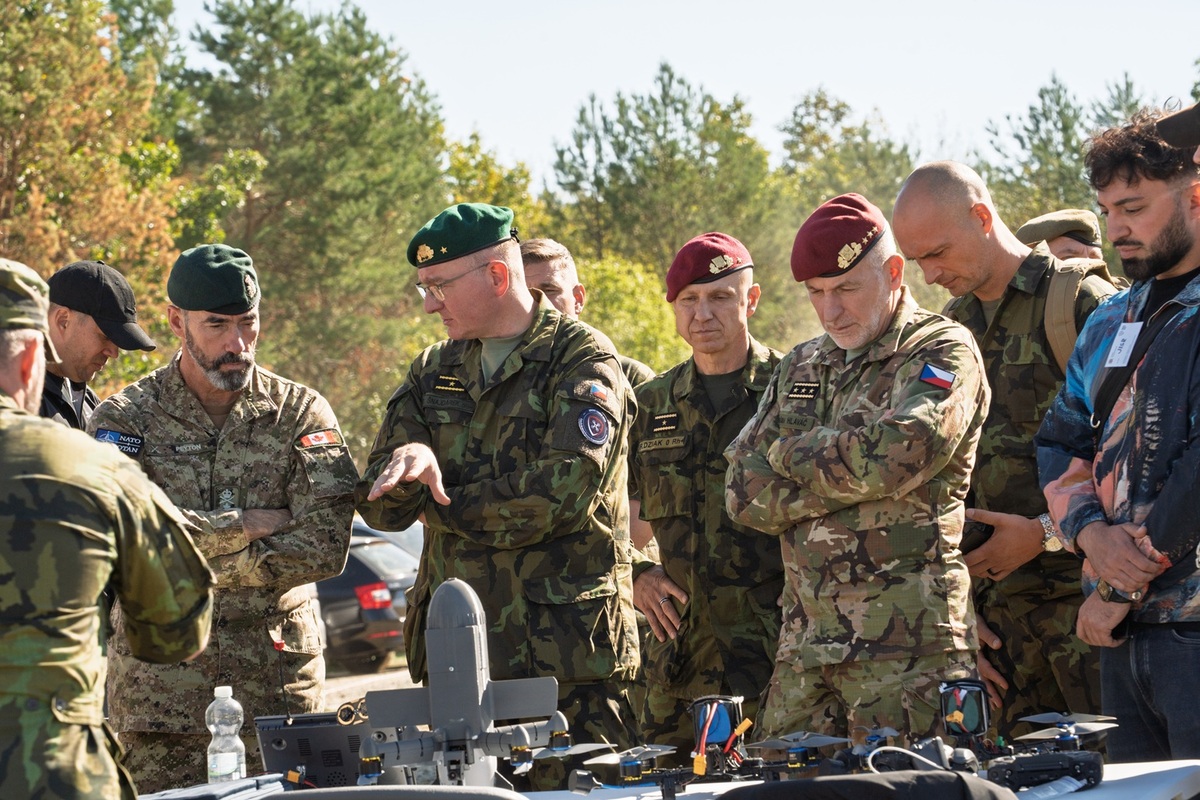
One of the concrete results is the NATEP UGV National Test Range for Autonomous Ground Vehicles, which was officially opened on June 3, 2026, at the Bečva training ground near Lipník nad Bečvou as part of the Signal Corps Conference. The project was in the works for approximately eighteen months, and its goal was to create a specialized environment for testing the capabilities of unmanned ground systems. Previous testing of these vehicles often took place at military training grounds designed primarily for heavy equipment, whose characteristics did not meet the specific requirements of smaller autonomous and robotic platforms. The new test range therefore offers a variety of terrain obstacles, including trenches, craters, water and mud sections, sloped surfaces, rails, and staircases. It allows for the evaluation not only of the mobility and technical characteristics of individual vehicles but also of their control systems, communication links, and potential for integration into military systems. The test range was also used during the international Drone Shield 2026 exercise. The experience gained from testing and the requirements of foreign partners will serve as a basis for its further development, for example, in the area of 5G network utilization or the expansion of testing capabilities for alliance partners.
At the same time, the NATEP project exemplifies the approach that Šnajdárek advocates for the introduction of new technologies. The essence of this approach is to first define the required military capability, then test available solutions under conditions close to real-world deployment, and only then, based on the results, decide on their further use. This approach is particularly important for unmanned vehicles, autonomous systems, and other technologies whose development proceeds significantly faster than traditional military acquisition processes. It is precisely the length and administrative complexity of these processes that Šnajdárek has repeatedly identified as one of the obstacles to the faster implementation of innovations in military practice.
Cooperation with Industry and Scientific Institutions
The development of new technologies is also linked to an emphasis on cooperation between the military and the domestic defense industry, universities, and research organizations. Many of the technologies currently used by the armed forces are, in fact, developed in the civilian sector. These include, for example, advanced software tools, artificial intelligence, data technologies, robotics, and autonomous systems. A practical platform for bringing together military and civilian experts is the Signal Corps Conference, which the military organizes jointly with the AFCEA Czech Chapter. The 2026 edition in Lipník nad Bečvou was attended by more than 650 experts, and the program included over 250 presentations and dozens of technology demonstrations. In addition to showcasing new solutions, the conference provides a forum for defining the military’s needs and discussing ways to meet them.
Another topic General Šnajdárek focuses on is quantum technology. Its potential use in the defense sector relates primarily to computational methods, secure communications, and other specialized applications. For now, the focus is mainly on research and evaluating the possibilities for their future deployment. The situation is similar with artificial intelligence, where attention is centered on data processing, the automation of selected processes, and decision support, while ensuring information security. Linking military needs with industry and academia is important not only for development itself but also for testing and the subsequent implementation of new solutions. However, in addition to the technological level, it is crucial that the results of research and experimentation meet specific operational requirements and can be put to practical use.
The New Generation of Signal Corps Personnel and Personnel Development
An important part of Šnajdárek’s tenure was also the personnel development of the Signal Corps. Growing technological demands require specialists in information technology, cybersecurity, electronics, data network administration, and other technical fields. Recruiting and retaining these specialists over the long term represents an ongoing challenge for the military. One of the recruitment tools has been the “New Generation Signal Corpsman” initiative, which Gen. Šnajdárek personally championed. Its goal is to present the Signal Corps as a modern, technologically advanced branch of the military and to highlight career opportunities for candidates with a technical education.
According to published data, in 2023 – for the first time since the army’s professionalization – the negative trend of personnel departures from the Signal Corps was reversed. The number of new recruits was nearly double the number of those leaving. In July 2025, the Signal Corps reported that it had succeeded in recruiting more than 300 new specialists through its recruitment efforts. The plan for 2026 was to recruit an additional 187 personnel, of whom 137 had been enlisted as of August. In addition to recruitment itself, professional training and the creation of conditions for further professional development are also important. Technological changes are increasing the demands for ongoing training and the ability of personnel to work with new systems. The personnel results of recent years therefore represent one of the specific indicators of the Signal Corps’ development, although the overall situation can only be assessed based on the long-term staffing levels of individual specialties and the ability to retain qualified specialists.
Communication Technologies in the Service of National Security
The agenda of the Communications and Information Systems Section also extends into the areas of national defense and crisis management. One of the key topics is the development of information systems that enable the secure sharing of data among authorized institutions and the creation of a shared situational picture. This area includes the National Defense Security Information System and related agenda-based information systems. Their development is aimed at interconnecting relevant data sources, digitizing selected processes, and supporting coordinated decision-making in ensuring national defense and resolving crisis situations.
In addition to information platforms, attention is also focused on alternative communication options for situations where standard infrastructure is unavailable or disrupted. One example is the ARDOS project, which aims to leverage the expertise of amateur radio operators, unmanned system operators, and other specialists to establish or restore communications during extraordinary circumstances. Part of this approach involves collaboration with the professional community and exploring ways to integrate these capabilities into the crisis preparedness system. Activities related to the national information platform for civil-military cooperation are also of broader significance. Their goal is to improve the exchange of information among relevant institutions and enable more effective coordination in addressing security and crisis situations.
Lessons Learned for the Further Development of the Army’s Capabilities
At the end of 2026, Brig. Gen. Petr Šnajdárek is preparing for a change in his assignment and promotion to the rank of major general. His next assignment will be with the Ministry of Defense’s Force Development Section, whose responsibilities include the conceptual and technical management of the Czech Army’s capabilities on a broader scale. This transition to his new role builds on his professional experience to date, which includes operational deployments, electronic warfare, reconnaissance, unmanned systems, command of military units, and management of communications and information technology.
Looking back on more than four years at the helm of the Communications and Information Systems Section, several specific achievements and activities are worth noting. In addition to advancing NATO interoperability through the Federated Cloud exercise, these include, in particular, the establishment of the National Test Range for Autonomous Ground Vehicles, the expansion of personnel in the Signal Corps, and the development of projects focused on national defense and secure information sharing. At the same time, preparations are continuing for additional projects in the areas of digitization, autonomous systems, artificial intelligence, infrastructure resilience, and cooperation with the civilian technology sector. Their implementation will depend on available financial and personnel resources, procurement procedures, and the ability to effectively integrate new technologies into military practice.
It is precisely in this area that a connection can be found between Šnajdárek’s work to date and his upcoming new role. This is not merely about procuring modern systems, but above all about creating the conditions under which the military will be able to respond to new technological trends, evaluate their benefits in a timely manner, and integrate them into the development of its operational capabilities. The experience Gen. Petr Šnajdárek gained in the Signal Corps and in managing communications and information systems can thus be applied to the broader development of the Czech Army. In addition to the ongoing modernization of its equipment, the ability to anticipate, verify, and practically apply technological changes in ensuring national defense will become increasingly important for the Army’s future operations.