
















Commentary: Czech Skyfox at the Forefront of NATO’s Counter-Drone Defense? RUSI Recommendation Remains on Paper for Now
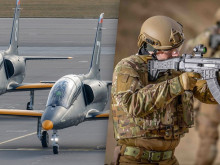
Over the past two weeks, there has been intense debate in the domestic media regarding an analysis by Justin Bronk of the British Royal United Services Institute (RUSI). In his paper, *Options for a NATO Multinational Drone-Interception Squadron*, he raised the question of the potential use of subsonic aircraft to destroy drones as part of counter-drone defense. Specifically, this involves a multinational squadron of 16 to 24 aircraft, which would likely be deployed on NATO’s eastern flank. The discussion has centered on Aero Vodochody’s flagship product: the subsonic L-39 Skyfox trainer and light combat aircraft, which has been in production since 2019. A total of eight of these aircraft will be made available to the state-owned enterprise LOM Praha for training Czech Armed Forces pilots.
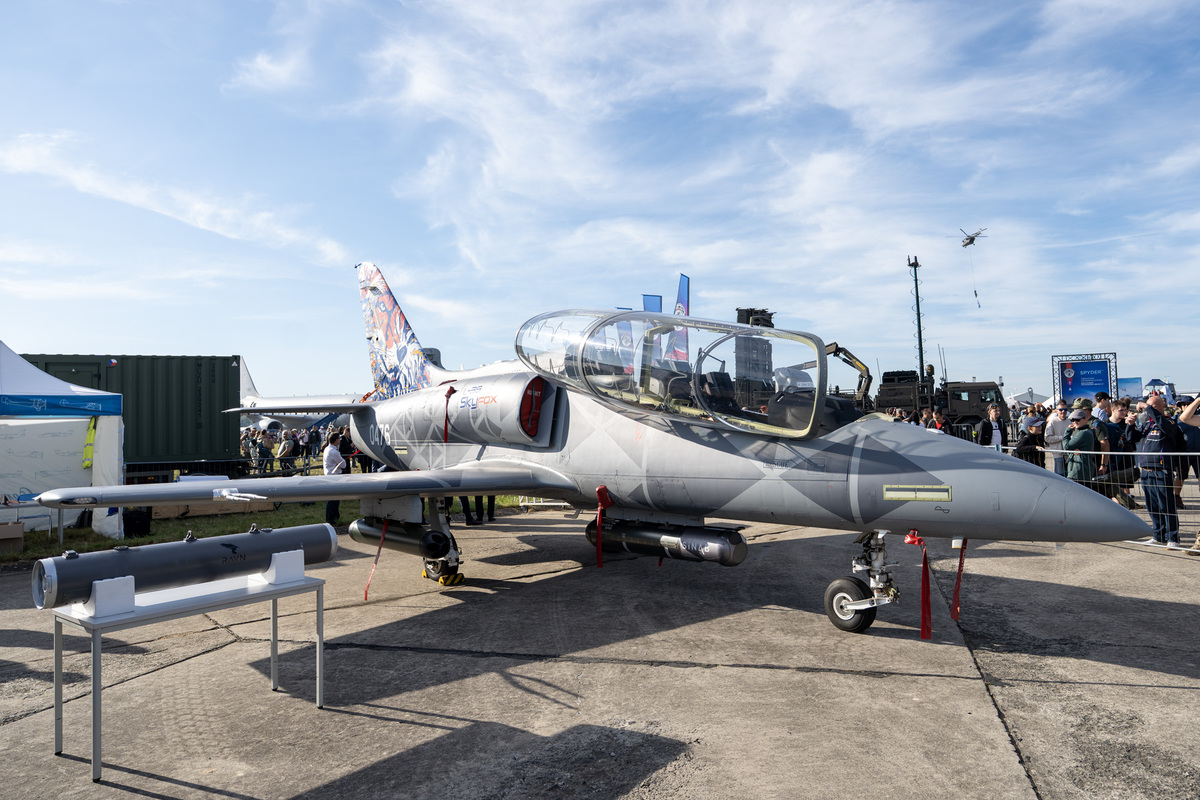
In addition to the L-39 Skyfox, Bronk also provides a detailed analysis of other aircraft types, such as the A-29 Super Tucano, Pilatus PC-9, Leonardo M-346, and KAI TA-50. He considers maintenance requirements, weight, armament options – including machine guns, cannons, and laser- or infrared-guided missiles – as well as the total cost per flight hour. He concludes that the optimal solution is the L-39 Skyfox, developed by domestic engineers. According to him, it has better flight characteristics than its competitors, can be armed with machine guns and cannons, and has much more accessible service and manufacturing capabilities.
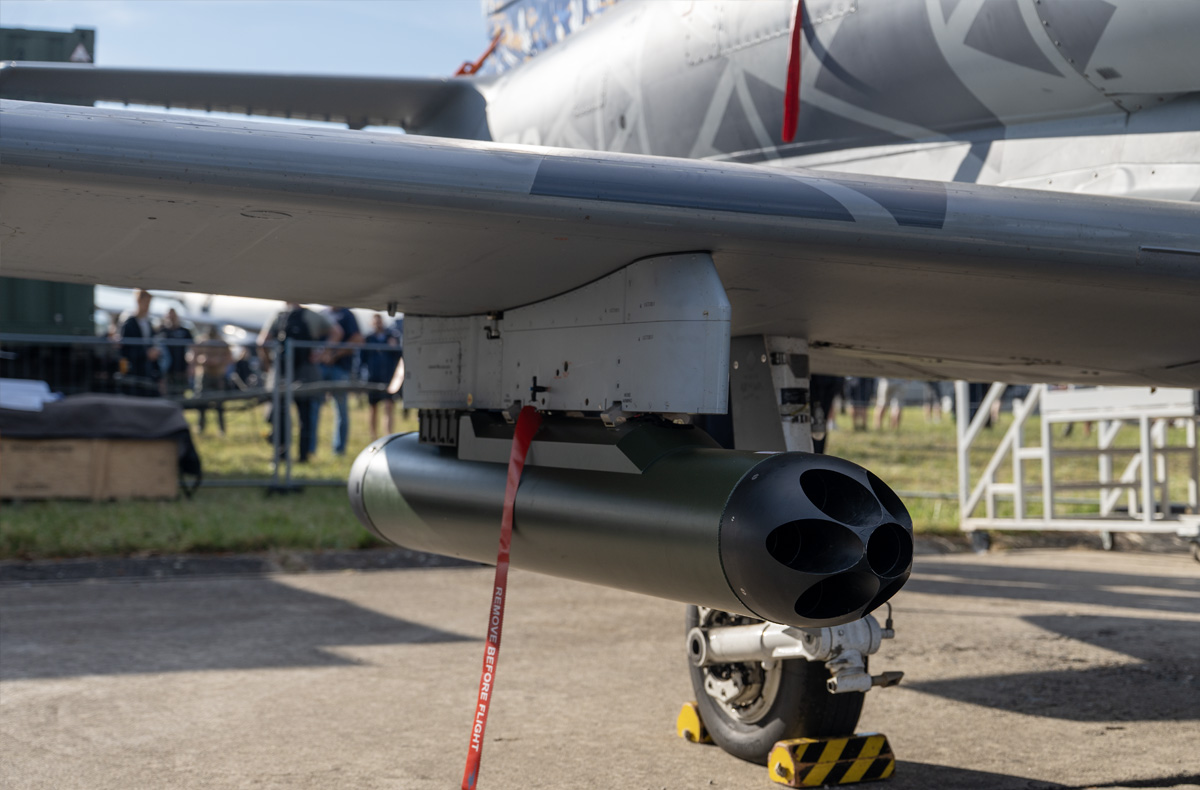
Among other things, the L-39 Skyfox is touted as a more suitable alternative to 4th- and 5th-generation multi-role supersonic aircraft, such as the F-16 or F-35. While these aircraft are capable of effectively destroying drones – as demonstrated by the downing of several Russian drones by Dutch F-35As in Polish airspace in September 2025 – their cost per flight hour runs into the tens of thousands of dollars. The risk of damage to the aircraft during deployment must also be taken into account. Repairs to an F-35 can easily run into several million dollars, while a new aircraft costs around $100 million – more than two billion Czech crowns. With the L-39 Skyfox, these concerns logically disappear, as the aircraft can shoot down targets just as effectively and its flight hour costs approximately $2,000. Even potential damage to the aircraft, which costs roughly a quarter of the price of an F-35, represents a significantly smaller financial burden. The Skyfox’s advantage lies not in its potential expendability, but in its substantially lower acquisition and operating costs and the ability to conserve the limited service life and armament of frontline fighter jets. The Czech subsonic aircraft thus appears to be perhaps the most compelling option available.

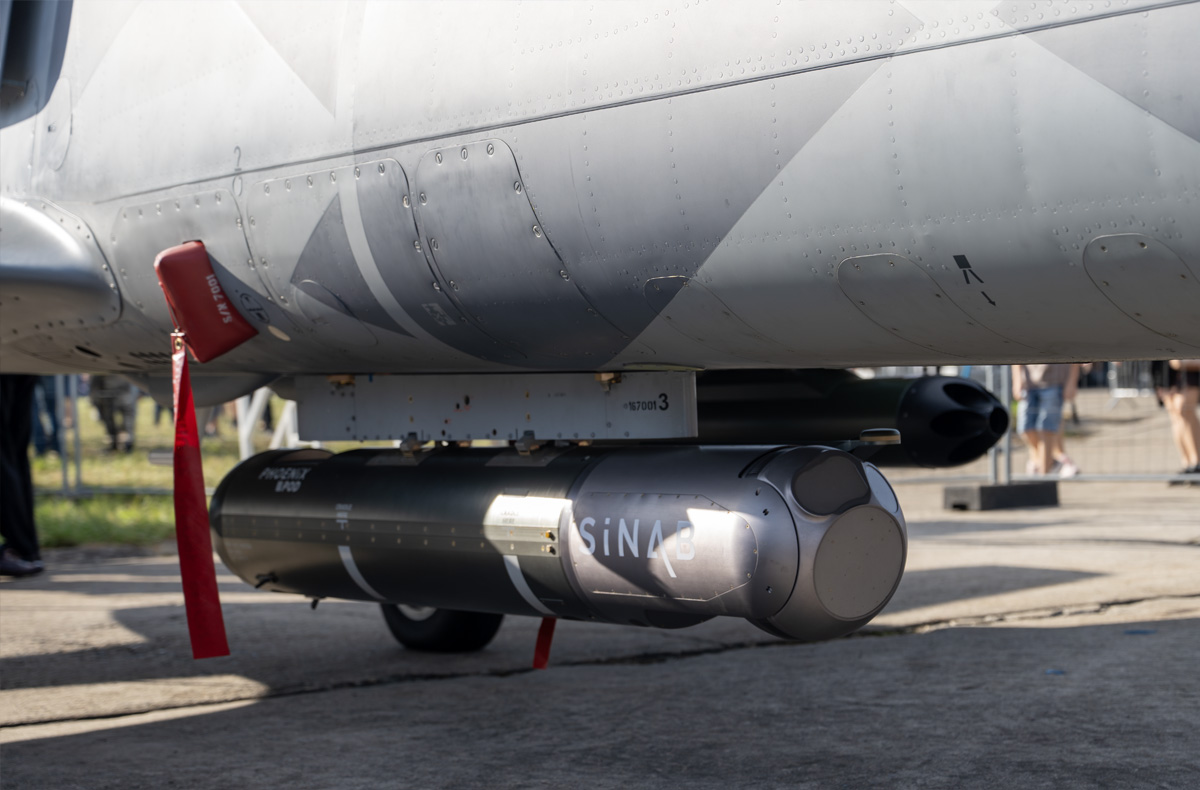
The only widely known drawback – which Bronk himself points out – is the lack of its own radar for detecting drones. The aircraft would therefore have to be guided to its target by ground-based assets, AWACS early-warning aircraft, or more powerful combat aircraft. These would bring it into proximity with the drone, which the crew would then lock onto and track using a pod-mounted targeting system. However, this is merely a matter of a follow-up technical solution.
As is often the case, the scenario described has its pitfalls. Following the publication of the analysis, an intense debate erupted in the Czech Republic over whether, when, and how NATO could use L-39 aircraft in the fight against drones. The author of this text himself weighed in on the topic in several commentaries for public media. The problem is that the debate is taking place primarily in a domestic context, as the British analyst highlighted a Czech aircraft of which we can be justifiably proud. The Czech defense industry, based primarily on the traditional production of ammunition, explosives, weapons, and infantry fighting vehicles, is thus proving that it is also capable of manufacturing sophisticated aircraft. The aviation industry is an exceptionally complex sector, and the Czech tradition of developing aircraft engines and platforms attests to the credibility of the domestic defense sector. Abroad, however, discussion of the RUSI analysis has been very limited. The idea can only be taken seriously once NATO’s top leaders begin to speak openly about this possibility.
Another question that arises is to what extent RUSI’s recommendations can be considered authoritative. RUSI, founded in London in 1831, is one of the traditional (“legacy”) defense and security think tanks, and its reports and recommendations have found their way onto the desks of European statesmen countless times. However, it remains a think tank – that is, a nongovernmental organization that formulates independent recommendations, which governments may or may not follow. In practice, they tend to be followed only marginally. The aforementioned analysis by Justin Bronk is also merely a commentary, meaning that, logically, the author’s text does not represent the position of the institute itself. One could also say that RUSI is currently significantly overshadowed by U.S.-affiliated RAND Europe, which has a much greater influence on European security policy, maintains offices in Cambridge, Brussels, and The Hague, and participates in a number of contracted projects for European governments. The issue will only gain real weight once NATO member states adopt RUSI’s recommendations.
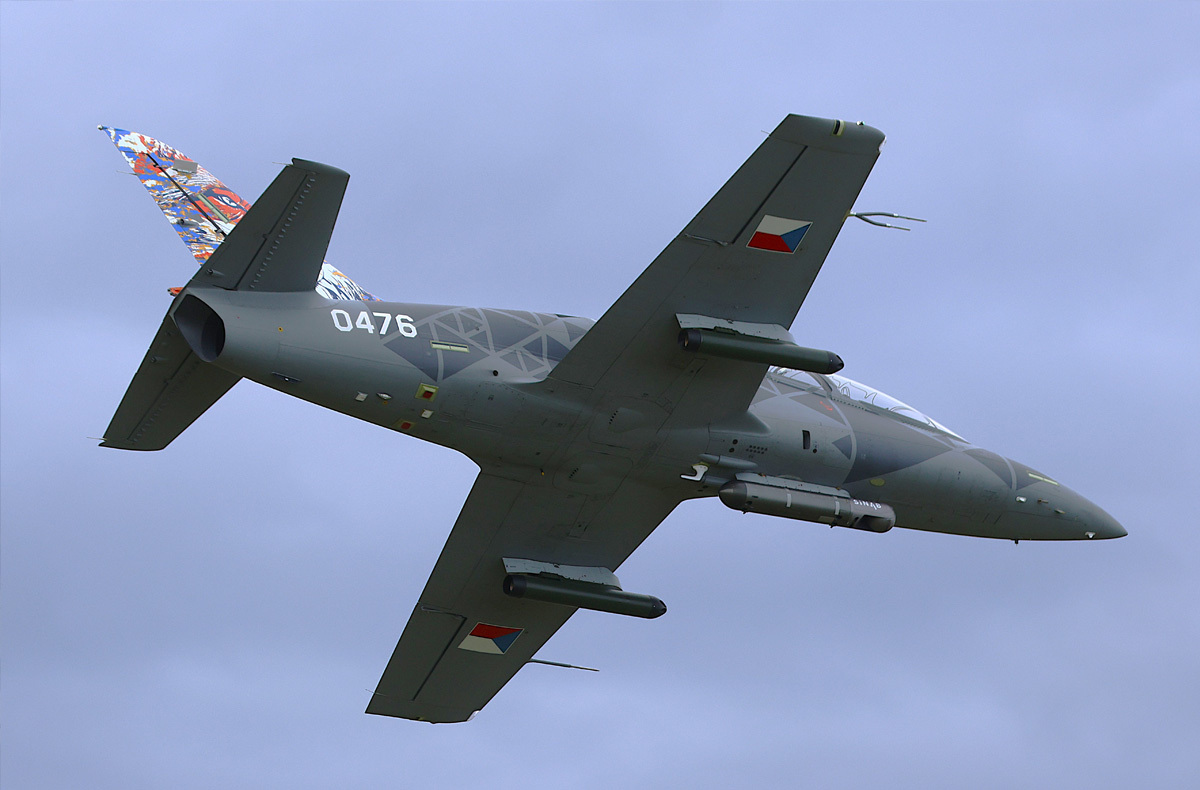
Overall, it is certainly a good thing that a suitable role has been found for the L-39 Skyfox, a topic that was widely discussed after 2015. For NATO combat missions outside Europe – such as in Afghanistan – the aircraft was not an option due to problematic maintenance support outside Europe; it was therefore primarily intended as a training aircraft within the European operational area. However, in the context of Russia’s intensifying hybrid operations – which are particularly evident through the use of drones – it is proving to be an elegant solution. The L-39 Skyfox need not serve solely to defend against Russian one-way (“kamikaze”) attack drones such as the HESA Shahed-136 or Geran-4, but also against drones that take off directly from NATO territory with the aim of attacking selected critical infrastructure, such as airports or the power grid, as we saw, for example, during this year’s drone attacks on Leipzig airport. In the Czech context, such a capability could form one layer of protection for selected strategic facilities, such as nuclear power plants or major airports. However, the specific number of aircraft required would depend on the nature of the attack and the overall architecture of the anti-drone defense system.


However, it remains an open question how these aircraft would fare against a swarm attack involving dozens of drones. It should therefore not be overlooked that, by their very nature, the L-39 Skyfox aircraft cannot single-handedly provide robust counter-drone defense for NATO’s eastern flank. The L-39 Skyfox would therefore have to be part of a layered counter-drone defense system combining detection and command capabilities, electronic warfare, ground-based kinetic defenses, and airborne interceptors.
The L-39 Skyfox is unquestionably a top-tier asset, and not just for destroying drones. If a multinational squadron were actually formed, it would undoubtedly boost the Czech Republic’s prestige within NATO. However, there is still a long way to go. Czech diplomats could, however, take up the issue and actively promote it within NATO. So let’s wait and see how it all plays out.