
















Defense Beyond National Borders: The Diaspora as a Source of Personnel
Population decline and rapid aging are now typical of most European countries, but this trend – which is detrimental to a country’s defense capabilities – is affecting some nations much more severely than others. Among the most severe cases is Latvia, which has lost more than one-fifth of its population since the start of the millennium. In addition to low fertility rates – which are well below the replacement level – emigration has also played a significant role. The largest outflow of residents occurred after the country joined the European Union in 2004 and, in particular, during the economic crisis. Between 2008 and 2011 alone, approximately 130,000 people left the country, primarily for Western European nations such as the United Kingdom, Ireland, and Germany.
Latvia Extends Mandatory Military Service to the Diaspora
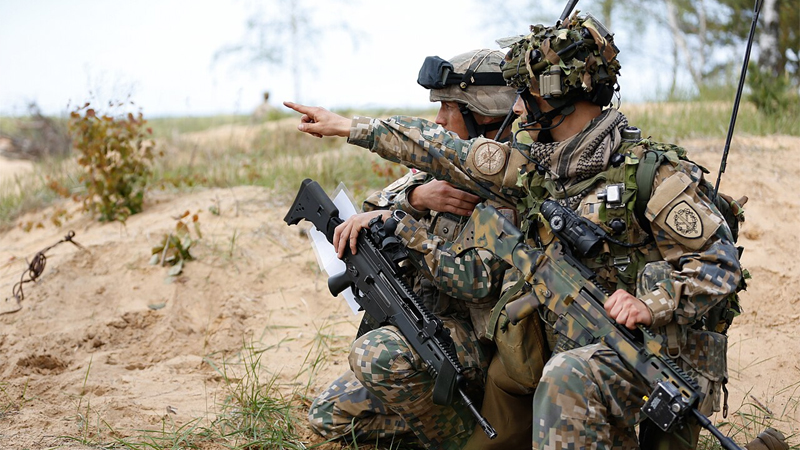
Currently, the wave of emigration has subsided, but most emigrants remain abroad. Starting in 2027, however, contact between part of the diaspora and their homeland may intensify significantly: Latvia plans to extend mandatory national defense service to citizens permanently residing abroad. The reasons are both demographic and social. Although the number of volunteers this year exceeded the planned number of conscripts – 1,560 volunteers signed up for the summer 2026 intake, compared to a need for 1,470 people – this success may not be sustainable in the long term. Some applicants typically fail the medical examination, and the state also plans to gradually increase the number of conscripts to approximately 4,000 per year. Greater involvement of the diaspora could therefore expand the limited personnel base while reinforcing the notion of defense as a civic duty that does not disappear simply by changing one’s place of residence.
However, conscripting members of the diaspora may encounter a number of difficulties. Some are purely practical, such as the issue of reimbursing travel expenses associated with conscripts’ journeys to Latvia or the nature of service for those who do not speak Latvian. These obstacles can be addressed to some extent through reimbursement of expenses or language courses. More complicated, however, may be the potential reluctance of Latvians living abroad to complete eleven months of service in a country with which they may no longer have strong personal ties.

Representatives of Daugavas Vanagi, a major organization of the Latvian diaspora, point out that some Latvian citizens – particularly those born or raised abroad, who often hold dual citizenship – may have a weaker connection to their homeland. If forced to perform military service, some of them might choose to renounce their Latvian citizenship. Therefore, it cannot be assumed that young people aged 18 to 19, who will be subject to compulsory service, will automatically be willing to return. The actual contribution of the diaspora to Latvia’s military manpower will thus depend not only on legal obligations but also on the state’s ability to enforce these obligations in practice and politically.
Europe Generally Does Not Call on Its Diaspora
As the Latvian Ministry of Defense points out, Latvia will not be alone in Europe in involving the diaspora in military service. Lithuania, Finland, and Estonia also take citizens living abroad into account, though each of these countries sets its own rules. Lithuania is the strictest in this regard; military service applies even to citizens residing abroad, and simply living outside the country is not grounds for exemption. In Finland, dual citizens may be exempted if they do not live in Finland on a long-term basis and have no real ties to the country. Estonia takes an even more lenient approach: while military service formally applies to citizens living abroad, individuals born and living long-term outside Estonia are not called up for service unless they apply for it themselves. Latvia, meanwhile, has no plans to introduce similar exemptions for its diaspora.
Within Europe, however, it is more common to exempt citizens living abroad from mandatory military service or to defer their obligation. Austria, Greece, Cyprus, Denmark, and Switzerland do not routinely call up their citizens living permanently abroad. These citizens may enlist voluntarily, or their obligation may be reactivated only upon their return to their home country. From the state’s perspective, this approach is less logistically and organizationally demanding and also reduces the risk of resistance from the diaspora, including efforts to sever even formal ties with their country of origin permanently. Latvia and Lithuania, however, face a combination of a more immediate security threat, a small population base, and long-term emigration. Therefore, they are more willing to view citizens living abroad as part of the potential military reserve, despite the practical problems and the uncertain effectiveness of such a step.
Related