




Czech Ministry of Industry and Trade Seeks to Significantly Increase Czech Companies’ Participation in European Defense Projects
The European Union is preparing a significant increase in funding to support the defense, security, and space industries. However, Czech companies will need to change their current approach to European funding, actively join international consortia, and strengthen their capacity to develop joint projects. These were the very topics addressed at the seminar “The Path for Czech Companies to European Projects,” organized by the Ministry of Industry and Trade (MPO) in Prague on November 6. The event also presented the ministry’s new responsibilities in the area of defense-industrial cooperation, funding opportunities for research and development, and upcoming changes regarding the involvement of domestic companies in strategic military acquisitions.
The seminar, held at the Ministry of Industry and Trade, brought together representatives of the Czech defense and security industry, research organizations, academia, and European institutions. The high level of interest was confirmed by more than 150 registered participants, who took part in person or via an online broadcast. The program included presentations by representatives of the European Commission, the European Defense Agency (EDA), the Permanent Representation of the Czech Republic to the European Union, and the private sector. In addition to current European defense programs, attention focused primarily on the new multiannual financial period beginning in 2028 and the opportunities it presents for Czech companies.
The opening remarks were delivered by David Müller, Director General of the Foreign Trade and European Union Section at the Ministry of Industry and Trade (MPO), who emphasized that supporting the defense industry is one of the ministry’s new strategic priorities. According to him, the transfer of certain responsibilities from the Ministry of Defense has made it possible to consolidate key support tools for Czech companies under a single ministry. “When we discussed priorities and the main topics we wanted to address at the beginning of the summer break, one of the things we agreed we wanted to place significantly greater emphasis on was precisely European resources and European funding,” Müller said.

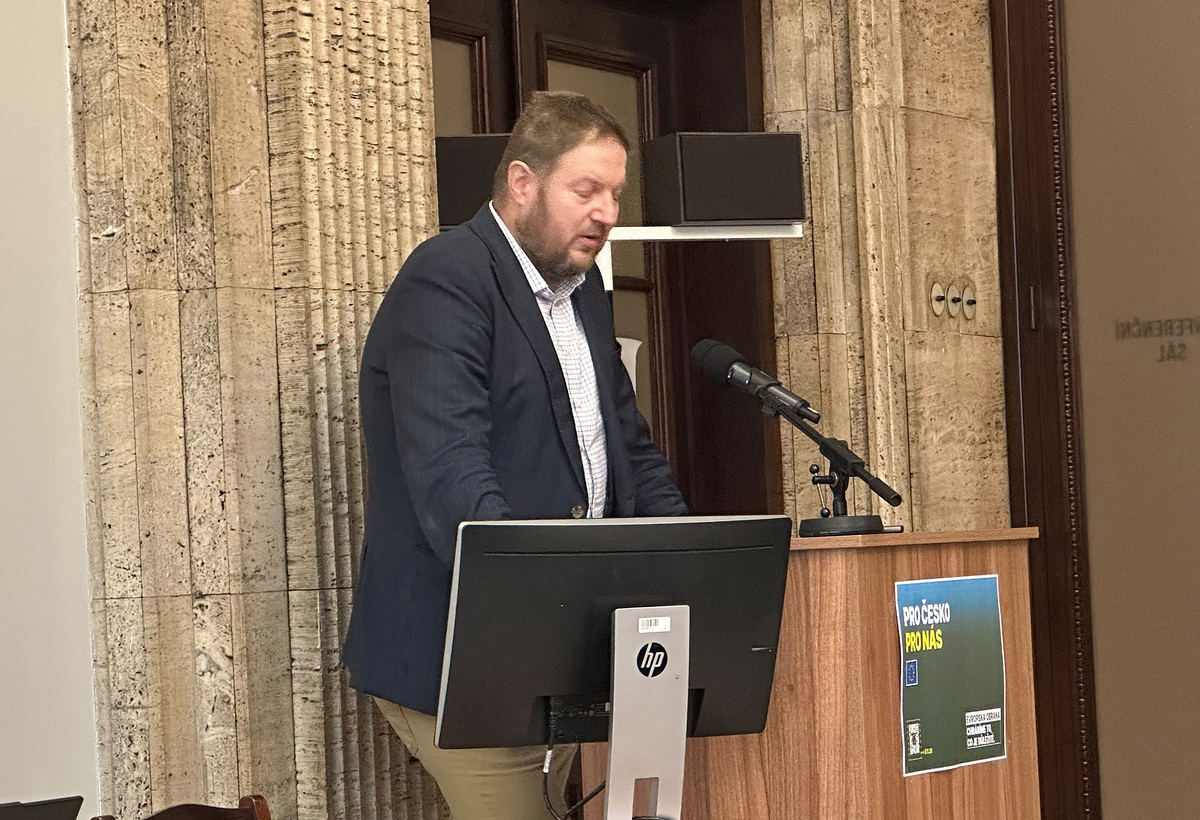
According to him, the decisive factor will be, above all, the ability of Czech companies to adapt to the new conditions of European funding. While in the past companies were accustomed to utilizing national operational programs, in the future, directly managed European programs – in which individual projects compete on an international level – will become increasingly important. “The national funding envelope will shrink. This trend is essentially inevitable, and we have to work with it. Conversely, the European funding envelope will grow. The key difference is that companies must compete directly for the European funding envelope,” Müller pointed out.
According to him, Czech companies must therefore be prepared not only to join international consortia but also to gradually take on leadership roles within them. It is precisely in this area that the Czech Republic has significant room for improvement. “You must be prepared to form consortia with entities from other member states. Czech companies – and this applies primarily to industry integrators – must learn to take the lead in some of these consortia. We have very few such examples,” Müller stated. He described this change as a fundamental shift in the approach to European funding. Therefore, he said, preparations for the new programming period must begin now.
The Transfer of Responsibilities from the Ministry of Defense to the Ministry of Industry and Trade Is Intended to Strengthen the Czech Defense Industry
Matěj Benda, Director of the Department of Defense-Industrial Cooperation at the Ministry of Industry and Trade, devoted a significant portion of the seminar to presenting the ministry’s new organizational structure and responsibilities. His department has become part of the Foreign Trade and European Union Section and is tasked with coordinating export support, industrial cooperation, European funding, and research activities. According to Benda, this realignment of responsibilities allows for the use of tools already available to the Ministry of Industry and Trade. These include, in particular, foreign trade missions, economic diplomacy projects, the official participation of Czech companies in international trade fairs, the PROPED program, the CzechBusiness tools, and cooperation with the Technology Agency of the Czech Republic. The framework for these efforts is provided by the government’s strategic documents, primarily the Strategy for Armament and Support for the Development of the Defense Industry in the Czech Republic through 2030, the Security Strategy of the Czech Republic, the Defense Strategy of the Czech Republic, and the Export Strategy of the Czech Republic 2023–2033.
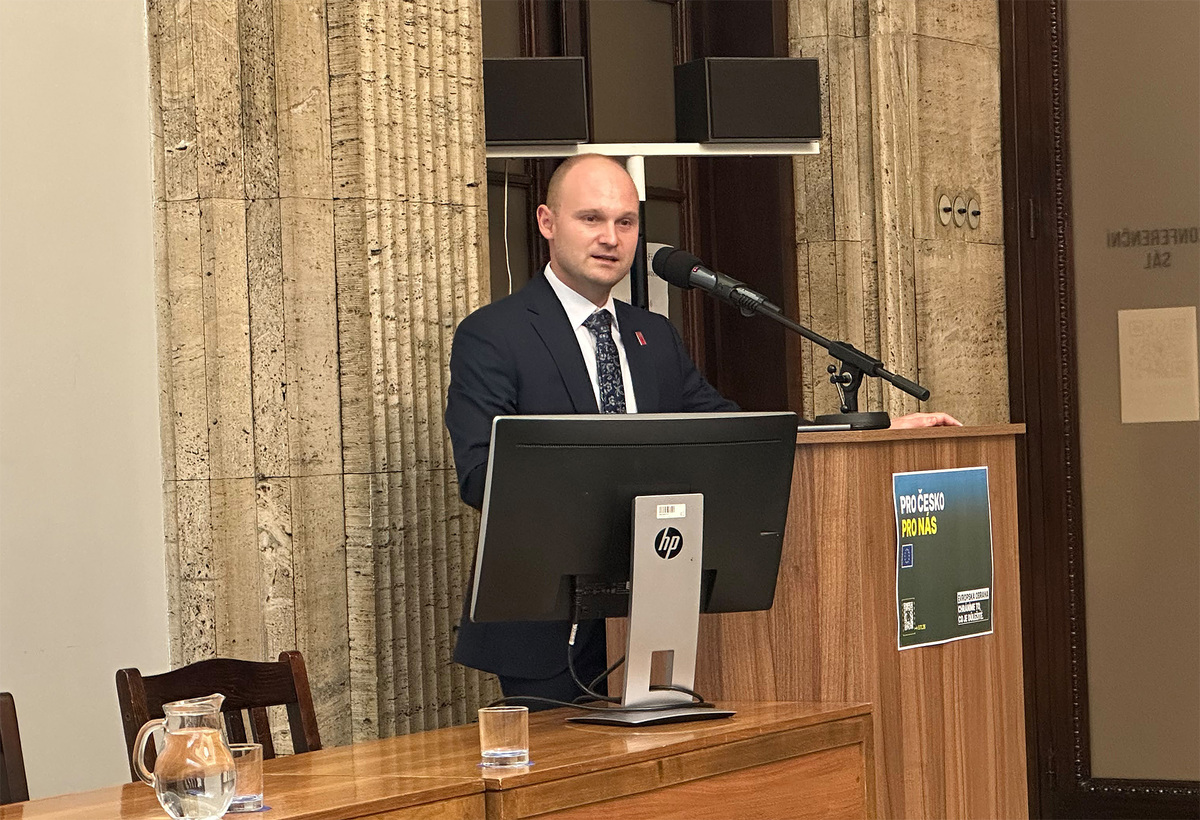
Coordination with the Ministry of Defense and the Czech Armed Forces remains one of the key priorities. Although the Ministry of Industry and Trade is now responsible for a number of commercial and industrial activities, military needs and acquisitions themselves remain within the purview of the Ministry of Defense. “Even though this agenda has been transferred to the Ministry of Industry and Trade, it is crucial that we cooperate with the Ministry of Defense and the Czech Army,” Benda emphasized. According to him, both ministries have already established basic rules for cooperation, which should be formalized through an agreement at the leadership level. The goal is to prevent jurisdictional disputes and create a functional system for supporting the domestic defense industry. B2B and B2G commercial relations fall primarily under the jurisdiction of the Ministry of Industry and Trade, while G2G intergovernmental relations remain with the Ministry of Defense. Work on European and NATO programs is divided similarly. The MIT will primarily handle European industrial and financial instruments, while the NATO DIANA agenda and other Alliance initiatives remain primarily the responsibility of the Ministry of Defense.
Another significant development is the assumption of responsibility for industrial cooperation programs related to strategic foreign acquisitions. The MIT is gradually taking over this agenda for projects involving F-35 fighter jets, Leopard tanks, and CV90 armored vehicles. At the same time, Benda announced preparations for a review of the current industrial cooperation system. The new methodology should place particular emphasis on technology transfer, the long-term involvement of domestic companies, and the creation of high-value-added capacities. “We will not support simply painting a tank green. We will support projects with genuine added value that also involve technology transfer to the Czech Republic,” Benda stated. According to him, the goal will not be to mechanically set a percentage share for domestic industry in individual acquisitions. Such an approach could, in fact, increase the final purchase price of military equipment without automatically yielding corresponding economic or technological benefits. More important will be the actual benefits for Czech companies, their integration into international supply chains, and their ability to subsequently apply the acquired technologies in other projects as well.
European Defense Programs Offer Billions of Euros for Research, Development, and Production
A significant portion of the seminar was devoted to European financial instruments. Presentations by representatives of the European Commission’s Directorate-General for Defense Industry and Space (DG DEFIS) outlined the current framework for supporting defense research, development, and technology capacity-building. DG DEFIS was established in 2020, and its mission is to develop the competitiveness of the European defense industry, strengthen technological sovereignty, and coordinate European space programs. According to the data presented, DG DEFIS’s financial framework for the defense and space sectors for 2021–2027 totals approximately 28.4 billion euros. Of this amount, 18.8 billion euros is allocated to space programs and approximately 9.6 billion euros to the defense sector. The European Defense Fund (EDF) remains a key instrument, with a budget of approximately 7.3 billion euros for the 2021–2027 period. The funds are primarily earmarked for joint research and development of defense technologies, demonstrators and prototypes, testing, qualification, and certification. However, the EDF does not finance the procurement of finished weapons systems.
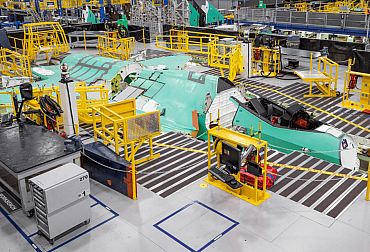
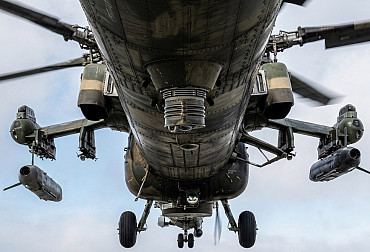
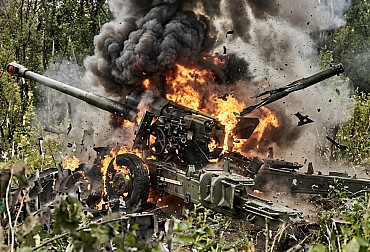
Specific opportunities for Czech companies are outlined in the EDF’s 2026 work program, which the European Commission adopted on December 17, 2025. Through this program, approximately one billion euros—more precisely, 1,005,978,500 euros—has been allocated to support joint defense research and development. EUR 676.1 million is allocated to the development of defense capabilities, and an additional EUR 329.9 million to defense research. The program comprises 31 thematic areas divided into ten calls for proposals and covers a broad spectrum of technologies, ranging from traditional weapon systems to state-of-the-art defense innovations. Approximately half of the budget is earmarked for the development of core defense capabilities, particularly air defense, main battle tanks, rocket launchers, autonomous vessels, and next-generation combat aircraft technologies. Another quarter of the funds is directed toward critical and emerging technologies, including quantum-secure networks, electronic warfare, the military cloud, artificial intelligence, unmanned systems, and the decontamination of chemical, biological, radiological, and nuclear substances. The remaining significant portion of the program is focused on the EUDIS defense innovation scheme, which primarily supports disruptive technologies, innovative small and medium-sized enterprises, and early-stage technology companies. Separate support for small and medium-sized enterprises and companies in the growth phase exceeds 20 million euros and also includes equity financing and business consulting.
Another important tool is the European Defense Industrial Program (EDIP), which, unlike the EDF, focuses more heavily on industrial production, capacity expansion, and the joint procurement of defense capabilities. According to the data presented, more than 700 million euros are earmarked for measures to strengthen the industry (IRA), which aim to expand European production capacities for critical defense products, components, and materials. An additional 240 million euros is directed toward supporting joint public procurement by member states (CPA). An additional 300 million euros has been allocated to the Ukraine Support Instrument (USI), which is intended to strengthen Ukrainian defense production and industrial cooperation between the European Union and Ukraine.
The presentation also offered specific recommendations for Czech companies. Businesses should assess whether their technologies, products, or production capacities align with the currently open topics of the IRA and CPA programs. In the case of support for industrial capacities, the ability to demonstrate an actual increase in European production or enhanced resilience of supply chains will be decisive. For joint procurement, participation in cross-border consortia will be important, while projects focused on Ukraine open up opportunities for partnerships with local manufacturers and joint production of military equipment. February 16, 2027, was cited as the next key deadline for submitting applications under the presented opportunities. The European Commission also highlighted the long-term investment deficit in European defense. According to the historical data presented, between 1999 and 2023, defense spending by EU member states increased by only 40 percent in real terms, while the United States saw a 68 percent increase, Russia a 523 percent increase, and China a 651 percent increase. If European countries had spent 2 percent of their GDP on defense between 2006 and 2021, their total spending would have been approximately one trillion euros higher, according to the calculations presented. Of that amount, roughly 270 billion euros could have been directed toward additional defense investments. These figures illustrate the extent of Europe’s long-term underfunding and explain the current push to strengthen industrial capabilities and joint European programs.
A major change in European funding is expected to take effect in 2028
However, according to the Ministry of Industry and Trade (MPO) leadership, the greatest opportunities will come with the new 2028–2034 funding period. The proposed European Competitiveness Fund (ECF) is expected to significantly expand funding opportunities for the defense, security, and space industries. According to current estimates, the budget is expected to exceed 100 billion euros, although its final form and size will be determined by further European negotiations. The Ministry of Industry and Trade is therefore preparing a support system for Czech applicants, which will include informational seminars, consultations, assistance in finding foreign partners, and national co-financing tools. Matěj Benda highlighted the importance of cooperation with the Technology Agency of the Czech Republic (TA ČR). The agency is tasked with helping Czech entities overcome financial barriers associated with participating in European projects. In the case of the European Defense Fund, Benda noted that national support could cover up to half of a Czech participant’s own co-financing. A new related call for proposals from TA ČR is expected to be announced in November.
At the same time, the Ministry is preparing to develop an information portal dedicated to the defense industry. In the future, this portal should serve as a single point of contact for companies to communicate with government agencies, search for project opportunities, and organize industry days. These activities will also include support for direct dialogue between Czech companies and the Czech Army. Through the Ministry of Industry and Trade (MPO), companies will be able to propose industry days during which they will present their technologies and solutions to military experts.
In addition to traditional defense programs, the seminar also addressed broader European support for innovation and space technologies. Presentations by representatives of DG DEFIS highlighted, among other things, the EUDIS and IRIS² programs. While EUDIS supports innovators and the development of new defense solutions, space programs focus on satellite navigation, Earth observation, secure connectivity, and the development of European technological independence. The importance of these areas is also reflected in the structure of the European space budget. The largest share of funding goes to the Galileo navigation system, approximately 7.38 billion euros, and the Copernicus program, with a budget of around 5.4 billion euros. Another approximately 2.4 billion euros is allocated to secure connectivity, including GOVSATCOM.
At the conclusion of the seminar, Matěj Benda emphasized that the mere existence of European funds does not guarantee the success of the Czech defense industry. The decisive factors will be, above all, the initiative of companies, the quality of projects, and the ability to build long-term international partnerships. “Our main goal is for you to apply for these projects as much as possible. We’ll do our utmost to help you with this,” said Benda. According to him, it is necessary to strengthen the representation of Czech entities in European programs and increase not only the number of applications submitted but, above all, the number of successful projects. However, failure in a single call for proposals does not necessarily mean that the technology being developed lacks potential. “It’s important that you build teams within your organizations, develop expertise, and become increasingly active, because we believe the Czech defense sector—and the research sector as well—has what it takes,” Benda emphasized.