










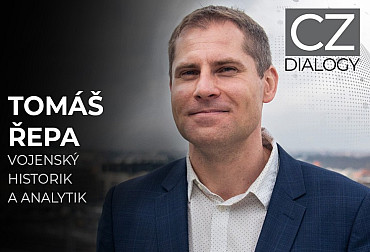
Tomáš Kopečný: Ukraine is constantly rebuilding; the scale of the destruction is enormous
Tomáš Kopečný has been closely following the war in Ukraine for a long time. Formerly the government’s special envoy for the reconstruction of Ukraine, he now works as a consultant in business development and public affairs, dividing his time between Kyiv, Brussels, and Washington. In this episode of CZ DIALOGY, Kopečný discusses the impact of Russian attacks on energy infrastructure, the gap between political declarations and actual aid to Ukraine, and the transformation of Ukrainian society during the war, which has now lasted over four years.
Video: An Interview with Tomáš Kopečný, Former Government Commissioner for the Reconstruction of Ukraine / CZ DEFENCE
Tomáš Kopečný no longer holds a government position, but Ukraine remains his primary focus. As he himself says, after leaving public service, he wanted to stay in an environment he knows well. “I advise good people on good things,” Kopečný says with a touch of hyperbole, summarizing his current role, and continues: “I wanted to move into business development and public advisory. I help people make connections, reach the right people, so their activities can flourish. And my area of operations is Ukraine, Brussels, and Washington.” Thanks to his regular trips to Ukraine, Kopečný sees the difference between how Europe perceives the situation and how Ukrainians themselves experience it. One of the most visible examples is the impact of Russian attacks on energy infrastructure. “What few people who don’t go there realize is the impact of last winter and the destruction of the energy infrastructure on Ukrainians and their daily lives,” notes Tomáš Kopečný.
According to him, this is not just a military strategy, but primarily a means of putting pressure on the civilian population. While the army on the front lines can adapt relatively quickly, large cities are existentially dependent on central energy infrastructure. “On the front lines, units often make do with generators and various improvised solutions. But large cities are absolutely dependent on centralized energy distribution,” he explains. It is precisely this strategy, he says, that is reflected in the daily reality of Ukrainian society. “What is really driving people from their homes is not just the lack of electricity or heat, but mainly the lack of water. When you don’t have access to drinking water for two or three days, you simply have to leave,” says Kopečný. He adds that the extent of the damage to infrastructure is enormous and its effects are cumulative. “This isn’t about a single attack or a single winter. It’s a year and a half of systematic attacks on power plants, transformers, substations, and the transmission grid,” explains the former government commissioner.
Kopečný also points out that Europe is taking note of these issues and responding to them. He cites Czech civic initiatives as an example: “In the Czech Republic, tens of thousands of people have taken very active notice of this. Hundreds of millions of crowns were raised through the ‘Gift for Putin’ fundraiser. This shows that even though the state’s response may sometimes be slower, society’s response is very strong.” Alongside the humanitarian dimension, the issue of military aid is increasingly coming up in the debate on Ukraine. Kopečný notes that one of the long-standing problems is the gap between political declarations and actual deliveries. “It’s true that promises don’t hurt,” he says candidly. At the same time, however, he points out that the situation isn’t black and white. “In most cases, the major donors are genuinely trying to ensure that the promise eventually materializes. The problem is that sometimes it arrives too late,” Kopečný explains. According to him, this discrepancy was most evident in the first two years of the war. “We often heard reassuring statements, but for months they weren’t backed up by concrete actions,” he recalls. According to him, Ukrainian leadership sometimes reacted very emotionally. “At times, you could almost sense desperation. Ukrainians would say: Europe promised us this, the Americans promised us this, but it’s not coming,” recalls Tomáš Kopečný. At the same time, he points out that the reality of support is more complex from a methodological standpoint as well. “It is very difficult to precisely quantify who promised what and who actually delivered what,” he says. This is because it often happens that the same aid is pledged by several institutions at the same time—for example, by the European Union and individual member states.
According to Kopečný, the Czech Republic plays a specific role in supporting Ukraine. “Our role has often been that we were able to deliver a lot of things, but in the vast majority of cases with someone else’s money,” he explains. Nevertheless, he considers this an important contribution. “Without that, the Ukrainians simply wouldn’t have that equipment, those cogeneration units, or that hospital gear,” explains Tomáš Kopečný.
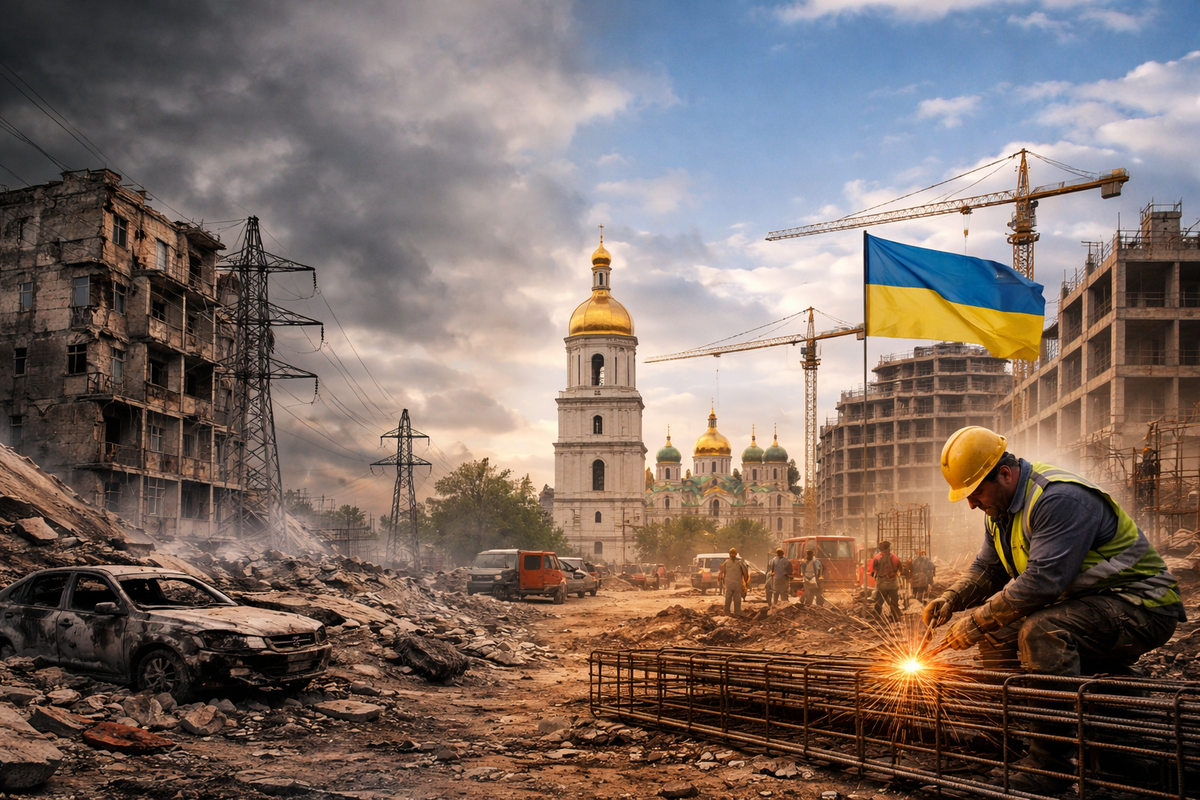
Another major issue is the country’s reconstruction. Kopečný points out, however, that it is misleading to speak of reconstruction only after the war has ended. “Ukraine is constantly rebuilding and reconstructing because the scale of the destruction is enormous,” he says. He adds that the projects follow a simple principle: “Build back better.” However, this recovery is taking place alongside ongoing destruction. “It’s a long-term effort. Reconstruction will take decades, but at the same time, it involves constantly replenishing what is being destroyed on an ongoing basis,” Kopečný notes.
According to Tomáš Kopečný, Czech companies’ approach to the Ukrainian market is also changing. He notes that interest was very high in the early years of the war. “Many companies went there hoping to tap into a new market and that the war would end soon,” he says. Today, the situation is more sobering. “They’ve already done that initial market research and are now waiting to see what happens next,” he explains. According to him, there are three basic conditions for success in Ukraine. “The first is to have a partner who really wants your goods. The second is to have someone on the ground who can protect you from complex legislation. And the third is to offer better financing terms than what Ukrainians could secure on their own,” describes the former government representative. He sees great potential primarily in technology sectors. “In the civilian sector, that includes energy, water management, and healthcare,” he says. Energy is key, he says, because Ukraine must fundamentally transform its entire energy production and distribution system. “People pay bills for electricity, heat, and gas. This is a sector where investment pays off,” says Kopečný.
At the same time, he points out that the war has also fundamentally transformed Ukrainian society itself. “Ukraine has undergone a fundamental shift,” he says. According to him, the change is evident, for example, in the relationship with Russia. “No one hates Russians as much today as the Russian-speaking eastern Ukrainians,” Kopečný describes. He adds that a new national identity is emerging. “Previously, the strongest anti-Russian sentiment was in the west of the country. Today, that is no longer so clear-cut,” he says. According to him, Ukrainians are also increasingly emphasizing their own history and cultural identity. “Ukrainian identity is primarily linked to culture and history. And that is precisely what is being fought for today,” he explains. According to Tomáš Kopečný, the war is also changing economic and social behavior. “Young entrepreneurs are very averse to old Soviet practices,” he says. Corruption, he notes, remains a problem, but at the same time, societal pressure for change is growing. “For many Ukrainians today, corruption is seen as a desecration of the memory of the fallen,” explains Kopečný.
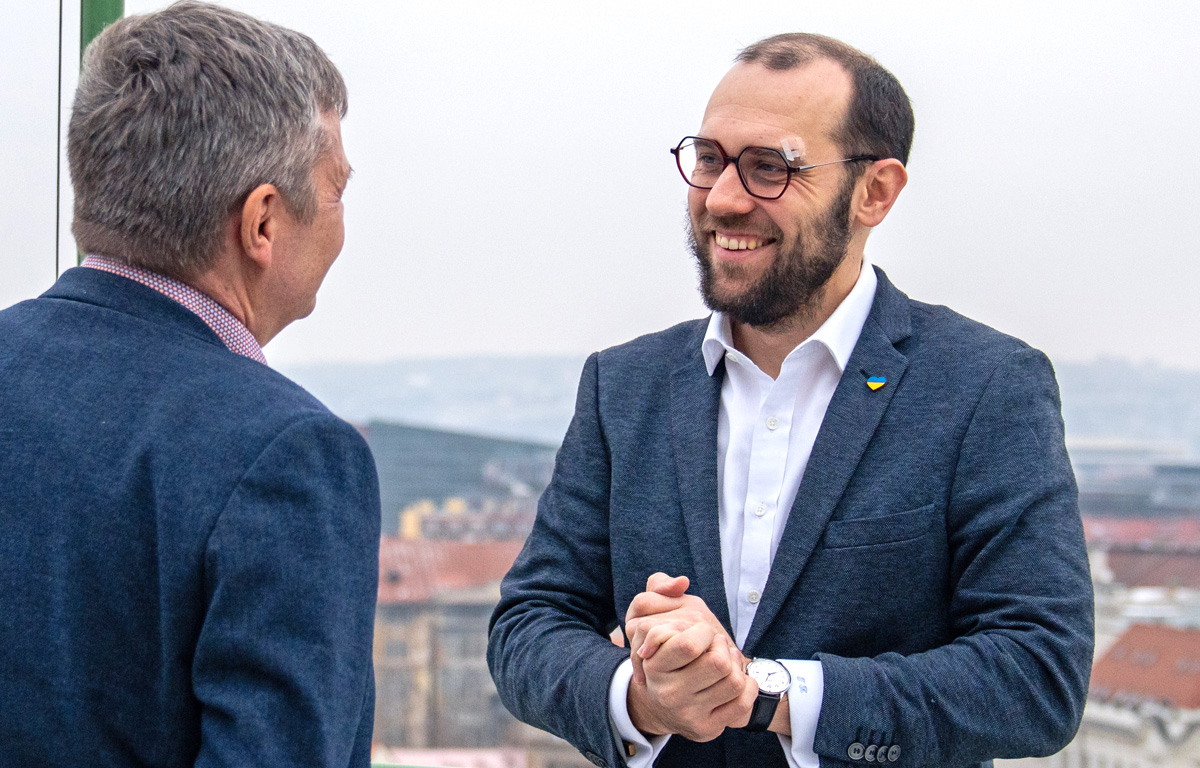
Nevertheless, the former special envoy for Ukraine’s reconstruction does not expect the conflict to end anytime soon. “The front line is moving very slowly—perhaps comparable only to World War I,” he says. According to him, Russia currently lacks the political motivation to end the war. “I don’t see any political will on the Russian side to stop this,” he says. At the same time, however, he admits that in the longer term, there may at least be a temporary ceasefire. “I think that within a year or two we may see a shift that leads to some kind of ceasefire,” Kopečný believes. According to him, it will depend primarily on developments on the battlefield. “It will depend on how successfully the Ukrainians attack the Russian economy, for example, refineries,” he outlines.
Despite all the negative news, however, Tomáš Kopečný retains a certain degree of optimism. “Europe now understands Russian ambitions and capabilities much better,” he says, while noting that even shortly before the invasion, there were disputes within NATO over whether Putin would actually attack. “We’ve moved past that. Today, every chief of staff says we must prepare for a possible conflict,” the former special envoy for Ukraine’s reconstruction observes.
And according to him, this shift may be one of the most important consequences of the entire war. “Europe is slowly waking up, and that is perhaps the most important lesson we are taking away from this war,” concludes Tomáš Kopečný.
If you want to learn more, watch the full interview at the beginning of this article.