











Tomáš Řepa: The world is splitting apart again—but this is not the cold war we remember
Wars remain unchanged in their essence – people and states still crave power, profit, and influence. However, their form is changing: drones hunt drones, information becomes a weapon, and conflicts are also fought "inside people's heads." In the next episode of the program CZ DIALOGY with military historian and analyst Tomáš Řepa, there is both a warning and encouragement: the Czech Republic is not out of the game, Europe must achieve unity, and resilience is not a slogan but everyday work.
Video: Interview with military historian and analyst Tomáš Řepa / CZ DEFENCE
According to Tomáš Řepa, mechanisms that we in Europe have come to regard as a thing of the past are re-emerging in international politics. "We are simply in something that could be called a continuation of the Cold War. Blocs of states and alliances have been formed. At the same time, there is a kind of proxy rivalry going on in the regions," says Řepa, immediately adding that this is not a simple repetition of the bipolar conflict between two superpowers. According to him, today's world is more complicated and at the same time more fragile because the structure of power has changed. "It was bipolar, then it was monopolar for a while, and now it's multipolar again. The world is splitting again. Only it's not the Cold War as we remember it," says Řepa.
And in a multipolar space, new ambitions, new ties, and new resources are emerging alongside traditional actors. From the perspective of the Czech Republic, according to military historian Tomáš Řepa, this means one thing: it is impossible to play the game of sovereign isolation. "We are talking about the Czech Republic, and our own capacities are limited. Therefore, we must also be part of some alliances and cannot pretend that we can manage on our own," he emphasizes. It is not just a matter of the number of soldiers or the size of the economy, but also the technological demands of modern defense. "The technological demands are such that a small country simply cannot cope," says Tomáš Řepa, describing the essence of today's security dilemma: sovereignty in the 21st century is often not about being alone, but about being firmly anchored.
At the same time, Řepa insists that what drives war at its core remains unchanged. What changes is its form. "The essence of conflict as such is not evolving at all," he says, pointing out that the desire for expansion, profit, or power is as old as human history. "The forms of these conflicts are evolving in an incredibly dynamic way," he emphasizes, citing the technological spiral of recent years as an example: "Who would have thought four years ago that there would be a drone war? Now there will be drones that catch drones, and then maybe something will come along that can shoot down those drones easily and cheaply." This encapsulates the whole modern paradox: expensive systems give rise to cheap countermeasures, which in turn force further innovation, and the pace of change becomes a strategic advantage in itself.
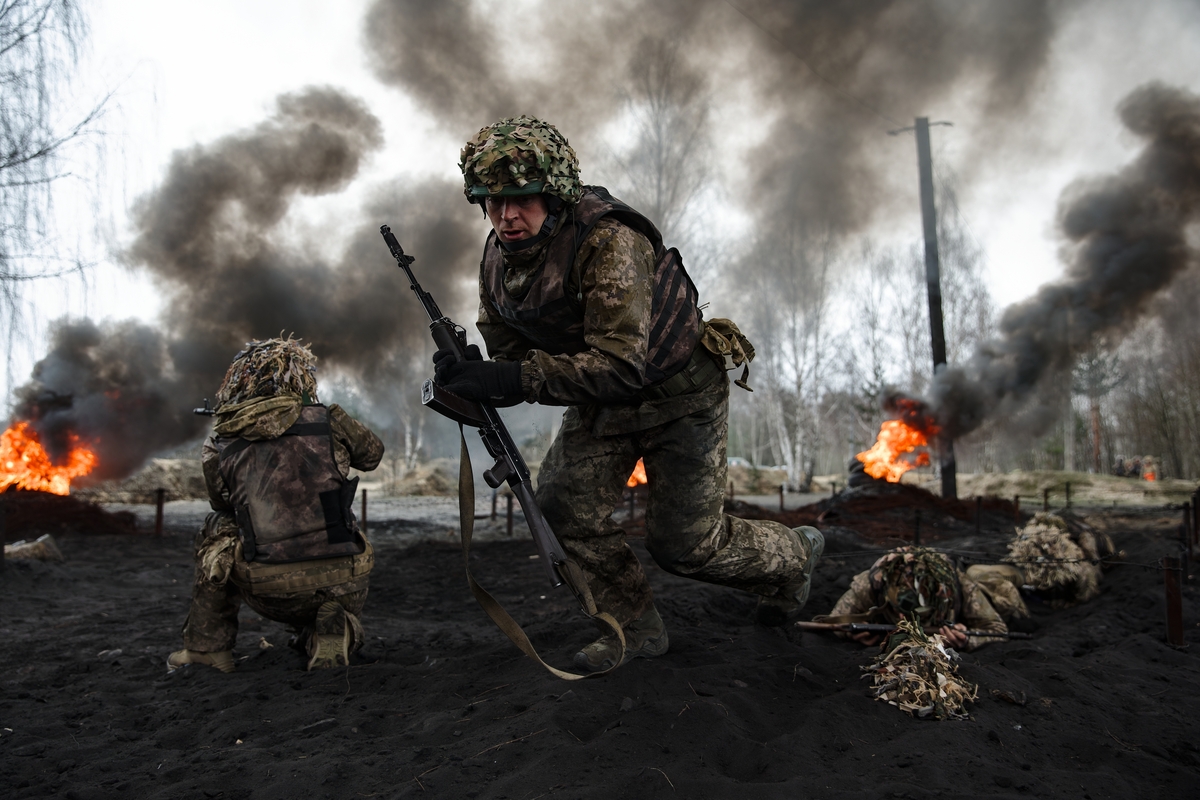
Meanwhile, terms such as hybrid threats and disinformation are entering the public lexicon. Řepa does not underestimate them, but he rejects their mechanical overuse. "The term hybrid has been around for a long time, for many decades. But it is gradually being overused, similar to the term disinformation," he says, warning against turning these terms into universal labels. At the same time, however, he suggests that an even more sophisticated level will come to the fore—an attack on social cohesion and people's ability to share reality. "Now I think there will be something new, that someone will control your mind," says Řepa, pointing out that even if it sounds like an exaggeration, the point is purely practical: you don't have to defeat a country by invading it if it falls apart on its own. "You don't necessarily have to invade a country with tanks; it's enough for the country to decay on its own. When the components of society turn against each other, there is chaos. It is easier to control even from a distance," he adds. And this is where "value anchoring" does not appear to be moralizing, but rather a security tool. Řepa points out that information operations are not a product of social media. According to him, World War II did not begin with tanks, but with manipulation. "World War II was started by a false flag operation," says historian Řepa. Importantly, similar mechanisms were present elsewhere: "Disinformation was used, manipulation was used," he summarizes.
Rozdíl oproti dnešku vidí Tomáš Řepa mimo jiné v informačním monopolu. V autoritářských režimech může být „monopol na informace“ tvrdý a vynutitelný; v demokraciích ne, a ani být nesmí. Jenže právě pluralita interpretací může být zneužitelná, pokud se společnost propadne do virtuálních realit, které se už nepotkají na společné půdě faktů. Řepa varuje před jazykem odlidšťování, protože ten může vést k extrémnímu násilí. V evropském kontextu je podle Řepy největší zlom vidět v informačních operacích války na Ukrajině. „Je to naprosto zásadní. Ta architektura je úplně jiná,“ říká o proměně bezpečnostního prostředí. Vnímá ale i pozitivní efekt: „Spoustě lidem spadly růžové brýle, začalo víc záležet na tom, co to doopravdy znamená bezpečnost,“ konstatuje. Zároveň ale upozorňuje na druhou stranu mince: uvědomění musí přerůst v dlouhodobý společenský konsensus o tom, co jsme ochotni investovat, jaké schopnosti chceme budovat a co považujeme za cenné. „Je to o nějakém společenském konsensu,“ říká Tomáš Řepa a dodává, že si není jistý, zda je v české společnosti dost silný a sdílený. Nabízí přitom jednoduchý argument, který se těžko vyvrací: „Můžeme se mít materiálně jakkoliv dobře, ale pokud nejsme v bezpečí, stejně přijde někdo a o ten vzácný status nás připraví.“
Tomáš Řepa also talks about resilience as the ability to stick together. "If there is a society that is united—that knows what it's all about—then it makes sense," he says. He brings his personal experience from the army, universities, and training into the conversation. "I also have a good feeling about many young people—that they do care," he emphasizes, describing how he talks to future soldiers about the traditions and values associated with the military in the Czech lands during basic training in Vyškov. According to him, these are not empty phrases, but something that, in times of crisis, translates into a willingness to take responsibility.
However, the debate about the Czech Republic is constantly plagued by Švejk-like doubts as to whether we are of any interest to anyone at all. Řepa rejects this without hesitation. "Of course we are interesting. If no one were interested in us, these influence operations would not be taking place," he says. According to Tomáš Řepa, it is a competition over rules and direction, and the Czech Republic is part of the arena because it is anchored in the European Union and NATO. Isolation, on the other hand, would mean a loss of real sovereignty: "If we were a completely isolated island in the middle of Europe, we would be so weak that we would eventually become part of some other geopolitical direction." He also recalls the historical parallel of 1938. According to Tomáš Řepa, Ukraine is a country at the crossroads of spheres of influence – both historically and geographically – and this is what has shaped its internal diversity. At the same time, he rejects the interpretation that this means an absence of identity; on the contrary, the war is strengthening it. "But that doesn't mean at all that they don't have a specific identity and that, on the contrary, it will continue to deepen because of the war. It will," says Tomáš Řepa. He adds an observation that is uncomfortably accurate: when threatened, people stop worrying only about comfort and start worrying about survival and meaning. "You don't just worry about material things and where you're going on vacation, but also about what really threatens you," he summarizes.
Another interesting observation concerns the behavior of another superpower – China. “China does not necessarily need to go to war at any cost,” says Tomáš Řepa, while admitting that this does not mean pacifism: if it senses an advantage, it may resort to conventional weapons. According to him, what is more important is the fact that China is able to buy influence and build dependencies, for example in Africa or elsewhere, and that its technological pace is a warning to Europe. "We already have factories in China where it is constantly dark because almost no people work there anymore, only robots," Řepa points out. And when it comes to relations with Russia, Tomáš Řepa is uncompromising: "Its so-called eternal friendship with Russia is, of course, a complete sham. They have turned Russia into nothing more than a raw materials appendage," he says, adding that the war in Ukraine has further deepened this balance of power. Řepa also points out that China is not a monolith without internal friction. He talks about purges and the concentration of power, which evoke historical associations: "Xi Jinping has had one of the highest-ranking generals accused, which reminds me of Stalin's purges." Whether this will strengthen the monopoly of power or weaken the system, according to Tomáš Řepa, only time will tell. He also points out the difference in mentality: "The Chinese do not forget with time. But their desire to get even is growing," says military historian Řepa about the approach to historical injustices, subtly suggesting that European categories may not be sufficient to understand Chinese thinking.
When the conversation returns to the Czech Republic and its preparedness for conflict, Tomáš Řepa says that true preparedness will only become apparent in a crisis. "How prepared a society is for a specific type of crisis will always only become apparent when the crisis fully hits us," says Řepa. He recalls the experience of floods as an example of how society can learn, improve its response, and infrastructure—but only practice will reveal what works. He also mentions the legislative level: crisis law is evolving and being amended because reality is changing faster than the law. He sees an important shift in the fact that territorial defense is once again becoming an explicit topic. "We are now creating new territorial defense units," he says, noting that the expeditionary model of foreign missions is no longer automatically assumed. At the same time, he is realistic, saying that we will no longer have a mass army as in the past. "We will never have 300,000 soldiers again," he says, adding that the ability to "defend our territory on our own" is difficult to expect. This makes the combination of alliance ties, domestic capabilities, and the ability to respond to various types of threats all the more important. He then touches on the information level, saying that passive defense is not enough in cyberspace and the information space. "You have to be proactive, you can't just wait and then react. That's too late," he says, talking about prevention and the ability to act proactively. He leaves the details aside and suggests that it is right for some things to remain private.
If you want to learn more, listen to the entire interview at the beginning of this article.
Related