















Tank Day in Lešany to Commemorate the Cold War: Eastern and Western Equipment to Face Off in the Arena
On Saturday, August 29, the Lešany Military Technical Museum will once again host one of the country’s largest exhibitions of historic military equipment. The Military History Institute in Prague will hold the 22nd annual Tank Day there, with this year’s main theme being the Cold War era. Visitors will see dozens of pieces of military equipment from the former Eastern and Western Blocs, newly restored exhibits, and new additions to the collections of the Military History Institute in Prague. There will also be dynamic demonstrations and a traditional reenactment of a military operation commemorating the Battle of the Ludendorff Bridge near Remagen, which took place toward the end of World War II and whose film adaptation bears a distinct Czechoslovak influence.
The last Saturday of summer vacation is traditionally set aside for Tank Day on the calendar of the Military History Institute in Prague. This year, the 22nd annual event will take place at the Military Technical Museum in Lešany, and the organizers have focused the theme primarily on the Cold War era. This year marks the 80th anniversary of former British Prime Minister Winston Churchill’s famous speech in Fulton, Georgia. His speech on March 5, 1946, in which he spoke of the “Iron Curtain” drawn across the European continent, became one of the symbolic milestones marking the emerging division of Europe and the world into two power blocs.
This division also had a profound impact on the development of military technology. During the Cold War, tanks became not only one of the primary means of a potential large-scale conflict between NATO and the Warsaw Pact, but also a symbol of military power for both sides. The race to develop armor protection, firepower, and mobility gradually produced several generations of designs, many of which are now preserved by the Military History Institute in Prague.
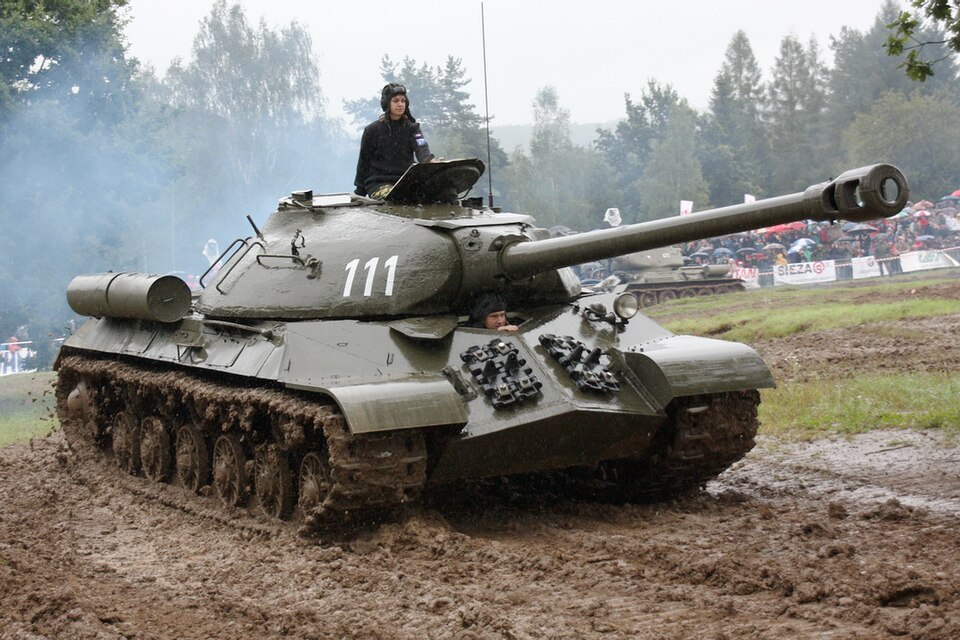
At the Lešany venue, visitors will be able to view equipment documenting the evolution from the end of World War II through the final decades of the Cold War. According to information released so far, the Eastern design school will be represented by, for example, the IS-3 heavy tank and the T-34, T-54, T-55, and T-72 tanks.
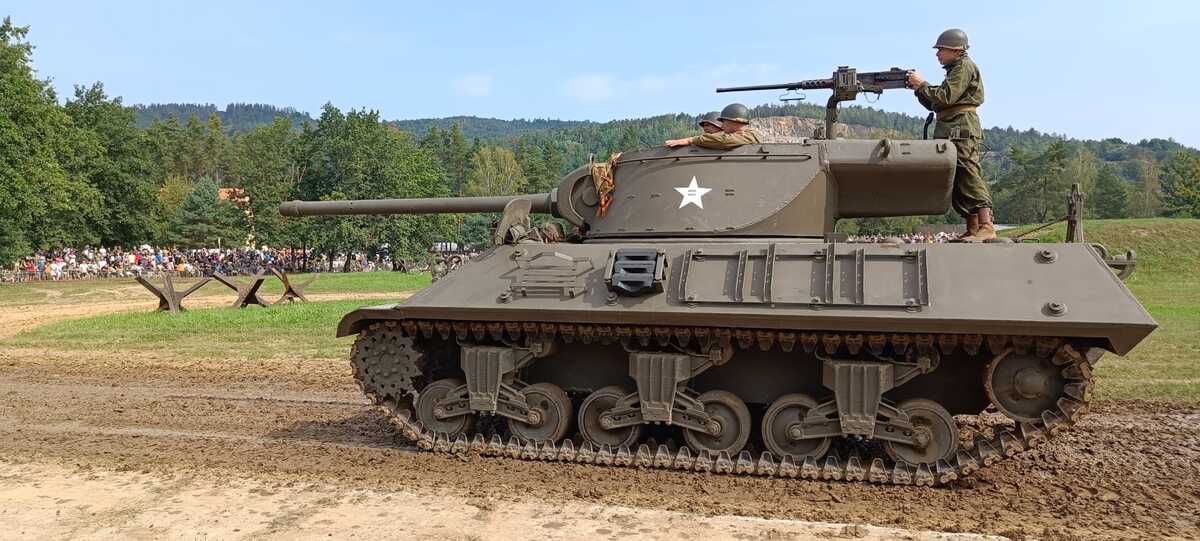
They will face off against Western-made vehicles, including the American M36 Jackson tank destroyer, the M60 Patton main battle tank, and the German Leopard 1A1. The opportunity to see vehicles from both former superpower blocs in action is one of the greatest highlights of Tank Day. Lešany is not merely a static museum exhibit. “The Military History Institute has long devoted considerable effort to ensuring that part of its collection remains in operational condition. Tank Day is thus also an opportunity to showcase the results of the work of restorers, technicians, and other museum staff who are dedicated to preserving military equipment for future generations,” says Brigadier General Aleš Knížek, director of the Military History Institute in Prague.
From the OT-810 D to the American Gama Goat
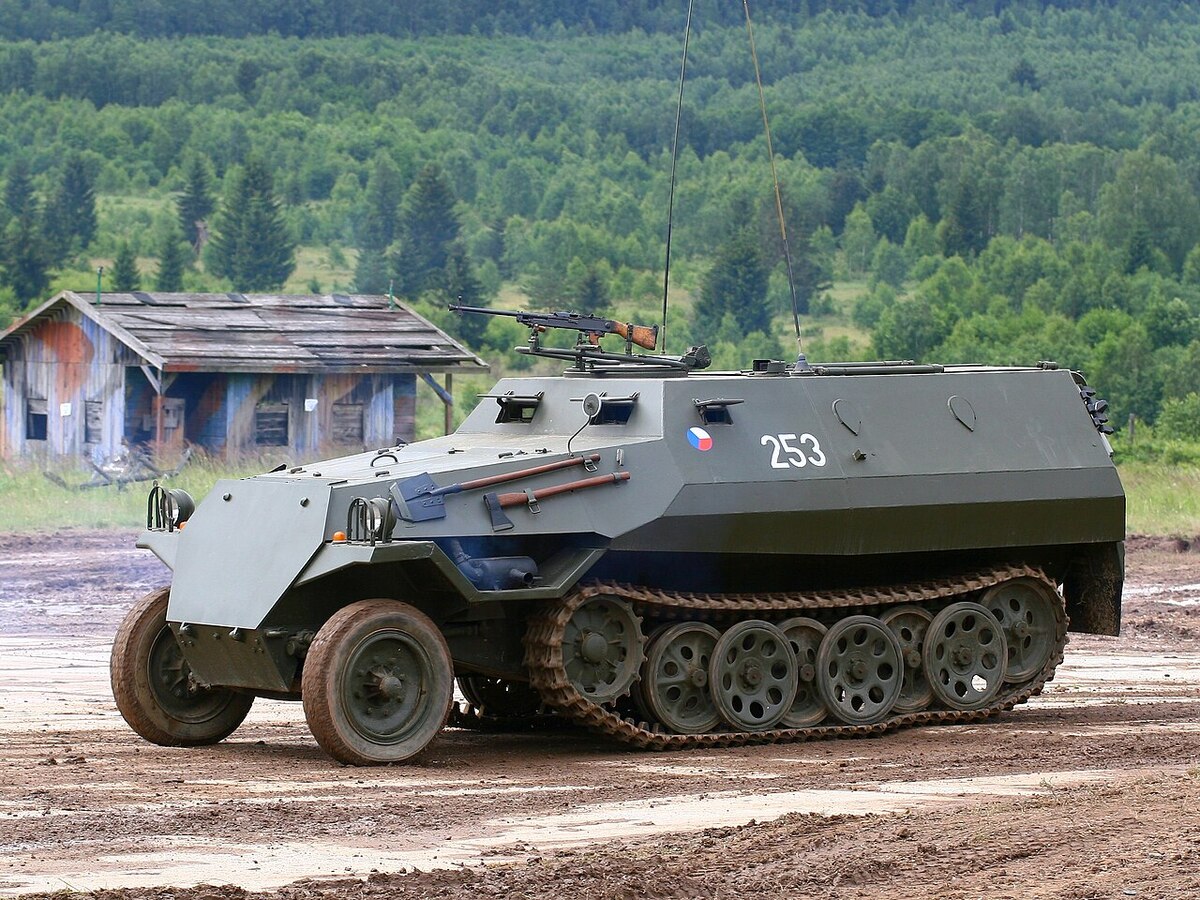
One of the exhibits expected to draw attention this year is the newly restored Czechoslovak OT-810 D armored personnel carrier. The vehicle represents a chapter in postwar domestic design that builds on German half-track transporters. Staff at the Military Technical Museum have been working on its restoration for some time, and last year the Military History Institute (VHÚ) showcased work on the Tatra 928 engine that powers this vehicle. The American M561 Gama Goat represents a completely different design philosophy. This six-wheeled amphibious all-terrain vehicle was developed for the U.S. Army and is primarily associated with the Vietnam War era. Thanks to its articulated, two-part design, it was intended for operation in extremely difficult terrain. This vehicle is also scheduled to be on display in Lešany as part of this year’s program.
However, tanks will likely once again be the main attraction. One of the most distinctive examples of Soviet postwar military technology is the IS-3, whose characteristic low turret and uniquely shaped front hull foreshadowed certain elements of the later Soviet tank design philosophy. On the other side of the imaginary Iron Curtain will be, for example, the American M60 Patton. It was developed at a time when the United States was responding to the rapid development of the Soviet T-54 and T-55 tanks. Although it was originally intended to be largely a stopgap solution, it became one of the most widespread Western main battle tanks of its era, and its modernized variants remained in service for an exceptionally long time in some countries.
Another representative of the Western tank school will be the Leopard 1A1. The German Leopard 1 was designed at a time when, given the capabilities of anti-tank weapons at the time, greater emphasis was placed on mobility, firepower, and the ability to operate under the conditions of the anticipated European battlefield. A joint display of the Leopard alongside the T-54, T-55, and the later T-72 will thus offer visitors a vivid glimpse into the differing approaches to armored vehicles that evolved on both sides of the Iron Curtain over several decades.
The battle for the bridge at Remagen
However, Tank Day is traditionally more than just a parade of individual vehicles. One of the main highlights of the program is the dynamic combat demonstrations organized by the Military History Institute in collaboration with military history clubs. This year, one of these demonstrations will take us back to the very end of World War II and commemorate the battle for the Ludendorff Railway Bridge over the Rhine near Remagen, Germany. The events of March 1945 are among the most remarkable episodes of the war’s final phase in Western Europe. The U.S. 9th Armored Division reached Remagen during its advance and discovered that the Ludendorff Bridge was still standing. German units attempted to destroy it, but the demolition was unsuccessful, and the Americans gained the opportunity to establish a bridgehead on the east bank of the Rhine.
According to materials from the Military History Institute, approximately 8,000 men, along with tanks and anti-aircraft weapons, were successfully ferried across the bridge within the first 24 hours. The Germans subsequently attempted to destroy this strategically important crossing using various means, including artillery, air strikes, floating mines, and the deployment of special forces.
Remagen and its Czechoslovak connection
For the Czech context, Remagen has another exceptionally interesting dimension. The event served as the basis for the American film *The Bridge at Remagen*, which director John Guillermin filmed in 1968 in Czechoslovakia as well, including in the vicinity of nearby Davle. Filming took place against the backdrop of the Prague Spring, and the presence of military equipment modified to represent American forces took on an almost absurd political context following the August invasion by Warsaw Pact troops.
Soviet propaganda, in fact, used footage of American-looking military equipment and soldiers as alleged evidence of the presence of Western forces in Czechoslovakia. The connection between this year’s Tank Day and Remagen is therefore not merely a commemoration of a single episode of World War II. In a sense, it links the end of the global conflict to the subsequent Cold War, while also recalling the unique Czechoslovak twist that the story of the Ludendorff Bridge took more than two decades later.
New additions, military camps, and historic aircraft
In addition to combat demonstrations and equipment displays, visitors will also have the opportunity to see new additions to the collections of the Military History Institute in Prague. Tank Day traditionally serves as one of the occasions when the museum presents the results of its acquisition and restoration efforts to the public. The program will be complemented by period military camps and a demonstration of service dog training by the Czech Army. Weather and flight conditions permitting, there will also be flight demonstrations of historic aircraft from the collections of the Military History Institute in Prague.
Tank Day marks the highlight of the visitor season at the Lešany Military Technical Museum and is also one of the largest regular events organized by the Military History Institute in Prague. This year’s 22nd edition follows on from last year’s Tank Day, which was dedicated to the 80th anniversary of the end of World War II. At that time, the program included not only extensive dynamic demonstrations of ground vehicles but also a flyover by a pair of JAS-39 Gripen fighter jets and historic aircraft from the Military History Institute’s collections.
The Lešany Military Technical Museum itself ranks among the most exceptional institutions of its kind in terms of the scope of its collections. The grounds of the former artillery barracks allow for the display of a large number of tanks, armored personnel carriers, artillery equipment, military vehicles, logistical assets, and other materiel documenting more than a century of development in ground military technology. The significance of dynamic events, such as Tank Day, lies primarily in the opportunity to showcase some of these exhibits not as static museum pieces, but in an environment that at least partially resembles the conditions for which they were originally designed.