














SAFEGUARD 2026: Active Reserves Practiced Protecting Critical Infrastructure on the Streets of Pilsen
The bridge over the Berounka River, the Czech Post complex, the movement of heavy equipment, live-fire exercises, and simulated attacks on critical infrastructure. For several days, Plzeň was transformed into a realistic setting reflecting modern security realities. The SAFEGUARD 2026 exercise, conducted by the territorial forces, demonstrated that national security today means not only defending the borders but also the ability to respond to crisis situations within the country’s own territory—quickly, in a coordinated manner, and under conditions that closely mirror the reality of current threats.
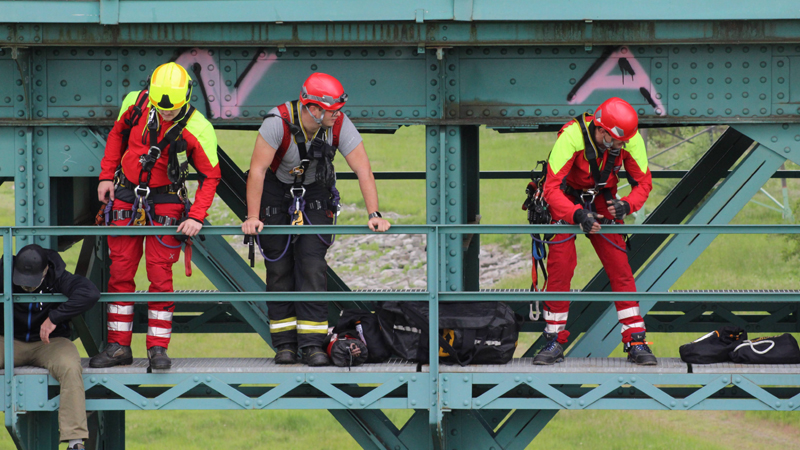
From May 19 to 21, the SAFEGUARD 2026 military exercise for territorial forces took place in Pilsen, involving units from the Active Reserve of the 171st Territorial Defense Battalion of the Pilsen Regional Military Command. The main objective of the training was to protect selected state infrastructure and to practice responses to incidents that could threaten the functioning of key facilities or destabilize public order. Over the course of several days, the soldiers practiced checking individuals and vehicles, protecting facilities, responding to intruders, securing perimeters, and handling simulated attacks on guarded areas.
In the words of the commander of the Pilsen Regional Military Command, Col. Jiří Štětina: “The SAFEGUARD exercise was unique primarily because it involved members of the active reserves—that is, citizens with their regular civilian occupations. Unlike other military exercises focused on improving the skills of individuals, squads, or platoons, this exercise was designed to teach procedures and coordination with other state agencies, including armed forces, and to respond to incidents during national crises. It was an exercise designed to create conditions as realistic as possible that soldiers would have to face. Some might argue that soldiers have their own training facilities for this purpose, but for the sake of mastering these activities, such training is irreplaceable. Therefore, I believe that this training did not fundamentally disrupt normal neighborhood life or daily operations. Please be assured that these exercises are conducted precisely for the benefit of our entire society, so that any response to a crisis situation is as effective as possible.”
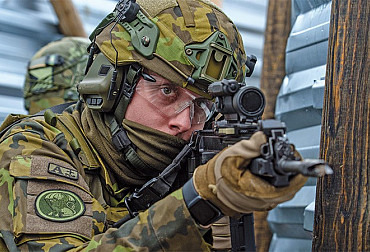
At first glance, the exercise might have appeared to observers as standard training for active reserves. In reality, however, SAFEGUARD 2026 very accurately reflects the profound transformation of the security environment currently being discussed by NATO, the European Union, and Czech strategic documents. Modern security threats increasingly combine elements of conventional conflict, sabotage, cyberattacks, information operations, and attacks on infrastructure. The war in Ukraine has shown that protecting the state today means not only defending the front lines, but also ensuring the functioning of railways, energy systems, logistics centers, and communication hubs in the rear.
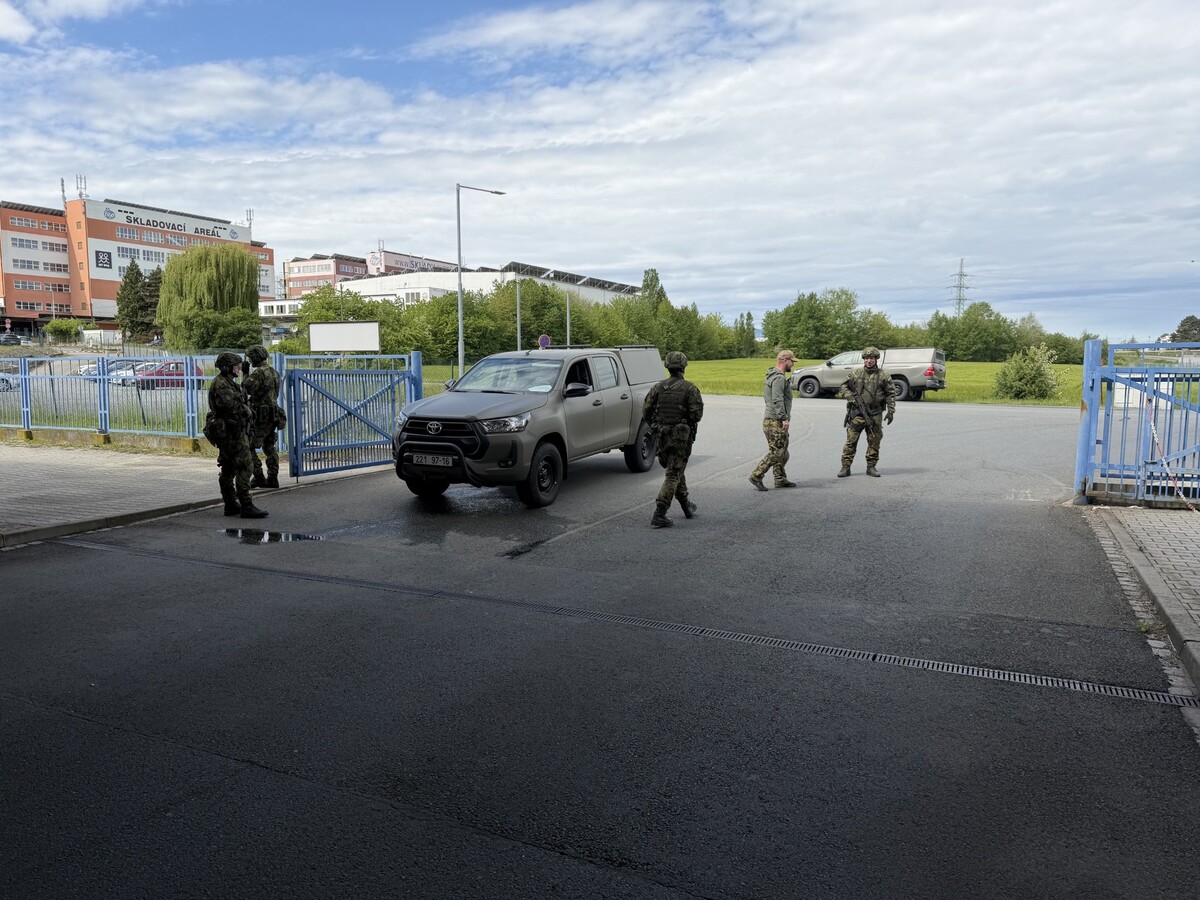
That is precisely why suitable facilities were selected for this training. One of the main locations was the Czech Post sorting center in Plzeň, and another was the area around the railway bridge over the Berounka River near Jateční Street. These were not merely backdrops. Both sites simulate infrastructure whose disruption could have significant impacts on the functioning of government services and the movement of people. Training in a real urban environment also allowed soldiers to operate under conditions that cannot be fully simulated in closed military facilities—namely, in confined spaces, amidst civilian infrastructure, and while maintaining normal operations.
Realism is one of the key trends in modern military training today. The Ukrainian battlefield demonstrates that 21st-century conflicts are not sterile operations conducted far from civilian areas. On the contrary, they take place in densely built-up areas, near infrastructure, among the population, and often in an environment of information chaos. Armed forces are therefore increasingly moving away from isolated “training ground” exercises and striving to prepare soldiers for the real-world conditions of crisis management and civil protection.
In this regard, SAFEGUARD 2026 also highlighted another crucial aspect of contemporary security: the coordination between the military, police, fire department, and civilian institutions. The exercise was conducted in close coordination with other components of the integrated rescue system, specifically the Fire and Rescue Service of the Railway Administration and the Police of the Czech Republic. Inter-agency cooperation is one of the most important prerequisites for managing modern crises today. Hybrid threats rarely affect just one sector. An attack on infrastructure can trigger information panic, a cyber incident can paralyze logistics, and a disinformation campaign can complicate the response of security forces. Modern security thus increasingly relies on coordination and the ability of institutions to cooperate.
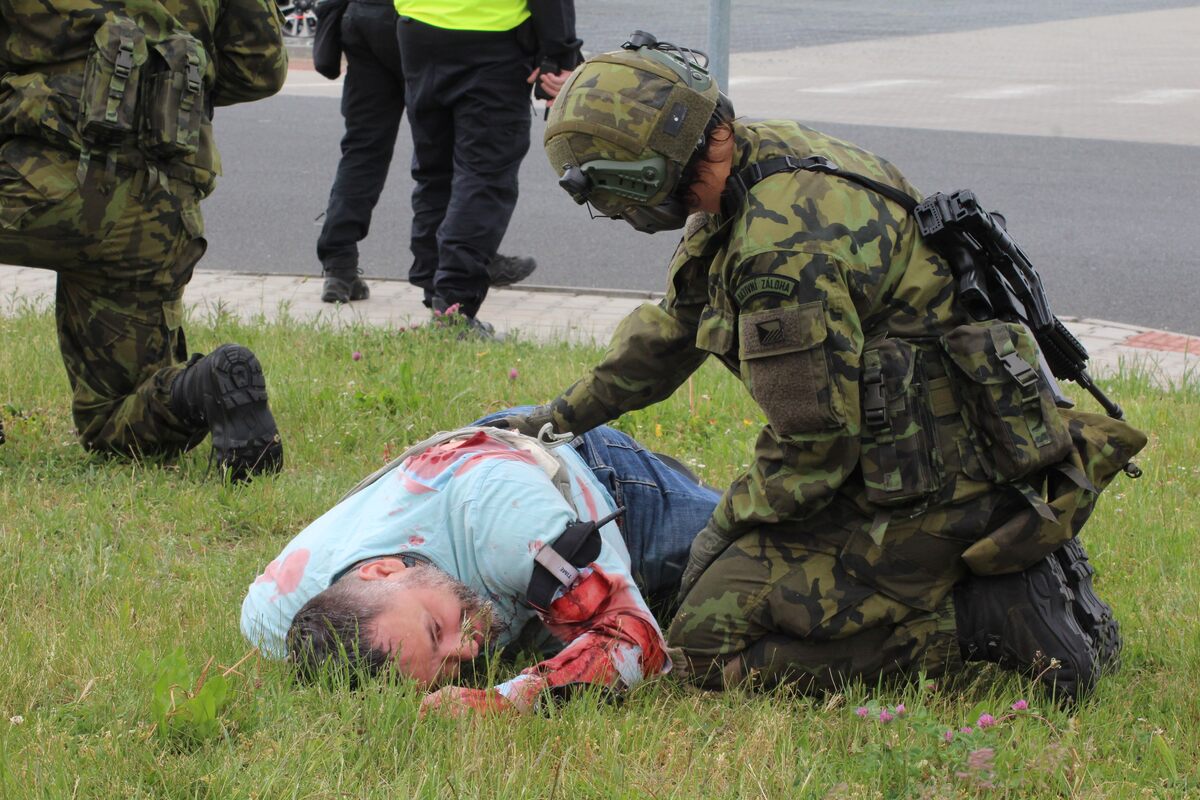
As Major Vonášek of the Pilsen Regional Military Command emphasized, the active reserves today represent “an integral part of the Czech Armed Forces,” and their importance has grown significantly in recent years. “In the event of a state of emergency or a state of war, it is precisely the soldiers of the active reserves who become one of the fundamental building blocks of the Czech Republic’s defense capabilities. Their task is not only to reinforce the professional army but also to respond flexibly to emerging crisis situations,” he adds. His words confirm that the active reserves are not merely a supplement to the professional army but a force capable of responding flexibly to emerging crisis situations directly in the regions.
In the words of Maj. Vonášek: “It was precisely the regional dimension that was very evident during the exercise. Units were deployed at several critical infrastructure sites, and their task was to ensure continuous protection of the sites without disrupting their normal operations. In practice, this involved not only the defense of the sites themselves but also coordination with civilian institutions, crisis communication management, and the ability to function under sustained pressure. A key factor in preparedness is regular training focused on operational procedures and managing initial responses in the event of a threat. Emphasis is placed on rapid decision-making, the ability to cooperate effectively, and coordination with members of the integrated rescue system. In crisis situations, minutes often make the difference.”
Simulated incidents focused on the infiltration and disruption of guarded facilities were also a key part of the training. Soldiers addressed situations ranging from routine entry and vehicle checks to scenarios involving violent or covert penetration of facilities. The training also included simulated attacks aimed at damaging infrastructure or disrupting its operations. Such scenarios are not merely a hypothetical concept for security planners today. In recent years, European countries have faced a growing number of acts of sabotage, suspicious incidents, and hybrid operations specifically targeting infrastructure and logistics routes.
The training therefore also included the use of training and imitation ammunition or smoke grenades, particularly in the area of the railway bridge. The short-term increase in noise and smoke was intended to simulate the conditions of a real incident and, at the same time, test the soldiers’ ability to operate under pressure and in a stressful environment. The organizers emphasized their efforts to minimize the impact on the city’s residents. This, too, is now part of the concept of territorial forces—the ability to operate directly within civilian areas, rather than separately from them.
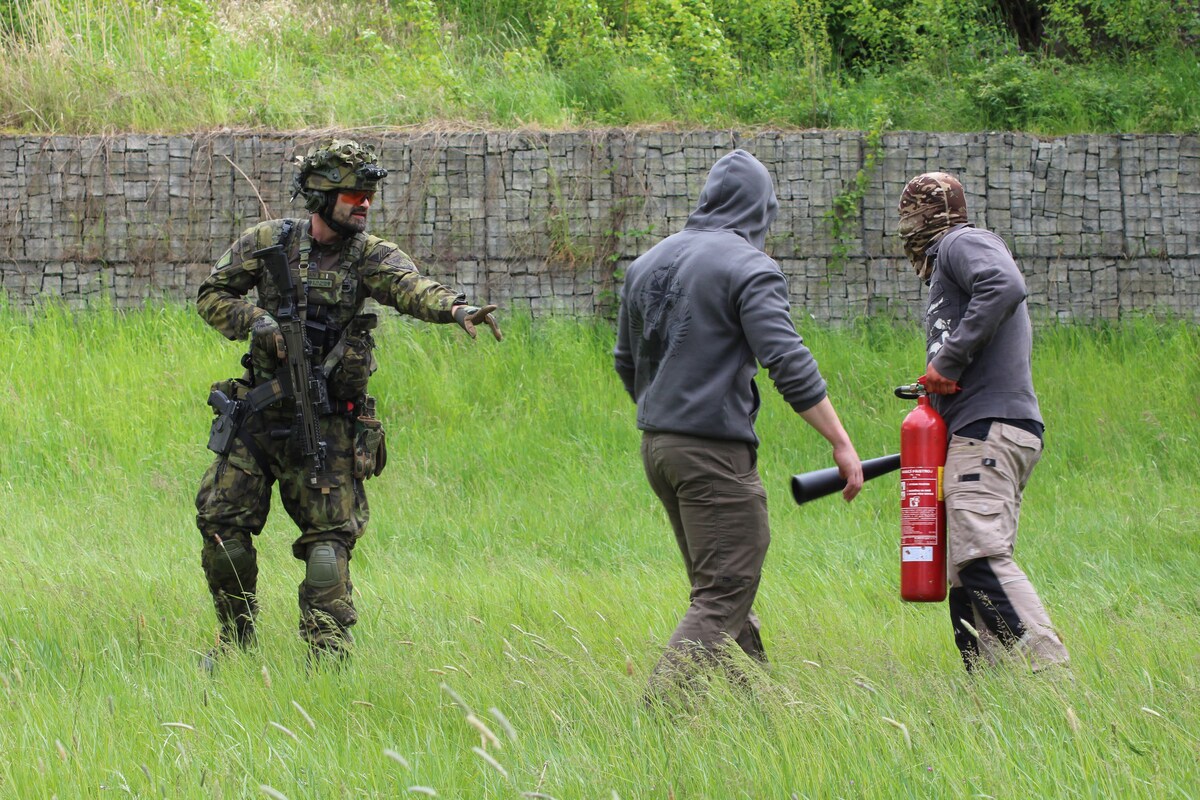
Major Vonášek also pointed out that the effectiveness of such operations depends not only on technology or command procedures, but above all on the individuals involved. “Every soldier is like a cog in a vast and interconnected system. If one fails or doesn’t function properly, it negatively affects the whole,” he explains. According to him, it is precisely the individual’s ability to function under pressure, follow procedures, and at the same time respond to unpredictable developments that represents one of the key elements of modern territorial defense today.
According to the organizers, mental and physical resilience was one of the key elements of the entire training exercise. “The soldiers of the 171st Territorial Defense Battalion demonstrated a high degree of resilience, dedication, and discipline, even at the cost of fatigue or minor injuries. The tasks were carried out with the utmost precision and attention to detail. In a very short time and under constant pressure to simulate and resolve model situations, all assigned tasks were completed to a high standard,” assessed Maj. Vonášek together with Capt. Krupička. The ability to improvise also played an important role, as the soldiers were not informed of the specific incidents in advance. Professional soldiers from the Plzeň Regional Military Command prepared the scenarios to simulate the unpredictability of real-life crisis situations as closely as possible.
Another very interesting element of SAFEGUARD 2026 was the use of unmanned aerial vehicles. Units of the 171st Territorial Defense Battalion are equipped with basic means for detecting and neutralizing drones, reflecting one of the most significant changes on the modern battlefield. Today, drones represent a cheap, flexible, and difficult-to-detect tool that can be used not only for reconnaissance but also for attacks on infrastructure, disruption of operations, or psychological warfare.
The war in Ukraine has shown that unmanned aerial vehicles are dramatically changing the economics of war. Today, an inexpensive, commercially available drone can cause millions of crowns in damage. As a result, militaries are increasingly investing not only in drone technologies themselves but also in counter-drone defenses. What just a few years ago seemed like a specialized capability of elite units is gradually becoming a standard part of critical infrastructure protection and territorial forces.
SAFEGUARD 2026 also fits into the broader debate on the role of active reserves in the Czech security system. The current security environment increasingly shows that a professional army alone cannot, in the long term, cover all tasks related to the protection of the state, infrastructure, and population. Active reserves are therefore gaining ever greater importance—not only as a supplement to combat units, but as a regionally anchored force capable of rapid response at the site of a crisis.
Incidentally, this is a trend we are seeing across Europe. Following the experience in Ukraine, countries are beginning to significantly strengthen their approaches to territorial defense, infrastructure protection, and civil preparedness. After all, a modern conflict does not necessarily begin with a frontal tank attack across the border. It can begin with sabotage of the railways, the crippling of the power grid, a cyberattack, or deliberately instigated information panic through the maximum use of distorted or intensively disseminated false information. And it is precisely the ability to quickly stabilize the situation in regions that is becoming one of the key elements of a state’s resilience.
Hybrid threats aimed at disrupting everyday life and undermining public confidence can be further amplified when unverified and alarming information is spread without verification. Rather than contributing to the solution of a crisis, such behavior may unintentionally worsen its consequences. These people should recall the legendary line from the movie Pelíšky: “And who does that serve—the other side, perhaps?” One would like to believe that even these individuals do not wish to see our society morally degraded or physically devastated. It is therefore up to all of us—and not just the armed forces—to shape and approach our surroundings and mutual security in such a way that we can all live well and that future prospects are clearly tangible.
Command and control capabilities—the C2 system—also played a significant role during the exercise. This was one of the main criteria used to evaluate the entire training exercise. “One of the main evaluation criteria was command and control, or C2. It was precisely this capability that proved crucial in handling individual simulated situations,” explained Vonášek and Krupička. According to them, the evaluation spanned all levels—from individuals up to company commanders and battalion commanders. “Commanders, starting from the lowest levels of command, fundamentally influence the course and success of mission execution. It is their preparedness, decisiveness, and ability to lead subordinates in a dynamic environment that determine the overall effectiveness of the active reserve deployment.”
According to the director of the Pilsen Regional Military Command, the exercise also clearly demonstrated that active reserve units are capable of effectively responding to scenarios involving the protection and defense of critical infrastructure facilities. “The SAFEGUARD 2026 exercise showed that active reserves have a firm and undeniable place within the armed forces. Active reserves are capable of responding very well to situations related to the protection and defense of facilities. Among the main tasks of the exercise were securing the inner and outer perimeters and subsequently establishing a command post to coordinate with the Czech Police and the Fire and Rescue Service, with the aim of quickly and effectively addressing emerging security threats,” he concluded.
The SAFEGUARD 2026 exercise was thus not merely a demonstration of military training, but also a reminder that the security of a modern state increasingly takes place within society itself. The protection of critical infrastructure, preparedness for crisis scenarios, and the ability to coordinate between the military, security forces, and civilian institutions are today an integral part of the Czech Republic’s defense capabilities. And it is precisely these exercises that demonstrate one fundamental truth: the security of a modern state does not emerge only at the moment of crisis. It is built long before that through systematic preparation, realistic training, interagency cooperation, and the ability to adapt to the rapidly changing nature of threats. For a few days, Pilsen thus became more than just the site of a military exercise. It became a model of what national defense might look like in the 21st century.
Related