
















Elite Ranger Course: A Test That Challenges More Than Just Physical Fitness
Pain, hunger, sleep deprivation, constant stress, and the pressure to perform. The Ranger course is one of the most demanding military training programs a soldier can undergo. For Petr Vaníček, a Czech soldier, however, it was not just another milestone in his career. It was the culmination of a long-standing inner motivation, a desire to prove himself under the most extreme conditions and to test the true limits of human endurance. Moreover, the experience he gained did not end when he completed the course. It stayed with him throughout his subsequent service and in his personal life.
From the Engineering Corps to Reconnaissance: A Dream with a Clear Direction
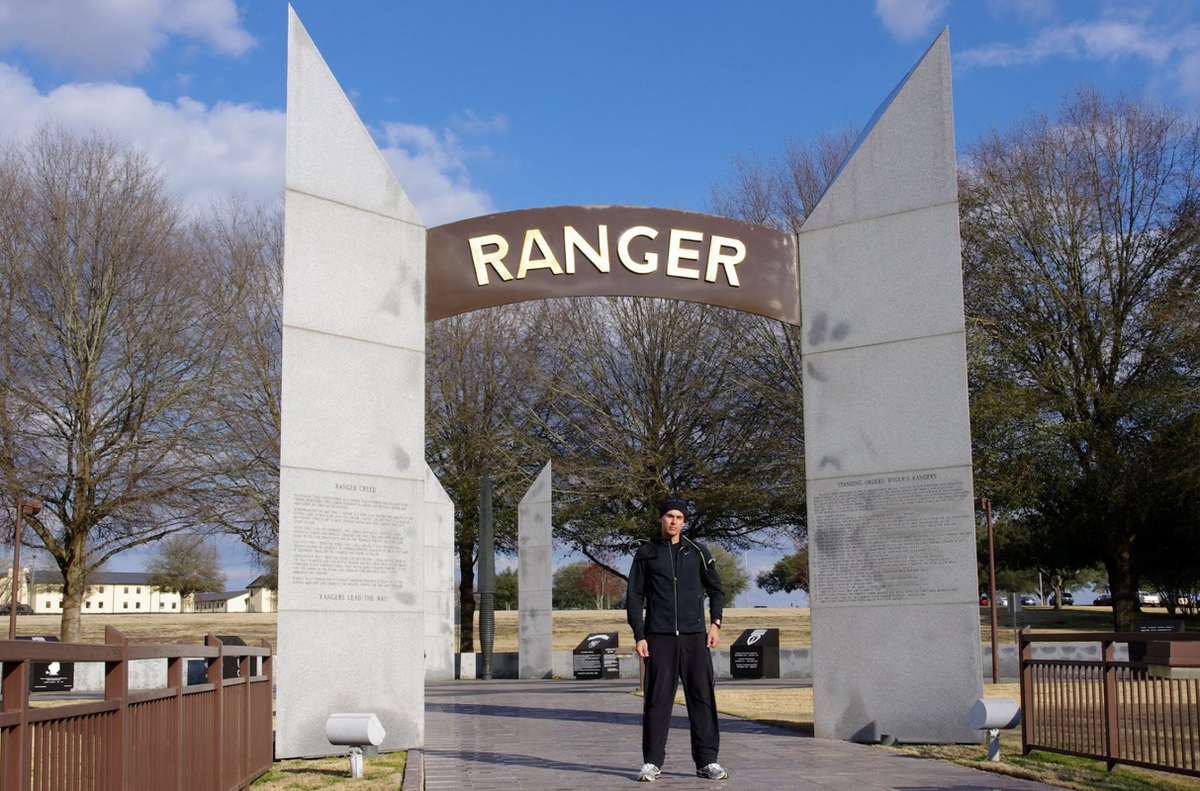
After his military service, during which he served in the Engineering Corps, Petr Vaníček knew exactly what he wanted. He wanted to continue as a professional. And although he respected all other branches of the military, his own path was clear from the start. He was drawn to the world of paratroopers and reconnaissance. It was a classic boyhood dream that combined physical challenge, working in small teams, independence, and high demands on the individual.
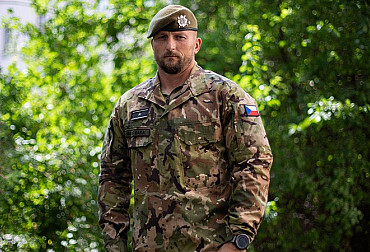
When he was offered a position in the artillery back then, he initially declined it with thanks. In his mind, it wasn’t the path he wanted to take. It hadn’t occurred to him that the artillery actually had a parachute reconnaissance battery. It was only there that a different perspective opened up for him. Traditional combatants need artillery fire support, and who else should provide it but a specialist who understands his field and also knows how the battlefield itself works. As he himself says, it’s good if that specialist knows “how to get down to the nitty-gritty.”
It was precisely this path that ultimately led him to an opportunity he wouldn’t have even considered before. His artillery unit gave him the opportunity to embark on one of the toughest military courses for small unit commanders in the world—a course that even its graduates speak of with extraordinary respect. For Petr, it wasn’t just a professional challenge. It was the moment when his long-standing inner motivation collided with the reality of elite training.
When the Illusion Fades Within the First Few Minutes
When he enrolled in Pre-Ranger, he knew it wouldn’t be easy. The very name of the course commands respect among soldiers. It has a reputation for being a training program that very quickly reveals just how much a person can truly endure. Yet even good physical conditioning and determination cannot fully prepare one for what comes when things really get going.
Seventy-five soldiers began the course. All were motivated, determined, and convinced they had a chance to succeed. But within the very first minutes, it became clear that neither words nor prior self-confidence would be the deciding factors here. One of the participants dropped out within the first ten minutes. On the second day, dozens more dropped out. After the first series of tests, only a handful remained who moved on.
There were eight foreign students among them. In the end, only Petr Vaníček passed all the necessary tests. Even then, however, there was no euphoria. Rather, there was a very sober realization that this was not a victory, but merely entry into the next, even more demanding phase.
The first blow came with the wake-up call. Getting up at three in the morning, the frost, the long wait outside, the body stiff with cold, and the question still flashing through his mind: Is this just the beginning? After the move, physical tests followed, which looked familiar on paper but in reality had different rules than anything one was used to.
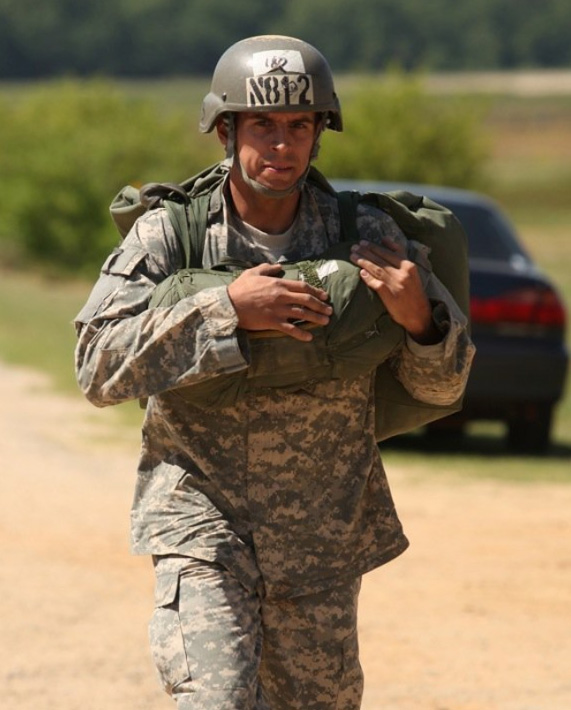
Push-ups, pull-ups, sit-ups, running. But every detail mattered. The technique was uncompromising. Performances that would have been considered very good elsewhere turned into failure here in the blink of an eye. Petr still remembers how he fell short by thirty seconds in the three-mile run. Thirty seconds after weeks of preparation and months of anticipation. But after several days without proper rest, with a body exhausted by constant strain, even half a minute takes on a completely different meaning. You quickly realize that here, you won’t just be battling the course or the clock. Above all, you’ll be battling yourself.
Mud, water, hunger, and a world reduced to the next few minutes
The true picture of the course isn’t just made up of individual tests. It’s shaped above all by the environment in which the soldier operates from morning until night—and often well into the following night. One of the first intense moments for Petr was the water confidence test: jumping into the water in camouflage, full gear, and with a weapon. The body is heavy, movement is clumsy, the boots pull you down, and it is only at that moment that you fully realize how thin the line is between calm and panic.
But it wasn’t just about the water. Every day brought another series of tests that piled up on top of each other. Equipment checks, known as “layouts,” meant dumping all gear on the ground, immediately laying everything out, repacking it, and putting it back in order within a time limit that felt more like a punishment than a realistic possibility. Everywhere there was shouting, stress, pressure, and chaos. At first, you tried to maintain some order, but you quickly realized that in this environment, the system wasn’t about keeping track of things, but about the ability to function under constant pressure.
On top of that came hunger and sleep deprivation. Meals were eaten outdoors, on the ground, in silence, and within a few minutes. It wasn’t about dining; it was a survival routine. Open, prepare, swallow, clean up, and keep running. Anyone who wanted to save something for later risked immediate elimination. Hunger thus gradually became a constant part of the day, just like fatigue. Sleep was reduced to a few hours a day, often broken up into short blocks.
It is precisely then, according to Petr, that the meaning of completely ordinary things changes. What one takes for granted in everyday life becomes a luxury here. The chance to sit down for a moment. To close your eyes for a few minutes. Eating without stress. Having dry socks. Not lying in the mud. Under Ranger conditions, the world narrows down to the next few minutes and what needs to be handled right now.
Navigation in the terrain was also a major challenge. Starting in the dark, rain, soggy terrain, and the dense forest of Georgia, which resembled a green wall more than a forest. After just a few steps, you were soaked through. Water dripped from your cap, down your sleeves, onto the map, and into your notebook. Every step was a struggle against the underbrush, the mud, and uncertainty. It was precisely here that it became clear who could remain calm even when they could see almost nothing and when instinct tried to drown out what training and discipline demanded.
In these moments, Petr relied on precision, concentration, and experience. Azimuth, estimating distance, step by step. No frills, no unnecessary gestures. Just the work that needed to be done. The result was the completion of the task, while many others in the field lost their bearings and ended up far from the goal.
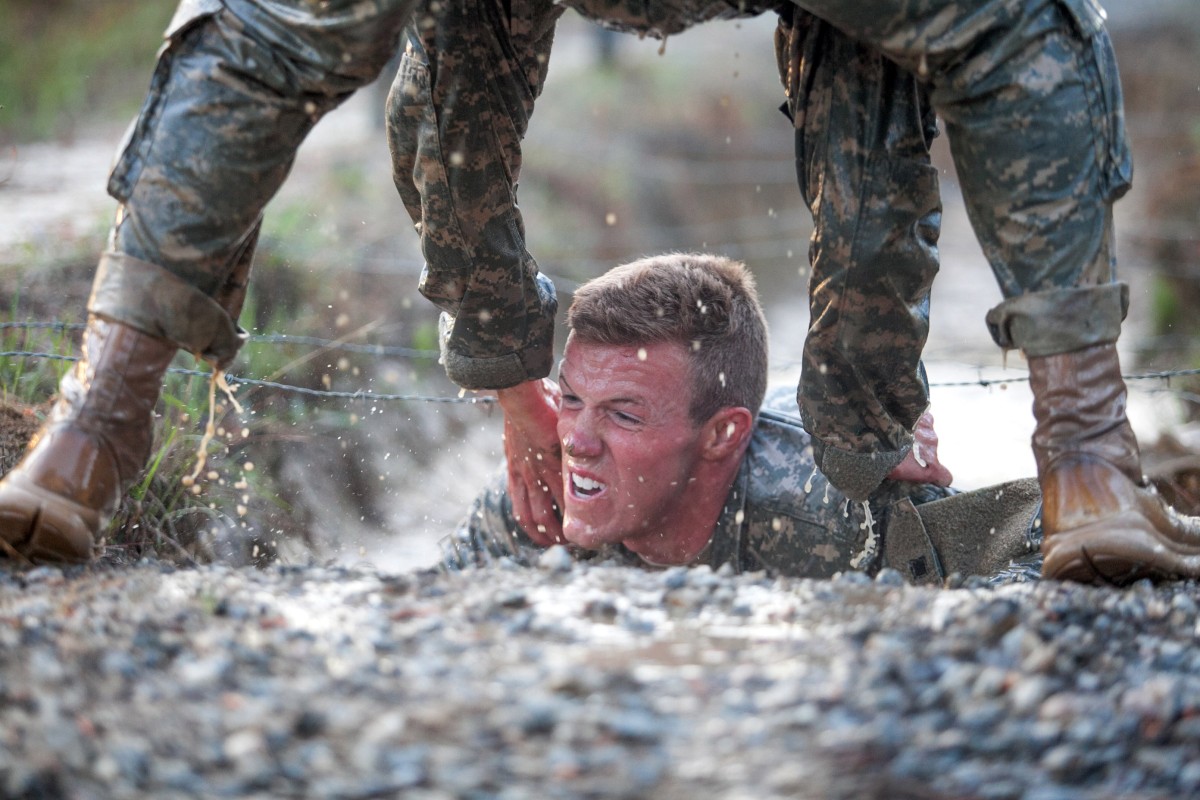
And then came the next days. Obstacle courses, crawling through icy water, runs with gear, movements, falls, climbing, shooting, repeated reactions to contact. The body was constantly pushed to its limits, with no rest. Pain became part of everyday life. Not as an exceptional state, but as a backdrop that was always present.
Small Unit Course Where the Team Also Makes the Decisions
After the first week, those who failed to meet the required standards were sent home. Two teams remained, and the training moved on to the patrol phase. At this point, it was no longer just about individuals. The team began to take center stage—teamwork, discipline, the ability to plan, issue orders, and function while in a state of almost constant exhaustion.
The day began very early and immediately picked up a fast pace. Checking equipment, laying out all gear, preparing, planning, issuing orders. It required hours of concentration at a time when both body and mind had long been begging for rest. This was followed by a move into the field. The distances themselves might not have seemed extreme on paper, but with a heavy backpack, a weapon, and minimal sleep, every kilometer took on a completely different weight.
It took just a moment for everything to change. You’d get out of the vehicle, get your bearings, and already the next encounter was coming—another time to take cover, another run, another reaction. Sprints, commands, gunfire, movements. And then silence again, during which you tried to catch your breath and gather your thoughts before the next situation arose.
One of the most crucial—and at the same time very treacherous—aspects of the course was the peer evaluation system. After every patrol, ambush, raid, or reconnaissance mission, all squad members participated in an anonymous peer evaluation. No one could hide behind the others. No one could slack off, be chronically ineffective, clumsy, or simply rely on others to carry the load for them. If someone fell below the set threshold, they were given a second chance in a different squad. If the situation repeated itself, they were out.
According to Petr, this was one of the most common reasons why international students dropped out. It wasn’t just about performance. The language barrier, different habits, cultural differences, and how quickly a person could become a natural part of the team all played a role. Looking back, he was all the more surprised that he himself didn’t get kicked out during the peer evaluation. Looking back, he is convinced that only one thing paid off for him: not playing for himself and trying to be useful to others.
And that remained one of the most important life lessons for him. In extreme conditions, the value of a person who tries to stand out at any cost is not confirmed. What is confirmed is the importance of someone who is valuable to the team.
When It’s No Longer Just About Physical Pain, but About the Mind
According to Petr, however, the hardest part wasn’t the physical exertion itself. The hardest part was the fatigue. It was that ever-present, deep, nagging fatigue that seeped into every thought and gradually robbed you of your ability to concentrate.
That is precisely why, paradoxically, one of the hardest parts was the theoretical section. Sitting down for several hours in a warm room, at a desk, at a time when your body is running on empty, meant waging an almost hopeless battle against falling asleep. But it was precisely that lack of focus that could later lead to more mistakes in the field, penalty points, and ultimately the end of the course.
In moments like these, your priorities shift. You no longer think in the long term. You don’t worry about what will happen in a week. You think about the next few minutes. About whether you can stay standing. Whether your eyes will close for a moment. Whether you can manage the next section. Whether you’ll be able to kneel down for a moment. Whether you’ll be able to eat everything in front of you.
That’s when you really see what a person is made of. And that’s when Petr realized something he still carries with him from the course: the limits of the human body—and above all, the human mind—lie far beyond what most people can imagine.
An experience that doesn’t end on the last day of the course
When the main phase of the Ranger course began later on, the pressure was even higher. Hundreds of students started the training, and with each subsequent stage, their numbers dwindled. One of the moments that made a strong impression on Petr was the night road march. A long march with heavy gear, starting after midnight, through terrain full of mud, rocks, potholes, and elevation changes. After days of physical and mental strain, you could see others starting to fall asleep while walking. They’d stagger, veer off course, and lose their rhythm. Anyone who dropped out was picked up by a vehicle following the column. No emotion, no stopping.
But in the end, Petr’s story didn’t end with graduation either. He was stopped by a back injury and disc problems that flared up again under extreme strain. It wasn’t a loss of willpower. It wasn’t a decision to give up. It was the body’s limit, which had taken its toll.
Others dropped out alongside him. One dropped out with a stress fracture, another after collapsing, and yet another due to what seemed like a minor issue. The Ranger program doesn’t forgive or compromise. It doesn’t take into account what a person has been through, how much they’ve already achieved, or how much they want to continue. It’s determined by what they can handle at that very moment.
Yet this story cannot be read as a tale of failure. On the contrary. It is precisely in what Petr took away from this experience that its true value lies. He says himself that never again in his career—not even during combat in Afghanistan, nor during survival training or reconnaissance patrols—has he found himself in a situation where he did not smile inwardly at the memory of Ranger School. Not because it was an easy experience, but because it forever shifted his measure of what can be overcome.
In his own words, this experience has proven its worth countless times and continues to do so in his later life. It taught him not to give up at the first sign of trouble. It taught him to function under pressure, to think clearly even when extremely exhausted, to keep the team together, and not to put himself first. And it also gave him a lasting awareness that the limits people commonly set for themselves are very often merely imagined.
Perhaps that is why, today, at the age of 45, he still meets the basic physical requirements for admission to the course. An eight-kilometer run in under forty minutes, push-ups, sit-ups, and pull-ups. It’s not just about the numbers. It is proof of a long-term commitment to discipline, which similar experiences have only reinforced in him.
In his story, Petr Vaníček presents the Ranger course without embellishment. He presents it as a place where image doesn’t matter, but where the true value of both the individual and the team becomes apparent very quickly. And that is precisely why his testimony is not just a story about a single grueling military course. It is also a testament to resilience, humility, and the ability to carry the toughest experiences into future service and life.