













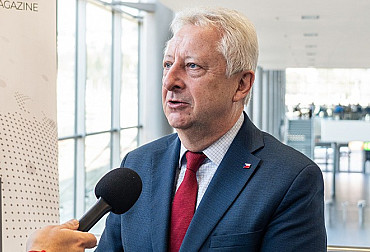
Lieutenant Ondřej Buriánek: Additive Manufacturing Can Bring Greater Flexibility to the Military, but It Requires Expertise, Standardization, and a Shift in Mindset
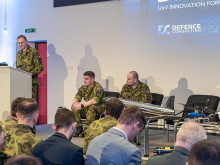
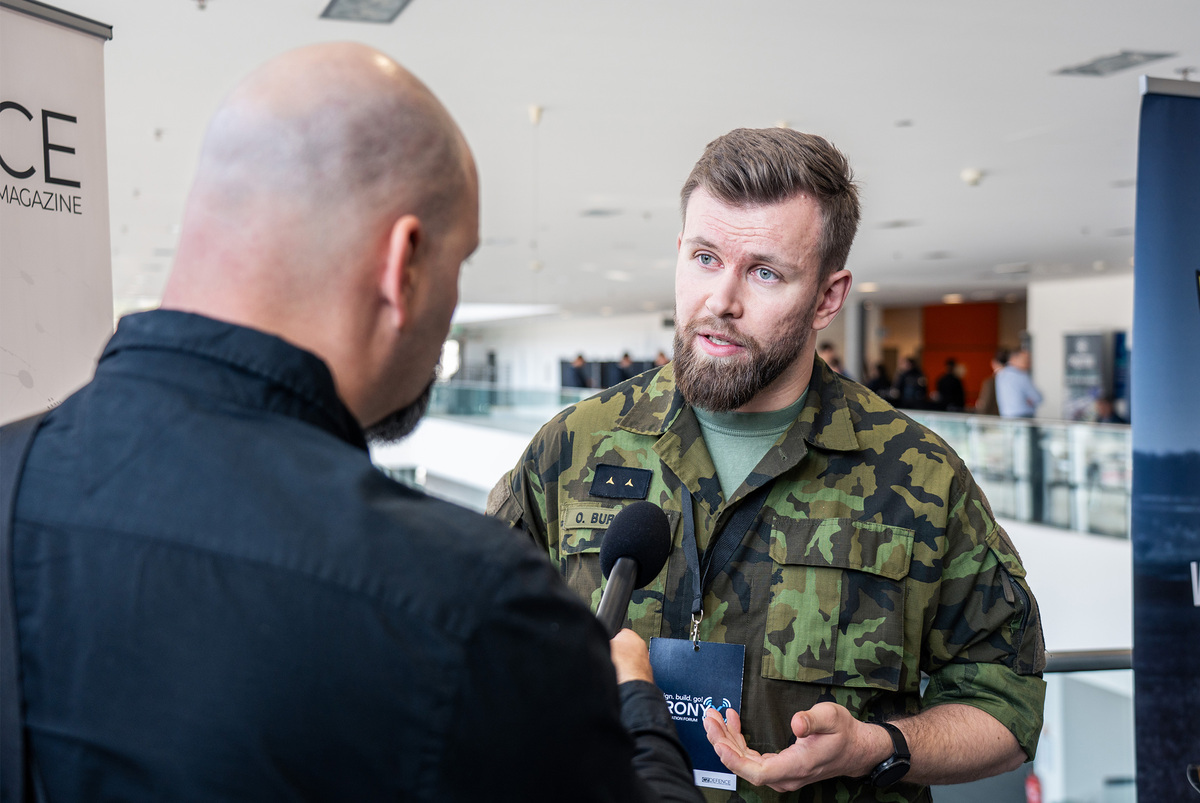
Additive manufacturing and 3D scanning represent a promising tool for the Czech Army that can significantly enhance the flexibility of logistical support, accelerate the production of selected components, and support adaptive training. According to Lieutenant Ondřej Buriánek, head of the Information Systems Support Group, however, it is not just about the printing technology itself, but about a comprehensive process in which materials, proper model preparation, and staff expertise play a crucial role. We bring you an interview conducted during the DronyX conference, which was co-organized by CZ DEFENCE magazine and Defence Consulting.
Video: Lieutenant Ondřej Buriánek: Additive manufacturing can bring greater flexibility to the military, but it requires expertise, standardization, and a shift in mindset
/ CZ DEFENCE
It’s not just the printers that matter, but also the material and proper processing
Right at the start of the interview, Buriánek points out that the future development of additive manufacturing will not rely solely on printing technologies themselves, but primarily on material development and the ability to properly prepare a model for a specific application. Even a very strong material does not automatically guarantee a high-quality result if the printing method, part orientation, or internal structure are not chosen correctly.
It is precisely this combination of design preparation and technological settings that determines whether the final product will be truly functional and durable even under real-world loads. While modern software can already flag certain issues, the decision itself still requires an experienced operator with technical expertise.
Preparation is key—not just the operation itself
Lieutenant Buriánek considers print preparation to be the most critical part of the entire process. This must be handled by personnel who combine expertise in information technology with an understanding of engineering principles. Operating the printer itself, by contrast, is relatively simpler and consists primarily of monitoring the print job, checking the materials, and performing basic equipment maintenance.
In a military environment, a natural division into two levels emerges: specialists who prepare models and print parameters, and operators who ensure the actual operation of the equipment. According to him, this model will be particularly important in future field deployments.
Field production will have to rely on pre-established solutions
Under field conditions, personnel cannot be expected to perform complex evaluations of the design parameters of each part on-site. Field additive manufacturing must therefore be based on pre-prepared, verified, and approved print files, which the operator simply selects and uses according to the specified procedure.
This means that a containerized or mobile printing station will depend on high-quality preparation from a higher level. Operators in the field will not replace the designer but will work with already verified data to ensure maximum functionality and safety of the resulting part.
There is a growing need for new expertise
According to Buriánek, as this field develops, it raises the question of a new military specialty that would combine elements of IT, technical training, and logistics. Additive manufacturing relies not only on software and a printer, but also on working with materials, file management, equipment maintenance, and an understanding of the specific purpose of the component being manufactured. It is therefore not purely an “IT” or purely a logistics discipline, but rather an intersection of multiple fields of expertise that will become increasingly important in the military.
Its use in the field has its limitations, but the potential is considerable
From a practical standpoint, Lt. Buriánek sees the greatest benefit of additive manufacturing primarily in the production of smaller and moderately complex parts, fixtures, or components for unmanned systems and other equipment. In some cases, it is already possible today to manufacture highly durable parts, for example, from composite or reinforced materials.
However, certification, safety, and the requirement to comply with alliance standards remain key constraints. The military therefore cannot afford to manufacture arbitrary components without a clearly defined verification process. It is precisely soldier safety and standardization that represent the fundamental dividing line in this area between what is technically possible and what is actually usable.
There is inspiration from abroad, but what will matter is how we adapt it
Although some foreign militaries, particularly the U.S. military, are further ahead in the field of additive manufacturing, according to Buriánek, a broader foundation for the systematic use of this capability is only now emerging in the Czech context. Sharing experiences and data sets is likely to become increasingly important in the future, as will the involvement of expert teams and the academic community.
A change in mindset will be crucial
In addition to the technologies themselves, Lieutenant Buriánek considers a broader shift in mindset to be the most important factor. In his view, the military should give more thought to what truly needs to be procured in the long term and, conversely, what it can produce on its own under certain conditions. It is precisely in this regard that additive manufacturing can represent a significant step toward greater self-sufficiency, speed, and flexibility.
Related