













Is it time to activate the EU's "Article 5"?
In connection with disputes between the United States and its European allies over the future of Greenland, scenarios have also emerged in political, media, and public discourse concerning the possible seizure of the Arctic island by the US military if Denmark does not comply with Washington's demands. The US president and his administration have long been ambiguous on this issue, raising a number of questions. It was not until the World Economic Forum in Davos in January that President Donald Trump explicitly ruled out the possibility of a military takeover of Greenland. However unlikely an American military attack on territory controlled by a NATO member may have been, the recent Greenland crisis can still serve as a useful mental exercise on the broader possibilities of European defense capabilities. In particular, it can remind us of some "forgotten" instruments, including Article 42(7) of the Treaty on European Union.
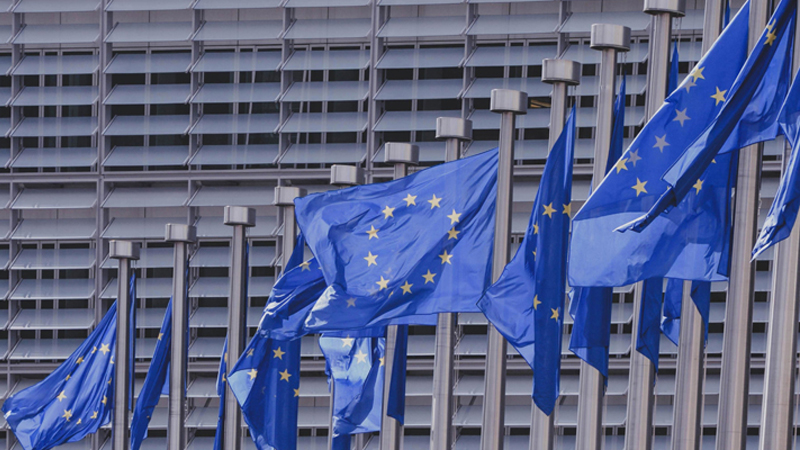
The so-called mutual assistance clause is a tool that has been available to the EU's Common Security and Defense Policy since the signing of the Lisbon Treaty. It is one of the few provisions in primary EU law that directly refers to common defense. This article stipulates that "if a Member State is the victim of armed aggression on its territory, the other Member States shall provide it with assistance and support by all means in their power." At first glance, the obvious similarity to Article 5 of the North Atlantic Treaty is striking.
Despite the existence of a collective defense commitment among NATO member states, however, the debate on the possibilities of using the mutual assistance clause is currently reviving, precisely against the backdrop of the Greenland crisis. But why does Europe need its own "Article 5"? And what is preventing the EU from developing the full potential of this instrument?
Let us begin by comparing the two provisions mentioned above, which oblige the relevant member states to provide assistance in the event of an attack on another member state. Despite their similar function, several differences can be identified between them, which make it possible to determine the added value as well as the shortcomings of Article 42(7).
A completely obvious difference is the fact that the mutual assistance clause can also be used against NATO member states. However absurd and difficult to imagine a scenario of armed aggression against an ally may seem, both the past (given the tensions surrounding Greenland) and the present show that conflicts with dangerous escalation potential can arise even between members of the North Atlantic Alliance. One example is the tension between Greece and Turkey in the eastern Mediterranean. Disputes over exclusive economic zones in 2020 led to a clash between the two countries' warships in the Aegean Sea. In this context, it is worth mentioning that Greece used Article 42(7) TEU as a diplomatic tool to deter Turkey.
It is also worth noting that the wording of Article 42(7) allows for its activation even in certain situations that do not suffice for the triggering of Article 5. First, the EU mutual assistance clause refers to armed aggression, while Article 5 refers to armed attack. Unlike Article 5, the mutual assistance clause could thus be triggered, for example, in the event of a blockade of a Member State's port by a foreign warship.
Article 42(7) also allows for activation in cases where any overseas territories of Member States that are an integral part of the EU are the victims of an attack. However, in the context of the overseas territories of NATO members, Article 5 is limited to the North Atlantic area, which does not include some overseas territories of European states (such as French territories in the Caribbean and South America).
Another difference has been demonstrated by the only invocations of both provisions to date. In the case of Article 5, it was in response to the terrorist attacks of September 11, 2001. In the context of Article 42(7), it was in response to the terrorist attacks in Paris in 2015. The invocation of the mutual assistance clause set a precedent whereby it can also be triggered in cases of domestic terrorism. However, Article 5 is interpreted differently on the basis of a 2001 decision by the North Atlantic Council. In order for it to be triggered, the attack must be carried out from abroad.
An important issue related to both provisions is their use in the context of hybrid threats, such as cyber attacks, reflecting the growing importance of unconventional threats in recent years. Both articles were originally conceived as tools to counter conventional kinetic strikes. With regard to Article 5 of the North Atlantic Treaty, NATO member states have agreed at recent summits that hybrid and cyber attacks (as well as attacks launched from space) may, under certain conditions, trigger its invocation.
Although there is broad consensus among EU member states on the applicability of Article 42(7) in the context of hybrid threats, there is still some uncertainty in this regard. Certain ambiguity (or strategic ambiguity) is, as in the case of NATO, intentional and desirable for deterrence purposes, but at the same time it is necessary to align Member States' expectations regarding the applicability of Article 42(7) in the context of hybrid forms of aggression. This will help ensure that member states do not question the legitimacy of activating the clause, which could lead to a refusal to provide substantive assistance to victims of hybrid attacks.
Another persistent problem is the unclear role of EU institutions and agencies in providing assistance under this provision. In view of the above, it should be emphasized that the EU has a wide range of tools at its disposal to counter hybrid threats, which even exceed NATO's capabilities. However, the question remains as to who would coordinate the provision of assistance in the event of Article 42(7) being invoked, particularly between the relevant EU institutions and agencies. Such coordination is, of course, crucial to ensuring a timely and effective response.
It is therefore not surprising that in recent years there have been calls for the operationalization of Article 42(7) through simulations, joint exercises, or the creation of scenarios for its possible invocation, particularly from the western and northern EU member states, as well as from EU institutions. However, this is opposed by traditional Atlanticists, namely the Baltic states and Poland. They fear that such a move could weaken the authority of Article 5. Neutral member states also take a cautious stance.
The Czech Republic has long held an ambiguous position in this debate. However, it is in its interest to ensure that the mutual assistance clause is properly operationalized. In an increasingly dangerous and unpredictable international system, it should advocate for the EU to act as a relevant and credible security actor, which could be facilitated by appropriate reform of existing EU instruments. Such a step does not undermine NATO's role as the main pillar of European defense, but strengthens the EU's ability to act independently when necessary.
Article 42(7) offers considerable untapped potential to function primarily as a deterrent. Unlike Article 5, however, it lacks the necessary credibility, which is one of the components of effective deterrence. In order to develop the full potential of this provision, it is necessary to operationalize it, in addition to strengthening the military capabilities of European states.
Related