














Old industry versus DefTech: a structural clash over the future of defence
Today, both the European and American defense industries are on the cusp of profound structural change that goes far beyond a mere generational shift in technology. It is a clash between two economic models and two ideas about where real military added value is created. For decades, the traditional defense industry has been characterized by a few large suppliers, long development cycles, and extremely capital-intensive programs. In the United States, this model stabilized around defense corporations such as Lockheed Martin, Raytheon, and Boeing after the consolidation of the 1990s. At the same time, however, a new defense sector is emerging that openly challenges this established practice: instead of ten-year programs, it offers monthly innovation cycles; instead of billion-dollar platforms, it offers inexpensive autonomous systems produced in large series. If the center of gravity of military value really shifts to software, data, and rapid manufacturing, some of the traditional industrial giants may find themselves in the role of slow hardware integrators without decisive added value.
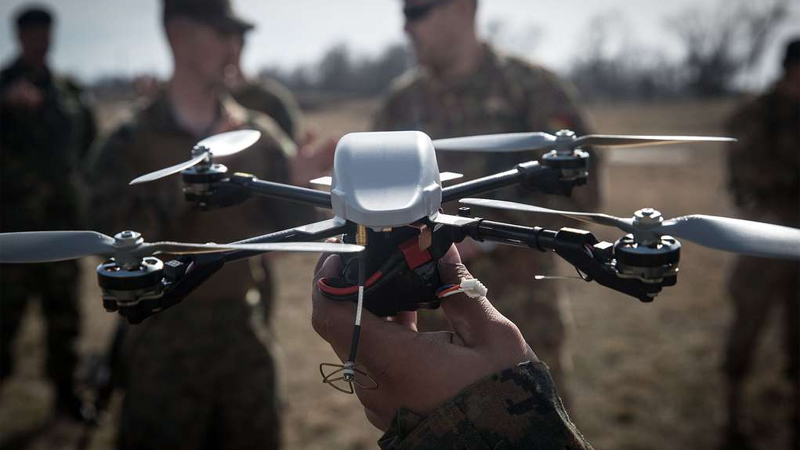
A new generation of defense technology (DefTech) companies has emerged in Silicon Valley. They favor smaller, cheaper, and autonomous systems combined with rapid development and software control. According to DefTech representatives, these solutions will better protect the United States and its allies in modern conflict. This is not a complete replacement of traditional platforms, but a shift in focus towards software, data, artificial intelligence, and the ability to modernize quickly. Defense is thus gradually shifting from a model of a single large program to a model of a continuously improved, less sophisticated product.
This shift was clearly evident in the war in Ukraine. Last year, Kiev purchased up to 4.5 million FPV drones for more than $2.6 billion, with their loss rate approaching that of ammunition. Drones are becoming consumer goods whose value lies in a combination of low price, mass production, and rapid manufacturing renewal. This marks a shift from the logic of a long-term platform to the logic of "smart and affordable mass production." While traditional weapon systems were designed to serve for decades, new systems are optimized for rapid replacement, frequent software updates, and high rates of combat wear and tear.
At the same time, it is clear that new players are also adopting some features of the old model. Companies that present themselves as startups and aggressive disruptors of the established order are following a similar consolidation scenario to that created thirty years ago by today's dominant companies. Anduril Industries acquired Dive Technologies, Copious Imaging, and Blue Force Technologies, while Shield AI bought Martin UAV and Heron Systems. While these acquisitions are significantly smaller than Lockheed's historic merger with Martin Marietta, Northrop's merger with Grumman, or Boeing's merger with McDonnell Douglas, their goal is similar: to occupy a new market segment and integrate key capabilities under one roof. What differs is primarily the scale and time horizon of the return on investment, not the logic of concentration itself.
The fundamental difference between the situation in the United States and Europe lies not in technology, but in institutional development. Europeans missed several key moments in combining technological innovation and military power. While the United States was able to carry out extensive industrial consolidation after the so-called "last supper" in 1993, which led to a wave of mergers, acquisitions, and vertical integrations and transformed the American defense industrial base into a more concentrated and capable entity, Europe failed to build on the momentum created by Airbus, Leonardo, and BAE Systems. The 2012 attempt to merge EADS and BAE Systems, which could have created a true multinational champion, failed due to disagreements among European countries over governance, public equity stakes, and sovereignty and security requirements. European integration has thus returned to programmatic cooperation and joint ventures rather than real capital consolidation of major suppliers.
The result has been structural weakness. While the United States has a defense budget of nearly $900 billion per year and a single market, Europe operates with fragmented national budgets and differing priorities. New technology companies are emerging in Europe, but they often face a limited domestic market and difficulties in scaling up production. France's EarthCube, later renamed Preligens, paved the way for AI-accelerated intelligence before being incorporated into the French Safran group in 2024. While this demonstrates a certain level of sophistication, it also highlights a limited ability to grow independently. In the field of sensors, Unseenlabs has entered the commercial space monitoring of maritime activities. Companies such as Alta Ares and Harmattan AI are seeking to transform command and control systems, develop autonomy industrially, and build capacity in the consumable weapons segment on a European scale. In Germany, too, a new generation of companies such as Helsing, Stark, and Quantum Systems has emerged since 2020, linking software, autonomy, and industrial production to reconnaissance and strike systems, often in collaboration with traditional prime contractors. The key question is whether these companies will gain sufficient strategic and industrial space to grow without being prematurely absorbed by larger groups.
The models of "old" and "modern" actors are not incompatible, just as special forces complement conventional forces. In the future, however, the question of where the main military added value lies will have to be addressed: whether in intangible capabilities, i.e., software, data, and algorithms, or in the physical means themselves. If the focus shifts to the intangible sphere, historical industrial groups may become interchangeable suppliers. This tension requires a well-thought-out combination of both approaches through open systems and management that can reconcile the rapid development of new technologies with the long-term planning of large arms programs.


Europe has no choice but to combine both approaches in the defense industry: long-term, high-tech platforms with a smart and affordable mass of "consumer" systems. The lower segment brings volume, fills the space, fixes the opponent, and renews itself quickly, while the higher segment brings decisive effect at the critical moment. This interconnection is also reflected in industry: highly sophisticated systems build credibility and technological prestige, while mass-produced resources provide the necessary volume and resilience in the event of a long-term conflict.
In Europe today, the defense economy is based on the coexistence of two distinct markets. On the one hand, there are strategic weapon systems with a long service life, air, sea, and land platforms, highly technological, expensive, and designed to last for several decades. On the other hand, a new market is emerging, characterized by consumer capacities, mass production, low unit prices, and rapid innovation cycles, the most visible symbol of which is drones in Ukraine. Future warfare will focus on saturation, economies of scale, and industrial flexibility. If Europe fails to clearly link the "old" and the "modern," it will fragment its efforts, slow down innovation, and weaken its competitiveness against powers that have already achieved this synthesis.
Artificial intelligence alone cannot solve any problems. It only has a real effect when it is firmly integrated into existing production, operational, and decision-making structures, sometimes through gradual evolution, sometimes at the cost of a profound restructuring of entire command and control systems. If Europe fails to combine cutting-edge technology with mass production capacity, it risks remaining dependent on others in high-intensity conflicts and losing the ability to independently determine the pace and form of modern warfare. This requires an active role for public authorities, which will not only balance the interests of traditional and new players, but also purposefully create conditions for their cooperation and long-term industrial resilience.