















Future Forces 2026: From Battlefield Lessons to Next-Generation Technology
From 21 to 23 October, PVA EXPO PRAGUE will host the sixteenth edition of the international Future Forces Exhibition & Forum (FF26) – one of the region's biggest dates on the defence and security calendar. It brings cutting-edge technology face to face with real operational experience, opening up space to discuss what armed forces and security services actually need on the ground.
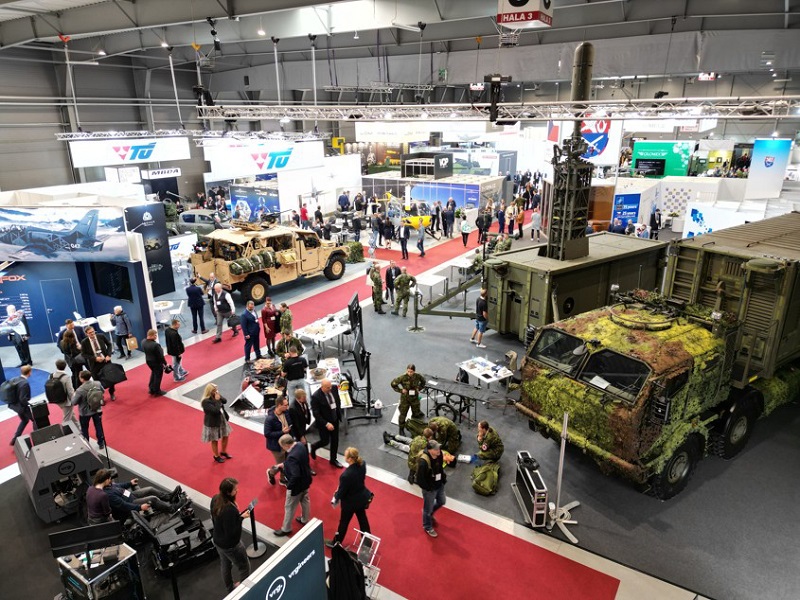
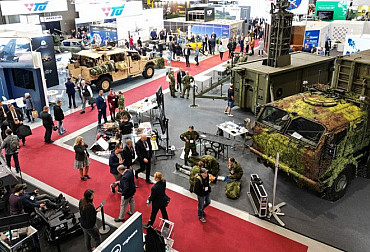
More than 450 exhibitors from 35 countries will fill over 23,000 square metres of exhibition space across seven halls, with an extensive outdoor equipment display and live dynamic demonstrations rounding out the experience. More than 9,000 professional visitors and over 1,000 official delegates and VIP guests are expected, with delegations travelling in from more than 70 countries.
This is far more than a static show of hardware. FF26 is built as a working platform where government representatives, armed forces, security and emergency services, international organisations, industry, research institutes and academia all meet in one place – to speed up the journey from innovation to operational use, share hard-won lessons from today's conflicts, and find real solutions for defence, security and national resilience.
Forty Expert Events, One Programme
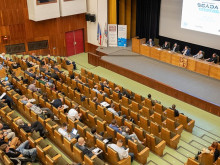
Alongside the exhibition floor, the programme packs in around forty conferences, expert panels, working sessions and specialist events, covering today's and tomorrow's challenges across the land, air, cyber and space domains.
The opening panel kicks things off with a strategic discussion under the theme Defence 2035+: Adapting to the New Security Reality, looking at how the security landscape is shifting, what new capabilities defence forces will need, and how ready Allied nations really are for the conflicts ahead.
The Future Air Force Conference turns to air mobility and multirole platforms, electronic warfare, the growing use of unmanned systems in air operations, and airbase protection. The Future Land Forces Panel focuses on protecting units and critical infrastructure against unmanned threats, while the Future C2 Conference tackles command, control and operations in the electromagnetic environment.
A significant part of the programme is dedicated to autonomous and robotic systems. The MESAS'26 conference, run in cooperation with the NATO M&S Centre of Excellence, explores modelling and simulation for autonomous systems and has become a go-to meeting point for experts from the armed forces, academia and industry alike.

The CBRN Defence Technology & Innovation Forum, held with the Joint CBRN Defence Centre of Excellence and NATO DIANA, will focus on speeding up the innovation cycle, deepening cooperation, and building NATO's future capabilities against CBRN threats.
Further panels take on military medicine, innovation and emerging technologies, and space – a domain that's become critical to how modern military operations are planned and run, and increasingly central to national security.
The cybersecurity strand centres on the Future of Cyber Conference, bringing together security-focused panel discussions, expert talks, lectures and workshops, plus a hands-on Live Hacking Zone and a cyber escape game.
Lessons from current conflicts run through nearly every panel. The Future of Civil Security Conference shares first-hand experience from military and civilian security operations in Ukraine, while the Internal Security and National Resilience track looks at protecting people and infrastructure and keeping the state functioning under conflict and hybrid threats.
The programme also features the annual police conference hosted by the Police Presidium of the Czech Republic, which regularly draws more than 500 police officers from across the country.
NNATO, Interoperability and What Users Actually Need
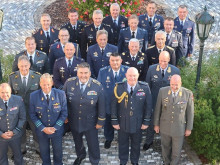
The Future Forces Forum (FFF) platform has a long track record of working alongside NATO and EU structures – not least by hosting working-group meetings. During FF26 in Prague, groups totalling more than 300 delegates will convene, including the NATO Army Armaments Group (NAAG) Land Capability Group Dismounted Soldier Systems and the NATO Support & Procurement Agency (NSPA) Dismounted Soldier Equipment User Group – both focused on weapons, personal kit and equipment for dismounted troops – alongside the NAAG Joint CBRN Defence Capability Development Group – Training & Exercise Panel.
These meetings zero in on current and future user requirements, standardisation, interoperability and capability development for the armed forces of Allied and partner nations.
A dedicated NATO Pavilion gives visitors and exhibitors the chance to connect directly with representatives from NATO's divisions, organisations and agencies. Bringing the exhibition floor together with these specialist working groups creates a rare space where manufacturers can test their technology against real operational needs and where future requirements take shape.
The Latest Technology and Solutions on Display
FF26 offers a comprehensive look at where the industry stands today. Unmanned systems and counter-UAS technology take centre stage: visitors will see a wide range of autonomous platforms for reconnaissance, surveillance and strike missions, including AI-driven solutions capable of running missions independently. Alongside that, expect a strong focus on counter-drone protection – from radio-frequency and radar detection through jamming and navigation-signal denial to physical and net-based interception. Many of the systems on show combine several of these approaches into layered solutions built to respond to different drone threats in real time.
Ground robotics shares the spotlight with unmanned aircraft. The exhibition presents autonomous and semi-autonomous systems for combat, logistics and support of deployed units; modular robotic platforms built on open architectures that let sensors and weapons be swapped out easily depending on the mission; and solutions that link multiple robotic systems into a coordinated whole – so-called swarms or multi-agent systems, where autonomous units talk to each other and split tasks without needing constant human oversight. AI technology for navigation and decision-making in GPS-denied environments also features – a capability that's become essential for operating in the jammed, electronically degraded conditions of the modern battlefield.
Exhibitors will showcase platforms for detecting and analysing cyber threats, training and certification programmes for security specialists, and AI-driven software for managing and analysing imagery and data streams. These sit alongside secure, rapidly deployable communications technology – including 5G mobile networks, satellite communications and tactical radio systems – plus command-and-control tools for air defence and electronic warfare.
On the radar, sensors and reconnaissance side, expect passive and active surveillance systems for identifying air, land and maritime targets, electro-optical and thermal-imaging cameras, remotely operated weapon stations, and sensors for detecting laser or radar illumination – technology that gives armed forces a complete picture of the battlefield, including areas beyond the reach of conventional radar.
Protection against chemical, biological, radiological and nuclear (CBRN) threats also gets strong billing. On display: individual and collective protective equipment such as masks, filters and escape hoods; field detection and identification technology for chemical and radioactive substances; decontamination procedures for highly hazardous materials; and pharmaceutical solutions including antidotes to nerve agents and other toxins. Medical support forms an integral part of the CBRN segment.
The aerospace segment brings in manufacturers of training and light combat aircraft, aviation R&D infrastructure including satellite technology, and manufacturers of propulsion systems for unmanned platforms and guided missiles – alongside companies specialising in the modernisation, maintenance, repair and technical support of military aircraft.
The land systems and combat vehicles segment covers combat and tactical vehicles as well as vehicle platforms adaptable for defence and security use. Weapons and ammunition also have a strong presence – from small arms and sniper rifles to sophisticated guided weapon systems and anti-tank technology, plus ammunition and energetic-materials production spanning the full life cycle from development and manufacture through to modernisation and disposal.
Personal protection and tactical gear feature prominently too: ballistic barriers and protective elements for buildings, technical textiles, body armour and helmets, functional clothing and footwear built for extreme conditions, load-carrying systems and transport equipment, and simulation and training technology – including virtual reality – for marksmanship, drone piloting and counter-UAS training.
Rounding things out: specialised imaging and monitoring systems for protecting critical infrastructure and soft targets, plus industrial automation for defence applications. Several national pavilions will showcase opportunities for international cooperation and current projects, including an exhibition from the UK Ministry of Defence and national pavilions from Denmark, Hungary, Türkiye and India. EU bodies will also be represented, including the European Defence Agency, Frontex, EUSPA and others.
Innovation, Start-ups and Emerging Technology
The Innovation Pavilion, developed with industrial group S-Tech Ventures, FFF's strategic partner, brings start-ups, fast-growing tech companies, established industrial businesses, investors, end users and universities together under one roof.
The dedicated innovation programme focuses on getting new technology into defence and security applications, giving innovative technologies a stage, sparking expert discussion, and opening doors to cooperation with investors and industrial partners.
Mobile Shooting Range – A First for the Czech Republic
One of the standout new features at Future Forces 2026 is a mobile containerised shooting range – the first time anything like it has appeared at an event of this kind in the Czech Republic. It allows hands-on testing of small arms, ammunition, ballistic protection, optical devices and sensors right on site. The range offers two 10-metre firing lanes suitable for calibres up to 12.7 mm.
That means exhibitors won't just be showing their products on a stand – they'll be able to put them into action in front of professional visitors. The shooting range is complemented by indoor and outdoor areas for live demonstrations, exhibitor presentations, tactical displays and showcases of unmanned and other specialised systems. The Exhibitor Stage will host product presentations and guided demonstrations of new technology throughout the event.
Armed Forces, Law Enforcement, and Emergency Services
The extensive exhibition from the Ministry of Defence and the Army of the Czech Republic is joined by displays from the Police, Fire Rescue Service, Customs Administration, Prison Service and other security institutions. Together, their exhibits make the point that defence and security can't be split into separate military and civilian worlds – what matters is the state's ability to coordinate the armed forces, security services, the Integrated Rescue System, public administration, industry and the public, all at once.
Where Technology Becomes Capability
Future Forces Exhibition & Forum 2026 brings political and military leadership, security services, industry, research institutions and technology users together in one place – with space for bilateral meetings, professional networking and targeted matchmaking alongside the exhibition itself.
The digital platform lets participants find relevant exhibitors, arrange meetings with specific attendees, and browse the full programme and individual events. Admission is reserved for professional and trade visitors. Online registration is free.
From the Trade Show to Defence and Security Day
After three days of trade exhibitions, Defence and Security Day opens to the general public on Saturday, 24 October 2026. Its message: defence, security and national resilience aren't just the job of professional services – they concern every citizen.
From 09:00 to 15:30, PVA EXPO PRAGUE will host presentations by the Army of the Czech Republic, Police, Fire Rescue Service, Prison Service, Customs Administration, Prague Emergency Medical Service, Prague Municipal Police, Czech Red Cross and other organisations.
Visitors can get up close with heavy equipment, specialised vehicles and the gear used by each service, plus dynamic demonstrations of emergency response and inter-agency cooperation.
An educational programme covers how to respond in a crisis, cybersecurity, online fraud, children's online safety, digital hygiene and psychology. In partnership with the Czech Red Cross and VR Rescue, visitors can even try virtual reality first-aid training for an unconscious person.
The big question running through Saturday's programme: how does the state protect its population, and how can citizens help build national resilience? Admission to Defence and Security Day is free.
Future Forces Exhibition & Forum 2026
Date: 21–23 October 2026
Venue: PVA EXPO PRAGUE
For: Professional and trade visitors
Registration: Free online
Information, programme and registration: www.FFF.global
Defence and Security Day 2026
Date: Saturday, 24 October 2026, 09:00–15:30
Venue: PVA EXPO PRAGUE
Admission: Free to the public
Information: www.dbo26.cz