















From Budgets to Capabilities: The Alliance Raises the Bar for Its Allies
Until recently, the debate on Czech defense revolved primarily around a single figure – 2% of GDP for defense. Today, however, the situation is fundamentally different. Following the summit in The Hague, NATO has entered a new phase of collective defense, in which the decisive factor is no longer merely the level of defense spending, but above all the ability of member states to build specific military capabilities. Meanwhile, the Czech Republic is unlikely to meet even its current 2% commitment this year, according to the Alliance’s methodology. An even more important question, however, is whether it will be able to keep pace with the rate at which the Alliance itself is changing.
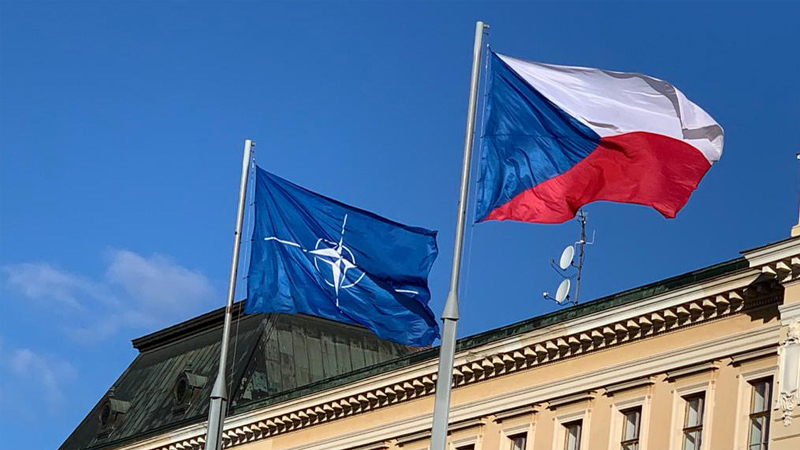
The war in Ukraine has definitively brought to an end the era in which European security was based primarily on deterrence and limited expeditionary operations. After more than thirty years, NATO is returning to planning for collective defense against a technologically advanced adversary and is preparing for the possibility of a long-term, high-intensity conflict.
This shift was clearly reflected at the Alliance summit in The Hague. There, the Allies agreed not only to gradually increase defense spending to 3.5% of GDP and to allocate an additional 1.5% of GDP to security-related areas, such as defense infrastructure, logistics, societal resilience, and the defense industry. Even more important, however, was the approval of new Alliance goals, the so-called Capability Targets – specific requirements for the capabilities of individual member states. In other words, NATO no longer evaluates only how much member countries spend. Above all, it evaluates what they are actually capable of building with those resources.
This year's meeting of NATO Allies in Ankara further confirmed this direction. The discussion no longer focused on the GDP percentages themselves, but rather on the pace of implementing new defense plans, strengthening the European defense industry, military mobility, air defense, ammunition stocks, and the member states’ ability to meet new alliance goals. This is precisely where the situation in the Czech Republic begins to be more complex than it might seem when looking at the defense budget alone.
Prime Minister Andrej Babiš admitted this year that the Czech Republic will likely not even meet its current 2 percent commitment according to NATO’s methodology. Spending is expected to range between approximately 1.7 and 1.8 percent of GDP, with the government not anticipating a return to the two-percent threshold until 2027. From NATO’s perspective, however, the percentage itself is no longer the most important indicator.
The new Capability Targets provide a much more comprehensive assessment of individual countries’ readiness. They include the ability to form and maintain combat units, ensure air defense, logistical support, sufficient ammunition stocks, engineering support, medical capabilities, cyber defense, military mobility, and the resilience of critical infrastructure. Equally important is the defense industry’s ability to provide long-term support to the armed forces during a potential conflict. The Czech Republic is certainly not starting from scratch in this regard.
The Czech Armed Forces are undergoing their largest modernization effort since their inception. The military is acquiring F-35 aircraft, CV90 tracked combat vehicles, Leopard 2A8 tanks, Caesar self-propelled howitzers, and new air defense systems. At the same time, thanks to its support for Ukraine and growing European demand, the Czech defense industry has significantly strengthened its international position. However, there are still problems that cannot be solved simply by increasing the budget.
The military has long faced a shortage of personnel; it needs to expand its infrastructure, modernize its barracks, build new logistics capabilities, and ensure it has enough specialized personnel to operate increasingly sophisticated equipment. Modernization is therefore not merely a matter of purchasing weapons systems, but also of creating the conditions for their long-term operation. Moreover, looking at European allies, it is clear that the pace of change is accelerating significantly.
Poland currently invests over four percent of its GDP in defense and is systematically building one of the strongest armies in Europe. In addition to purchasing K2 tanks, K9 howitzers, HIMARS and Patriot systems, F-35 aircraft, and Apache helicopters, Poland is simultaneously increasing the number of professional soldiers, active reservists, and participants in voluntary military training. The goal is an army of approximately 300,000 personnel.
Germany, which just a few years ago was criticized for having an underfunded military, is significantly increasing its defense spending, establishing a permanent brigade in Lithuania, and preparing for further expansion of the Bundeswehr in accordance with new alliance plans.
The Baltic states are investing in air defense, the construction of fortifications on NATO’s eastern flank, military mobility, and societal resilience. Their approach is based on the premise that national defense is not merely the responsibility of the military, but of society as a whole. In this regard, the Czech Republic is certainly not lagging behind technologically. However, the pace of developing certain capabilities is slower than in countries that view the security situation as an immediate threat.
The biggest change brought about by the summits in The Hague and Ankara does not lie in new defense spending percentages. It lies in a shift in philosophy. For decades, it was relatively simple to assess the success of member states – based on the size of their defense budgets. Today, that is no longer enough.
The Alliance is increasingly assessing whether individual armies are truly prepared to wage high-intensity conflict – whether they have sufficient troops, ammunition, logistics, industrial base, the ability to rapidly replenish losses, and the capacity to sustain combat operations over the long term.
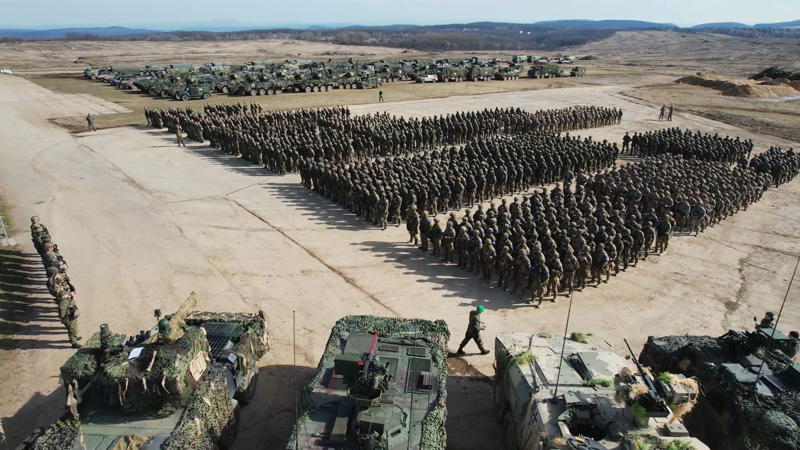
The war in Ukraine has shown that modern conflict is not a contest between individual weapons systems, but rather a contest of a nation’s ability to sustain military power over the long term. This may pose an even greater challenge for the Czech Republic than simply increasing its defense budget. Just a few years ago, meeting the 2 percent commitment was considered the primary symbol of NATO member states’ credibility. Today, it is merely a prerequisite for membership.
The true measure of an alliance’s credibility is its ability to translate financial resources into tangible military capabilities: ready brigades, effective air defense, resilient infrastructure, sufficient stockpiles, a strong defense industry, and well-trained personnel.
The Czech Republic is well on its way in a number of areas. It is modernizing its armed forces, has a competitive defense industry, and is among Ukraine’s key supporters. At the same time, however, it is entering a period in which the pace of change within the Alliance is accelerating significantly.
The question, therefore, is no longer whether we will be able to meet a specific percentage of GDP. What will be far more important is whether we can build, in a timely manner, the capabilities that our allies will expect from us in the coming decade. It is precisely on this capability that not only the Czech Republic’s credibility within the Alliance but, above all, its security will depend.