














DronyX 2026: Integrating the military, industry and government as the key to modern defense
The DronyX conference, held in Brno on March 18, featured an open discussion on unmanned aerial vehicles, anti-drone technologies, artificial intelligence, and additive manufacturing. Representatives of the Czech Armed Forces, Czech companies, and state-owned enterprises agreed that the country’s future defense capabilities will depend not only on the pace of technological innovation but also on the ability of the state, the military, and industry to cooperate much more closely than before. The significance of the conference was underscored by the patronage of the Czech Minister of Defense, the Alliance for the Unmanned and Aerospace Industry, and the Czech Chamber of Commerce.
Video: DronyX 2026: Linking the Military, Industry, and Government as the Key to Modern Defense / CZ DEFENCE

The aim of this event, co-organized by CZ DEFENCE magazine and Defence Consulting, was to create a shared space for presentations and subsequent expert discussions across key technological fields. As stated by the event organizers, the DroneX conference is intended to be a platform where experts from the Czech Armed Forces, representatives of the defense and dual-use industries, the startup scene, and creators of innovative technological solutions come together—and where, alongside technological trends, current experiences from the Ukrainian battlefield are also discussed.
The conference, which clearly set the framework for the entire event—linking the strategic needs of national defense with the specific technological capabilities of Czech industry—was opened by Czech Minister of Defense Jaromír Zůna, who noted in his speech that the field of autonomous systems has long been one of his professional focuses. “I have been focusing on this issue since the beginning of the millennium, and I can say that the direction of development has been known for a long time.”
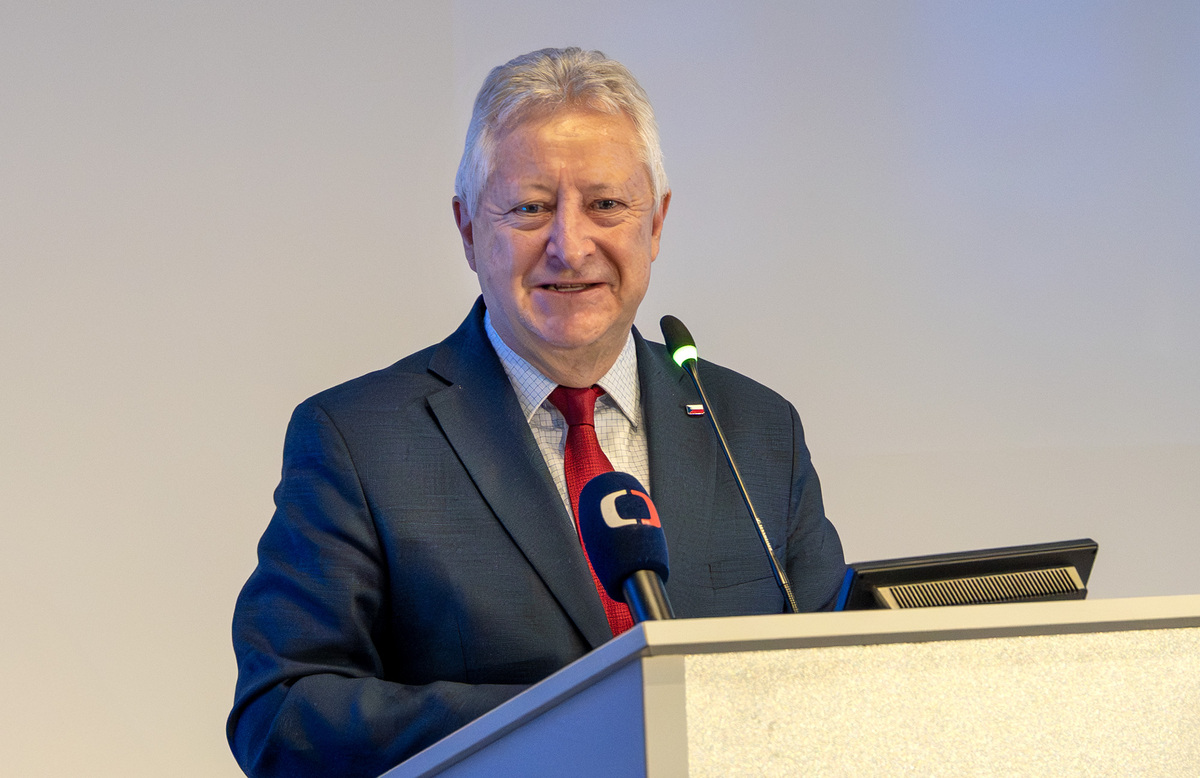
“Autonomous systems and drones have been part of strategic concepts for decades,” Zůna emphasized. According to him, the current goal is to build a modern, technologically advanced, and well-managed military: “The Czech Republic will never rely on sheer numbers. We need high-quality, well-trained, and motivated soldiers, supported by technology.” One of the key priorities is the area of air defense, including defense against drones. “This area is currently the absolute priority for our investments and acquisitions,” emphasized the defense minister, who also highlighted the need for legislative changes and a faster state response to crisis situations, and noted the importance of lessons learned from current conflicts, which must be adapted to the conditions in the Czech Republic.


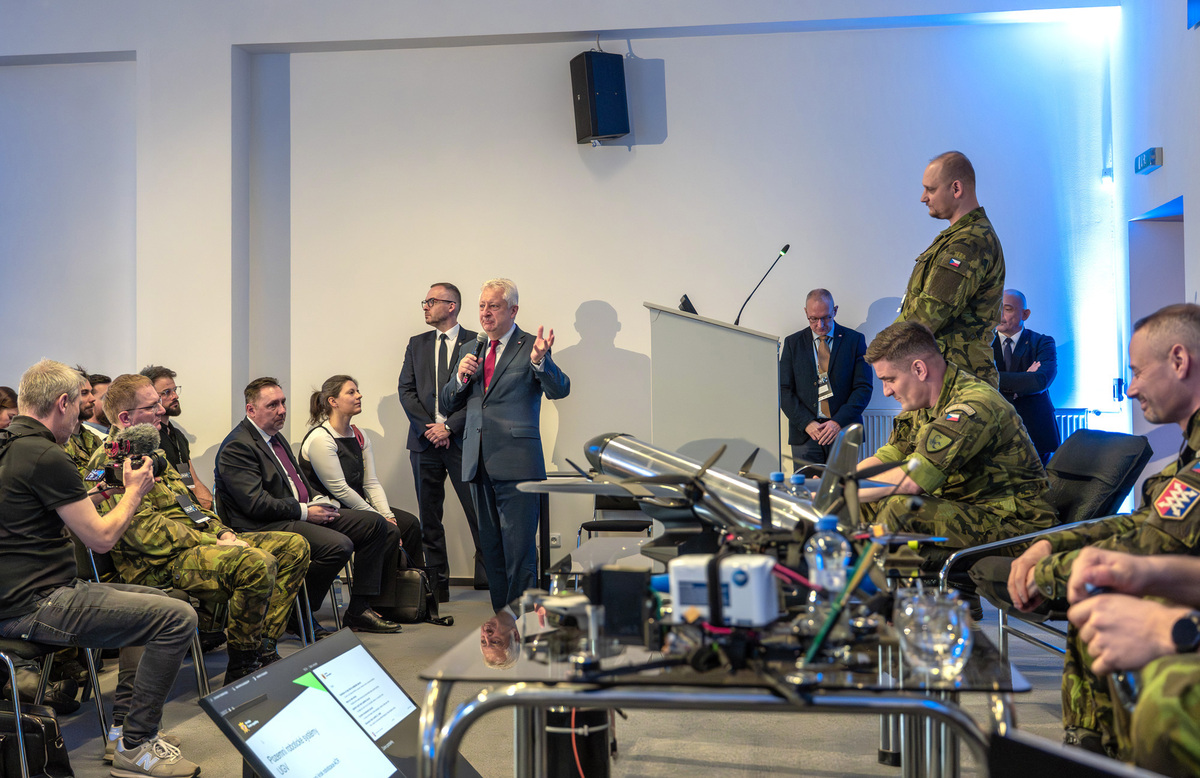
Four representatives of the Czech Army spoke during the morning session of the conference: Lieutenant Colonel Michal Peterek (C-UAS specialist from the Ministry of Defense’s Communications and Information Systems Section), Lieutenant Colonel Vít Knapek (Commander of the Center for Deployable Systems and Command and Control Technology Development), Colonel Martin Hlaváček (Director of the Development Department of the Ministry of Defense’s Communications and Information Systems Section), and Lieutenant Ondřej Buriánek (Head of the Information Systems Support Group). Right at the start of the session, it was stated that the goal is “transparent and open communication,” which will enable the sharing of both conceptual approaches and practical experience from the implementation of new technologies. In his presentation, Lieutenant Colonel Michal Peterek focused on layered anti-drone protection across all levels, from the individual to strategic state facilities. “It is better to have 80% protection than 100% vulnerability,” he summarized the fundamental principle on which, in his view, it is necessary to build. He emphasized that no system can be absolutely effective and that it is always a compromise between capabilities and available resources. He described in detail the spectrum of threats, ranging from reconnaissance and logistics drones through offensive FPV devices to decoys and corresponding countermeasures, from simple detection devices to advanced systems incorporating radar, electro-optics, smart jamming, and cyber interventions.
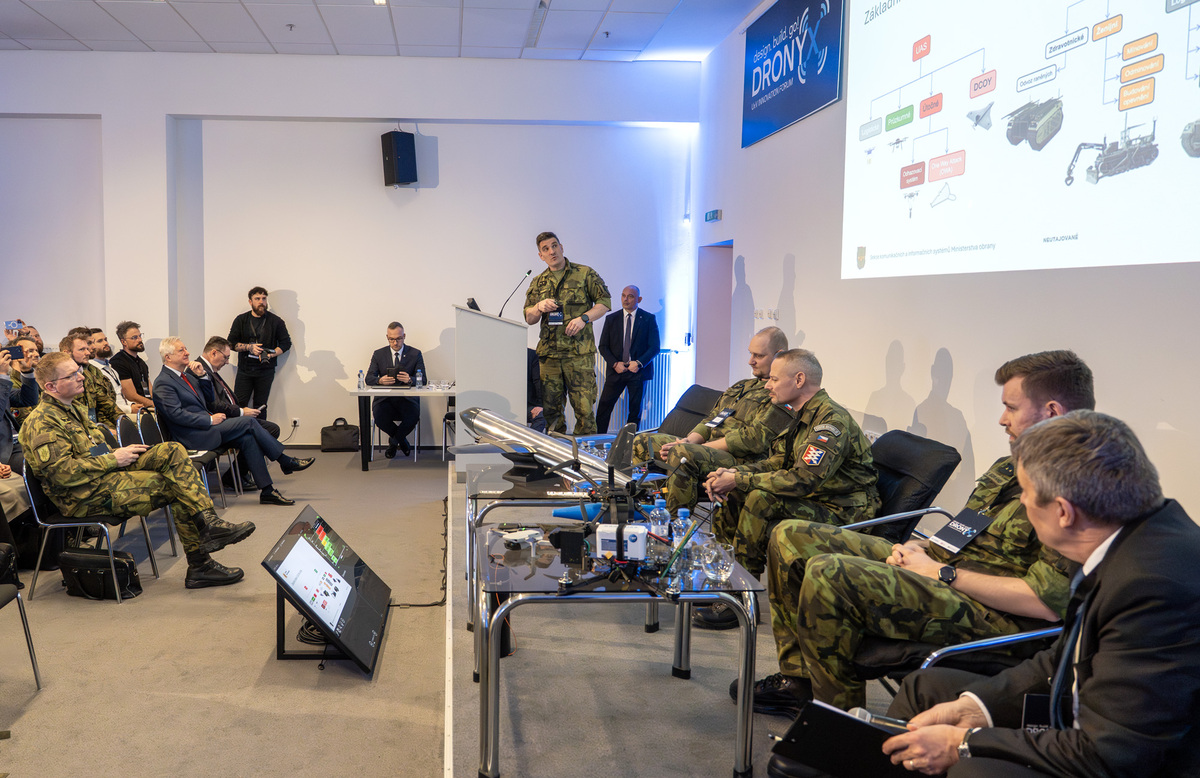
Lieutenant Colonel Peterek also devoted a significant portion of his presentation to practical experiences from Ukraine, where unmanned systems are being widely deployed not only in combat operations but also in logistics and medical support. “Every movement a soldier makes on the front lines today poses a risk. That is why it is often more effective to deploy a robotic system than a human,” Peterek stated.
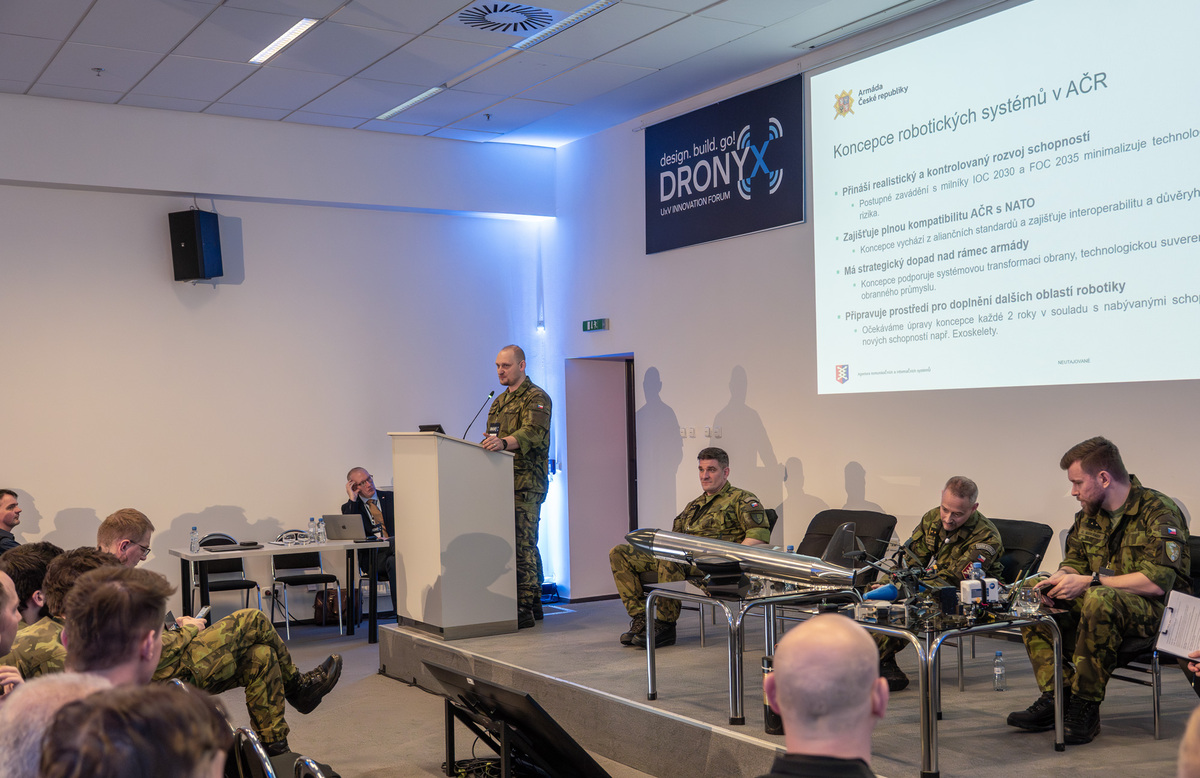
Lieutenant Colonel Vít Knapek followed up with a discussion on ground robotic systems (UGVs), which he described as the natural first step toward the robotization of the military, particularly in logistics and support operations.
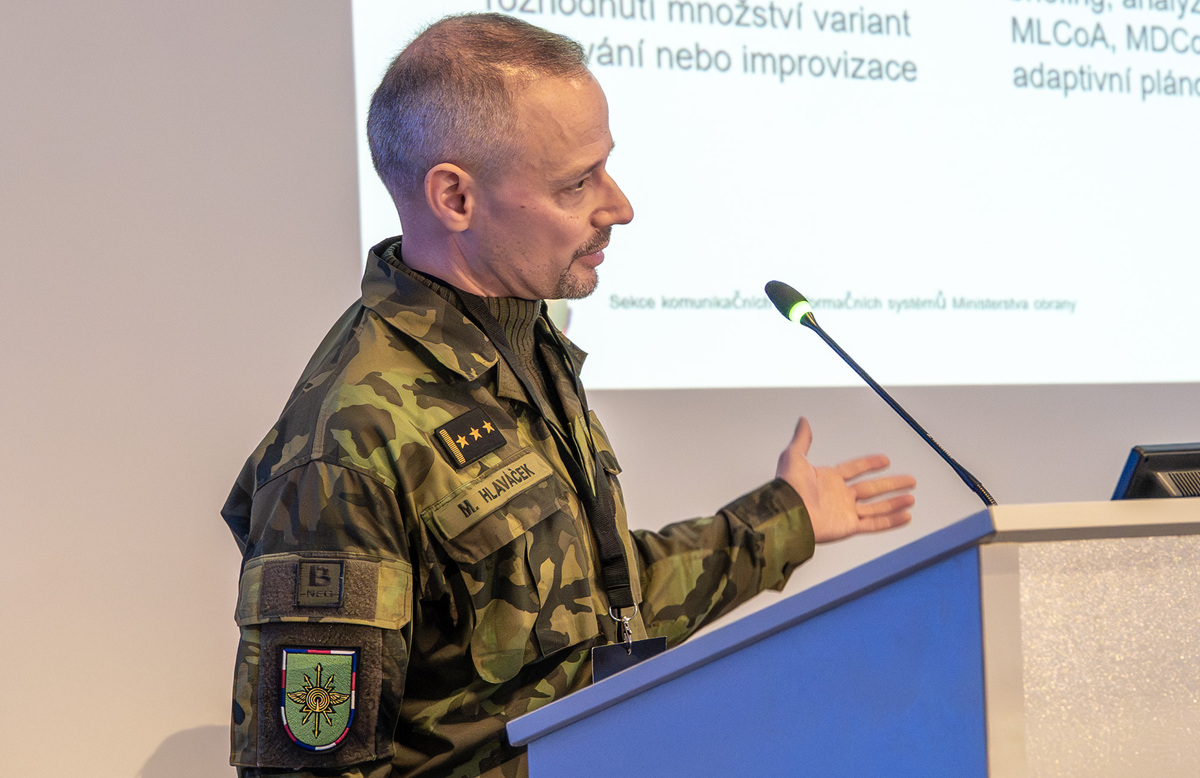
Colonel Martin Hlaváček then outlined the Czech Army’s approach to the implementation of artificial intelligence, from the strategic level down to tactical applications within multi-domain operations. “If we want to synchronize effects across domains, we must also factor in the dimension of time. And this is precisely where artificial intelligence has significant potential,” he noted, among other things.
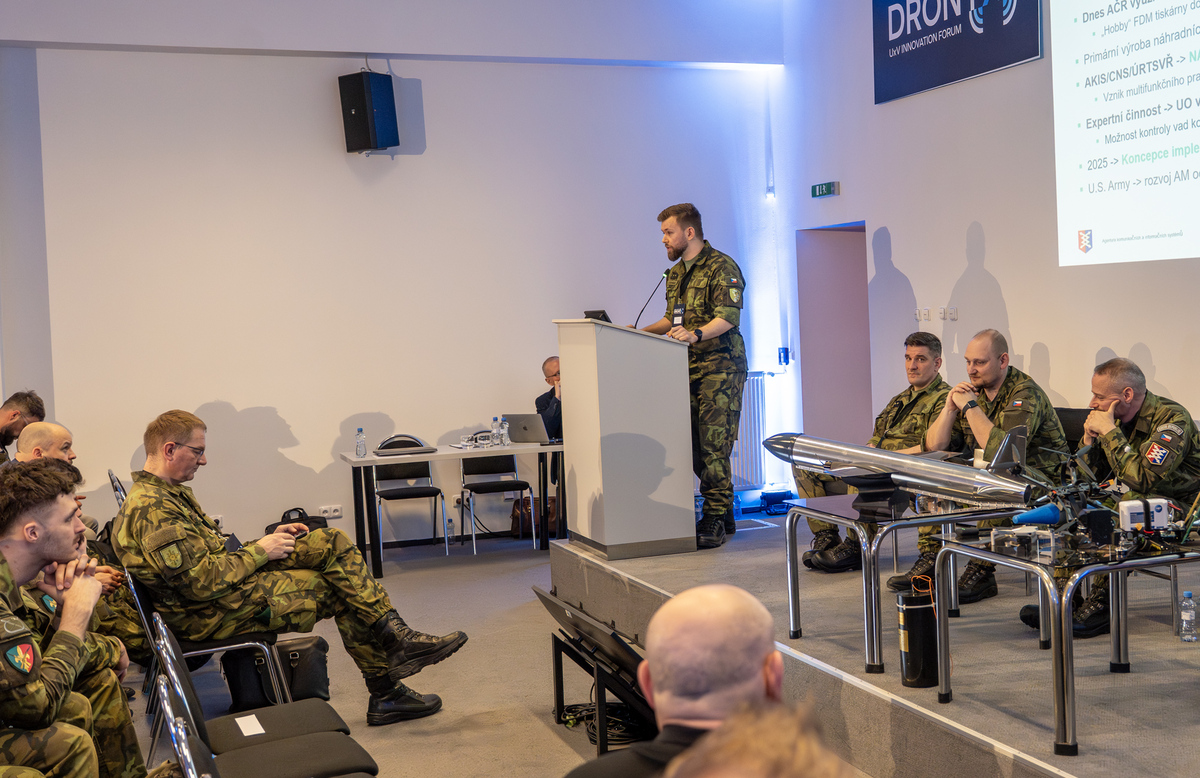
Lieutenant Ondřej Buriánek concluded the session by discussing the use of 3D printing and 3D scanning as tools for agile manufacturing and adaptive training. He noted that these technologies can significantly reduce response times and increase flexibility in both training and operational deployment.
The morning session thus provided not only a strategic framework but also very concrete insights into how the Czech Armed Forces approach the implementation of new technologies in the field of unmanned and autonomous systems. At the same time, it reaffirmed DronyX’s ambition to become an open platform where real-world operational requirements meet the technological capabilities of Czech companies focused on dual-use manufacturing.
In addition to military experts, Czech companies and representatives of innovative technology firms were given significant time at the conference to share their perspective from the other side of the ecosystem—namely, from the realm of development, production, and rapid response to practical needs. It was precisely this part of the program that confirmed that DronyX does not want to be merely a forum for describing the armed forces’ requirements, but above all a place where these requirements can directly engage with the specific technological capabilities of the domestic industry.
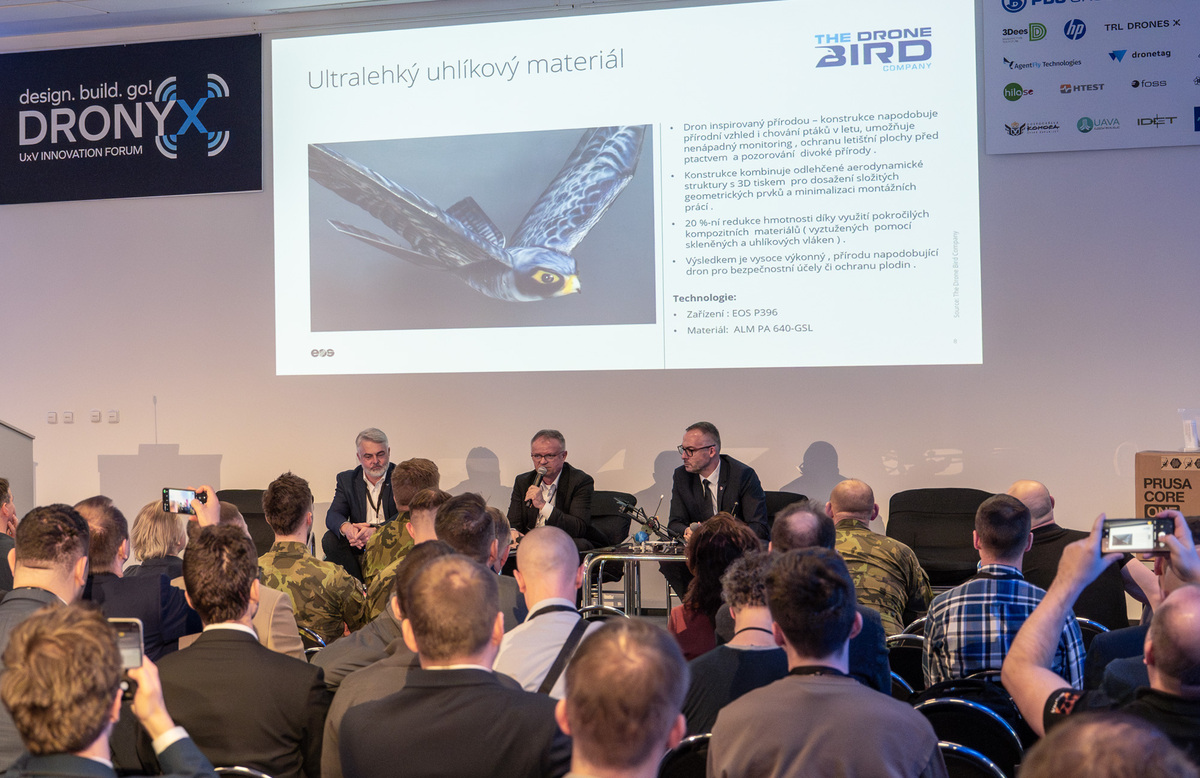
The discussions covered topics such as the development of drone technology, test sites, the integration of UAVs into airspace, and specialized applications, with representatives from both established companies and rapidly growing firms and the startup scene taking the floor.
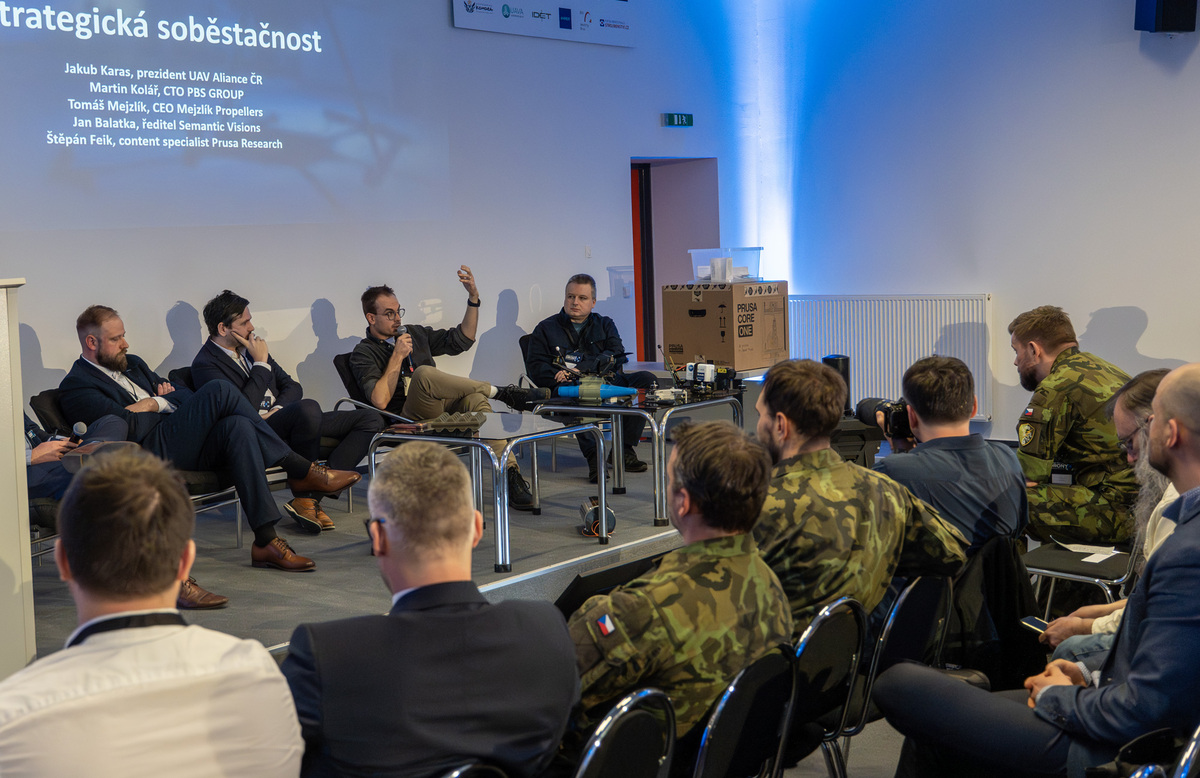
One of the prominent voices was Kateřina Beránková, owner and CEO of AWEC Group, who described her own transition from the automotive industry to defense as the result of a combination of economic realities and the security situation in Europe. “Essentially, I started looking for new opportunities and diversifying our portfolio during a period of relative calm, because we all know how difficult times are in the automotive industry in Europe,” said Beránková. According to her, the key impetus for entering the new segment was her experience during a trade mission to Taiwan: “I had the honor of learning about drone technologies there, and I decided to start a business in this field. Initially, it was more about civilian applications, but the geopolitical situation forced me to expand into defense as well.” Beránková also emphasized how important direct and ongoing communication with the Ukrainian side is for companies, as Ukraine currently represents an unprecedented source of real-world battlefield experience. “It often happens that the units seek you out themselves and then collaborate intensively,” said the CEO of AWEC Group.
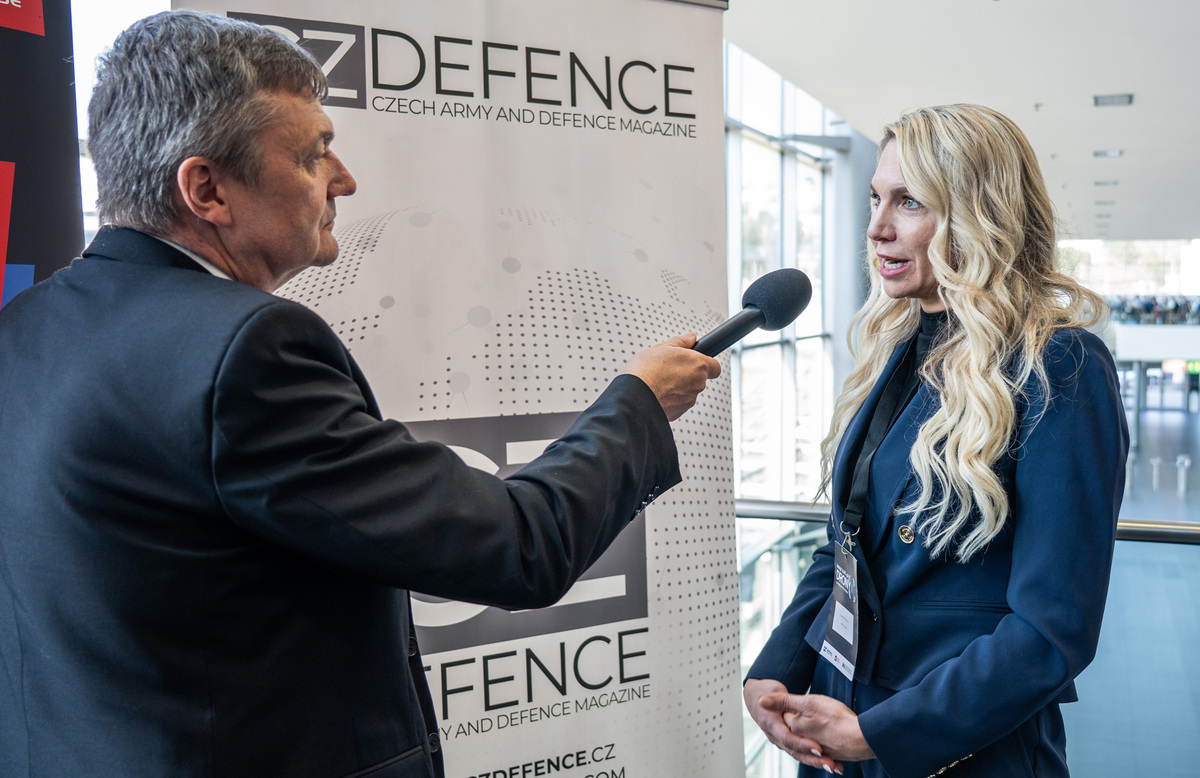
According to her, this is a hard-won but exceptionally valuable experience for both Czech companies and the state: “Now, as the Czech Republic, we can benefit greatly from this, because I believe that this cooperation is intensive at all levels and in all relevant areas.” She also noted that Ukraine currently serves as a sort of “testing ground for Europe,” where the pace of technological change can be observed in real time. She identified the speed of development as one of the greatest challenges for companies operating in this sector. “It’s incredibly demanding because things don’t change there from month to month; you have to adapt practically from week to week,” she noted. Without high-quality information from the front lines, she said, it is impossible to develop truly relevant solutions: “Without that high-quality information from the front lines, you’re unable to respond.” According to her, the AWEC Group therefore focuses not only on air defense but also on simulators designed to help capture changes on the battlefield more quickly and incorporate them into training. “We want to capture those changes in real time more quickly and train soldiers and operators for new situations,” explained Kateřina Beránková.
PBS GROUP Chief Technology Officer Martin Kolář echoed this experience, illustrating just how dramatically demand for Czech industrial products has changed. “The defense sector currently accounts for one of the largest shares of our production,” he said, noting that while the company has historically relied on dual-use principles, the current geopolitical situation has pushed defense contracts into a dominant role. “That direction was dictated by demand. Customers began using our motors in defense applications, particularly in the field of unmanned aerial vehicles.” Kolář also described the enormous increase in production: “We now manufacture thousands of motors annually. Since 2023, we have increased motor production fivefold.” This growth is further driven by global demand—from Southeast Asia, through Europe, to the United States, where PBS is expanding its operations due to customer interest. “There is huge interest in our jet engines in the U.S., which can be used both in defense and in other applications.” According to him, the key factor is the ability to respond quickly to feedback from real-world deployment. “We must listen to customers who come back with specific requirements: higher performance, longer range, or other parameters. And we reflect that,” Kolář stated. It is precisely this flexibility, he says, that is behind the growing interest from partners such as the U.S. Air Force. Regarding cooperation with the Czech Army, Kolář emphasized the wide range of opportunities for involvement: “We are able to offer the Czech Army a full portfolio of products and technological solutions.” He added that PBS GROUP holds a unique position in this field: “We are one of the world’s leading suppliers of jet engines in this category, which creates a very promising environment for further development.”
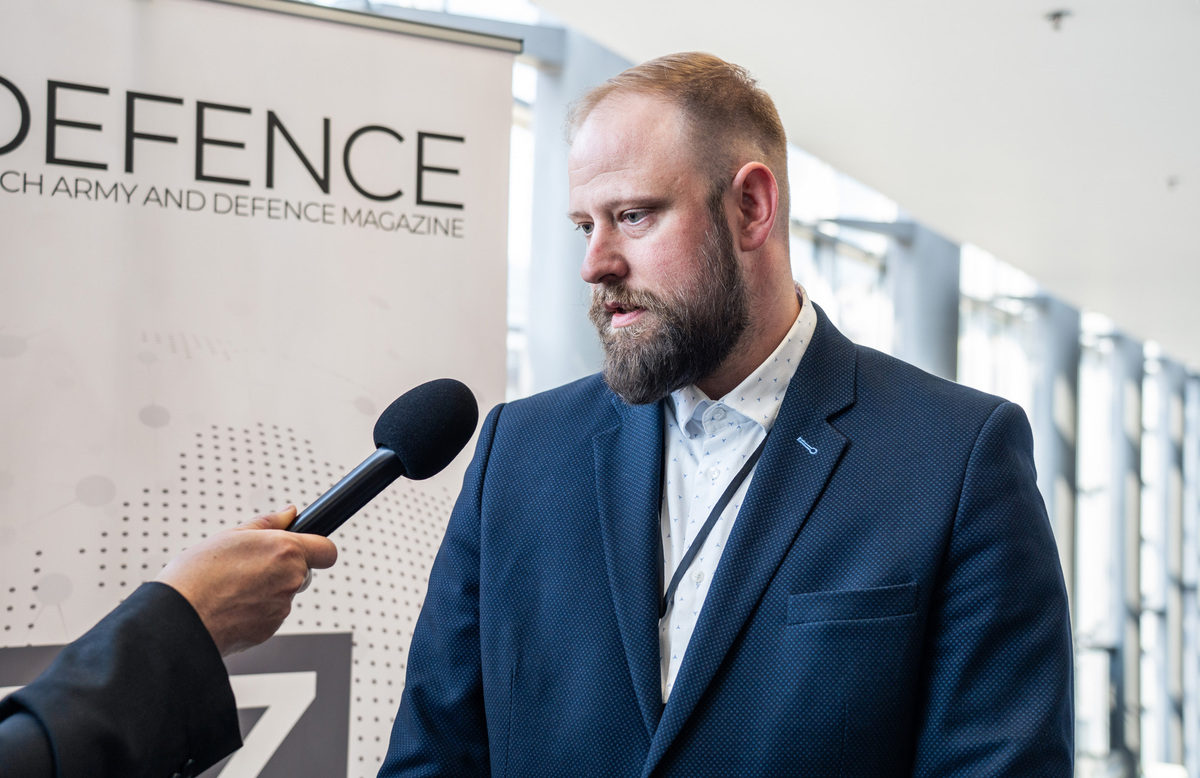
The debate on the roles of industry and the military also touched on the status of state-owned enterprises under the Ministry of Defense, which were represented at the conference by, among others, Jiří Protiva, director of the state-owned enterprise LOM PRAHA. His presentation and the subsequent interview demonstrated that state-owned enterprises are not merely a service arm of the state, but are increasingly positioning themselves as an active component of an innovation and integration ecosystem. “State-owned enterprises under the Ministry of Defense definitely belong at this conference,” said Protiva, emphasizing that their role extends beyond simply supporting the military. “We can view them as a link between civilian industry and the state, but also as partners. In the areas of integration or detection systems, a state-owned enterprise can play a significant role.” According to him, the specific contribution lies primarily in practical capabilities and infrastructure. LOM PRAHA, for example, operates two airports where it is already testing and using systems for detecting unmanned aerial vehicles. “We strive to ensure safe air traffic and airspace over individual airports,” he explained. It is precisely this infrastructure that can also become an important platform for broader cooperation with industry.
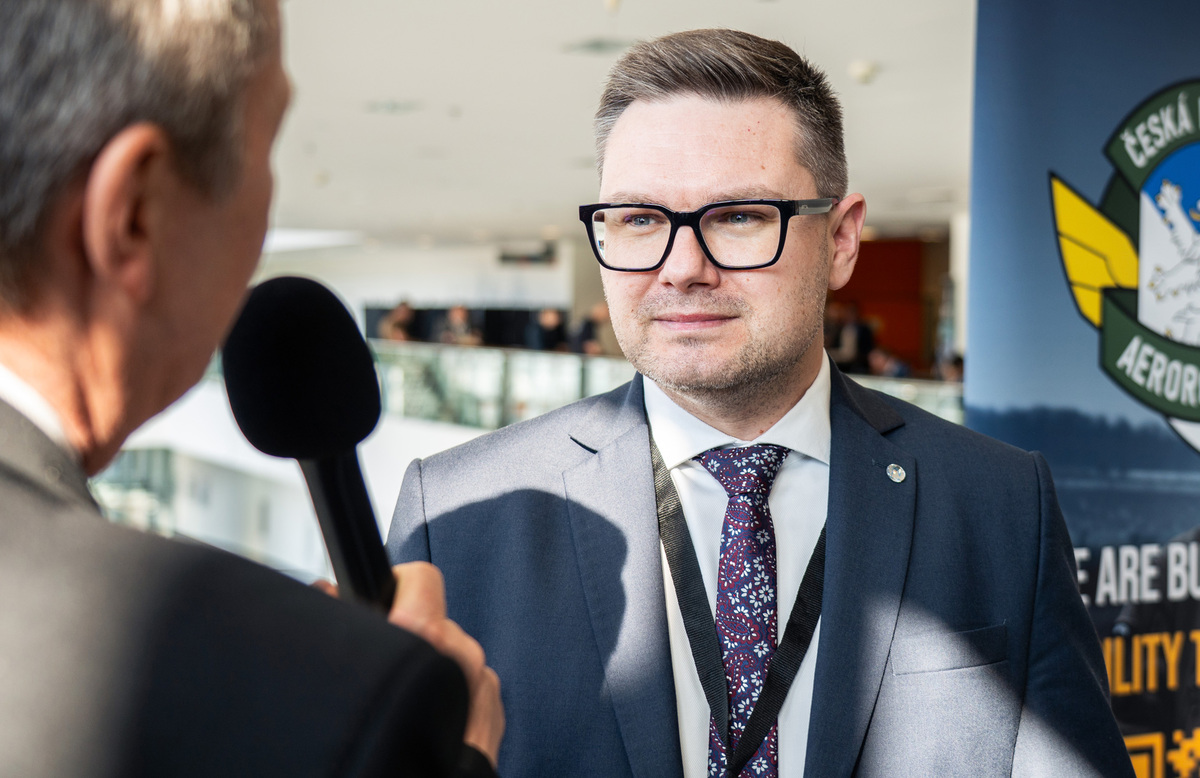
Protiva also highlighted the growing importance of coordination among state-owned enterprises themselves. “If we pool our expertise, we can significantly intensify our cooperation with Czech industry,” he said, referring to a recent joint meeting of companies at the Aviation Training Center in Pardubice. According to him, the goal is to seek synergies and offer capabilities not only to the military but also to private companies. Another important issue is the ability to understand the challenges posed by unmanned aerial vehicles in all their complexity. “We must look at the individual layers of the system, from detection to actual destruction, and ensure that no gaps arise within them,” he emphasized. In this regard, he also sees room for a systematic analysis of the capabilities of Czech industry, for example through professional associations. State-owned enterprises can also play a specific role in the area of certification and testing. “For example, in the case of unmanned systems, some state-owned enterprises already serve as certification authorities,” Protiva noted, while also mentioning the possibility of broader use of military training areas for the needs of civilian entities.
According to him, LOM PRAHA is ready to go even further in this direction. “I see the Přerov Airport as a real-world air traffic control laboratory,” he said, describing a specific experience with the implementation of detection systems. “We initially tested the equipment at the company’s request, but it proved so beneficial that we eventually purchased it.” Data from these systems now finds broader application: “We communicate with the military, which also uses them to protect critical infrastructure across the Czech Republic.” Looking to the future, LOM PRAHA and other state-owned enterprises are thus moving toward strengthening their role as an integration hub connecting the military, the state, and the private sector. As Protiva indicated, the very ability to share infrastructure, data, and know-how may be one of the key factors for the further development of the Czech defense and technology ecosystem. Among the developments at this state-owned enterprise is also a new line of business: “I may have hinted at this in the past, but now it needs to be stated outright. The state-owned enterprise has established a construction division. We have found our niche specifically in project work and construction for the Ministry of Defense. We remain focused on the Air Force, as we assist with the reconstruction and construction of real estate infrastructure at military airfields. Primarily at our own bases—that is, Přerov, Pardubice, and possibly Líně—but we are currently also involved in this way in the F-35 project and are assisting with the renovation of facilities that will be used by drone pilots in Přerov,” concluded Jiří Protiva, director of the state-owned enterprise LOM PRAHA.