
















Col. Petr Tesařík: A good paratrooper should have drive and set goals for themselves, which they then achieve.
What makes a soldier a paratrooper who can stand up to pressure? We spoke with Colonel Petr Tesařík, commander of the 43rd Airborne Regiment, about the mental resilience of paratroopers, their motivation, and their ability to not give up at the first sign of failure. You will also learn about the regiment's role in rapid response forces, cooperation with allies, and delays in the modernization of military technology. We will also focus on how communication between commanders and soldiers has changed, for example.
Video: Interview with Colonel Petr Tesařík, commander of the 43rd Airborne Regiment / CZ DEFENCE
Physical fitness is essential. In this respect, paratroopers are no different from other soldiers. However, according to Col. Tesařík, paratroopers need something extra—a clear head, resilience, and an inner drive that won't falter at the first stumble. "For us, mental resilience is key, as is the ability to cope with stress and work under pressure," says the paratrooper commander, adding: "A good paratrooper should be goal-oriented and have a goal that they set for themselves and achieve."
According to him, it is precisely these goals, ambitions, and the ability to pursue them that change over time—not that the new generation is weak, but rather that it reacts differently. According to Tesařík, this can be seen very clearly, for example, in selection procedures and career courses. "We find that soldiers in selection procedures tend to give up after their first failure," the colonel describes, but at the same time he rejects simple judgments, saying that this is not the majority, but rather a part of the people who need to be led. This is also related to how the army today works with explanations and the meaning of tasks. "There is room for that. We explain more than we used to," admits the paratrooper commander. According to him, in the past, orders were given and explained briefly, but today, explanations are given first, and then orders are given. When asked if this is a good thing, Col. Tesařík admits: "Sometimes it's time-consuming."
The 43rd Airborne Regiment bases its identity on speed and versatility. "It is a small unit, but it can be deployed quickly and is versatile," says Col. Tesařík, describing the main characteristics of the unit. In practice, this means readiness to perform rapid response tasks both at home and within the alliance. According to him, the basic tasks remain unchanged, but there is an increased emphasis on readiness and the ability to pack up and deploy quickly. In this context, Tesařík recalls practical experiences from recent years: "We already carried out a transfer to Slovakia in 2022, and last year we were activated twice, once of which was a live deployment."

However, speed also requires technology, and this is where the regiment faces challenges. According to the commander of the paratroopers, the situation is solid when it comes to individuals: "In terms of individual weapons and equipment, we are doing relatively well within the Czech Army. However, where we are struggling is in terms of technology," explains Col. Tesařík. The delayed purchase of light assault vehicles is more than just an administrative inconvenience for paratroopers, because the new technology was supposed to come with a package of new capabilities. "The delivery was also supposed to include heavy weapons, anti-tank kits, heavy weapons such as 'fifty cal' and grenade launchers. This is probably what limits us the most at the moment, because we don't have those heavy weapons," says the commander of the 43rd Airborne Regiment openly, continuing: "The only heavy weapons we have are mortars and Carl Gustav M3s." Regarding new vehicles for paratroopers, Col. Tesařík reveals that 46 Flyer vehicles should be delivered to the 43rd Airborne Regiment this year as part of US aid. According to him, these vehicles will perfectly complement the two airborne commandos, but the commander of the paratroopers also emphasizes that this is not a substitute for a systemic solution: "We are still counting on purchasing light attack vehicles for the entire regiment sometime in 2031."
In the interview, we also asked about the paratroopers' ability to fight against armored vehicles or airborne targets. In this context, Col. Tesařík pointed out that paratroopers are not primarily a unit designed to fight armored targets or airborne vehicles. Nevertheless, according to him, they must have at least some means of protection. "I mentioned Carl Gustav, which can be used primarily to combat armored targets. It is more for protection or defense," explains Tesařík. According to the paratrooper commander, the situation is worse when it comes to airborne targets: "We have a 12.7 machine gun, but the chances of hitting a helicopter with this light machine gun are close to zero."
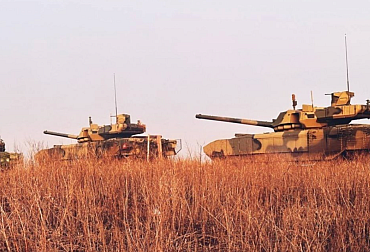

We were interested in how intensively the paratroopers train. The colonel answers without hesitation: "I think more than anyone else." He specifies that this applies to both national and international exercises. Among the alliance partners, he mentions the Poles, Americans, Slovaks, and Romanians. Romania, in particular, is an example for him of how to seek new opportunities for specialization: "We have two teams for mountain training and two teams for CQB training in built-up areas. Romania has opened up opportunities for attractive training in a mountain environment." Contacts and comparisons of skills with foreign paratroopers also play an important role in training: "We have so-called jumps, we go to Germany or Poland for jumps, and we invite people to visit us, for example as part of the Airborne Triathlon."
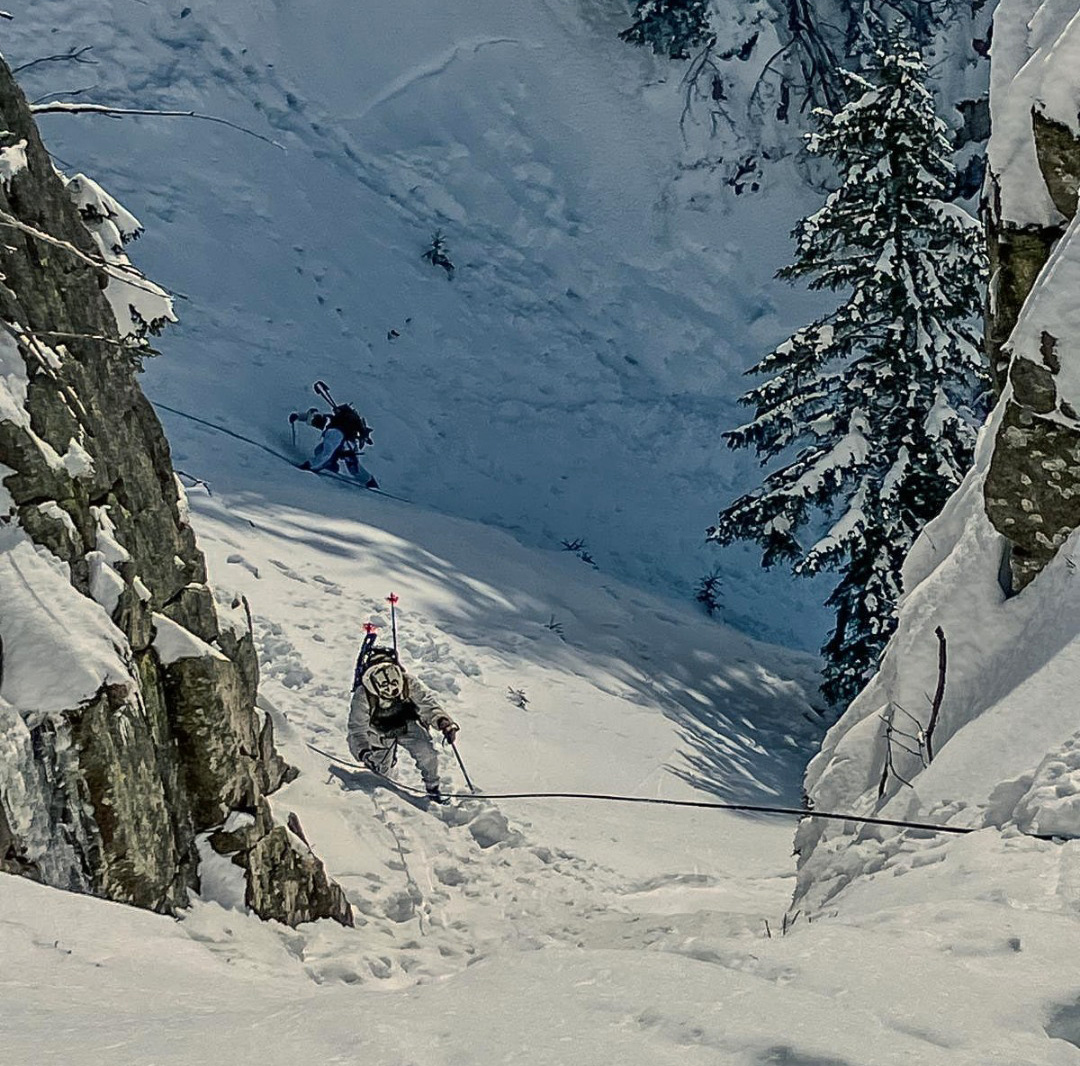
There is a small observation related to the jumps themselves that captures the paratrooper mentality. It may seem that jumping into the snow is easy and pleasant—but only until you realize what is beneath you. "Sometimes it looks like you're jumping into a feather bed," smiles the commander, before becoming serious: "The problem is that you don't know what's under the snow. There could be a rock there," explains the paratrooper commander, who has made several jumps into snow himself.
Colonel Tesařík praises the Czech parachute design in comparison with those of their allies. "I think our parachutes are among the best in the world in terms of landing comfort and maneuverability," he says. According to him, there is a general rule for paratroopers when it comes to weapons and equipment: "Paratroopers, along with special forces, usually get the best equipment available on the market."

Approximately 850 soldiers currently serve in the 43rd Airborne Regiment, and there are still vacancies. However, recruitment faces a typical problem—many applicants want to be "shooters," while the unit also urgently needs other professions that are essential to any combat unit. "We have a particular problem recruiting repairmen, cooks, and mechanics," admits the commander. It often happens that people join in combat roles and only move into support roles over time. According to Tesařík, the selection requirements have been adjusted in recent years, but he rejects the claim that the conditions for joining the regiment are now manageable for everyone. "Last year, the media unfortunately reported that we had lowered the limits and that anyone could join in Chrudim. That's not the case," says the paratrooper commander. The adjustment of the conditions is intended to give motivated people a chance to improve: "It's adjusted so that they have three attempts and that on the third attempt, they are really capable of doing it. If someone manages it on the third attempt, it's a sign that they want it, are capable of pushing themselves and motivating themselves," says Tesařík, while also pointing out that applicants today are more likely to have difficulties in psychological tests. "In every round of the selection process, at least one or two people fail the psychological tests. This was not so common in the past," says the commander.
The airborne regiment also directs its recruitment activities towards schools. "In February, we visited about 28 to 30 secondary schools. The aim was to educate them about how the army works," says Col. Tesařík, noting that since the abolition of compulsory military service, some young people have no realistic idea of what military service is like and live with stereotypes. "For example, there were questions about whether they could go home at four o'clock and where they would sleep," recalls the paratrooper commander.

This year, the airborne regiment wants to focus more on the skills it lacks, such as electrical engineering, and show young people the prospects that lie ahead: "They have what it takes to be unmanned aerial vehicle pilots," says Tesařík.
The paratrooper commander sees voluntary military training as an attractive taster, but at the same time warns against the illusion that it will automatically lead to a career. According to him, many participants see this training as just a test.
In the interview, the commander of the 43rd Airborne Regiment also assessed the significant events of the last five years: "Over the past five years, we have built four new buildings, increased accommodation capacity to around 540 places, added garages, and we have 70 covered parking spaces," says Col. Tesařík, adding that the unit's gym is probably the best in the entire Czech Army.
According to the commander of the paratroopers, a major shift has taken place in the supply of units deployed behind enemy lines. "A tremendous amount of work has been done. We currently have two types of cargo parachutes – one with a capacity of 250 kilograms and the other with a capacity of one ton. And we would like to expand our capacity so that we can drop loads of up to two tons – such as quad bikes or heavy weapons," adds the colonel.
If you want to learn more, listen to the entire interview at the beginning of this article.