














Trenches and improvised field fortifications are once again of crucial importance on the modern battlefield
Trenches and field fortifications are among the oldest defensive elements in the history of land warfare. As early as in ancient times, dug-out trenches, earthen ramparts, and makeshift fortifications were used to protect soldiers from direct fire and to slow the enemy’s advance. In modern times, particularly during World War I, trench warfare became a symbol of static conflict and the mass deployment of infantry. Trenches were also widely used in World War II, where their design and purpose varied depending on the specific front and the type of combat being waged. Similarly, trenches played a significant role in the Vietnam War, where they were connected to extensive tunnel systems and adapted to the specific conditions of the jungle. And the importance of trenches is evident even on today’s modern battlefield, as we have been observing for the past four years in Ukraine.
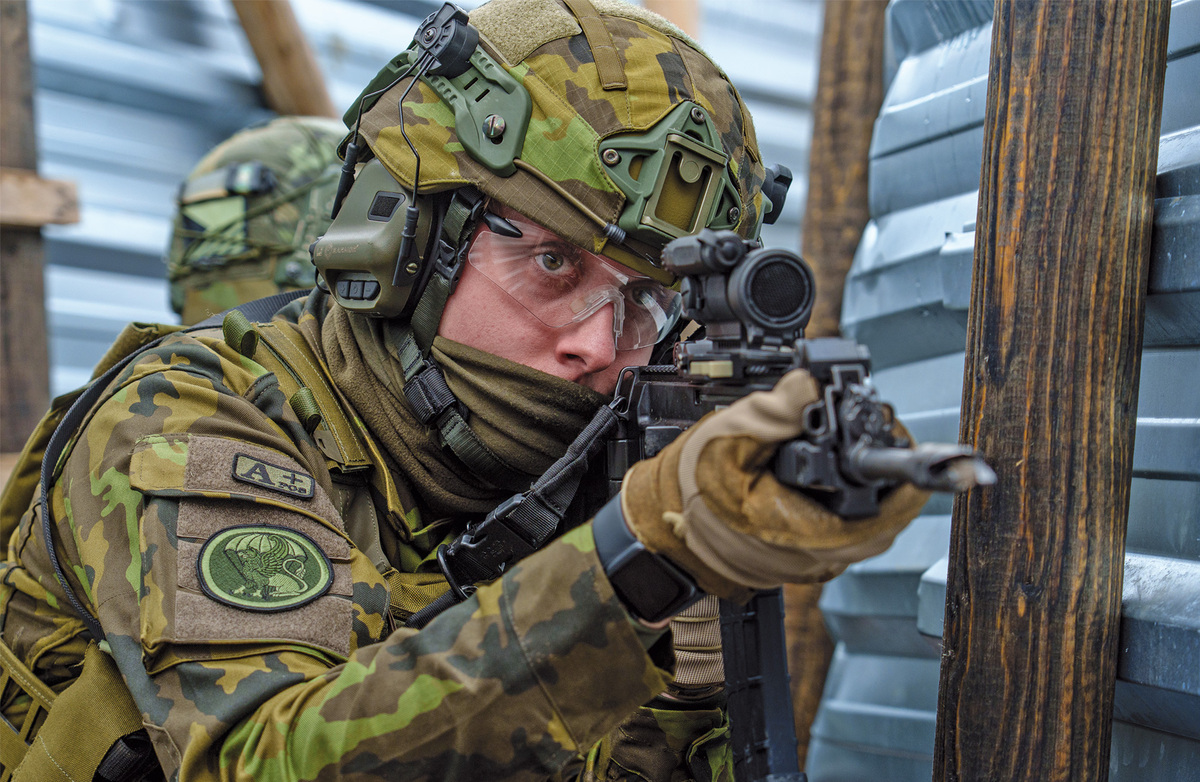
With the advent of highly mobile military operations and precision weapon systems, it might have seemed that the importance of trenches was fading into the background. However, the reality of modern conflicts shows the opposite. The modern battlefield, characterized by a wide range of sensors, drones, artillery, and precision-guided munitions, places extreme demands on soldiers to conceal themselves, seek cover, and minimize vulnerability. Trenches and improvised field fortifications are therefore regaining critical importance not only as a means of protection against fire and observation, but also as an element enabling sustained defense, stabilization of the line, and effective combat management.
Modern armies are thus increasingly reevaluating their training procedures and returning to the systematic teaching of skills that were until recently considered marginal. The question remains as to what role trenches and drones would play in a conflict where one side possessed cutting-edge technology and was able to quickly gain air superiority. However, there are no “what-ifs.” Armies draw on lessons from recent conflicts, continuously update their procedures, supplement them with modern technologies, and adapt to current threats. The foundation remains the same; only the perspective and the means supporting it change.
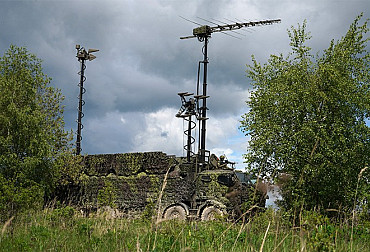
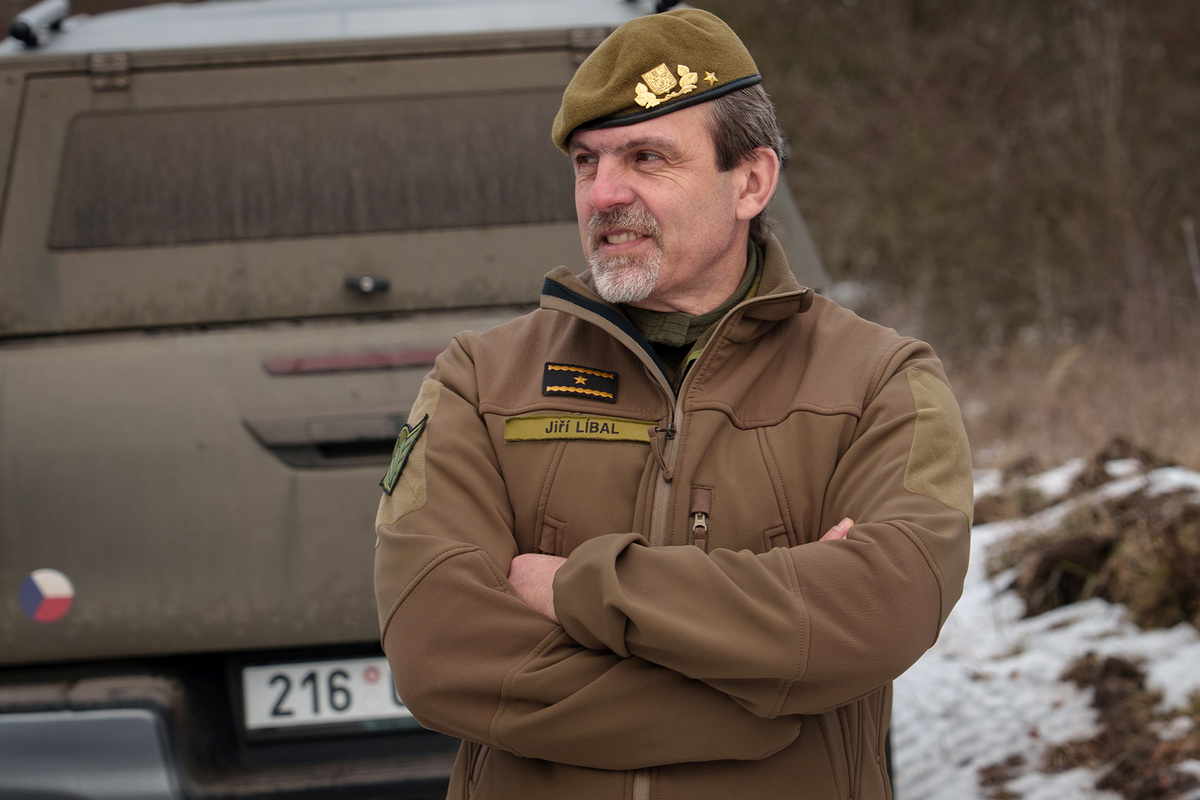
In light of the significant role of trenches on the modern battlefield, we asked Brigadier General Jiří Líbal, commander of the 4th Rapid Deployment Brigade, for a brief interview.
What specific tactical lessons from the Ukrainian battlefield do you consider most crucial for the revival of trench warfare training?
Specific tactical lessons stem primarily from the use of drones, which make the battlefield more transparent and create a need to take cover in time. For the average soldier, the best way to take cover is underground – specifically in trenches or foxholes. That is why we are now placing greater emphasis on trench warfare, which has always been part of our training.
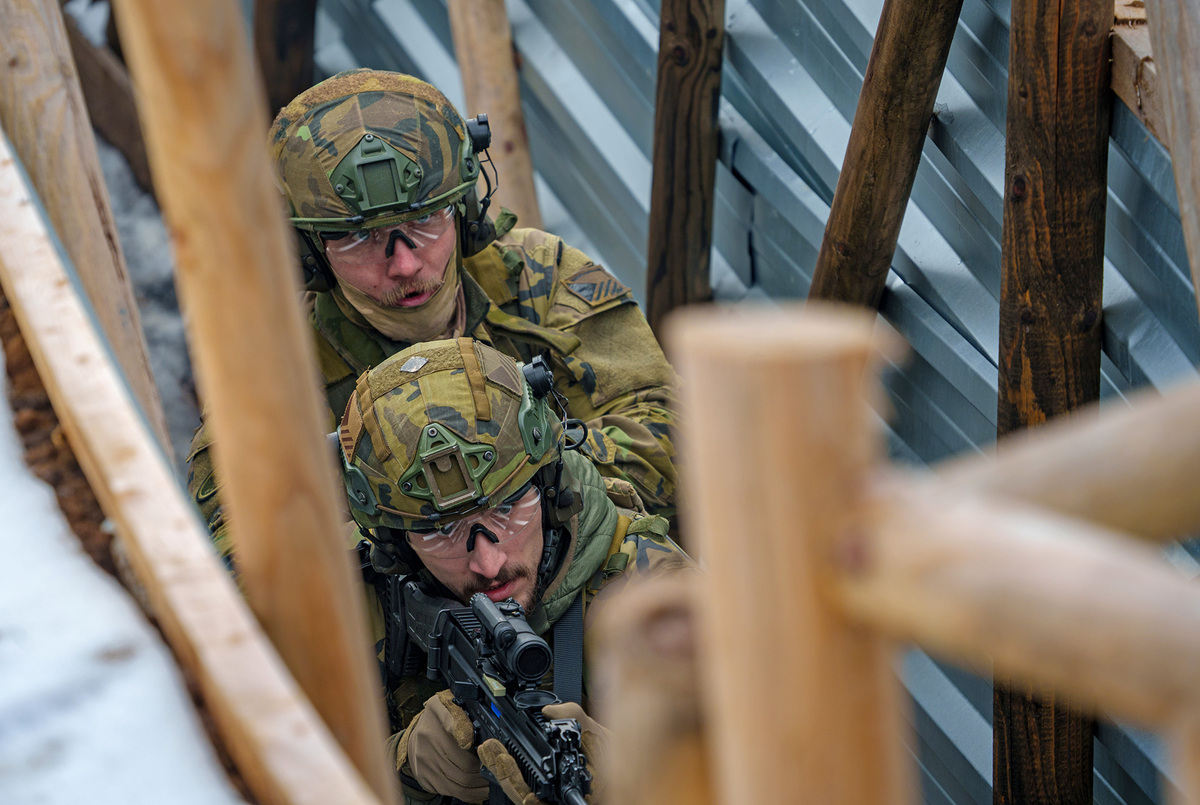
Do experiences from Ukraine shift the concept of the trench from a purely defensive element to a component of maneuver warfare – for example, for short-term combat stops, covert movements, or logistical points?
As I mentioned earlier, the modern battlefield is much more open today; everyone can see everything. This creates a need for concealment, which applies not only to individuals but also to supplies, troop movements, and logistics hubs.
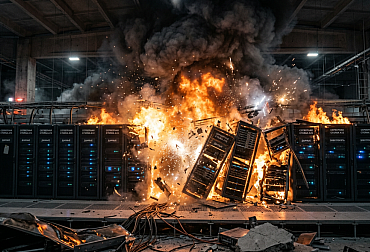
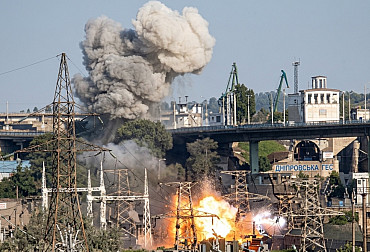
How does the fact that today’s trenches are constantly threatened by drones and precision munitions – and therefore require a different approach to camouflage, mobility, and troop rotation than in the past – manifest itself in training?
This fact has a significant impact on training, because in the past, when constructing a foxhole, the focus was primarily on direct fire, and emphasis was placed on the earthen wall in front of the soldier to prevent bullets from passing through. Today, however, trenches serve primarily as cover against aerial threats, which is why camouflage and overall protection against airborne threats are much more important. We therefore use protective nets to intercept attacking drones, camouflage nets to cover the trenches, and other means to protect soldiers in the trenches.
How important is the coordination of small units within trench systems today, and could this lead to changes in the current structure of squads or platoons?
The role is practically the same as it was before. Small units have always had to coordinate within the trench system. Today, however, we have better means of doing so. In the past, the most we could do was shout to each other or use signal flags, but today we can have our own drone flying overhead, which sees not only us but also the enemy and is capable of transmitting information to us in real time. I see no reason to change the structure of a squad or platoon, because even though these tactical units have their basic structure, that doesn’t mean, for example, that a platoon commander storming a trench can’t reorganize his forces at any time to suit the needs of the moment.
To what extent is the approach to providing engineering support for units changing – does every soldier today have to be more of a "field engineer" than in the past?
Even during our troops’ deployment in Afghanistan, everyone had to undergo training in CIED, which is a measure against improvised explosive devices or mine hazards. This has always been part of the training; it just needs to be constantly emphasized that there can be various hazards in the trenches. If there is a better-trained soldier in the unit capturing the trench, that is obviously a plus.
Do you view the return of trench training as a temporary response to the specific nature of the war in Ukraine, or as a lasting trend that will fundamentally influence the doctrine of ground forces on the modern battlefield?
From my perspective, this is a response that will be temporary in some respects and permanent in others. It is difficult for us to assess today what the situation would be like if the conflict were waged against fully equipped NATO units. As for ground forces doctrine, it will certainly have some impact – for example, on general combat management or tactical procedures – but it will certainly not affect the entire doctrine.
Has the return of trench warfare also changed the requirements for equipment and weaponry – such as personal protective gear, optics, small arms, or close-range systems?
With every activity we return to or prioritize more today, we find that modern equipment brings new features or capabilities. Personal protective equipment, such as vests and helmets, has undergone certain changes. In the case of small arms, this includes various new firing positions, as well as new methods of throwing grenades, and so on. So in this regard, we are responding appropriately to new methods of combat.
What impact does trench warfare have on soldiers' mental resilience?
Trench warfare, as well as urban combat, are among the most demanding types of combat operations, which have a significant impact on a soldier’s mental state. As a general rule, the more a soldier is trained, the more mentally resilient they are, and we regularly practice these demanding combat methods. What soldiers learn in the trenches subsequently makes it easier to conduct combat in open terrain.