











SIPRI: Global arms trade at historic highs, CSG sets new records
The global defense industry is entering an era of significant growth, surpassing the momentum seen at the beginning of the war on terror at the turn of the millennium. According to the SIPRI think tank, the the revenues of the world’s 100 largest arms manufacturers reached US$679 billion last year. The 5.9% growth signals that the world is shifting to a structurally different security environment, where military power and production capacity are once again becoming crucial. Countries are replenishing their ammunition and equipment stocks, building new production facilities, expanding existing ones, and shortening delivery times. This transformation is global and has long-term consequences. Growing demand for artillery, air defense, electronics, optics, sensors, unmanned systems, and missile technology is reshaping the entire value chain. Countries that can produce quickly, reliably, and in large volumes are gaining a significant advantage on the global geopolitical chessboard.
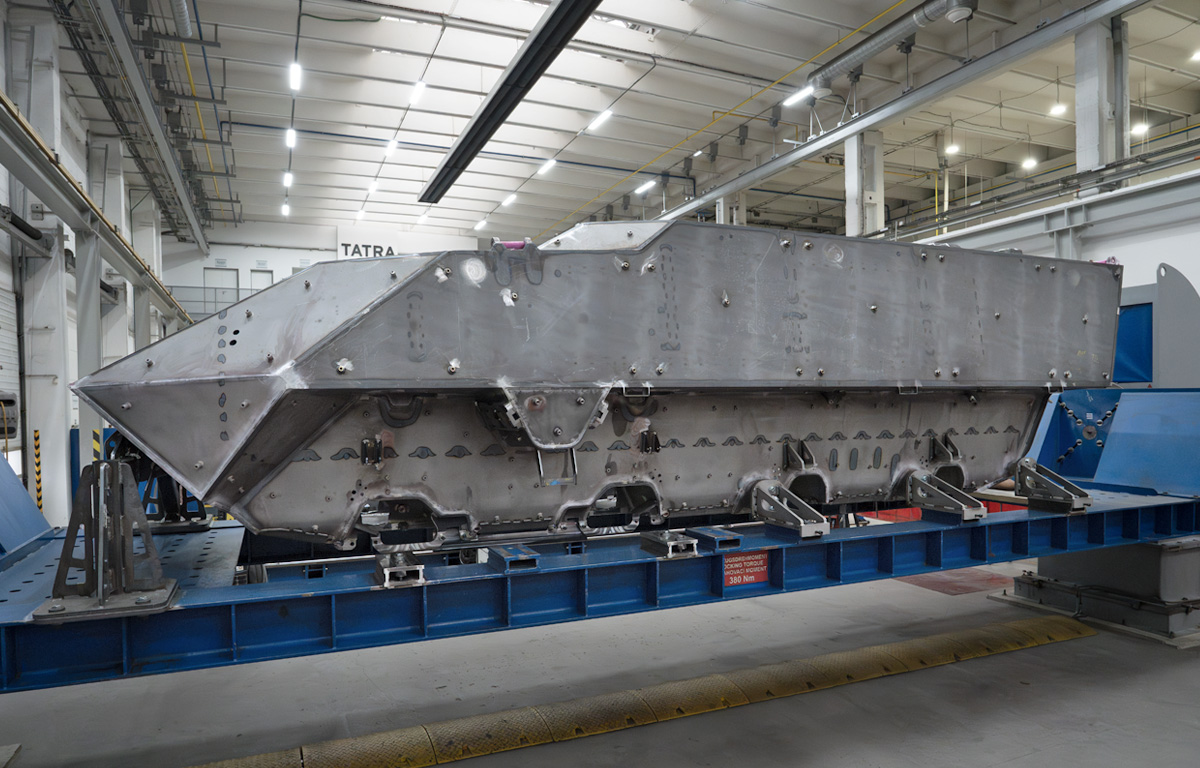
The Czech Republic is a surprisingly strong player in this environment. While many medium-sized countries are struggling with slow production growth, the Czech Republic has seen one of the sharpest increases in Europe. The Czechoslovak Group (CSG) increased its sales by 193%, reaching a total of $3.63 billion according to SIPRI. This made the only Czech representative among the world's 100 largest defense technology manufacturers the fastest-growing company in the ranking. CSG also demonstrated its ability to respond very quickly to extraordinary demand. The Swedish think tank attributes half of the group's turnover to its support for Kyiv.
The growth in the Czechoslovak Group’s revenues also shows where the domestic defense industry could go in the long term. Israel, which is comparable in terms of economy and demographics, has a defense sector with revenues exceeding $16 billion a year (companies in the SIPRI ranking). Its three main arms manufacturers, Elbit Systems (with last year's sales of $6.28 billion), Israel Aerospace Industries ($5.19 billion), and Rafael ($4.7 billion), are stable players in the global market. Israel has been building its capabilities for decades in response to permanent security threats and the need for technological superiority. The Czech Republic has not historically had such a need, but thanks to a combination of European demand, a flexible industrial base, and strategic investments, it is able to grow at a pace that opens up the possibility of approaching Israel’s level of development. If the war in Ukraine continues and Europe maintains a high level of investment, Czech industry could rise from the category of regional supplier to that of global strategic player.
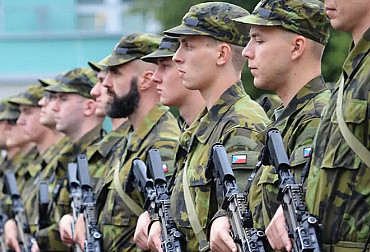
A comparison within the Visegrad Four (V4) further highlights the Czech Republic's potential. Poland is investing on an unprecedented scale, with defense spending exceeding 4% of GDP. Warsaw is buying South Korean technology on a massive scale and has almost completely disposed of its Soviet inventory. According to SIPRI, the Polish company PGZ achieved a revenues of $3.04 billion and grew by 34% year on year. Its growth is significant, but the structure of its business is characterized by ground equipment, maintenance, and projects dependent on state demand. Czech industry, on the other hand, is based on private capital, which allows for faster decision-making, and on a strong export orientation, which stabilizes company growth even without large domestic orders. Slovakia is completely outside this dynamic—it does not have a single company in the SIPRI ranking, and a long-term lack of investment has caused an outflow of experts and stagnation of the entire sector. Hungary, meanwhile, is banking on cooperation with Germany and South Korea. The production of Lynx KF41 armored vehicles and Rheinmetall's investments have potential, but their real impact will likely only be felt in the coming years. Hungarian industry has not yet reached the export volumes that would propel it among the major European players. The Czech Republic is thus at the forefront of the V4 in terms of the performance and flexibility of its defense industry, and its lead may continue to grow.
.png)
Growth is occurring across the whole of Europe. Twenty-six European companies in the SIPRI ranking increased their revenues by an average of 13%, and the largest of them (Rheinmetall, Thales, Leonardo, BAE Systems, Airbus Defence and Space, and MBDA) are investing billions of euros in increasing production capacity. German companies are growing by 36%, French companies by 12%, and Italian companies by 9%. The EU is abandoning its peaceful post-war model and moving towards long-term structural mobilization. For the first time, Europeans are systematically supporting defense industrial projects from EU funds, working on joint production lines and projects, and reducing their dependence on critical raw materials and external suppliers. They are beginning to see arms production as a fundamental element of their own defense capabilities. In the context of this transformation, medium-sized but highly industrialized countries such as the Czech republic have the opportunity to gain disproportionately large influence.
The United States remains the dominant global arms power. Its companies (Lockheed Martin, Raytheon, Northrop Grumman, General Dynamics, and Boeing Defense) generate tens of billions of dollars in revenues annually and dominate the most advanced segments of the global market. The US has the largest defense budget in the world, and large orders for the domestic military create stable, extensive demand that no other country can match. American power is so significant that European countries are trying to build their own capacities to avoid excessive dependence on American equipment in the event of future long-term conflicts.
Russia, on the other hand, has shifted to a war economy and is orienting its production towards sustained conflict. Industrial giants (Rostec and United Shipbuilding Corporation) produce large volumes of ammunition and heavy equipment. However, their technological limitations, sanctions restrictions, and the need to import weapons and components from Iran and North Korea confirm that Russian industry is unable to keep pace with the most advanced countries. Nevertheless, its size and ability to maintain high production levels over the long term mean that it cannot be underestimated.
.png)
China represented the biggest surprise in the entire ranking. Eight Chinese companies reported a 10% decline in sales last year. NORINCO, AVIC, CASC, and CSIC experienced declines that are unprecedented in the context of the previous decade. The reason for this is widespread corruption scandals in the missile forces and the procurement system, which triggered personnel purges, order delays, and disruption of the entire decision-making process. The slowdown in Chinese growth has significant geopolitical implications, as it is China's overproduction in recent years that has set the direction for the global market for ammunition, electronics, and raw materials.
Chinese restrictions on exports of gallium, germanium, and previously titanium also have a significant impact. These raw materials are essential for lenses, sensors, radar systems, semiconductors, and aircraft components. European companies are therefore looking for alternative sources, and some countries are investing in the launch of mining and processing capacities. The Czech Republic benefits from its industrial flexibility, high-quality technical infrastructure, and integration into the European environment, but even here, the pressure for self-sufficiency will grow. Every Chinese restriction reinforces the importance of European strategies aimed at reducing dependence on raw materials that can easily be used as a tool for political pressure.
Developments in recent years clearly confirm the arrival of a period in which industrial capacity will have strategic importance comparable to the number of soldiers or the size of the budget. The Czech Republic plays the role of an industrial player with the potential to exceed its size in this transformation. Poland, on the other hand, is building extensive capacity to meet domestic demand, Slovakia is stagnating in terms of the defense industry, and Hungary is trying to keep up with the times. From the perspective of larger geopolitical entities, we can observe the accelerating mobilization of resources in Europe and American efforts to maintain their global technological lead. Russia, in connection with its all-in war in Ukraine, is operating in a war economy mode, while China dealt with corruption scandals across the sector in recent years. The Czech Republic therefore has a unique opportunity today to consolidate its position and become one of the most important defense producers of the 21st century.