














See and Not Be Seen: How Czech Technology Is Pioneering Modern Conflicts
The nature of modern conflicts is changing dramatically. After more than twenty years, the focus of NATO forces has shifted from asymmetric conflicts to preparing for a massive symmetric conflict with technologically advanced adversaries. The advantage of asymmetric conflicts was absolute superiority over adversaries, with an enormous electromagnetic advantage. Command posts and the units themselves have become accustomed to operating with nearly unlimited electromagnetic emissions. Current conflicts, particularly the one in Ukraine, demonstrate that the modern battlefield is filled with sensors and drones interconnected with command and fire control systems, enabling rapid engagement of detected targets. In this environment, the emission of electromagnetic radiation in the form of radars or tactical radios acts as a direct invitation for enemy fire. The fact that the enemy possesses such detection capabilities necessitates a change in tactics, and NATO forces must be capable of operating during radio silence, known as EMCON (Emission Control). In this regard, the Czech Armed Forces have a solution in the form of the DPET and PLESS passive surveillance systems from the Czech manufacturer ERA.
Due to these events, command centers have grown considerably and have become large infrastructure complexes where there was no need to relocate headquarters, as they faced no threat. A prime example of this is the massive U.S. bases in Afghanistan. It was during such operations that a trend emerged within NATO to build large command centers, sometimes referred to as “Taj Mahals” – massive complexes with vast arrays of antennas that facilitate a constant flow of information in all directions. These command centers generate a massive electromagnetic and thermal signature. Such command posts then become the epicenter of these signals and are immediately identified by the enemy as strategically important. As part of NATO’s preparation for a conflict with a technologically advanced adversary, it is necessary to abandon old habits from asymmetric conflicts, as they can become a fatal vulnerability. In the age of modern artillery and the ability to conduct precision fire over long distances, there is a risk of losing command and contact with units.
The use of EMCON does not consist directly in turning off radios, but rather in selective and judicious use designed to minimize traces that would allow detection. To implement EMCON effectively, military units must learn to adjust their transmission levels according to the environment in which they are currently operating. The same, of course, applies to command posts. In this regard, it is also necessary to operate transmitters at the lowest possible power required for communication and to prefer directional antenna systems over omnidirectional ones. It is also necessary to assess and interpret the surrounding terrain, which can help mask radio signals. As part of protection, EMCON must also be supplemented with measures to deceive the enemy. The vulnerability of command posts can also be reduced by separating communication nodes from their physical locations. It is possible to place the source of electromagnetic emissions farther away from the command post and connect it via cables. In this case, while the source may be hit by fire, the command post personnel will not be. Another option is to deploy false signal sources, which will serve as a distraction and may cause the enemy to waste ammunition on false signals.
However, simply adhering to EMCON would blind our defenses, leaving us without any adequate sensors capable of effectively monitoring air and ground space. Shutting down active radars to protect them opens the door for enemy forces to, for example, gain control of the airspace. However, this entire issue is addressed by the passive surveillance systems at the disposal of the Czech Armed Forces, which have proven to be the market leader. These passive surveillance systems allow the Czech Armed Forces to see without being seen, which is currently essential for survival on the modern battlefield.
Passive surveillance systems, in particular, have a long tradition in the Czech Republic. The first passive surveillance system was KOPÁČ, whose first prototype was assembled as early as 1961. KOPÁČ was followed by the KRTP-81 Ramona system around 1983 and then by the perhaps best-known system, the KRTP-86 Tamara, from 1987. Due to the shape of its antenna section, this system earned the code name “Trash Bin.” This research has now been taken over and brought into the 21st century by the Pardubice-based company ERA.
The Czech Armed Forces currently combine two passive tracking systems. Both systems are from ERA and are called DPET and PLESS. DPET is a replacement for the older Věra S/M system. The acronym DPET stands for Deployable Passive Electronic Support Measures Tracker. This system is capable of tracking air, ground, and naval targets. With this system, the AČR gains the ability to simultaneously track up to 200 aircraft, drones, or ground targets under favorable conditions at distances of up to 400 km. The system is even capable of identifying the specific type of equipment, not just its category. A key capability of the DPET is, of course, its interoperability and compatibility with the command and control systems of the Czech Armed Forces and NATO as a whole. The system can do all this without being detectable via electromagnetic waves.
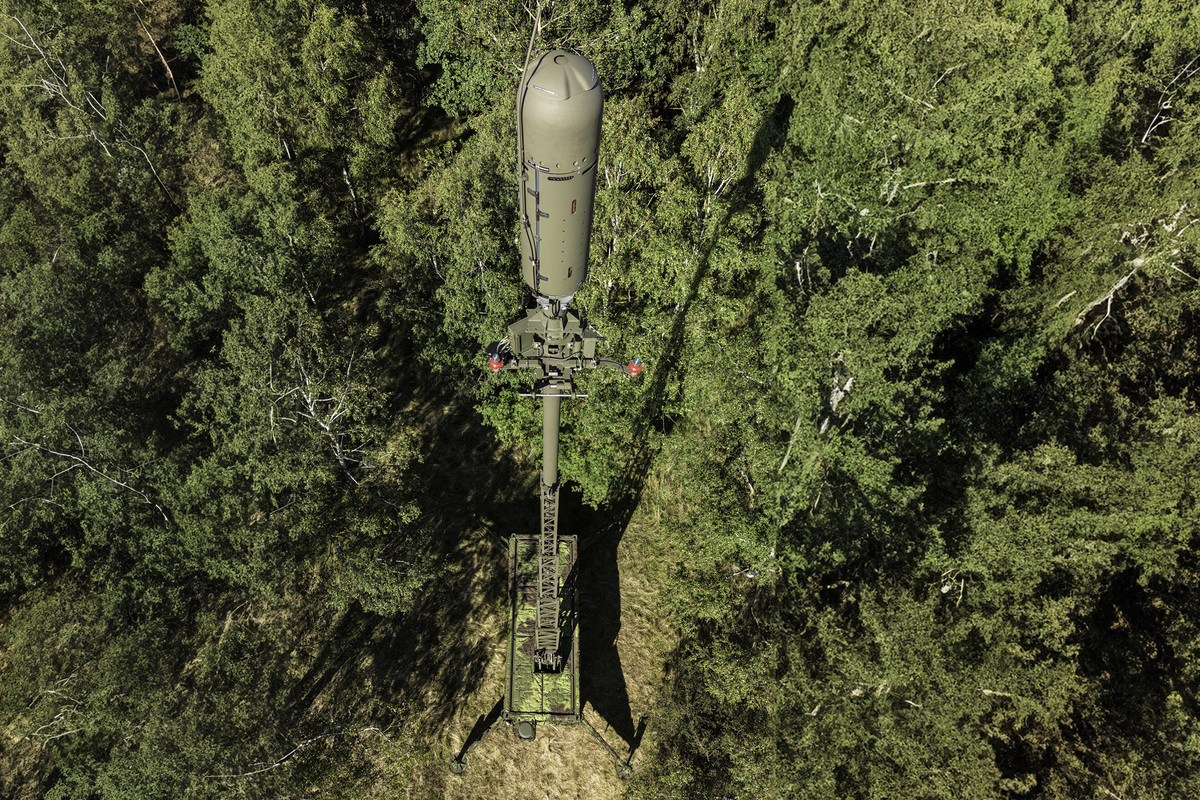
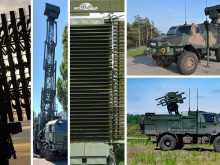
The DPET system consists of four VERA-NG antenna units. These antenna units are housed separately in standardized ISO-1C containers. This means they can be easily transported by Tatra T-815 8x8 trucks equipped with a standard hook-lift. The system also features a Main Processing Shelter, where operators are physically present. DPET offers a strategic advantage thanks to its flexibility. The first aspect of this flexibility is its placement directly on the transport vehicle, which is a significant advantage over previous versions that were towed. The second aspect of the system’s flexibility is the so-called “light variant,” where antennas can be mounted on tripods instead of masts. Other parts of the system can also be transferred from shipping containers to transport crates. Interestingly, the entire system also includes two Toyota Hilux vehicles, which are equipped with inflatable tents and other gear.

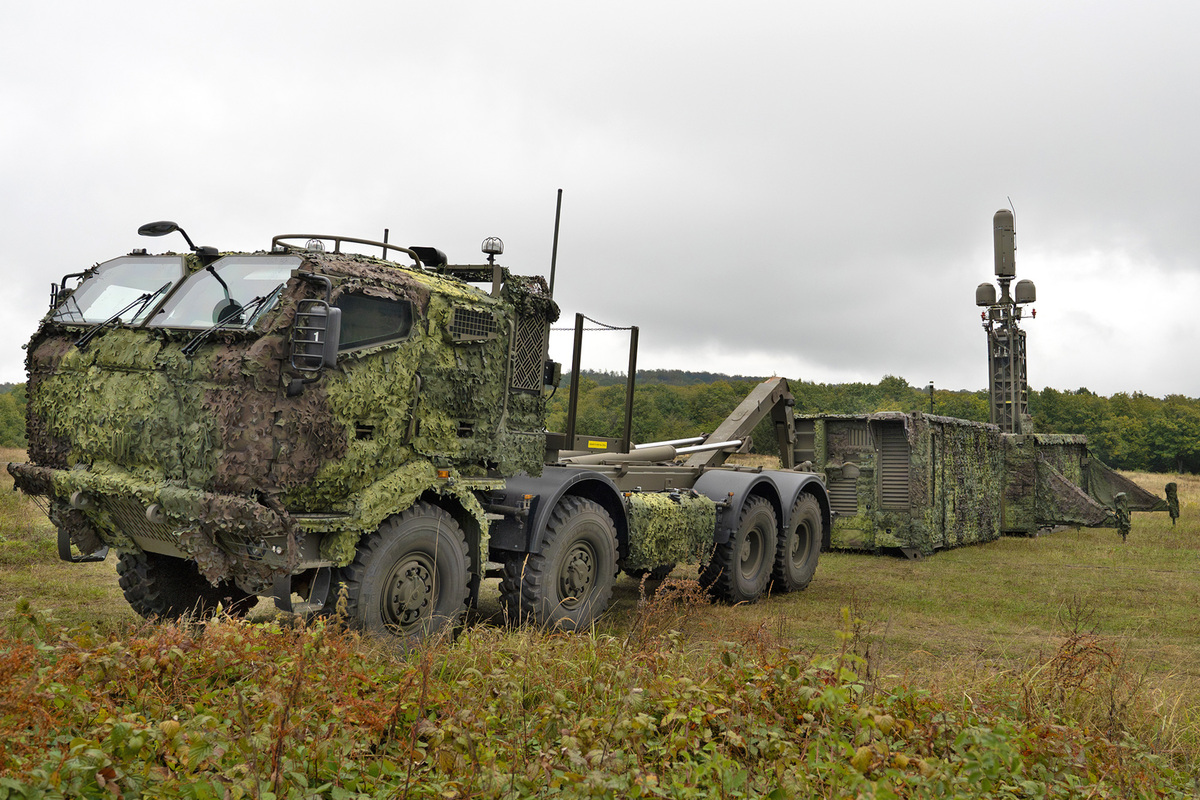
Although PLESS is less accurate than DPET, it has the advantage of its range. While the systems can be used independently of one another, their combination forms a single effective unit. Thanks to its range of up to 700 km, it offers an effective early warning system that does not itself transmit any detectable signals. The PLESS system uses signal reflections from the troposphere for detection, enabling detection far beyond the radio horizon. Consequently, it can be said that when a threat is detected, the PLESS system provides an early warning as the object approaches the DPET range, which then supports real-time countermeasures. The PLESS system is therefore suitable for long-term surveillance behind enemy lines. In today’s context of widespread drone use, this system will provide the Czech Armed Forces with clear information about a threat very early on. In 2025, the Czech Ministry of Defense decided to purchase three of these systems.
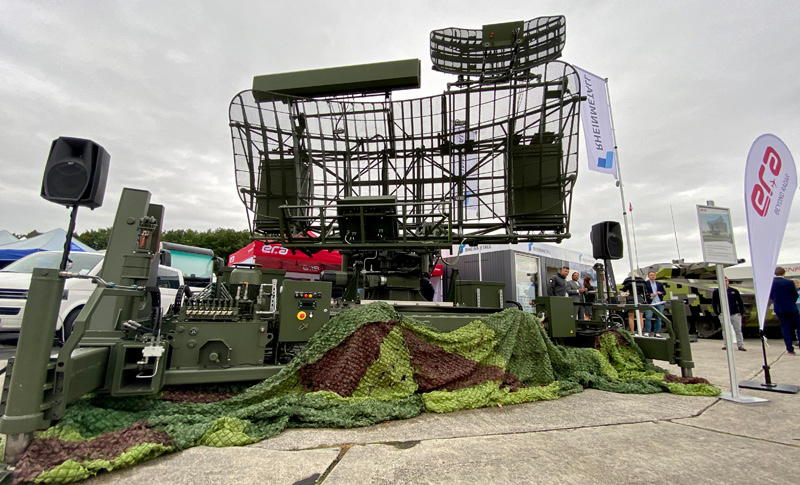
High levels of electromagnetic emissions are a relic of the past. As data from Ukraine shows, such practices amount to almost certain death in today’s symmetrical conflicts. It is therefore in the interest of NATO as a whole to move away from this practice as quickly as possible, adapt to this reality, and embrace the future. In the Czech Republic (and, by extension, Czechoslovakia), this step toward the future was taken in the past and heralded a leadership position in this field, which, thanks to technology from ERA, continues to this day. It is therefore in everyone’s interest for Czech passive surveillance systems to become the standard throughout NATO, or at least in Europe.