












Military Police: 35 years on the side of the law – from its roots in the legions to tasks in cyberspace
The Military Police (MP) is a special kind of "silent professional" in the Czech security ecosystem. When things are going well, you don't hear about it – yet it maintains discipline, law, and security within the armed forces both at home and in operations. Since January 1991, when the modern MP was established, it has become a service that can investigate, protect, escort, de-escalate, and act in crises that cannot be rehearsed. The 35th anniversary celebrations at Vítkov and the publication of the anniversary book this year symbolically closed one chapter – and opened a debate about what will happen next.
The history of military-police service in our country did not begin in 1991. The Ministry of Defense points out that its roots date back to 1917, when units were formed within the Czechoslovak Legions in Italy and Russia. It was then that the symbol of a burning grenade, still used today, was born. However, its development was not straightforward. In the interwar period, the military-police agenda gradually shifted to the structures of the gendarmerie and the state police. It was not until shortly before World War II that the Czechoslovak army established a field gendarmerie, which was activated during the mobilization in 1938. After 1945, the role of the security forces changed, and some "military-police" elements survived rather in partial inspection structures, such as the Tank and Automobile Inspection (TAI). This historical arc is not just an academic note: it creates a continuity of values—legal awareness, courage, responsibility—which the current MP likes to emphasize as its professional code.
After the fall of communism, the army and the state changed faster than their internal rules. It was at this stage, on January 21, 1991, that the military police of the Czechoslovak Army was established; after the division of the federation, on January 1, 1993, the basis of the MP as we know it today was established. In connection with the 35th anniversary, the Ministry of Defense commemorated, among other things, the adoption of the first law on the Military Police in 1992, the subsequent organizational stabilization after the establishment of the independent Czech Republic, the introduction of a structure with territorial responsibility, and the development of criminal investigation and expert capacities. In other words, the "new service" gradually became an institution with clear competences, its own law, and significant interoperability—at home with the state police and judiciary and elements of the Integrated Rescue System, and abroad in alliance structures.
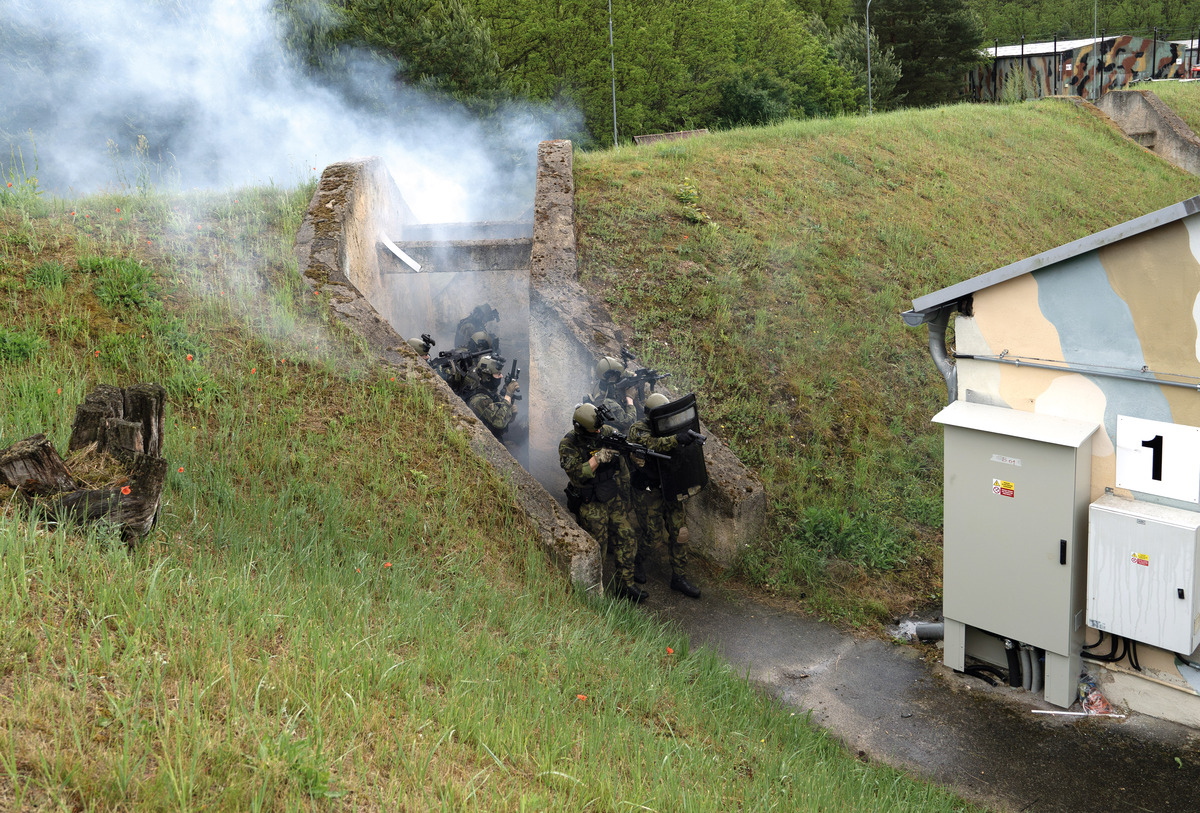
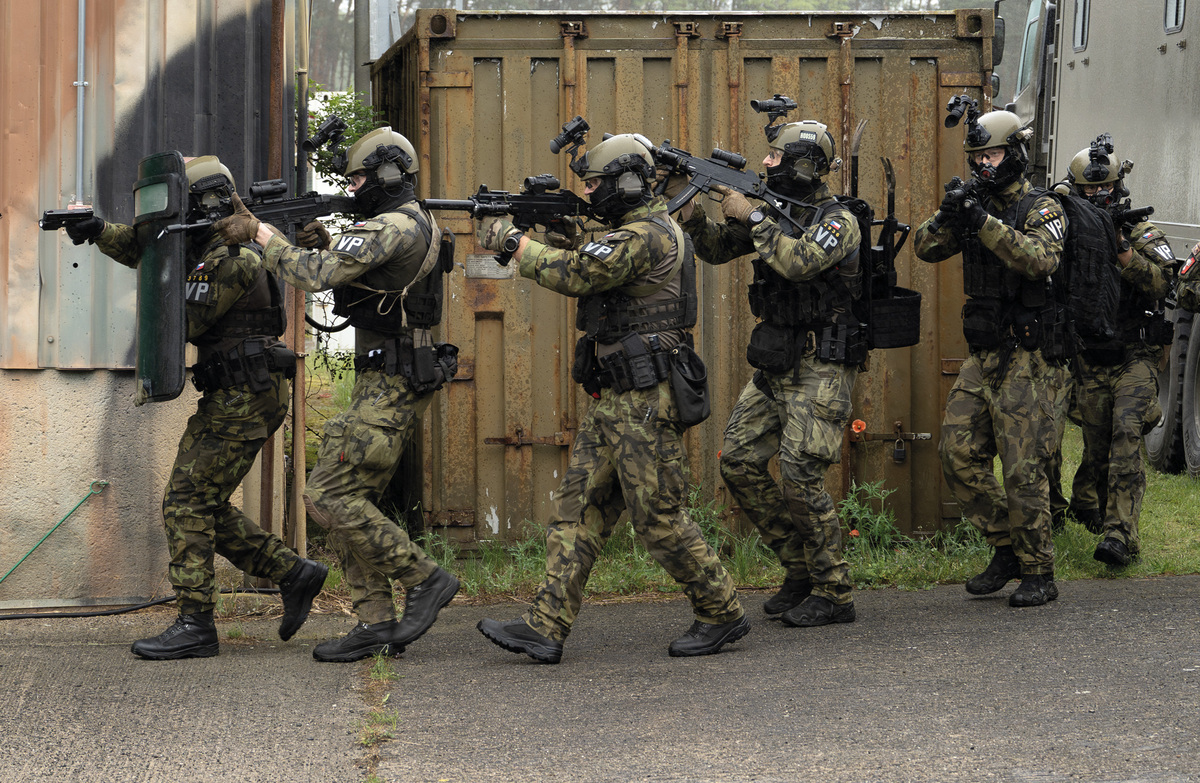
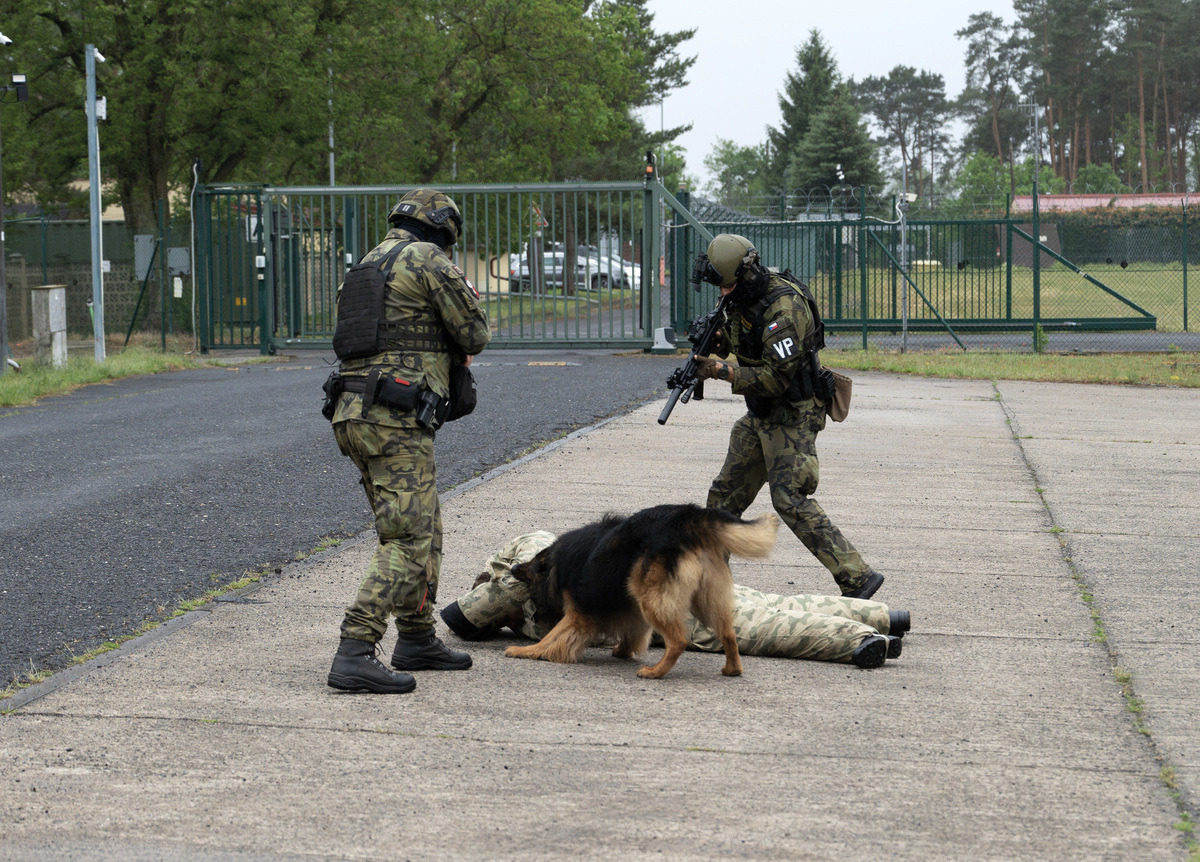
The public often imagines the MP mainly as "army transporters" or VIP protection. The reality is broader. Internally, the MP is divided into three basic professional units: criminal service, transport and public order service, and protective service. In addition, there are specialized units – the department of criminal investigation techniques and expertise, the pyrotechnic and canine service, information security and technology, education, and logistics. It is this "mix" that allows the MP to switch between modes, sometimes dealing with military transport security and the protection of dedicated aircraft for transporting constitutional officials, other times investigating complex cases or preparing units for deployment abroad. The organizational logic is also important, with a structure based on a territorial principle (nationwide elements + territorial headquarters) so that the Military Police can respond quickly while maintaining uniform standards.
Foreign deployment is not an add-on for the MP, but a key experience. Among recent moments, the Ministry of Defense mentions involvement in operations in Iraq, Afghanistan, Mali, the Baltic States, Kosovo, Slovakia, and a number of other countries. From the perspective of public memory, one of the most powerful stories remains that of the MP KAMBA (Kabul Embassy) unit. Its task was to protect and defend the Czech diplomatic mission in Kabul and to provide personal protection to members of the diplomatic mission. In August 2021, however, standard protection duties turned into crisis management and evacuation within a matter of hours.
At this stage, it is important not to forget the now former Special Operations Unit of the Military Police, which was designated for the most demanding protection and security tasks in foreign operations. It was the SOG MP that operated in an environment where standard protection procedures were quickly exhausted and the situation changed from hour to hour. Its members provided high-risk personal protection, protection of objects and movements, and were prepared to respond to crisis scenarios, including support for evacuation operations in unstable and hostile environments. Experience not only from Afghanistan, but also from Iraq, etc., showed that the role of the Military Police in foreign missions at that time did not end with discipline supervision or incident investigation – in critical moments, specialized elements of the Military Police, represented by the SOG, were deployed to crisis management and evacuation. showed that the role of the Military Police in foreign missions at that time did not end with supervising discipline or investigating incidents – at critical moments, specialized elements of the MP, represented by the SOG, became a key link between the diplomatic service, the armed forces, and alliance partners in ensuring the safe withdrawal of personnel and equipment.
In recent years, Kosovo has been a significant chapter. The Ministry of Defense states that Czech military police officers operate within the MSU KFOR (together with the Italian Carabinieri and other allies) and also supplement the MNMP element subordinate to the Force Provost Marshal. Tasks include security and free movement, patrols, information gathering, crowd control, and de-escalation during demonstrations. Dogs trained to search for explosives and weapons are also working in Kosovo, and dog handling activities are concentrated, for example, at Pristina Airport, including cooperation with American dog handlers and local police.
If the MP is to function as the "guardian of the law" within the armed forces, it must also be able to handle sensitive issues. In recent years, it has therefore placed emphasis not only on the results of the criminal service's work, but also on transparent communication. An example of this is a case that the MP itself has publicly described: the criminal service was investigating a case involving the awarding of public contracts for construction work dating back to around 2020; according to media coverage, the case involved the indictment of several individuals and companies and damages amounting to millions of crowns. (It is important for the Military Police that such cases fall within its competence in the Ministry of Defense and also have a preventive significance.) In addition, the Military Police is one of the components that can be involved in domestic crises. In the past, the Ministry of Defense reported on the deployment of Military Police territorial headquarters during the COVID pandemic, when the army assisted the state in a wide range of tasks. These are precisely the moments when military police competences – discipline, movement control, protection, coordination – spill over into broader state security.
This year's 35th anniversary celebrations at Vítkov were not just about ceremony. Chief of the Military Police Jiří Roček framed them as an opportunity to express respect for current and former members and to thank partners – from the armed forces to the public prosecutor's office and the police to the customs administration, prison service, and the Integrated Rescue System. A highlight of the day was the launch of the comprehensive publication Military Police, Always on the Side of the Law. The initiative to write it came from former Military Police Chief Brigadier General Miroslav Murček, and the launch itself was performed by the Chief Chaplain of the Czech Armed Forces Spiritual Service. Regarding the motivation behind the project, General Murček said, "We wanted it to be more than just a factual publication; we wanted it to tell stories." In addition to milestones, the book also contains a section devoted to everyday service and is based on authentic memories. This is important for an institution that often works "out of the spotlight": professionalism is inherited not only through regulations, but also through experience.
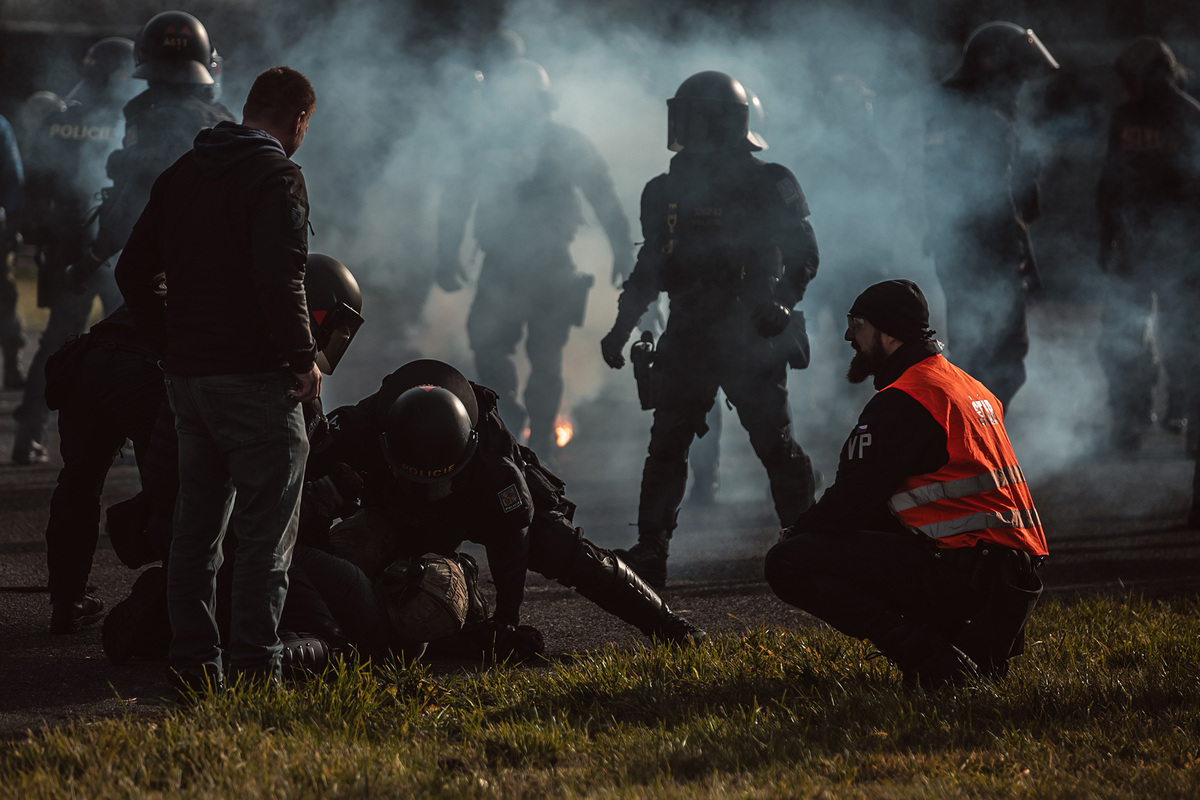
While in the 1990s the Military Police was tasked with consolidating discipline and legality in a changing army, today it must respond to a much tougher environment, namely highly dynamic security threats, pressure for rapid deployments, hybrid operations, and technological change. Brigadier General Pavel Huták sums it up in one sentence: "We must be prepared not only for peacetime tasks, but also for possible deployment in wartime." The Military Police already has an information security and technology department within its structure; with the growth of digitalization in the army, the agenda of incidents, evidence, and data protection will also grow.
An even more visible part of the MP's work in the future may be the protection of critical infrastructure and movements, where communications and hubs are key to militär mobility. Police protection of movements, escorts, traffic control, and security planning will be crucial.
Foreign deployment in the "gray zone" is also important, with Kosovo, for example, clearly demonstrating the importance of crowd control, de-escalation, and information management capabilities. Afghanistan, on the other hand, has shown that the MP can find itself in situations where protection turns into crisis negotiation and evacuation.
The ability to investigate complex economic cases in the defense sector will also become increasingly important alongside "classic" crime, not least because of the huge modernization budgets.
The history of the Military Police is actually the history of one need: for the army—and with it the state—to have a mechanism that can enforce law and order within its own armed structures while protecting them externally. From its roots in the legions, through the field police, to the modern institution founded in January 1991, the means and environment have changed.
However, the core remains the same: the legitimacy of force is based on rules. And that is why it makes sense that the 35th anniversary at Vítkov was accompanied by a book based on the memories of the people who do this work. Not as a museum artifact, but as a "guide" on how to uphold the law in times of crisis – at home and abroad.