











Gen. Petr Milčický: The army lacks modern equipment in a number of areas
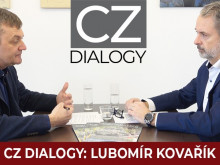
The third annual large-scale exercise Resilient Czechia 2025 recently took place, testing not only the preparedness of the Czech Armed Forces, but also the ability of the state as a whole to deal with crisis situations. We discussed this exercise, which takes place regularly every two years, the current state of our army, and cooperation with the Czech defence industry with Major General Petr Milčický, Director of the Force Development Section of the Ministry of Defence of the Czech Republic and the main organizer of the Resilient Czechia project, as part of our discussion program CZ DIALOGUES.
Video: Interview with Major General Petr Milčický, Director of the Force Development Section of the Czech Ministry of Defence / CZ DEFENCE
The Resilient Czechia project was created in response to changes in the security environment in Europe and the need to test the resilience of the Czech Republic as a whole – not only its armed forces, but also all components of the state, regions, local governments, and civil society. The aim of the project was to create systemic exercises that would connect the army, state administration, and key institutions in dealing with emergency and crisis situations. The first year took place in 2021, the second two years later. This year's third edition had the widest scope in its history. Dozens of institutions, hundreds of soldiers and civilian experts, and, for the first time, representatives of non-governmental organizations took part in the exercise.
"We organize Resilient Czechia every two years, and each time we expand it with new capabilities that the state needs to ensure its defence," explains General Milčický, adding that this year, for the first time, other ministries of the Czech Republic were also involved in the planning process, such as the Ministries of the Interior, Transport, Agriculture, and Health, as well as the Czech Police and the Fire and Rescue Service. Another new feature of this year's edition was the participation of non-governmental and non-profit organizations. "This is the part of society that functions independently in normal life, but can provide essential support in a crisis. For example, the Czech Red Cross can offer extensive humanitarian aid if cooperation is well coordinated," says Milčický.
The Ministry of Transport, which manages infrastructure crucial for troop movements, played a key role in this year's scenario. "The exercise did not test whether we should build new bridges or highways. Our main goal was to practice processes, coordination, and information exchange between departments. We needed to verify how the chain of data sharing, provision of free capacity, and mutual assistance in resolving a large-scale crisis works," explains Major General Milčický. When asked what specific crisis situations were simulated during the Resilient Czechia exercise, the general responds cautiously: "The exercise was conducted in secret, but I can say that it was a large-scale crisis.
When asked what specific crisis situations were simulated during the Resilient Czechia exercise, the general responds cautiously: "The exercise was conducted in secret, but I can say that we practiced scenarios that correspond to the current security situation in Europe. For example, it included verifying troop movements across the territory of the Czech Republic, where our country is committed to providing so-called host nation support. We must be able not only to receive allied troops, but also to send our own forces where NATO needs them."
In addition to professional soldiers, units of the Active Reserve of the Czech Armed Forces also took part in the exercise. "They are an integral part of the army. They were given their own tasks through the Territorial Forces Command, and we then tested and evaluated their responses," says the main organizer of the Resilient Czechia project, describing the involvement of members of the active reserve.
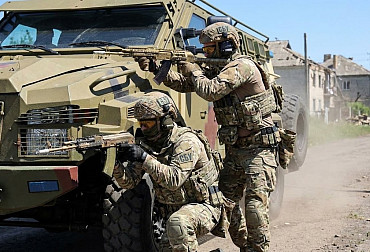
Although the exercise met all of its objectives, Milčický believes that a few changes will need to be made. "The results already show that it will be necessary to adjust some defence plans, coordination processes, and even propose legislative changes. We have identified several weaknesses that could be counterproductive in a crisis situation. Thanks to these findings, we can plan better and be prepared," says the general.
The next edition of the Resilient Czechia 2027 exercise is already being prepared and, according to Milčický, will continue to build a resilient state that can respond to any crisis.
In the interview, we also discussed the current state of the Czech Republic's army. "In terms of preparedness, the army is in very good shape," says Milčický. "Our soldiers are trained and capable of responding to crises. We proved this during the floods and the pandemic. However, the Czech Republic's army is not well armed and does not have all the equipment, weapons, and weapon systems necessary to achieve the effects we want to achieve with our prepared soldiers, which is the impact expected of a modern army," admits the general, according to whom the army lacks modern resources in a number of areas—from artillery to helicopter aviation, engineering troops, communication and information systems, to air defence and cyber capabilities. However, General Milčický adds that there has been a fundamental shift in orders for new weapon systems, ammunition, and technology over the past six to seven years.
According to the director of the Force Development Section of the Czech Ministry of Defence, modernizing the army is a never-ending process that must reflect rapid technological developments. "We are intensively looking for ways to procure materials and weapons for the future that will be competitive on the modern battlefield," says the general.
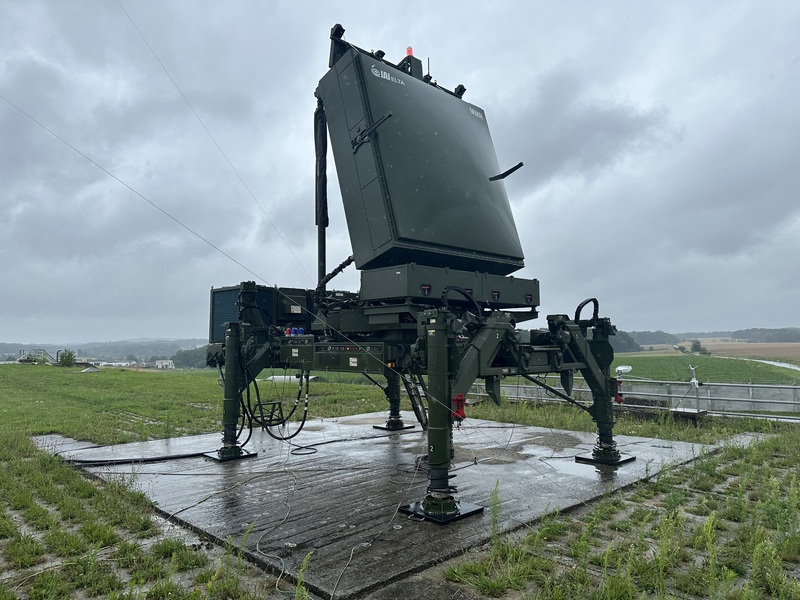
General Milčický further emphasized the importance of the Czech defence industry. "It is our highest priority. In a crisis, it shortens our supply chains and allows us to respond flexibly. Anything we can produce at home strengthens our self-sufficiency," says General Milčický, who also places great emphasis on personnel and training: "Soldiers and civilian employees are the most valuable assets the army has. We are improving the care of our personnel. We want to make service attractive. We offer new educational programs and cooperate with the University of Defence and other universities."
We were interested in what specific systems will play a significant role in the military environment in the coming years. According to General Milčický, the future belongs to robotization and autonomous systems. "We are beginning to develop the capabilities of unmanned vehicles – flying, ground, and logistical. These systems will be linked to artificial intelligence and represent a major breakthrough in the future operations of the army," says the director of the Force Development Section of the Czech Ministry of Defence.
We asked how our army is doing in terms of the Alliance's requirements for individual member states within the framework of collective defence. According to Milčický, the Alliance's requirements are reflected in the national concept: "The Czech Republic's army has three basic tasks under the law – to defend the Czech Republic, to support the integrated rescue system in crises, and to support the North Atlantic Alliance in its activities. If we break it down, the Alliance's requirements account for roughly one-third of the total requirements for the capabilities of the Czech Armed Forces. This third relates to the collective capabilities of the entire Alliance. The Alliance has a four-year NATO Defence Planning Process, which evaluates every four years what capabilities NATO needs to repel a potential adversary. These requirements are assessed from a military point of view, and each member state contributes its share to the resulting package of capabilities. The basic rule applies: the stronger the defence capabilities of each individual state, the stronger the entire Alliance. We incorporate the requirements that the Alliance sets for us every four years into our planning and take them into account financially – now it's just a matter of time before we build the required capabilities," says the general.
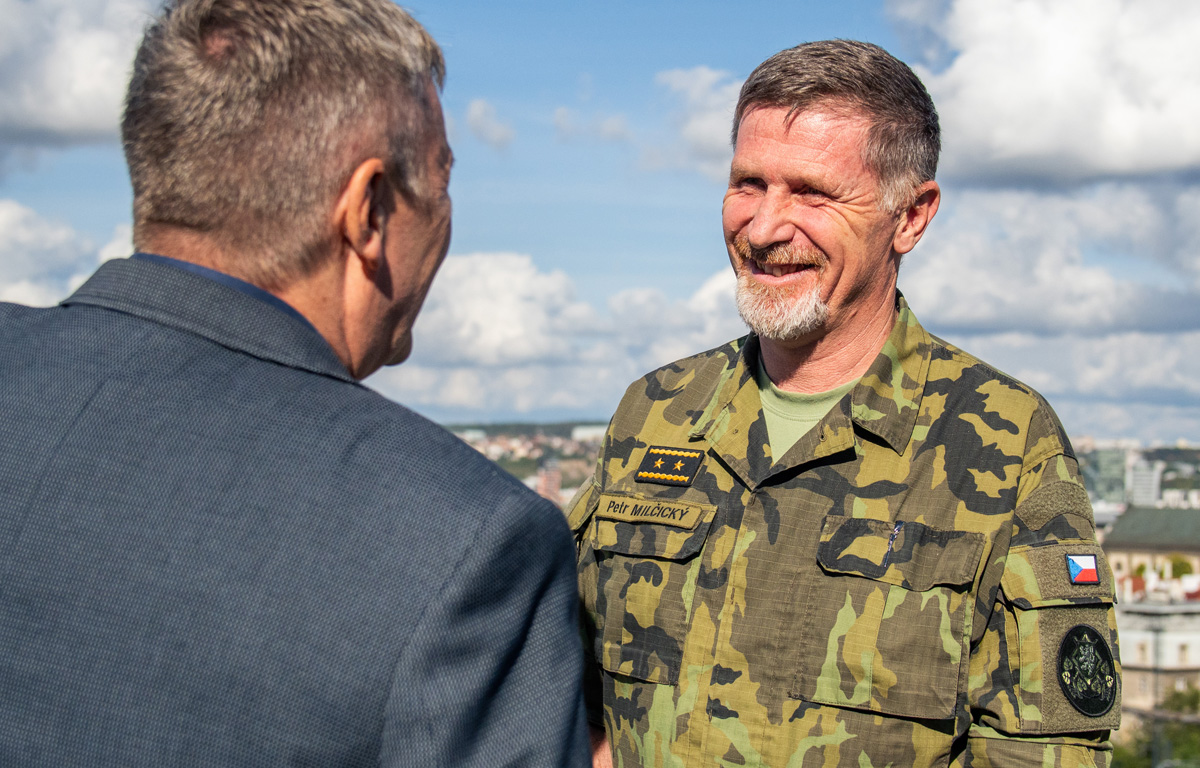
When it comes to our military reliability on the eastern flank of the Alliance, General Milčický responds succinctly and clearly: "With its current equipment and systems, the Czech Army is capable of rapid response – we are ready and will engage in the process at any time. The demands for higher-quality equipment are relevant given what we are facing today."