













Gen. Karel Řehka: Defense is not just the task of the army, but of society as a whole
In an extensive interview, Chief of the General Staff of the Czech Armed Forces, Army General Karel Řehka, talks about security threats, societal resilience, the future of the Czech army, and the need to have a realistic discussion about new forms of military service. He openly describes problems with the procurement system, lengthy bureaucracy, and staff shortages. "We do not live in isolation, and Russia is preparing for war with us. We must do everything we can to prevent this from happening," says the general.
Video: Interview with Chief of the General Staff of the Czech Armed Forces, General Karel Řehka / CZ DEFENCE
General, what do you see as the greatest security threat to the Czech Republic today?
I clearly see the greatest threat today in Russia and in the possibility that it will miscalculate in the future and spark a conflict between NATO and Russia. Russia is unpredictable, aggressive towards us, labels us as an enemy, and is taking a number of steps that clearly show us that it is preparing for war with us. We must do everything we can to prevent this from happening.
There is a lot of talk about the resilience of Czech society and mental preparedness. What does this actually mean for ordinary citizens of the Czech Republic?
There are various studies and different criteria for resilience are measured. However, I believe that it is important that in the event of a serious crisis, including a possible war, which would most likely take place primarily outside our territory but would have immediate impacts, the entire state would continue to function. Constitutional institutions, the economy, and everything else must continue to function. It is not just about the army. Defense is a matter for society as a whole, and people must be resilient enough to continue functioning. I consider the first step to be the most important in this, let's say, preparedness: for people to admit that crisis situations can happen, to be aware of them, and to be at least somewhat prepared for them. The greatest stress and chaos arise from unexpected surprises.
Now, exercises involving the state administration have also begun. The Hradba and Odolné Česko exercises have been conducted. How important is the connection between the civilian and military sectors?
Despite all the shortcomings and frustrations caused by the long-term underfunding of the army and the many gaps we are now trying to fill, I dare say that the army is still the best-prepared institution for crises in this country, at least for military-type crises. However, it is not enough on its own; everyone must be prepared for a crisis. Just as we, the soldiers, have revised our defense plans to fit in with the alliance's plans, we also try to practice them in real life. For example, as part of the Resilient Czechia exercise. However, our plans are superseded by the Central State Defense Plan and other documents. Every ministry, state administration, local government, and some non-profit organizations have a role to play in defense. It is necessary to practice this. Therefore, although it is not the primary role of the army, we try to realistically involve others in our exercises. At Resilient Czechia, we had representatives from several ministries – the Interior, Transport, Health, and non-profit organizations, including the Czech Red Cross. It's not just about exercises; we also hold various seminars.
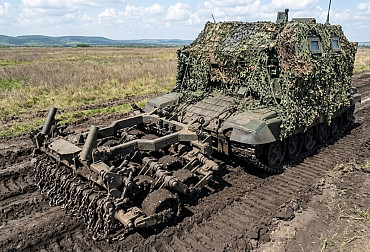
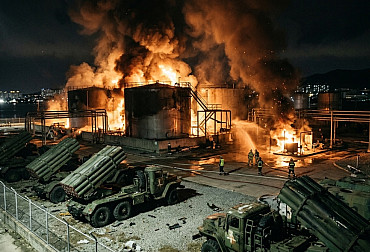
Both exercises are currently being evaluated. Do you have any results yet?
We certainly have a number of outputs. I recently had a briefing on the preliminary evaluation. In accordance with the Alliance's "lessons learned" methodology, we evaluate each exercise as standard, and the evaluation is still ongoing. For example, we have confirmed some gaps in the legislation that prevent us from doing what we need to do at certain stages. For example, poorly defined so-called crisis states. We also have internal findings regarding our internal affairs. The Resilient Czechia exercise focused on the strategic and operational levels. The Operations Command tested a new structure and readiness for multi-domain operations. At the same time, we have external findings, such as the legislative gaps I just mentioned. We will continue to work on this and propose what needs to be changed.
Compulsory military service is a topic that is currently resonating in several countries, such as Germany, Croatia, and Turkey. Isn't it time to start talking about it openly here in the Czech Republic as well?
I think that time has long since come. I don't necessarily mean compulsory military service, but it's time to talk about different forms of military service that don't have to be compulsory. One of the problems I have been pointing out for a long time is that we are tasked with preparing for a major crisis, a large-scale, high-intensity conflict with a technologically advanced adversary that may have nuclear weapons, i.e., de facto Russia. Among other things, you need a functional reserve system for this. However, today's model of the armed forces was created for a different security environment: for "out of area" expeditionary operations and crisis management operations. For large-scale collective defense, you also need sufficiently large reserves and reserves. You need legislation and rules so that we can use them quickly and have the opportunity to take many preparatory steps in peacetime. We have a number of gaps in this area. The biggest problem in the area of personnel today, apart from staffing levels, is that we do not have a system that generates sufficient reserves. We have voluntary military training, active reserves, and former professional soldiers. Otherwise, no one else undergoes military training or conscription, there is no proper overview of people, they are not trained or identified, and often they are not even aware that they have a military obligation. We are trying to talk about this, and awareness of this issue may be improving.
That's exactly the point: who will actually "start" this discussion?
This needs to be discussed at the political level. The government, not the army, is responsible for defending the country. Society must decide what kind of army it wants, and this is done through elected representatives. In order to set up a system and discuss, for example, some form of compulsory military service, political and social consensus is needed, and this requires lengthy discussion. It will not happen overnight. By not discussing this at the political level, we are only wasting time. We regularly submit a so-called mobilization concept to the government. We already have a new proposal, which will go to the new government and undergo interdepartmental review. In it, we propose a system that is primarily based on voluntarism, but gives the state an effective mechanism to selectively impose obligations in the event of insufficient voluntarism. We are not talking about a return to universal conscription for many months. However, it must be said that even if we wanted to, and I am saying clearly that we do not, conscription cannot be reinstated overnight. There is a lack of manpower, resources, infrastructure, and supplies. All of this will have to be built up gradually. It will be a process that takes years.
We have already completed the second year of voluntary military training for high school students. Is this one of the ways forward?
That alone is not enough; around 800 high school students is definitely not enough. However, it is useful. It helps not only to build reserves, but also the resilience of society, and it brings the army closer to the people, especially the younger generations. It can also help with recruitment, both to the army and to the active reserves.
I will ask about KVAČR (Concept of the Czech Army's development). Are you on track? Are you planning any changes? There is a lot of talk about air defense.
We are preparing changes. The concept of army development must be revised. This is not a 180-degree turn. The concept was developed in a new security environment. Our defense is primarily based on collective defense within NATO, and it is crucial that we are able to operate within the framework of collective defense. Capability Targets, which we receive as part of Alliance defense planning, are essential for the development of capabilities. A new cycle has taken place, new targets were approved at the turn of May and June, and there are a number of changes. This must be reflected in the concept of development. It is not just a matter of adding capabilities, but also of the effectiveness of the army's structure. We are looking at the macrostructure, future changes, dislocation, and the creation of new units and garrisons. We are putting together a team, preparatory work is underway, and it will be in full swing at the turn of the year so that a new concept can be presented to the government during the course of next year.
When we spoke earlier, you said that participation in NATO would not be just a matter for one heavy brigade or task force, but for the entire Czech Armed Forces. Has that time come?
That time is long gone, regardless of the goals of capability development. The Alliance responded with a concept of deterrence and defense, elaborated into a series of plans down to the regional level, which includes us. Our defense plans are fully synchronized with those of the Alliance. The plans are implemented through a force model, and our army is almost entirely included in it. In the event of a crisis, virtually all combat units and most of the army will play a role in the Alliance's plans. What is necessary to support the host country and secure our territory is partly based on active reserves.
Let me return to air defense. How are we protected today? And where do we, as an army or a state, need to focus our efforts most in order to make up for lost ground?
We do not live in isolation; we are surrounded by allies, and our air defense is fully integrated into the Alliance's air defense. Air defense is not just about ground-based assets. It also includes our Gripen fighters. It is laughable when someone questions the F-35 and claims that we should focus on air defense. They are part of it. The fifth-generation F-35 aircraft will strengthen our air defense not only as an effector but also in terms of detection capabilities. In the past, there was a category of ground-based air defense designed to protect deployed troops, and then there was the so-called PVOS, or national air defense. We basically abolished that. In the Czech Republic, these were various rings around population centers, according to importance, around important objects. And this category has actually disappeared completely. We don't have that here. And we will have to rebuild it. In addition to introducing fifth-generation aircraft, we are strengthening our radio-technical forces and detection capabilities. We have introduced new radars and are supplementing them with passive systems. We are trying to streamline, mobilize, and adapt very short-range RBS systems for troop protection based on battlefield experience. We are acquiring Spyder anti-aircraft systems, which, depending on the ammunition used, cover airspace from medium distances to tens of kilometers. Spyder is designed to cover multiple target directions and territories. The acquisition of these batteries alone increases our capabilities many times over. However, this is still not enough. We will continue to build, including protection against ballistic missiles.
And drones...
Even drones. That's not an area where we're doing nothing either.
How will you address the introduction of these measures into the military?
We already have a battalion focused on unmanned systems. We are starting to acquire more layers and categories, from the more sophisticated ones, which are also connected to the command and control system and require a specialized unit and specialists to operate them. This brings us to categories that will be assigned normally in combat units, such as those that will be connected to command and control systems, as well as those that are stand-alone. The situation will be similar with anti-drone protection: it is not possible to have specialists for everything, and a certain level of protection must also be provided by the troops. We are also responding in terms of processes: we are looking at command and control settings, approvals, and the delegation of powers downwards. At the same time, we are deploying, testing, and experimenting with some technical solutions against the presence of commercial drones in our territory around important national defense facilities and airports. We are preparing for what we see in Western Europe.
Can it be sped up? Airports in Europe are currently being closed due to the threat posed by drones.
Theoretically, everything can be accelerated, but in our system, it is very difficult. And that is the problem. There is no sense of urgency. Other countries to the west, north, and northeast of us take intelligence assessments seriously and are changing their procedures and rules of the game. We live in a deep "process peace." The acquisition system has not changed, and the possibility of purchasing, testing, and experimenting with uncertified equipment has not been simplified. We are overwhelmed by bureaucracy, and changing anything is an exhausting long-distance run.
Would you say that the only thing that could break it is a real conflict?
In my opinion, it can be broken without him. It's about willpower and priorities.
Drones and anti-drone defenses are currently the most dynamically developing elements of the modern battlefield. What is the situation in our country with regard to the development and use of UAVs?
Since Russia's large-scale invasion of Ukraine in 2022, we have developed a plan for the use of unmanned systems in the Czech Armed Forces and have already revised it once. Specific activities are underway. These include not only the purchase of various categories of drones, but also experimentation, introduction into training, and the organization of courses. We are in close contact with Ukrainian instructors and armed forces and are drawing on their knowledge.
Experiences from Ukraine lead some people to conclude that drones have made maneuver warfare, artillery, and tanks obsolete. Is this true?
No, it isn't. If it were, our ammunition initiative would not be so important. Artillery has definitely not disappeared; drones are a response to the situation and a major phenomenon that must be taken into account and incorporated into tactics and doctrines. However, this does not mean the end of artillery or tanks. Moreover, every conflict is different. The situation would be different if one side gained air superiority. We must be careful with "revolutionary" ideas about eliminating entire types of forces. Some countries have almost abolished their tank forces and are now rapidly returning to them.
The development of drones is almost exponential, with new systems constantly emerging, drones carrying other drones...
Yes, jammers, fiber optic drones, attack and reconnaissance unmanned aerial vehicles, as well as ground systems are used. Not only for attacks or reconnaissance, but also for supply, logistics, evacuation of the wounded, and distribution of medicines. It is an important phenomenon that will open up technological possibilities and influence tactics and doctrines. But it does not mean the end of other types of troops.
If you had to pick one area to invest in immediately, what would it be?
It's hard to say, but people are the key. In terms of capabilities and objectives, it's largely ground-based air defense. But that won't work without logistical support. So it's not really one area. You can't focus on one thing and ignore the rest.
Infrastructure is also important. How are we catching up on the debt incurred by the previous disposal of properties?
Wrong. We are in a "processual peace" and everything is connected: the length of the construction process, public procurement, zoning. When intelligence assessments say that we need to strengthen our defenses within three to five years, but it takes six years to construct a building, that is a problem. This also applies to expropriation or the fact that an individual or municipality can block the operation of an air base. These issues need to be resolved. The military needs to create the right conditions.
What is the most important lesson learned by the Czech Armed Forces from Ukraine?
There are many. From the army's point of view, attrition warfare is not a dirty word. Technology cannot solve everything. Attrition is a significant factor, which is why it is said that battles are won by armies and wars by economies. And even in Ukraine, despite all the technology, despite the brutally rapid innovation, where changes and implementation take place within weeks of identifying needs on the battlefield. Even with all this, despite drones, despite the use of commercial space technology, despite all these things, it is still simply attrition. That is a big and important factor. You need reserves and an industry capable of mobilization. Of course, autonomous systems and technologies are also important.
Let's move on to the topic of active reserves. What is their status and how important are they?
The active reserve is the only reserve we can quickly deploy, which is a huge benefit. In my opinion, they are well trained, although this varies depending on their length of service. Conditions today are not bad; we can deploy them legally and we do deploy them on missions, with forward presence in Lithuania, Latvia, and Slovakia. We also had reservists in Afghanistan and Africa, some of whom actually saw combat. The active reserve is becoming an increasingly integral part of the army, and this is reflected in rearmament and material support. We order equipment and ballistic protection for the number of professional soldiers plus active reserves. Their training, professional and career courses are also improving. It also depends on the type of unit (territorial forces versus combat units), but in general, the active reserve is crucial for us.
Personnel are key. The army will do well in terms of recruitment this year, but is it realistic to achieve the target of 37,500 soldiers?
The number of 37,000 to 40,000 soldiers is an estimate, because in addition to alliance goals, we are also dealing with the restructuring of the army. Today, we have just under 25,000 in the army (approximately 24,800 under my command), and the increase is slow. Whether this is achievable and sustainable within a decade depends on the rules, the possibility of recruiting foreigners, labor market developments, and demographics. My estimate is that without a change in conditions, it is not achievable or sustainable quickly enough. That is why we need to seriously discuss other forms of military service. And even if we achieve the target numbers, it does not solve the problem of reserves. We must also address that issue.
Is raising soldiers' salaries a way to resolve the personnel issue, or is it just one piece of the overall mosaic of changes?
There has been an increase in soldiers' salaries, half of which has been implemented so far, with the rest to follow at the turn of the year. We have been asking for this for a long time. It was not because of future optimal conditions, but so that what we have now would not fall apart. Sociological research has shown a critical situation among the lowest ranks. Commuting, two households, dormitories. People were leaving even though they didn't want to. The army ceased to be competitive. Economic benefits are important for improvement, but they have their limits. You also cannot raise benefits indefinitely, because then you start to disrupt the labor market and undermine other security components that also draw from the same pool. But without a significant increase in benefits, it will definitely not work. It will simply have to be done.
New trends in warfare. How are they reflected in training and education?
We are training as part of command preparations and closely monitoring events in Ukraine. We are sending some specialists to train with their Ukrainian colleagues and organizing training sessions with instructors from Ukraine, ranging from advanced UAV piloting to ground operations and trench warfare. This is reflected in career courses, and we are preparing courses for unmanned vehicle operators. Units are building mock-ups of sections of the front line at garrison training grounds based on knowledge and images from the battlefield and are training procedures, including trench warfare.
What do you think is the biggest problem in acquisition processes? Is it legislation, the technology selection process, or something else?
I am not an acquisition manager and I don't want to go into details, but it is clear that this has to change. It is desperately slow. I see a lack of life cycle management, which leads to disadvantages and low operational readiness of equipment. Another problem is the behavior of part of the defense industry, where companies take the army hostage in competitive battles and undermine each other's contracts. I envy my colleagues in Western countries, where soldiers can simply say "we want this," buy it, and test it. Internally, the process is inflexible, with many alibi-making intermediate steps; often those who bear responsibility do not have authority, and vice versa. And it is not very transparent or digitized.
Is communication between the military and society set up correctly? Where is the line between what to say and what not to say?
The army has little autonomy in many areas, and that is a problem. Everything is slowed down and influences that should not be there interfere with decision-making. The army must communicate: it is paid for from public funds, citizens have the right to know what their money is being spent on, and we cannot function without public support. It is true that we are used to communicating almost everything. I see Act 106/1999 Coll. on free access to information as a fundamental document for transparency, but in our field, it sometimes "kills" us. If information is not classified or under a special regime, we often have to release it, even if it involves sensitive details. There is a lack of broader exceptions, such as cyber security, where you can withhold information if it would reveal weaknesses. Sometimes it is our own fault. Too much is published on social media. In the past, we established a culture of "total openness," which sometimes needs to be restricted in the public interest of defense.
Does the army have StratCom?
It has strategic communication, which is not just "talking about strategy" or merely working with the media and social networks. It is a complex discipline and part of strategy: not only what you say, but also how you behave, what measures you take, what doctrines you issue. This also applies to the state. For example, issuing a new defense strategy that identifies threats and steps to be taken. I think the army has enough people who understand what strategic communication is; we issue regulations on it and create communication frameworks every year. I'm not saying we're always champions, but we're improving.
The army is apolitical, but communication with politicians is important, for example, in warning of certain threats. Are politicians willing to listen to you, and is communication open, or do they prefer not to hear the army's opinion?
You know, you can't really say that. Many politicians are very interested, they are responsible and want to know about the issues, including classified information, they want to get involved and help. So you definitely can't say across the board that politicians aren't interested, that would be unfair. But it's not always a priority, and leaders aren't always willing to say unpopular things. As for being apolitical: we're here for all citizens, and we're prepared to risk our lives for each and every one of them. We have to be apolitical, and we're required to be by law. Pointing out risks isn't "meddling in politics." It is like a firefighter warning about drought and the risk of fires. Things need to be named so that people know the reality. If the political representatives decide on 1% of GDP for defense, we must respect that. But what must not happen is to say "we are building a multi-layered air defense system" and at the same time not allocate more than 2% of GDP to defense. Either you don't know what you're saying, or you're lying. Similarly, you cannot promise to support the domestic defense industry or fulfill allied commitments without an adequate budget. For years, we pretended, and the army ended up in ruins. We must not repeat that.
What should Czech citizens be aware of when considering the current security situation?
From a defensive perspective: realizing that what we have cannot be taken for granted. Knowing what we love about this country and what values we are willing to defend. Whether freedom and the ability to decide our own future are so precious to us. And realizing that we all have a responsibility. For the future of our country and our children. And this is reflected in our everyday decisions.