















Europe takes responsibility: The war in Ukraine as a test of resolve
Ukraine estimates that it will need US$120 billion for defense in 2026, half of which it expects to come from foreign partners. At the same time, the European Union has approved a €90 billion interest-free loan program for Kyiv. Some member states have also reopened the debate on security guarantees, including the possible presence of multinational forces on Ukrainian territory after the conclusion of a ceasefire. The decisions Europe is now making will shape its security architecture for decades to come.
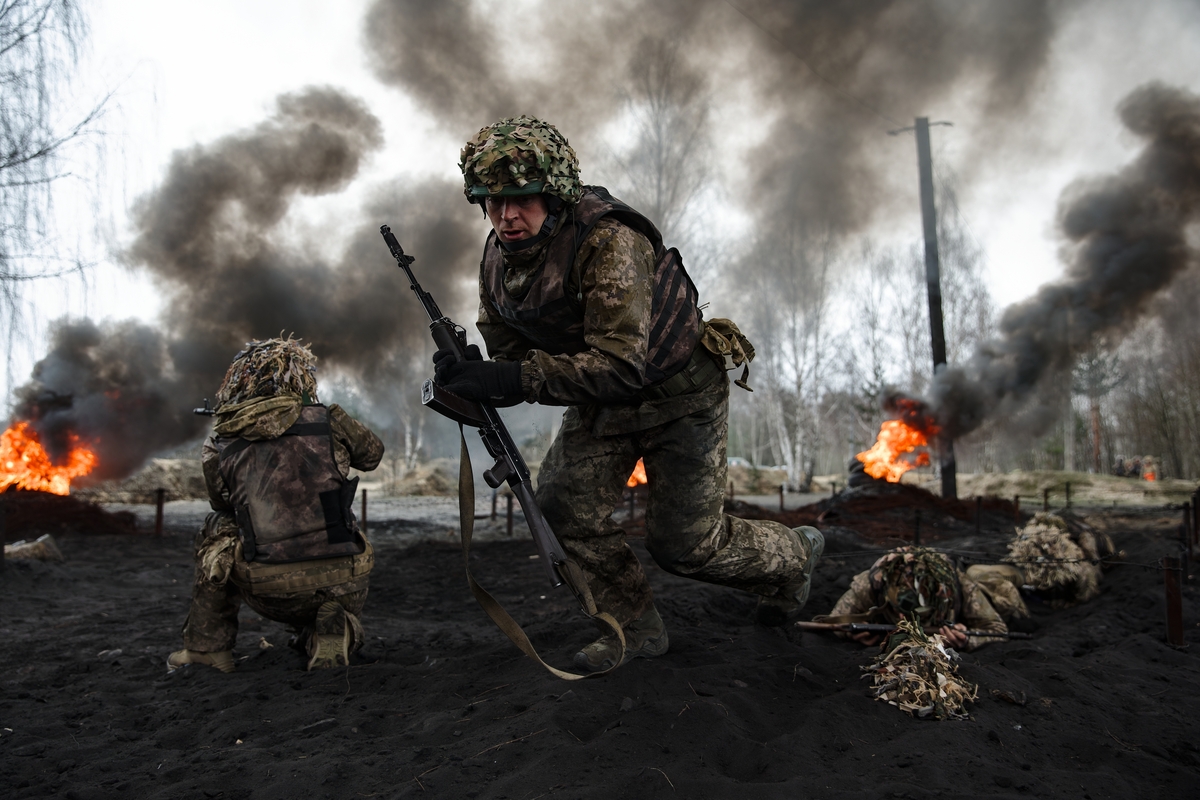
Ukraine's calculation of the costs of the war for 2026 does not represent political pressure or an attempt to shift responsibility onto its allies. It is a realistic description of a conflict that has turned from what was originally expected to be a short phase into a long-term conflict with profound structural impacts. Kyiv is thus making it clear that the defense of Ukraine is no longer just a matter of extraordinary military aid, but part of a broader security balance in Europe. The openness of this message shifts the debate from symbolic gestures to decisions that have a direct impact on European budgets, politics, and defense planning.
The total budget of $120 billion in 2026, of which $60 billion is to come from foreign partners, clearly shows the scale of the challenge ahead. The United States has withdrawn from direct financing of the war, and the burden of responsibility has shifted to European states. This shift changes the role of the European Union from a supporting actor to the main bearer of financial and political responsibility. In this context, the decision by member states to approve an interest-free loan of €90 billion to finance Ukraine's needs in 2026 and 2027 is crucial. The European Union has thus sent a clear signal that it is prepared to take on a longer-term role as a guarantor of stability in the east of the continent.

At the same time, however, the chosen financial model shows the caution of European governments. Instead of directly using frozen Russian assets, the Union has opted for joint debt, covered by EU budget mechanisms. This approach allows for the rapid release of funds and reduces immediate legal risks, but at the same time postpones fundamental decisions on the final settlement of the costs of the war until the future. Europe is thus confirming its willingness to finance Ukraine's defense, but is doing so in a way that minimizes immediate political conflicts within the Union.
At the same time, the question of security guarantees after a possible ceasefire is returning to the European debate. There is increasing talk of a European-led multinational force that would operate on Ukrainian territory, participate in protecting airspace, securing critical infrastructure, and supporting the restoration of the Ukrainian armed forces. This is not a classic peacekeeping mission, but rather a long-term stabilizing element designed to prevent the resumption of Russian aggression. Such a step would set an important precedent in European security policy.
.png)
The concept of a multinational force is supported by a group of European states that are prepared to bear the political and security risks associated with the direct presence of their troops in Ukraine. This creates a new hierarchy within Europe, in which the weight of individual countries is determined not only by the size of their economies, but above all by their level of engagement in the field of security. The Czech Republic is not yet part of this group, which in itself does not necessarily represent a weakness if this position is balanced by other forms of support.
The Czech position in the European debate is characterized by an effort to combine political support for Ukraine with fiscal restraint. This approach was articulated by Prime Minister Andrej Babiš after the meeting of European leaders, when he emphasized the difference between the Czech position and the stance of some other states. "We do not have the same position as Slovakia and Hungary. We support Ukraine. We supported the conclusions of the summit. The only exception is that we do not want to guarantee loans. Slovakia and Hungary have refused any support," he said after the meeting.
Prime Minister Babiš also repeatedly emphasized that the Czech Republic does not question the need for European support for Ukraine as such. "Czechia does not question the need for EU support for Ukraine, but it should be financed as before, which means that Europe will borrow. Czechia will not provide any extra guarantees," he said before leaving for the summit. In the domestic debate, he supplemented this position by emphasizing budgetary responsibility, saying: "We will not send money to Ukraine, we need money in Czechia. We will not guarantee these things."
These statements do not express a refusal to support Ukraine, but rather an effort to define the limits of Czech involvement, particularly in the area of financial guarantees. In the European context, however, this approach faces a structural problem. The influence of individual states increasingly depends on their willingness to participate in key instruments of common policy. Countries that systematically opt out of financial commitments risk weakening their negotiating position when decisions are made on the form of long-term security guarantees.
Decisions on financing Ukraine cannot be separated from the broader debate on the role of NATO and the future shape of European defense. Although the new mechanisms are formally outside the alliance framework, their credibility remains closely linked to transatlantic deterrence. Any shift towards greater European autonomy will require a significant strengthening of the military capabilities of European states and a clear definition of their relationship with NATO.
These strategic choices will inevitably be reflected in defense budgets and the structure of the armed forces. If Europe assumes long-term responsibility for Ukraine's security, pressure will grow to invest in air defense, ammunition, logistics, reconnaissance, and rapid deployment capabilities. This represents a significant opportunity for the Czech defense industry, but one that will be contingent on the political credibility of the state and its willingness to participate in joint solutions.
The war in Ukraine is increasingly becoming a test of European political will. Kiev's request for $60 billion a year from its allies and the EU's approval of a $90 billion loan show that Europe is entering a new phase of responsibility. For the Czech Republic, this means the need to clearly define what role it wants to play in this process. The decisions that are made now will not only be important for Ukraine, but will also determine the position of individual European states in the security architecture of the coming years.