













Europe after New START: The end of nuclear parity and the beginning of an era of uncertainty
At the turn of 2025 and 2026, the issue of nuclear weapons is returning to the center of the European security debate with an intensity unprecedented since the end of the Cold War. The expiration of the New START treaty on February 5, 2026, marks a symbolic and practical turning point in the system of strategic stability that has characterized relations between the United States and Russia for decades and indirectly created security rules for Europe as well. Moreover, its end is taking place in an environment fundamentally transformed by the war in Ukraine, the long-term erosion of US defense guarantees, the return of open great power competition, and rapid technological developments that call into question the existing assumptions of nuclear deterrence. Europe suddenly finds itself in a situation where the old bilateral order is disappearing without a new, stable, and politically shared security system in place.
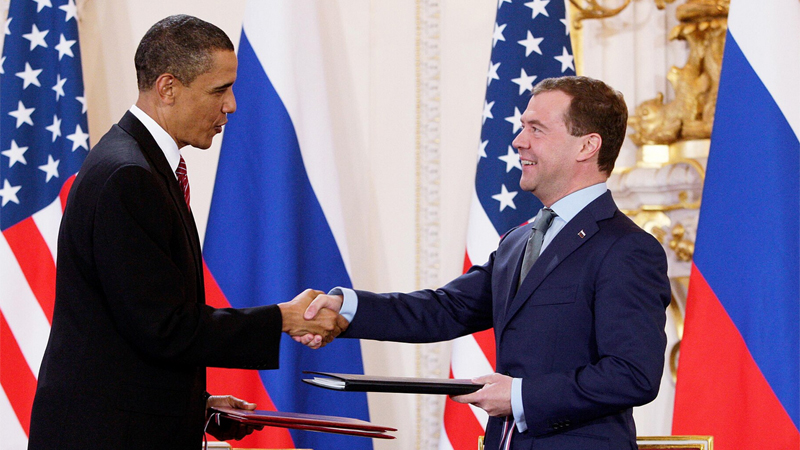
The New START treaty, signed in Prague in 2010, was the last pillar of the bilateral strategic arms control architecture between Washington and Moscow. It limited the number of strategic warheads and delivery vehicles and introduced robust mechanisms for transparency, data exchange, and inspections. Following the previous collapse of the ABM (Anti-Ballistic Missile Treaty) and INF (Intermediate-Range Nuclear Forces Treaty) treaties, it remained the last formal safeguard against an uncontrolled return to nuclear competition. Its extension in 2021 was more an attempt to keep the dialogue open than evidence of renewed trust. However, the pandemic, the subsequent Russian invasion of Ukraine, and the gradual freezing of inspections have transformed arms control from a technical risk management tool into a political hostage of a broader conflict. Even before its formal expiration, the New START treaty had lost much of its practical value.
From Russia's point of view, Washington is responsible for the end of the treaty. Moscow has repeatedly claimed that the United States was unwilling to engage in dialogue on strategic stability in the broader context of security relations. Deputy Foreign Minister Sergei Ryabkov declared Russia's readiness to operate in a "new world" without major bilateral treaties. At the same time, he has reopened the long-standing demand to include France and the United Kingdom in future multilateral agreements, thereby making their relatively small nuclear arsenals part of a broader "Western package" alongside the United States. Paris has consistently rejected this logic since the 1980s, as it would undermine the principle of national control over nuclear deterrence. The result is a stalemate that reinforces Russia's choice of a different strategy: further diversification of its nuclear arsenal instead of quantitative reductions.
This strategy is reflected both in the numbers and, above all, in the structure of Russian forces. Moscow has long focused on systems outside the traditional framework of arms control, including Avangard hypersonic gliders, Burevestnik cruise missiles with a flat trajectory and nuclear propulsion, and Poseidon nuclear-powered torpedoes. These programs have not only a military dimension, but also a strong political and psychological one: they increase the uncertainty of the adversary, complicate defense planning, and call into question the effectiveness of US missile defense. In an environment without binding limits, these technological innovations become a substitute for treaty stability.
This is where the European perspective differs fundamentally from the American-Russian one. The New START treaty mainly concerned strategic forces, while the main nuclear threat to Europe comes from Russian non-strategic nuclear weapons, which have never been subject to treaty restrictions. In this area, Russia maintains a significant quantitative and qualitative superiority, not only in terms of the number of warheads, but also in the diversity of delivery systems and scenarios for their use. Neither the United Kingdom nor France has such capabilities, and European deterrence against a limited nuclear strike has long relied primarily on the credibility of US extended deterrence.
The collapse of New START therefore does not threaten Europe by changing the number of strategic warheads, but rather by eroding confidence in the US's ability to control escalation and bear the risk for the benefit of its allies. As soon as these capabilities begin to appear less convincing from a European perspective, space automatically opens up for doubts about the long-term sustainability of the transatlantic security arrangement. It is precisely this uncertainty that is reflected in the growing debates about European strategic autonomy and, in some cases, about nuclear options, which, however, often represent a political signal rather than a realistic strategic choice.
At the same time, the risk of misinterpreting intentions is increasing. Moscow may interpret US efforts to respond to the combined challenge posed by Russia and China as an attempt to achieve nuclear superiority. In such an environment, even seemingly marginal capabilities take on disproportionate significance, as they cannot be assessed in isolation, but only within the broader cumulative balance of power. The Russian leadership's irritated reaction to Japan's decision to purchase Tomahawk missiles for ground strikes illustrates how easily even limited conventional capabilities can gain strategic weight. The lesson for Europe is that even relatively small investments in conventional strike capabilities can, from Russia's perspective, increase the sense of vulnerability and contribute to the dynamics of escalation.
Moreover, the debate on European nuclear programs comes up against the harsh reality of the alliance's division of labor. Within NATO, only the United States, France, and the United Kingdom possess nuclear weapons. The others are engaged in other activities in which they excel or which result from their geographical position. From the point of view of collective security, it therefore makes no sense for Germany, Poland, or other states to embark on building their own national arsenals. Current developments confirm this logic: instead of actual nuclear proliferation, we are seeing massive reinvestment in the German conventional arms industry and in strengthening Poland's role in the forward defense of the eastern flank. Nuclear rhetoric remains largely political, while real security is based on conventional strength and alliance integration.
This development has clear consequences for the Czech Republic. As a non-nuclear state with no ambitions in this area, it is not threatened by the absence of its own nuclear deterrent, but by the weakening of the collective mechanisms on which its security is based. The Czech Republic's strategic interest therefore lies not in debates about hypothetical nuclear programs, but in strengthening European and alliance cohesion, developing conventional capabilities, and maintaining a firm transatlantic anchor. In an environment of growing uncertainty, the predictability of allied ties is the most important security asset for small and medium-sized states.
Unfortunately, the prospects for restoring ambitious arms control remain limited. China's rapidly growing arsenal, Russia's diversification strategy, and Europe's dependence on US deterrence create an environment in which a return to past patterns is not realistic. Europe faces the need to abandon the idea of stability as a default state and replace it with a strategy of managing permanent risk, based on a combination of military preparedness, political cohesion, and crisis communication. The end of New START therefore does not just mean the end of a single treaty. It symbolizes the definitive end of a period in which European security was indirectly stabilized by bilateral agreements between the superpowers. Europe, and with it the Czech Republic, is entering an era in which there are no firm guarantees, only a degree of preparedness to face uncertainty. The question is no longer how to restore lost stability, but whether Europe will be able to maintain relative security and political cohesion in a system whose essence is instability.